An accidental blog

"If God is sovereign, then his lordship must extend over all of life, and it cannot be restricted to the walls of the church or within the Christian orbit." Abraham Kuyper Common Grace 1.1.

Thursday, 8 February 2007

Christian bloggers survey

recently participated in a Christian Bloggers Survey. We were asked to post the list of those who participated - so here it is.

The results of the poll will be posted at Church Communications Pro, as well as in Rick Warren’s Ministry ToolBox.

Wednesday, 7 February 2007

What is the emerging church?

Here are two brief video introductions to the emerging church.


Ryan Bolger:

Eddie Gibbs:


Ryan Bolger’s blog: TheBolgBlog; Bolger’s class site

Tuesday, 6 February 2007

SMOG

A couple of days ago I posted a useful tool for analysing a text. Here is another tool - this one measures the readability of a text - the lower the number the easier it is to read it is called a SMOG test. SMOG - Simplified Measure of Gobbeldygook (I kid you not) - was devised by Harry McLaughlin in 1969. Details are available here and the code for the test is here.


Sunday, 4 February 2007

What is the emerging church?

Scott McKnight excellent piece on the emerging church has now been published on-line at Christianity Today. It is drawn from this paper he delivered at WTS in October 2006.


powered by performancing firefox

Net Finney

Worried about Calvinism being the new emergent? Concerned for your loved ones stumbling over neocalvinsm sites on the web that might wreck their lives? Fear no more - there is Net Finney. Developed by a team at Liberty university, and named after revivalist Charles Finney, Net Finney filters out 99.9% of Calvinist and Reformed literature on the web. [HT Idiot Savant]


powered by performancing firefox

Saturday, 3 February 2007

Analysing a text

There is a great tool to analyse a text at usingenglish.com. It provides a number of interesting statistics. The following are data from a section of Dooyeweerd's New Critique of Theoretical Thought:

A word cloud:


Wednesday, 31 January 2007

Snap - update


Apparently it's easy to disable Snap on websites. Lifehacker has the gen here.

A few links

There is a fascinating conference on 'Karl Barth and American Evangelicals: Friends or Foes?' 24-27 June. Details here [HT Generous Orthodoxy ThinkTank]. Speakers include D G Hart and George Harinck, Michael Horton, John Franke and Kevin Hector. Topics include Barth and ... Van Til, emergent, radical orthodoxy, neo-anabaptism ....

Lifehack has 26 tips to keep your computer up and functioning - this is rather close to my heart as my computer malfunctioned over Christmas and the New Year, I had to reformat it and lost a lot of information.

To Snap or not to snap?
I've been using snap for a few weeks now - and becoming increasingly frustrated with it. So too have a number of other bloggers: here and here. There is also a poll here [HT Bill Kinnon What do others think?

powered by performancing firefox

Monday, 29 January 2007

Odds and sods

Macht of Prosthesis has a great blog on Telic thoughts : 'Emergent properties, abstraction and reductionism'. He provides an excellent illustration of the abstraction of science:

That is, when scientists try to make general theories about something they strip the phenomenon of all its "unnecessary" qualities and properties and only look at the relevant ones. For example, if I want to come up with a general theory of projectile motion, I don't have much need for information about what my projectile is made of or how much it costs or what color it is. Very often, I won't even care what shape my projectile is (I'll just assume it to be a point-mass). All I'll be concerned about is the initial velocity of the projectile, it's mass, the force of gravity at my experiment location, its initial angle of motion, and the height it falls. In all likelihood, I'll make a further abstraction of the motion into vertical and horizontal components of motion and look at those separately. And I haven't even begun to mention things like the legal properties of the projectile (maybe it's a hollow-point bullet and not legal in some places) or the biological properties of the projectile (maybe it's a human cannonball).

Abstraction is a vital and necessary part of doing science. But it can be a problem if we forget that abstractions are being made and we end up mistaking the abstraction for the reality.


Ben Myers at Faith and philosophy has a post on 10 theses on B. B. Warfield; the first of which is: 'It is fashionable to disparage B.B. Warfield without having actually read his work'!

The Faraday Institute for Science and Religion are organising a short course on 'Science and religion in schools' 30 March - 1 April.

The post-charismatic Roby Mac has a fascinating post with some relevant warnings on 're-monking the church'.

powered by performancing firefox

Saturday, 27 January 2007

Presbymergent

Presbymergent is a new website for Presbyterians who are also Emergent:


It is our hope that this website will serve as a portal for all who are interested in connecting with Presbyterian and emerging pastors, leaders and lay people who are interested in and wrestling with how to live in and work in a “presbymergent” world. We hope that people will share their stories and thoughts.


powered by performancing firefox

The Christian Idea of the State


On 3 October 1936 Dooyeweerd delivered a lecture on 'The Christian idea of the State'. This was subsequenty translated by John Kraay and published by the Craig Press in 1968. I have recently obtained a copy of this book and have started a blog/study guide on it here.

Friday, 26 January 2007

I'm a teetotaler!


I've just discovered that I'm a teetotaler - at least in terms of the original meaning according to Transformatum.

I never have liked tea. The only tea I can drink is nettle tea.

Thursday, 25 January 2007

Dooyeweerd's philosophy of aesthetics

Glenn Friesen has recently posted his paper 'Dooyeweerd's philosophy of aesthetics: a response to Zuidervaart's critique' on his website. He concludes:


Reformational philosophy has not understood Dooyeweerd’s ideas on imagination. As a consequence, Dooyeweerd’s ideas of perception, aesthetic imagination and theoretical thought have also been misunderstood. This is particularly so insofar as reformational philosophy follows the philosophy of Vollenhoven, who did not accept the importance of imagination, and who also rejected Dooyeweerd’s other key ideas, including those of the supratemporal selfhood, individuality structures, enkapsis, and even Dooyeweerd’s meaning of ‘modal aspect.’

Zuidervaart’s critique of Dooyeweerd is related to his failure to distinguish Dooyeweerd’s philosophy from that of Vollenhoven. As a result, Zuidervaart has not properly understood Dooyeweerd’s philosophy of aesthetics. This includes a failure to consider what Dooyeweerd himself says about imagination as an act that proceeds from out of our supratemporal selfhood, the role of imagination in perception, and the nature of individuality structures and of their enkaptic interlacements. Had he separated Dooyeweerd’s philosophy from Vollenhoven’s philosophy, Zuidervaart might have reached different conclusions. Of course, Zuidervaart might have still rejected Dooyeweerd’s aesthetics. But the arguments used to understand and ultimately accept or reject Dooyeweerd’s aesthetics would necessarily be different from those that Zuidervaart has advanced in this article.

Dooyeweerd’s philosophy of aesthetics depends on his very powerful ideas on imagination, by which we reflect God’s Wisdom, and so open up temporal creation in a way that unfolds its potentialities. And these potentialities are not mere static Ideas in the sense of ‘eidos,’ but they are endlessly dynamic within God’s even more limitless and dynamic Wisdom. And our artistic creation, like other acts of opening up the temporal world, help to make that world real, to fulfill it and to redeem it.


powered by performancing firefox

Saturday, 20 January 2007

WYSOCS 21st Birthday Weekend

June 2007 sees the celebrations for 21 years of WYSOCS. The special guest and speaker is Bishop Tom Wright. On 25th June 5 pm he will be speaking on 'Thinking about God in tomorrow's world' and then on 26th June 10.30 am on 'Whatever did Paul do with the kingdom of God'. There is also lots of food!


Full details are available here.

Rowan on YouTube?

Gill, of Sandbox, has a fascinating post based on rumours in the Sunday Telegraph (For TouTube, read PewTube)that Rowan Williams is planning to use YouTube to broadcast his sermons.


Gill wonders if this is rather like building a large Victorian church in an Indian fishing village; jonnybaker wonders if this might not be categorical imperialism.


I'm not so sure .... I suppose it depends on what we mean by 'sermon' and if it is any good! And couldn't the same arguments be applied to podcasts, mp3s and DVDs?


powered by performancing firefox

Thursday, 18 January 2007

ASCII-0-Matic


December's Zygon

December's Zygon journal is now out. It has three articles from the 'Einstein, God and time' conference by John Hedley Brooke, Antie Jackelen and John Polkinghorne. Abstracts can be obtained from here.


powered by performancing firefox

Wednesday, 17 January 2007

Philip Edgecumbe Hughes on Dooyeweerd

Of particular significance is the development of Herman Dooyeweerd - a work of immense erudition - constructed in loyalty to the principles of the biblical revelation which are also the principles of Reformed thought. (Dooyeweerd will frown at finding himslef placed among theologians in this volume; but his philosophy is erected upon a genuinely theological foundation.) His purpose has been to construct a philosophy, which being authentically Christian, penetrates to every sphere of human life and activity. In doing so, however, he has engaged in a transcendental critique of pilosophy as a science in its specific manifestations throughout the centuries and has shown how the only system which is not incapacitated by insoluble inner contradictions os that which is founded on the creation-fall-redemption ground-motive of the biblical revelation. Herman Dooyeweerd ahs given a notable lead as with singelness of purpose and intellectual integrity he has devoted himself to the creative task of the Christian thinker
.
Philip Edgecumbe Hughes 'The creative task of theology' in Creative Mind in contemporary Theology (ed. Hughes). Eerdmans, Grand Rapids, 1966; p. 24.

Saturday, 13 January 2007

F J Stahl Publishing Project

Ruben Alvarado of Wordbridge Publishing has completed a biography, and the first part of a translation, of Friedrich Julius Stahl. Details of the project are here and a blog dedicated to the stahl project is here.


Stahl (1802-161) was the founder of the antirevolutionry party in Germany and greatly influenced Guillame Groen van Prinsterer (1801-1876).


powered by performancing firefox

Thursday, 11 January 2007

Worth checking out

Macht has a link to a review by Plantinga on Dawkins's God Delusion.


Rudi has two interesting posts on Jonathan Chaplin on liberalism and telerance.


The Evangelical Outpost declared it Atheism Appreciation Week.


Giveawayoftheday is a new(ish) site that offers a new piece of commercial software (legitimately) - the only catch is that is is only available to download in a 24 hour window.


powered by performancing firefox

The Forgotten Ways

Alan Hirsch, author of The Forgotten Ways, has a blog here. In his book he poses the question:


How did the number of Christians in the world grow from as few as 25,000 one hundred years after Christ’s death to up to 20 million in AD 310? He then goes on to add:

And before you respond, here are some qualifications you must factor into your answer.

• They were an illegal religion throughout this period. At best, they were tolerated; at the very worst they were very severely persecuted.

• They didn’t have any church buildings as we know them. While archaeologists have discovered chapels dating from this period, they were definitely exceptions to the rule, and they tended to be very small converted houses.

• They didn’t even have the scriptures as we know them. They were putting the canon together during this period.

• They didn’t have an institution or the professional form of leadership normally associated with it. At times of relative calm, prototypical elements of institution did appear, but by what we consider institutional, these were at best pre-institutional.

• They didn’t have seeker-sensitive services, youth groups, worship bands, seminaries, commentaries, etc.

• They actually made it hard to join the church. By the late second century, aspiring converts had to undergo a significant initiation period to prove they were worthy.


powered by performancing firefox

Wednesday, 10 January 2007

H. G. Stoker translations in process

John Steyn, of the Omnipotent grace blog, is in the process of translatiing some of the South Afican H G Stoker's work. Hendrik Gerhardus Stoker (1899-199?) was born in Johannesburg and taught at the Potchefstroom University for Christian Higher Education. He served on the board of the journal Philosophia Reformata; very litle of his work has been published to date in English. But hopefully that will soon change. John Steyn on his blog comments:

It is quite a process [translating Stoker]. Stoker, as did Dooyeweerd, made up their own terminology to get certain ideas across, and you have to try and understand the context to make sure you get an acurate translation done.

Furthermore, the parts that I have finished need to go for review with his son, and/or with one of the other professors in South Africa.

So I am sorry to say, I am busy, but there is nothing I can release yet. I am not the intellectual property right owner, so I cannot even publish an unofficial version.

I have reserved a website name already, and I am hoping that I can publish some stuff there pretty soon, in the form of my own commentary on his thoughts. Check back often, I will include it in my links as soon as it is up and running.

Saturday, 6 January 2007

The book of nature

I have never really liked the metaphor of God's two books, ie, the book of scripture and the book of nature. Augustine was one of the first to formulate an early version of what could be construed as the two books metaphor:

"It is the divine page that you must listen to; it is the book of the universe that you must observe. The pages of Scripture can only be read by those who know how to read and write, while everyone, even the illiterate, can read the book of the universe” . Enarrationes in Psalmos, XLV, 7 (PL 36,518).

Robert Crease also has some qualms about it. In an article in Decemebr 2006's Physics World he looks at 'The book of nature' and concludes:
...the image of the book of nature can haunt us today. One reason is that it implies the existence of an ultimate coherent truth – a complete text or "final theory". While many scientists may believe this, it is ultimately only a belief, and it is far likelier that we will endlessly find more in nature as our concepts and technology continue to evolve. Furthermore, the image suggests that the "text" of the book of nature has a divine origin. The idea that the world was the oeuvre of a superhuman author was the precursor of the idea that it was the engineering project of an intelligent designer. This implication has led some contemporary sociologists of science to succumb to the temptation of characterizing scientists as behaving, and seeking to behave, in a priest-like manner.

The most important lesson to be found in Galileo's image is the need to keep developing and revising the metaphors with which we speak about science.

My problem with the metaphor is it seems to sugest that science is a neutral activity and that it is independent of any religious belief. Frank Manuel in his The Religion of Isaac Newton (OUP, 1974) pp. 27-8, sums it up well:
Those who inclined towards developing the idea of neutrality, or separateness, or autonomy, of science took a position that became epitomized in the metaphor of the two books, the Book of Scripture and the Book of Nature, both created by God as manifestations of His omnipotence and omniscience, but books different in character that had to be kept apart.
And why only two books? Isn't God active in history and other areas as well?

Newbigin also has some pertinent things to say about it:

Graf Reventlow's [Henning Graf Reventlow, The Authority of the Bible and the Rise of the Modern World, London: SCM Press,1984] study shows how, during the latter part of the seventeenth and through the eighteenth centuries, while ordinary churchgoers continued to live in the world of the Bible, intellectuals were more and more controlled by the humanist tradition, so that even those who sought to defend the Christian faith did so on the basis that it was "reasonable", that is to say, that it did not contradict the fundamental humanist assumption. Reviewing the story, one can see how the defence moved through successive tactical retreats. There was, to begin with, the view that God has provided two ways of making himself known to us: the book which we call the Bible, and the book of nature.

Truths which we cannot by the exercise of reason read from the book of nature, are provided for us as a sort of supplementary source, from the Bible. We are not, in this view, part of a story, a drama of creation, fall, redemption and consummation. We are in a timeless world where timeless truths, valid for all times and all peoples, are being communicated in two different ways. As the eighteenth century rolls on, we find that the really essential truths are available to us from the book of nature, from reason and conscience; the truths which we can only learn from the Bible are of minor importance, adiaphora about which we need not quarrel. But inexorably we move on to the point where the Bible is subjected to the scrutiny of reason and conscience and is found to be full of inconsistencies, absurdities, tall stories, and plain immorality.

"What is striking about the books which were written, especially during the eighteenth century, to defend Christianity against these attacks, is the degree to which they accept the assumptions of their assailants. Christianity is defended as being reasonable. It can be accommodated within these assumptions, which all reasonable people hold. There is little suggestion that the assumptions themselves are to be challenged. The defence is, in fact, a tactical retreat. But as later history has shown, these tactical retreats can - if repeated often enough - begin to look more like a rout."

(Lesslie Newbigin, The Gospel in a Pluralist Society, London: SPCK, 1989, pages 2-3)

Friday, 5 January 2007

Dooyeweerd from Nelson's New Christian Dictionary

Dooyeweerd, Herman (1894–1977) Dutch Calvinist philosopher. Dooyeweerd spent his entire teaching career (1926–1965) at the Calvinist Free University of Amsterdam. He taught that religion is at the heart of all human activities, that Christians need to be guided by the Holy Spirit in their efforts to be engaged in social reforms, and that diversity of gifts must be respected and encouraged. He set forth these ideas in A New Critique of Theoretical Thought (4 vols., 1953–1958), The Twilight of Western Thought (1960), and Roots of Western Culture (1979).


From Kurian, G. T. 2001. Nelson's New Christian Dictionary: The authoritative resource on the Christian world. Thomas Nelson Pubs.: Nashville, Tenn.


powered by performancing firefox

Thursday, 28 December 2006

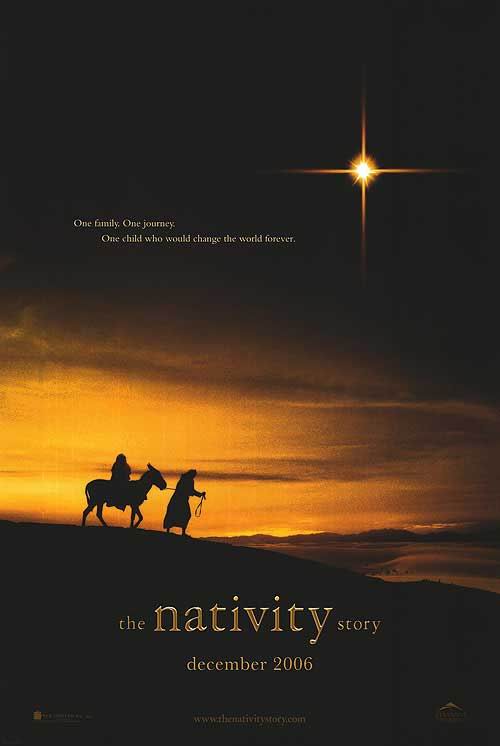
'The Nativity Story': a review

There is a good review of The Nativity Story by Mark Goodacre on the Society of Biblical literature website here.

Epiginoskein on why he's a neocalvinist

Epiginoskein refelcts on his journey from fundamentalism and pentecostalism to Calvinism and neoclavinism:


After high school I enrolled at Dordt College because it seemed to be a good solid Calvinistic Institution. Imagine my shock when many of these Dutch "Calvinists" had no clue what the five points of Calvinism were. However, by God's grace I had come to study history, and the entire history department was filled with Neo-Calvinists who confessed the Canons of Dordt but also pushed me to think about the goodness of creation and the need for a Christian worldview. It was here that I read books by Al Wolters, Abraham Kuyper, Herman Dooyeweerd, etc. Keeping in mind my essentially gnostic background, Neo-Calvinism liberated me to think as a Christian and live as a true human being (no more ranting about how horrible it was to be a "soul trapped in a body!").

Sunday, 24 December 2006

Happy Christmas


It’s amazing that God should come to earth in human flesh: he became one of us. Too often Christians are the victims of dualism: a sacred/ secular; grace/ nature; spirit/ matter dualisms; and yet here is God becoming matter! Matter matters!

God is endorsing the creation – it’s not about escaping to heaven! It about bringing heaven, the kingdom of God, to earth. Happy Christmas!

Saturday, 23 December 2006

Living with liberalism

Jonathan Chaplin examines how tolerant is liberal toleration in this week's Comment.

The Nativity Story

We went to see The Nativity Story today. It was much better than I anticipated. It set the political background and the Roman occupation extremely well and bought home the shame that Mary's family must have felt. Herod was well played and his paranoia came over well. I'd certainly recommend seeing it. It seemed to be pretty faithful to the Gospels. Though I'm not sure that the magi would have arrived so soon after the shepherds.

Wednesday, 20 December 2006

Nature and grace in the nativity

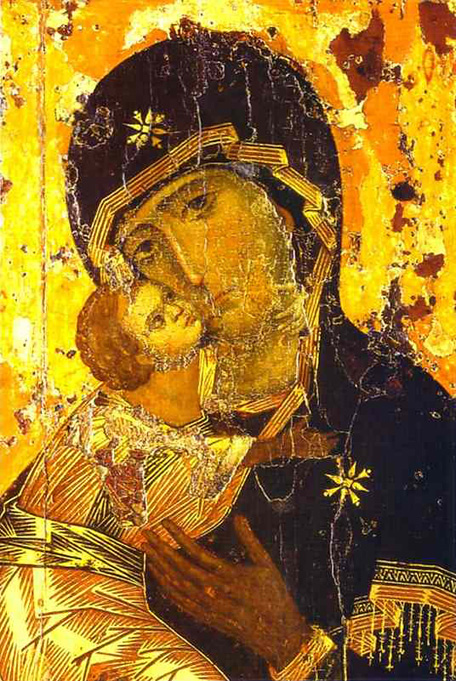
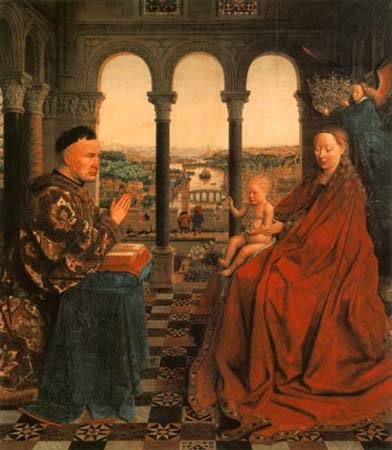
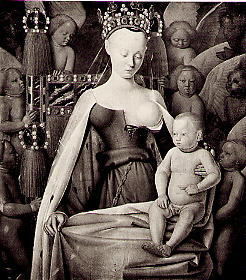
Dualism has distorted most of Christian thought. From Aquinas onwards it was the dualism of nature and grace. This battle between nature and grace can be seen in nativity art (see Francis Schaeffer's Escape from Reason IVP, 1968).


Here grace subsumes nauture - there is nothing natural in this twelfth century icon.


In Van Eyck's Madonna of the Chancellor Rolin (1435) Rolin is facing Mary and he is the same size: there is a battle between nature and grace - no side is dominant.


In Fouquet's painting the king's mistress is painted as Mary with one breast exposed - nature has swallowed grace.


Schaeffer points out:
... when nature is made autonomous it is destructive. As soon as one allows an autonomous realm one finds that the lower element begins to eat up the higher.
The Christians worldview knows nothing of dualism - there is no battle between nature and grace - no one aspect is greater than the other. In the Christian worldview grace restores nature.

Tuesday, 19 December 2006

Xmas or Christmas?

A Lost Chapter from Herodotus

by C. S. Lewis

And beyond this there lies in the ocean, turned towards the west and the north, the island of Niatirb which Hecataeus indeed declares to be the same size and shape as Sicily, but it is larger, and though in calling it triangular a man would not miss the mark. It is densely inhabited by men who wear clothes not very different from other barbarians who occupy the north- western parts of Europe though they do not agree with them in language. These islanders, surpassing all the men of whom we know in patience and endurance, use the following customs.

In the middle of winter when fogs and rains most abound they have a great festival which they callExmas , and for fifty days they prepare for it in the fashion I shall describe. First of all, every citizen is obliged to send to each of his friends and relations a square piece of hard paper stamped with a picture, which in their speech is called anExmas-card . But the pictures represent birds sitting on branches, or trees with a dark green prickly leaf, or else men in such garments as the Niatirbians believe that their ancestors wore two hundred years ago riding in coaches such as their ancestors used, or houses with snow on their roofs. And the Niatirbians are unwilling to say what these pictures have to do with the festival, guarding (as I suppose) some sacred mystery. And because all men must send these cards the market-place is filled with the crowd of those buying them, so that there is great labour and weariness.

But having bought as many as they suppose to be sufficient, they return to their houses and find there the like cards which others have sent to them. And when they find cards from any to whom they also have sent cards, they throw them away and give thanks to the gods that this labour at least is over for another year. But when they find cards from any to whom they have not sent, then they beat their breasts and wail and utter curses against the sender; and, having sufficiently lamented their misfortune, they put on their boots again and go out into the fog and rain and buy a card for him also. And let this account suffice about Exmas-cards.

They also send gifts to one another, suffering the same things about the gifts as about the cards, or even worse. For every citizen has to guess the value of the gift which every friend will send to him so that he may send one of equal value, whether he can afford it or not. And they buy as gifts for one another such things as no man ever bought for himself. For the sellers, understanding the custom, put forth all kinds of trumpery, and whatever, being useless and ridiculous, sell as an Exmas gift. And though the Niatirbians profess themselves to lack sufficient necessary things, such as metal, leather, wood and paper, yet an incredible quantity of these things is wasted every year, being made into the gifts.

But during these fifty days the oldest, poorest and the most miserable of citizens put on false beards and red robes and walk in the market-place; being disguised (in my opinion) as Cronos. And the sellers of gifts no less than the purchasers become pale and weary, because of the crowds and the fog, so that any man who came into a Niatirbian city at this season would think that some great calamity had fallen on Niatirb. This fifty days of preparation is called in their barbarian speech the ExmasRush .

But when the day of the festival comes, then most of the citizens, being exhausted with theRush , lie in bed till noon. But in the evening they eat five times as much supper as on other days and, crowning themselves with crowns of paper, they become intoxicated. And on the day after Exmas they are very grave, being internally disordered by the supper and the drinking and reckoning how much they have spent on gifts and on the wine. For wine is so dear among the Niatirbians that a man must swallow the worth of a talent before he is well intoxicated.

Such, then, are their customs about the Exmas. But the few among the Niatirbians have also a festival, separate and to themselves, called Crissmas , which is on the same day as Exmas. And those who keep Crissmas, doing the opposite to the majority of the Niatirbians, rise early on that day with shining faces and go before sunrise to certain temples where they partake of a sacred feast. And in most of the temples they set out images of a fair woman with a new-born Child on her knees and certain animals and shepherds adoring the Child. (The reason of these images is given in a certain sacred story which I know but do not repeat.)

But I myself conversed with a priest in one of these temples and asked him why they kept Crissmas on the same day as Exmas; for it appeared to me inconvenient. But the priest replied, It is not lawful, O Stranger, for us to change the date of Crissmas, but would that Zeus would put it into the minds of the Niatirbians to keep Exmas at some other time or not to keep it at all. For Exmas and theRush distract the minds even of the few from sacred things. And we indeed are glad that men should make merry at Crissmas; but in Exmas there is no merriment left. And when I asked him why they endured the Rush, he replied, It is, O Stranger, a racket ; using (as I suppose) the words of some oracle and speaking unintelligibly to me (for aracket is an instrument which the barbarians use in a game calledtennis ).

But what Hecataeus says, that Exmas and Crissmas are the same, is not credible. For the first, the pictures which are stamped on the Exmas-cards have nothing to do with the sacred story which the priests tell about Crissmas. And secondly, the most part of the Niatirbians, not believing the religion of the few, nevertheless send the gifts and cards and participate in theRush and drink, wearing paper caps. But it is not likely that men, even being barbarians, should suffer so many and great things in honour of a god they do not believe in. And now, enough about Niatirb.

[Nicked from here]

Sunday, 17 December 2006

Foy Vance - Gabriel and the Vagabond

Winter holidays?

There has been a tendency at the college where I teach to speak of the winter holidays rather than of the Christmas holidays. I can only assume that this is not to upset the secularists as a large proportion of the Moslems I teach wish me a Happy Christmas! If they wished me a happy eid it certainly wouldn't upset me.


There are even happy winter holiday cards:


It reminds me of the story Paul Marshall told (I can't find the original source for this and have forgotten the details): three people were arguing over which game to play - one wanted to do nothing, one wanted football and the other hockey. They agreed they couldn't agree and so played nothing. But in doing nothing they were actually doing something - what the first person wanted.


The term winter holidays also reminds me of what Tumnus tells Lucy of the White Witch:

"It's she that makes it always winter. Always winter and never Christmas; think of that!

Saturday, 16 December 2006

Gideon Strauss on living with liberalism

This week's Comment has a wonderful piece by Gideon Strauss on living with liberalism. By liberalism he means 'the modern ideology commited to individual freedom above all else'. He reminds us that cultural transformation in the form of Schaeffer, Rookmaaker, Dooyeweerd and Kuyper is not an overnight sensation - we have to work at it:

The kind of cultural renewal that will move North American culture beyond the liberal hegemony is the work of more than one or two generations. With this in mind, and without giving up the long-term dream of transforming the culture, Christians must learn how to live with the reality of a liberal cultural hegemony—with authenticity and integrity, but at the same time with prudence and patience, courtesy and civility.

Friday, 8 December 2006

Pray for Fiji


Please pray for Fiji. Bruce Wearne writes on thinknet:
Fiji's so-called coup is by no means a fait accompli.There is stern resistanceof a peaceful and courageous kind stirring from the villages and islands.Suva may be under the Military's heel but they do not have it their own way. Not at all.Please keep this matter in your prayers and bring it to the attention of your churches, associations, schools.
Details can be found on the Fiji Times website and in some of Bruce's recent Nurturing justice articles here.

Saturday, 2 December 2006

Comment: Living with liberalism

This week's Comment is by David Koyzis and Brian Dijkema and looks at the issue of liberalism and outline six strategies for faithfulness:

  • Nurture marriages for the long term
  • Have children and raise families
  • Become committed, active members of your church community
  • Join a Christian labour or another work-related association
  • Become involved in your country's political life
  • All all your work to be influenced by your faith:
"If liberalism attempts to force issues of faith into private compartments, and if this curtails the scope of the redeeming power of faith in Christ, integrating our work with our faith is perhaps the best way to address the deficiencies of liberalism."


Saturday, 25 November 2006

Christian Reformed Church Periodicals Index

This searchable database contains over 100, 000 records and provides bibliographic data for many CRC-related publications, includng back issues of Pro Rege.

Friday, 24 November 2006

Myodicy update

Theodore has updated his excellent Myodicy site.


He has added his fourth and final instalment of his notes on Runner's Introduction to philosophy lectures; an article by Alvin Plantinga on Dooyeweerd: Dooyeweerd on being and meaning' Reformed Journal (Oct 1958); and the fourth in his series on reformational history: dialogue and apologetics.

Sunday, 19 November 2006

All of Life Redeemed update


Added to the Calvin Seerveld pages are the following papers:

General

Education
Art and art history

On Proverbs from Vanguard's 'Take hold of God and pull' series from 1972-1975; including:


Added to the James H. Olthuis pages are four papers:
  • On Worldviews [pdf] Christian Scholar's Review XIV (2): 153-164. Also in Stained Glass: Worldviews and Social Science (ed.) Paul Marshall, Sander Griffioen and Richard Mouw. University Press of America, Lanham MD, 1989: 26-40.
  • The word of God and biblical authority [pdf] Potchefstroom: Wetenskappelike Bydraes van die Potchefstroom Universiteit vir Christelike Hoger Onderwys, 1976.
  • The word of God and creation [pdf] AACS Academic papers, 1975. Also published in Tydskrif vir Christelike Wetenskap 25 (1989): 25-37; and Christian Scholar's Review XXI (3) : 231-48.
  • Values and valuation [pdf] Philosophia Reformata 32 (1) (1967): 37-54.

Added to the Richard Russell pages are three lectures on the History of Education:


Richard Russell of Christian Studies Unit, Radstock, provides a few memories of a mis-spent youth in reformatia. This paper was presented at the first UK Reformational Colloquium in Leeds, October 2006.

David Hanson of Wysocs, Leeds, traces the history of the reformational movement back to the 1920s. This paper was presented at the first UK Reformational Colloquium in Leeds, October 2006.

Marty Rice's paper: What is a science? from Contemporary Reflections on the Philosophy of Herman Dooyeweerd ed. D. F. M. Strauss and M. Botting (Edwin Mellen Press, 2000)

The D F M Strauss pages have been updated with a list of 2006 papers and a new paper on Infinity and Continuity: The mutual dependence and distinctness of multiplicity and wholeness.

Sunday, 12 November 2006

Twilight for Sale

Peter and Rachel Reynolds, booksellers in Dingwall, Scotland, have set up a blog and have a copy of Dooyeweerd's Twilight for sale:


[464197] Dooyeweerd, Herman. In the Twilight of Western Thought: Studies in the Pretended Autonomy of Philosophical Thought (University Series: Philosophical Studies). Nutley: Craig Press, 1972. Paperback. Very Good . 195 pages. GBP 19.50

Saturday, 11 November 2006

James Orr on God and proofs

Neither shall I waste time at this stage by discussing in what sense it is permissible to speak of “proof” of so transcendent a reality as the Divine existence. We remember here the saying of Jacobi, that a God capable of proof would be no God at all; since this would mean that there is something higher than God from which His existence can be deduced. But this applies only to the ordinary reasoning of the deductive logic. It does not apply to that higher kind of proof which may be said to consist in the mind being guided back to the clear recognition of its own ultimate pre-suppositions. Proof in Theism certainly does not consist in deducing God’s existence as a lower from a higher; but rather in showing that God’s existence is itself the last postulate of reason—the ultimate basis on which all other knowledge, all other belief rests.
James Orr The Christian View of God and the World. 9th edn 1908. Lecture III p 94-5.

Friday, 10 November 2006

On Dooyeweerd: a bibliography

Introductions to Dooyeweerd (in English) Roy Clouser. 1991. The Myth of Religious Neutrality: An Essay on the Hidden Role of Religious Beliefs in Theories. University of Notre Dame Press: Notre Dame (2nd edn 2005)

L Kalsbeek. 1975. Contours of Christian Philosophy: An Introduction to Dooyeweerd’s Thought. Wedge, Toronto. J M Spier 1954. An Introduction to Christian Philosophy. Presbyterian and Reformed: Philadelphia.

S T Wolfe. 1978. A Key to Dooyeweerd. Presbyterian and Reformed: Philadelphia.

On Dooyeweerd (in English)

Gregory Baus 2005. 'Dooyeweerd's societal sphere sovereignty: neither tax based nor laissez-faire' (VU Masters paper)

Tim Black A Transcendental Analysis and Critique of Dooyeweerd’s Distinction between Naïve and Theoretical Thought

Philip Blosser. 1993. 'Reconnoitering Dooyeweerd's theory of man' Philosophia Reformata 58 (2) 192-209 (a revised version of 'Soul and body in the philosophy of Herman Dooyeweerd' Tydskrif vir christelike Wetenskap 27 (1) (1991) 57-82)

Vincent Brummer. 1961. Transcendental Criticism and Christian Philosophy: A Presentation and Evaluation of Herman Dooyeweerd’s ‘Philosophy of the Cosmonomic Idea. Wever: Franeker.

Alan Cameron. 1997. Implications of Dooyeweerd's legal philosophy for political theory. Nuances [electronic] 5 (August) Pt 5. Alan Cameron. 1998. Dooyeweerd's jurisprudential method: legal causality as a case study. ALTA 1998 Conference Proceedings vol 2: 595-634. Alan Cameron. 1998. Dooyeweerd on law and morality: legal ethics - a test case. Victoria University of Wellington Law Review 28 (1): 263-281. Alan Cameron. 2000. 'Implications of Dooyeweer's encyclopedia of legal science' in Strauss and Botting (ed.)

Alan Cameron.2000. Between norm and fact: the jurisprudence of Herman Dooyeweerd [unpub article]. Alan Cameron.2004. The Encyclopedia of the Science of Law: a orovisional assessment of the Legal Philosophy of Herman Dooyeweerd [A paper prepared for presentation as a public lecture at Redeemer University College, Ancaster, Ontario, 27 September 2004.]

Charles Cameron. 1991. 'Herman Dooyeweerd' in J. D. Douglas (ed.) From The Twentieth Century Encyclopedia of Religious Knowledge Baker: Grand Rapids.

Jonathan Chaplin.1995. 'Dooyeweerd's Notion of Societal Structural Principles'. Philosophia Reformata 60:16-36 Jonathan Chaplin. 2006. 'Herman Dooyeweerd' in New Dictionary Of Christian Apologetics (ed.) Campbell Campbell-Jack et al. Leicester: IVP.

Yong-Joon Choi. 2006. Dialogue and Antithesis: A Philosophical Study on the Significance of Herman Dooyeweerd’s Transcendental Critique. California: Hermit Kingdom Press. Roy Clouser. 1996. 'A Sketch of Dooyeweerd's Philosophy of Science' in Facets of Faith and Science, Ed. J. Van der Meer. (Lanham: University Press of America, 1996), vol. 2: 81-98. Roy Clouser. 1995. 'The Uniqueness of Dooyeweerd's Program for Philosophy and Science: Whence the Difference?' in Christian Philosophy at the Close of the 20th Century, Ed. Griffoen & Balk (Netherlands: Kampen, Kok, 1995): 113-125. Gordon H Clark. 1999. The Toronto school. Trinity Review (August) A L Conradie. 1960. The Neo-Calvinist Concept of Philosophy. University Press: Natal.

Anton Dillier. 1990. Herman Dooyeweerd – a profile of his thought. Spectrum 22(2): 139-154. J. Douma. no date. Another Look at Dooyeweerd: Some Critical Notes Regarding the Philosophy of the Cosmonomic Idea. Winnipeg: Premier Publishing.

W F De Gaay Fortman et al. (eds) 1965. Philosophy and Christianity: Philosophical Essays Dedicated to Professor Dr Herman Dooyeweerd. North-Holland: Amsterdam.

Jan Dengerink. 1965. 'Hauriou and Dooyeweerd' in De Gaay Fortman (ed.)

J J Duyvene de Wit. 1965. 'The impact of Herman Dooyeweerd's christian philosophy upon present day biological thought' in De Gaay Fortman (ed.)

John Frame. 1972. The Amsterdam Philosophy: A Preliminary Critique. Phillipsburg, NJ.

David H Freeman 'A new school of Christian philosophy' Journal of Religion 38 (1958): 46-53 J. Glenn Friesen's The mystical Dooyeweerd part I and part II J. Glenn Friesen Dooyeweerd and Bader: A response to D F M Strauss

J. Glenn Friesen's translation of Dooyeweerd's 'De Kentheoretische Gegenstandsrelatie en de Logische Subject-Objectrelatie' Philosophia Reformata

J. Glenn Friesen Individuality Structures and Enkapsis: Individuation from totality in Dooyeweerd and German Idealism (1975) 83-101

J. Glenn Friesen Dooyeweerd, Spann and the Philosophy of Totality  Philosophia Reformata 70 (2005) 2-22

J. Glenn Friesen.2005. Dooyeweerd versus Vollenhoven: The Religious Dialectic within Reformational Philosophy Philosophia Reformata 70 (2005) 102- 


 J. Glenn Friesen. 2006. 'The religious dialectic revisited


J. Glenn Friesen The Mystical Dooyeweerd: The relation of his thought to Franz von Baader

Gerit Glass. 2002. Churchland, Kandel and Dooyeweerd on the Reducibility of Mind States. Philosophia Reformata 67: 148-172 Henry R. Van Til. 1955. 'Anniversary : The First 25 Years of Prof. Herman Dooyeweerd'Torch and Trumpet 4.6 (Feb/March 1955): 6–8. Sander Griffoen and Bert M Balk (eds). 1995. Christian Philosophy at the Close of the Twentieth Century: Assessment and Perspective . Kampden: Kok. H. Hart, J. van der Hoeven and N Wolterstorff. 1983. Rationality in the Calvinian Tradition . University Press of America: Lanham. Hendrik Hart. 1985. Dooyeweed's Gegenstand theory of theory. In McIntire (ed.) Hendrik Hart. 2000. 'Notes on Dooyeweerd, reason and order' in Strauss and Botting (ed.) Andrew Hartley. 2004. The Philosophy of the Law Idea and the Role of the Prescientific in Statistical Inference. Journal of the ACMS (December) R D Henderson. 1994. Illuminating Law: The Construction of Herman Dooyeweerd's Philosophy. Free University: Amsterdam. Irving Hexham. 1984. 'Herman Dooyeweerd' in Evangelical Dictionary of Theology: 330-331. Arthur F. Holmes. 1964. 'Dooyeweerd: some questions and an alternative'. Reformed Journal 14 (Jan): 11-14. Arthur F. Holmes. 1963. 'Dooyeweerd: his philosophic method' Reformed Journal 13 (Nov): 14-16. Arthur Holmes. 1971. Christian philosophy of science: unfinished business. Journal of the American Scientific Association 23 (March): 4-6. Arthur Holmes. 1974 edn. Christian philosophy. Encyclopaedia Britanica Vol 4: 555-556. Dirk W. Jellma.1954. 'The philosophy of Vollenhoven and Dooyeweerd' Calvin Forum 19 (Apr): 169-172; (May):192-194. Rob Joustra. 2004. Progress and Differentiation: A Critical Exposition on the Philosophy of History of Herman Dooyeweerd and Christopher Dawson Earl William Kennedy. 1973. 'Herman Dooyeweerd on history: an attempt to understand him' Fides et Historia 6: 1-21. Jacob Klapwijk. 1980. The struggle for a Christian philosophy: another look at Dooyeweerd. Reformed Journal 30 (Feb): 12-15; (Mar): 20-24. Jacob Klapwijk. 1980. Dooyeweerd’s Christian philosophy: antithesis and critique. Reformed Journal 30 (3): 20-24. Robert D. Knudsen. 1954. The idea of Christian scientific endeavor in the thought of Herman Dooyeweerd. Journal of the American Scientific Affiliation 6 (2): 8-12. Robert D. Knudsen. 1962. 'Dooyewerd's philosophic method'. Lecture delivered at the annual philosophy conference, Wheaton College. (mimeo) Robert D. Knudsen. 1979. Dooyeweerd's doctrine of science. Journal of the American Scientific Affiliation 31 (September): 209-212. Robert D. Knusden.1986. The transcendental perspective of Westminster’s apologetic. Westminster Theological Journal. 48 (2): 223-239. Robert D. Knudsen. 2000. The religious foundation of Dooyeweerd's transcendental method in Strauss and Botting (ed.) Richard Kroner. 1954-5 A new critique of theoretical thought. Review of Metaphysics 8 (3) 321-4. David T. Koyzis Dooyeweerd Revised John Kraay. 1979-80. 'Successive conceptions in the development of the Christian philosophy of Herman Dooyeweerd' Philosophia Reformata 44: 137-49; 45: 1-46. T. H. Leith.1972. Notes on the presdisposition of scientific thought and practice. Jornal of the American Scientific Affiliation 24 (June): 51-57. Paul Marshall. 1985. 'Dooyeweerd's empirical theory of rights.' in McIntire (ed.) C T McIntire. 1985a. Herman Dooyeweerd in North America. In Reformed Theology in America, D F Wells (ed). Eerdmans: Grand Rapids. C T McIntire (ed.). 1985b. The Legacy of Herman Dooyeweerd: Reflections on Critical Philosophy in the Christian Tradition. University Press of America: Toronto. C. T. McIntire. 1985. Dooyeweerd's philosophy of history' in McIntire (ed.). Robert MacLarkey.1991. Reformational social philosophy and sociological theory. Perspectives on Science and Christian Faith 43: 96-102 [response by Heddendorf ]. Hugo Meynell. 2003. The philosophy of Herman Dooyeweerd: a transcendental Thomist appraisal. Faith and Philosophy 20: 265-87. Ronald Nash. 1962. Dooyeweerd and the Amsterdam Philosophy. Eerdmans: Grand Rapids. James H. Olthuis.1985. 'Dooyeweerd on religion and Faith' in McIntire (ed.). James H. Olthuis. 2006. Spiritual convergence and philosophical differences. Redeemer conference. C. Orlebeke. 1954. 'What is calvinistic philosophy? Calvin Forum 19: 139-140. Paul Otto. 2005. 'In the twilight of Dooyeweerd's corpus'. Philosophia Reformata 70 (1) W J Ouweneel. 1993. 'Supratemporality in the Transcendental Anthropology of Herman Dooyeweerd' Philosophia Reformata 58: 210-220. Jim Payton and Rob Joustra 'The vindication of tradition: a response' 24 (Sept): 11-17. Jack Roeda. 1969. 'Structure and revolution: Herman Dooyeweerd and Helmut Thielicke'. Stromata 15 (Oct): 3-7. Richard Russell. 1991. In defence of Dooyeweerd and of Christian philosophy. Spectrum 23 (2): 147-159. Calvin Seerveld. 1965. 'Dooyeweerd's contribution to the historiograpy of philosophy' in De Gaay Fortman (ed.) Calvin Seerveld.1996. Dooyeweerd’s idea of “historical development”: Christian respect for cultural diversity. Westminster Theological Journal 58(1): 41-61 Calvin Seerveld. 1985. Dooyeweed's legacy for aesthetics: modal law theory. in McIntire (ed.) Norman Shepherd. 1971. The doctrine of Scripture in the Dooyeweerdian philosophy. Outlook 21 (Feb): 18-21; (March): 20-23. James Skillen. 1979. Herman Dooyeweerd’s contribution to the philosophy of social science. Journal of the American Scientific Affiliation 31: 20-24. Henry J. Stob. 1977. 'Herman Dooyeweerd'. Reformed Journal 27 (Apr): 2-3. Pete Steen. 1961. The supra-temporal self-hood in the philosophy of Herman Dooyeweerd. Master's Dissertation. Westminster Theological Seminary. Pete Steen. 1983. The Structure Of Herman Dooyeweerd's Thought. Wedge: Toronto. D F M Strauss.2004. Intellectual Influences upon the Reformational Philosophy of Dooyeweerd. Philosophia Reformata 69: 151-181. D F M Strauss. 2006. Appropriating the legacy of Dooyeweerd and Vollenhoven. Redeemer conference. D F M Strauss and Michelle Botting (eds). 2000. Contemporary Reflections on the Philosophy of Herman Dooyeweerd. Edward Mellen: Lewiston. Dale K. Van Kley. 1975. 'Dooyeweerd as historian' in G. Marsden and F. Roberts (ed.) A Christian View of History? Eerdmans: Grand Rapids. Cornelius Van Til.1977. Herman Dooyeweerd (a personal tribute). Westminster Theological Journal. 39 (2): 319-27 Cornelius Van Til. 1953. Review of A New Critique of Theoretical Thought, Vol. I.Westminster Theological Journal 16: 180–83. Nick Van Til. 1973. 'Dooyeweerd's "history" and the historian'. Pro Rege 2 (Dec): 7-15. Brian J Walsh and Jon Chaplin.1983. 'Dooyeweerd’s contribution to a Christian philosophical paradigm'. Crux 19 (1): 8-22. Nicholas Wolterstorff 'Dooyeweerd: an appreciation' unpublished (written in the mid-1960s and presented to a Calvin Faculty Forum) Al Wolters. 1983. Dutch neo-calvinism: worldview, philosophy and rationality. In Hart et al. (1983) Al Wolters. 1985. The intellectual milieu of Herman Dooyeweerd. In McIntire (ed.) (1985). Colin Wright. 1999. 'Dooyeweerd made easy (well ... easier'). Christianity and Society IX (1): 21-27. William Young. 1966. 'Herman Dooyeweerd' in P. E. Hughes (ed.) Creative Minds in Contemporary Theology. Eerdmans, Grand Rapids : 270-306. William Young. 'The nature of man in the Amsterdam philosophy' Westminster Theological Journal 22: 1-12. William Young. 1952. Toward a reformed philosophy: the development of a Protestant philosophy in Dutch Calvinistic thought since the time of Abraham Kuyper Grand Rapids: Piet Hein. Lambert Zuidervaart 2004. The great turning point: religion and rationality in Dooyewerd’s transcendental critique. Faith and Philosophy 21 (1) : 65-89. Lambert Zuidervaart. 2006. Reformational philosophy after Dooyeweerd and Vollenhoven. Redeemer conference.

Uko Zylstra. 1981. 'Dooyeweerd's concept of classification in biology' in Life is Religion: Essays in Honor of H. Evan Runner. Paideia: St Catherine's. Update My thanks for Chris Gousmett, Harry Der Nederlanden, Rudi Hayward and Theo Plantinga for suggesting some titles and spotting a few typos.

Friday, 3 November 2006

Climate Change and Global Warming

WYSOCS is organising a conference on Climate Change and Global Warming on Saturday 2nd Decemebr 2006. The speakers are Bob Goudzwaard and John Houghton. They will speak on 'Unmasking the ideologies obstructing global economic change' and 'Global warming: a challenge to scientists and Christians' respectively. Full details and a booking form can be obtained here.

Wednesday, 1 November 2006

J. J. Duyvene De Wit on Dooyeweerd's view of evolution and creation

[12] As an alternative to all these mentioned conceptions, Dooyeweerd's view is herewith presented.

First of all we must distinguish between creation and becoming. The process of becoming within the temporal order of our cosmos presupposes God's creation. Only of God's creation can it be said [13] (Gen. 2:1) that it is completed. This can never be said of the process of becoming in the temporal order of creation with its modal diversities of meaning. The process of becoming still goes on and individual physical men, animals, plants etc., arise continuously. This is, however, not a temporal continuation of the divine act of creation, but only an elaboration, within the temporal order. of the already completed creation.

The whole order of time, together with the whole process of becoming which was destined to execute itself therein, was undoubtedly comprised in the creation, but only as the creational result of God's completed work of creation. But this work of creation is not comprised in the creational order of the temporal process of becoming.

It is true that in Scripture God's work of creation is revealed to us in human language which itself is bound to the creational order of time. But this may never be used as an argument to conclude that this work of creation itself has occurred within the creational time-order.

We must also observe that the revelation about the creation may not be identified with the creation itself. That revelation directs itself primarily to the human heart, the religious center of our existence, and in which everything which occurs within time, is grasped in a central relation to our Creator through the operation of His Spirit. But as revelation it also enters into the horizon of our temporal existence in order to address itself to man in his faith within the order of time.

Within the temporal order, the Word-revelation often speaks about God himself in terms of time, but this does not mean that God and his acts of creation are enclosed within time.

God's work of creation and its creational result are not of the same order and therefore cannot have a common temporal denominator.

The distinction between creation and creational becoming within time is intrinsically related to the revealed distinction between the Creator and the creation.

These considerations bring us to the fundamental problem concerning the inner relation between the central religious meaning of God's Word-revelation as regards creation and scientific investigation. This problem can only be solved on the basis of what has been said above.

[14] As soon as one tries to conceive of God's work of creation as of a successive series of temporal events, as it has been done in certain theological quarters, unsurmountable antinomies arise. He then can no longer account for this time-order in its integral and universal meaning (including the temporal faith-aspect) because he is compelled to accept that the temporal modal aspects themselves have been created in the successive order of the six days of creation and these then must have had a temporal duration. Before the first organic life in living organisms revealed itself on earth within the order of time, this time-order would thus have had only the first four aspects, namely the aspects of number, space, motion and energy. But within what time-aspect did the creation of the following aspects of time then fall?

The posing of the question already lays bare the antinomies in which one gets involved when he conceives of the days of creation as theoretically abstracted aspects of time. For every attempt to view these days of creation according to the objective and geological time-scale be it as days of 24 hours or as geological periods, is irreconcilable with the account of the creation itself. This appears already from the fact that "fixed times, days and years" became established only on the fourth "day of creation", so that "day of creation" cannot possibly imply "day" or "period" in the sense of temporal duration.

And finally this attempt definitely strands on the seventh day, the day of God's sabbatical rest, every interpretation of which, either as a 24-hour day or a geological period, would lead to blasphemy.

In other words, in so far as the two first chapters of Genesis are speaking about the becoming of the world and of man within the order of time as a result of creation, they do not speak scientifically, but exclusively to reveal to us that God cares for the elaboration of his Words of Creation in the order of time with the structural laws enclosed therein by Him. This implies that from the information given in Genesis, no scientific conclusions can be drawn and that therefore the traditional confrontation of this information with the scientifically established facts finds itself on the wrong track. The facts which are revealed to us in the two first chapters of Genesis are of another order than those which can be brought to light by scientific investigation. And it is just for this reason that they are of such central and basic significance for this kind of investigation.

Excerpt from J. J. Duyvene De Wit ‘Introductory comment’ in ‘Organic Life and the evolutionistic world and life view’ Christian Perspectives 1962 (Guardian Publishing Company, Hamilton, Ontario, Canada, 1962.)

Tuesday, 31 October 2006

Reformational evolutionary biology


Kerry Hollinsworth in a recent post has pointed out some useful resources on reformational biology:

I thought it might be useful to some of the younger members who may not be aware of the work of J. J. Duyvene De Wit in the area of Evolutionary Biology to have some references to this outstanding scholar.

A New Critique of the Transformist Principle in Evolutionary Biology. J. H. Kok, 1965. (65pp)

The Impact of Herman Dooyeweerd's Christian Philosophy Upon Present Day Biological Thought. (pp. 405-433) in Philosophy and Christianity. J. H. Kok. 1965.

Organic Life and the Evolutionistic World and Life View, in, Christian Perspectives: The Unioniville Lectures, 1962 (pp 11-70)


J. J. Duyvene de Witt was born in the Netherlands in 1909, he was head of a pharmaceutical company befor taking a PhD at Utrecht in 1939. From 1951 he held the chair of zooology at the University of Bloemfontein, South Africa.

Sunday, 29 October 2006

Eagleton on Dawkins

Terry Eagleton has a review of Dawkins's The God delusion here. (London Review of Books 28 (20) 19 October 2006.  Eagleton starts:

Imagine someone holding forth on biology whose only knowledge of the subject is the Book of British Birds, and you have a rough idea of what it feels like to read Richard Dawkins on theology.Imagine someone holding forth on biology whose only knowledge of the subject is the Book of British Birds, and you have a rough idea of what it feels like to read Richard Dawkins on theology.

Calvinistic Philosophy and Reformational Thought index

Theo Plantinga has, with sponsorship from SSHRC, started to compile a list of the contents of reformational books. He explains:

The purpose of this index is to facilitate and promote the study of Calvinistic philosophy and reformational thought. The idea underlying it is that when it is not possible to hold in your hand a certain book that seems to deal with a subject of interest to you, it would be helpful to have some sort of detailed and objective indication of the book's contents. If a friend or colleague could photocopy the table of contents and the index when he visits the University of Rhode Island, let's say (which happens to have a copy of the book in its library), when he attends a conference there next month, he would be doing you a favor. You could then determine whether it would be worthwhile for you to try to get hold of the book via interlibrary loan, or to track it down in the used bookstores using the internet. Or perhaps you could then try to get someone at the University of Rhode Island to photocopy the one essay or article in the book that you need for your work.

Well, what if the table of contents and index of the book in our example, the one you have heard of but never have seen, were available on the internet? That's the idea of this index in a nutshell. With the permission of the publishers (in the case of books still under copyright) and with the blessing of the authors (where we can get hold of them), we reproduce the basic publication information, the table of contents, the index, the publisher's abstract (if there is one), and the dissertation summary (if there is one). It's as simple as that.

Deatils of how to get involved are here. A list of FAQ are here.

Reformational Colloquium Leeds 27-28th Oct 2006

This Friday and Saturday I was at the Reformational Colloquium in Leeds. It was organised by David Hanson of WYSOCS.

It was an excellent and action packed time. It as particulalry good to meet fellow bloggers Paul Robinson, Rudi Hayward and Jeremy Ive.

The event started at noon on Friday with two excellent presentations by David Hanson and Richard Russell on the origins of the Reformational movement in the UK. In Richard's case it was in the early 1960s when IVF were sent a set of the Unionville lectures, they didn't know what to do with them and so were given to Richard - who was studying at UCW Aberystwyth - by Geraint Fielder a Travelling Secretary.

David traced the roots back to the Soverign Grace Union and an ex-miner Henry Atherton who took a group over to the Netherlands in 1928 - a group that included David's parents (though they weren't an item at that time!). A series of subsequent meetings led to the formation of the International Association for Reformed Faith and Actuion in 1953. Also invoved in the IARFA were Lance and Hazel Bidewell who were also at the Leeds meeting.

The reminder of the weekend was split up into about 25 ten minute presentations. These included art, short stories, testimonies of how people came into contact with the reformational movement, presentations on eating, book supplies, creationism, health issues, information technology, websites, science, politics, philosophy and activities that people were involved with. It was an inspiring and moving time.

It is hoped that will be a bi-annual event.