Click on the image for a larger size.
Maps of the other chapters are available:
Chapter 1
Chapter 2
Full book details here.
Showing posts with label mindmaps. Show all posts
Friday, 19 July 2013
Tuesday, 16 July 2013
Sunday, 14 July 2013
Friday, 29 March 2013
Kuyper's Rooted & Grounded - a mindmap
Mindmap of Abraham Kuyper's Rooted and Grounded: The Church as Organism and Institution. Christian's Library Press, 2013.
Saturday, 23 March 2013
Abraham Kuyper 's Particular Grace part III - a mindmap
Abraham Kuyper's Particular Grace Part III - a mindmap. (Click on the image to enlarge it.)
Part II is here.
Saturday, 13 October 2012
Kuyper Particular Grace (part I) - a mindmap
A mindmap of Abraham Kuyper's Particular Grace: A Defense of God's Sovereignty in Salvation (Granville, Michigan: Reformed Free Publishing Association, 2001)
Monday, 1 October 2012
Richard Mouw's Abraham Kuyper (Eerdmans, 2011) - a mindmap
This is a mindmap of the second section of Richard Mouw's Abraham Kuyper: A Short and Personal Introduction. Eerdmans, 2011. The first part appeared here.
Thursday, 12 July 2012
Monday, 9 July 2012
Thursday, 5 July 2012
Monday, 2 July 2012
Kuyper's Lectures on Calvinism Ch 3 mindmap
Mindmap of Abraham Kuyper's Lectures on Calvinism Ch 3 "Calvinism and politics".
Here Kuyper shows that Calvinism is not merely an ecclesiastical concept. Neo-Calvinism stresses the sovereignty of God over every area and aspect of life. Here Kuyper articulates and fleshes out how State, church and society relate using the idea of sphere sovereignty.
Thursday, 28 June 2012
Kuyper's Lectures on Calvinism Ch 2 mindmap
Mindmap of Abraham Kuyper's Lectures on Calvinism ch 2: Calvinism and Religion.
Here Kuyper raises four important questions:
In the case of Calvinism, for Kuyper, religion is for God's sake; it operates directly from the heart and not via intermediaries such as priests or a church; religion is to do with our whole existence; and it is soteriological in character - we need regeneration and revelation.
Here Kuyper raises four important questions:
- Is religion for humanity's sake or God's?
- Does religion operate directly or indirectly?
- Is it partial or universal?
- Is it abnormal or normal?
In the case of Calvinism, for Kuyper, religion is for God's sake; it operates directly from the heart and not via intermediaries such as priests or a church; religion is to do with our whole existence; and it is soteriological in character - we need regeneration and revelation.
Monday, 25 June 2012
Kuyper's Lectures on Calvinism Ch 1 mindmap
Mindmap of Abraham Kuyper's Lectures on Calvinism chapter 1: Calvinism as a life-system.
Monday, 18 June 2012
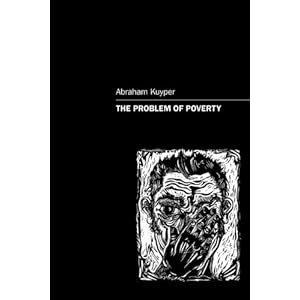
Abraham Kuyper The Problem of Poverty (Dordt College Press, 2011)
The Problem of Poverty
Abraham Kuyper
Edited and introduced by James Skillen
Dordt College Press, 2011
ISBN 978-0-932914-87-3
94pp; pbk
In 1891 Abraham Kuyper opened the first Christian Social Congress in the Netherlands with an address "The social problem and the christian religion". This speech has now been made available by Dordt College Press (DCP).
This version was translated by James Skillen and was originally published by Baker Book House and The Center for Public Justice in 1991. A previous translation by Dirk Jellema was made available by under the title Christianity and the Class Struggle (Piet Hein, 1950). The original Dutch version Het sociale Vraagstuk en de Christelijke Religie was published in 1891 by Wormser.
Skillen's updated translation reads much more fluidly than Jellema's. The advantage of this DCP edition is that it includes Skillen's excellent introduction and concludes with a reprint of an excellent article on 'How Abraham Kuyper became a Kuyperian' by Roger Henderson. These two pieces are worth the price of the book alone and help place Kuyper within the historical, political and cultural milieu in which he was speaking.
The mind map below gives a summary of Kuyper's ideas in the book.
Abraham Kuyper
Edited and introduced by James Skillen
Dordt College Press, 2011
ISBN 978-0-932914-87-3
94pp; pbk
In 1891 Abraham Kuyper opened the first Christian Social Congress in the Netherlands with an address "The social problem and the christian religion". This speech has now been made available by Dordt College Press (DCP).
This version was translated by James Skillen and was originally published by Baker Book House and The Center for Public Justice in 1991. A previous translation by Dirk Jellema was made available by under the title Christianity and the Class Struggle (Piet Hein, 1950). The original Dutch version Het sociale Vraagstuk en de Christelijke Religie was published in 1891 by Wormser.
Skillen's updated translation reads much more fluidly than Jellema's. The advantage of this DCP edition is that it includes Skillen's excellent introduction and concludes with a reprint of an excellent article on 'How Abraham Kuyper became a Kuyperian' by Roger Henderson. These two pieces are worth the price of the book alone and help place Kuyper within the historical, political and cultural milieu in which he was speaking.
The mind map below gives a summary of Kuyper's ideas in the book.
Friday, 15 June 2012
Mindmap of James Eglinton's Trinity and Organism Ch 7
Mindmap of chpater 7 of James Eglinton's Trinity and Organism. Here herman Bavinck's ecclesiology is examined in light of the organic motif. The link between contemporary debates in the Netherlands and with neo-calvinism are made. Kuyper's distinction between church as organism and as institution and the distinction between the invisible and visible church are drawn upon.
This book of Eglinton provides an excellent overview of Bavinck's theology.
Monday, 4 June 2012
Mindmap of James Eglinton's Trinity and Organism Ch 4
Mindmap of chapter 4 of James Eglinton's trinity and Organicsm.
Here Eglinton, after rejecting the bipolar view of Herman Bavinck, looks for an alternative reading. Bavinck is rightly placed in the neo-Calvinist tradition. Bavink's theology is thoroughly reformed and Trinitarian. The unity-in-diversity of the Trinity is used by Bavinck as a key component. To misunderstand the Trinity is to grossly misappropriate the creation.
The emphasis here is on the neo-calvinist distinction between the Creator and creation. God's existence is not self caused or dependet on anything. God is wholly unlike anything - but everything else is like God. This is why there are vestiges of the Trinity within the creation.
After the ground clearing of previous chapters, Eglinton here is beginning to lay a new pathway for the understanding of Bavinck.
Monday, 28 May 2012
Bavinck's organic motif: mindmap of Eglinton's Trinity and Organism Ch 3
Mindmap of James Eglinton's Trinity and Organism chapter 3 'Bavinck's Organic Motif'.
Eglinton examines Bavinck's organic motif and finds that Veenhof's use of it flawed. The motif is not as universally defined or as homogeneous as supposed. Van Eck's examination of it has shown that such a view is wrong. Veenhof's approach is to assuem that Bavinck's use is defined by a historical-etymological approach. A better way is to see how Bavinck uses the metaphor. Mattson suggests that it comes from Reformed theology. This is supported by the fact that Kuyper sues such a term and that Josef Bohatec has traced it sue to Calvin.
The organic motif is best seen in the light of a reformed trinitarianism rather than Idealism - contra Veenhof.
Eglinton examines Bavinck's organic motif and finds that Veenhof's use of it flawed. The motif is not as universally defined or as homogeneous as supposed. Van Eck's examination of it has shown that such a view is wrong. Veenhof's approach is to assuem that Bavinck's use is defined by a historical-etymological approach. A better way is to see how Bavinck uses the metaphor. Mattson suggests that it comes from Reformed theology. This is supported by the fact that Kuyper sues such a term and that Josef Bohatec has traced it sue to Calvin.
The organic motif is best seen in the light of a reformed trinitarianism rather than Idealism - contra Veenhof.
Wednesday, 23 May 2012
How many Bavinks? Mindmap of Eglinton's Trinity and Organism Ch 2
Mindmap of James Eglinton's Trinity and Organism ch 2: "How many Bavinck's?"
Eglinton examines the thesis that has dominated Bavinck studies, the idea that there are two Bavinck's. The Reformed, orthodox theologian and the Modern, progressive academic. This bipolar reading of Bavink has been the lens through which Bavinck has been read. It is found in Jan Veenhof and more recently in VanDrunen's two-kingdom approach.
Eglinton draws upon Nelson Kloosterman to show how flawed this model is.
Eglinton examines the thesis that has dominated Bavinck studies, the idea that there are two Bavinck's. The Reformed, orthodox theologian and the Modern, progressive academic. This bipolar reading of Bavink has been the lens through which Bavinck has been read. It is found in Jan Veenhof and more recently in VanDrunen's two-kingdom approach.
Eglinton draws upon Nelson Kloosterman to show how flawed this model is.
Monday, 21 May 2012
Where was Bavinck? Mindmap of Eglinton's Trinity and Organism Ch 1
A mindmap of the first chapter of James Eglinton's Trinity and Organism
This first chapter of Eglinton's important book - based on his New college, Edinburgh PhD - looks at the key question: where was Bavink? He provides the theological and cultural background to Bavink and late 18th century and early 19th century Dutch theology. This background is important to the rise of neo-Calvinism developed by Kuper and Bavinck.
Tuesday, 15 May 2012
Subscribe to:
Posts (Atom)