December's Zygon journal is now out. It has three articles from the 'Einstein, God and time' conference by John Hedley Brooke, Antie Jackelen and John Polkinghorne. Abstracts can be obtained from here.
powered by performancing firefox

"If God is sovereign, then his lordship must extend over all of life, and it cannot be restricted to the walls of the church or within the Christian orbit." Abraham Kuyper Common Grace 1.1.
powered by performancing firefox
Of particular significance is the development of Herman Dooyeweerd - a work of immense erudition - constructed in loyalty to the principles of the biblical revelation which are also the principles of Reformed thought. (Dooyeweerd will frown at finding himslef placed among theologians in this volume; but his philosophy is erected upon a genuinely theological foundation.) His purpose has been to construct a philosophy, which being authentically Christian, penetrates to every sphere of human life and activity. In doing so, however, he has engaged in a transcendental critique of pilosophy as a science in its specific manifestations throughout the centuries and has shown how the only system which is not incapacitated by insoluble inner contradictions os that which is founded on the creation-fall-redemption ground-motive of the biblical revelation. Herman Dooyeweerd ahs given a notable lead as with singelness of purpose and intellectual integrity he has devoted himself to the creative task of the Christian thinker.
powered by performancing firefox
powered by performancing firefox
And before you respond, here are some qualifications you must factor into your answer.
• They were an illegal religion throughout this period. At best, they were tolerated; at the very worst they were very severely persecuted.
• They didn’t have any church buildings as we know them. While archaeologists have discovered chapels dating from this period, they were definitely exceptions to the rule, and they tended to be very small converted houses.
• They didn’t even have the scriptures as we know them. They were putting the canon together during this period.
• They didn’t have an institution or the professional form of leadership normally associated with it. At times of relative calm, prototypical elements of institution did appear, but by what we consider institutional, these were at best pre-institutional.
• They didn’t have seeker-sensitive services, youth groups, worship bands, seminaries, commentaries, etc.
• They actually made it hard to join the church. By the late second century, aspiring converts had to undergo a significant initiation period to prove they were worthy.
powered by performancing firefox
It is quite a process [translating Stoker]. Stoker, as did Dooyeweerd, made up their own terminology to get certain ideas across, and you have to try and understand the context to make sure you get an acurate translation done.
Furthermore, the parts that I have finished need to go for review with his son, and/or with one of the other professors in South Africa.
So I am sorry to say, I am busy, but there is nothing I can release yet. I am not the intellectual property right owner, so I cannot even publish an unofficial version.
I have reserved a website name already, and I am hoping that I can publish some stuff there pretty soon, in the form of my own commentary on his thoughts. Check back often, I will include it in my links as soon as it is up and running.
"It is the divine page that you must listen to; it is the book of the universe that you must observe. The pages of Scripture can only be read by those who know how to read and write, while everyone, even the illiterate, can read the book of the universe” . Enarrationes in Psalmos, XLV, 7 (PL 36,518).Robert Crease also has some qualms about it. In an article in Decemebr 2006's Physics World he looks at 'The book of nature' and concludes:
...the image of the book of nature can haunt us today. One reason is that it implies the existence of an ultimate coherent truth – a complete text or "final theory". While many scientists may believe this, it is ultimately only a belief, and it is far likelier that we will endlessly find more in nature as our concepts and technology continue to evolve. Furthermore, the image suggests that the "text" of the book of nature has a divine origin. The idea that the world was the oeuvre of a superhuman author was the precursor of the idea that it was the engineering project of an intelligent designer. This implication has led some contemporary sociologists of science to succumb to the temptation of characterizing scientists as behaving, and seeking to behave, in a priest-like manner.
My problem with the metaphor is it seems to sugest that science is a neutral activity and that it is independent of any religious belief. Frank Manuel in his The Religion of Isaac Newton (OUP, 1974) pp. 27-8, sums it up well:The most important lesson to be found in Galileo's image is the need to keep developing and revising the metaphors with which we speak about science.
Those who inclined towards developing the idea of neutrality, or separateness, or autonomy, of science took a position that became epitomized in the metaphor of the two books, the Book of Scripture and the Book of Nature, both created by God as manifestations of His omnipotence and omniscience, but books different in character that had to be kept apart.And why only two books? Isn't God active in history and other areas as well?
Graf Reventlow's [Henning Graf Reventlow, The Authority of the Bible and the Rise of the Modern World, London: SCM Press,1984] study shows how, during the latter part of the seventeenth and through the eighteenth centuries, while ordinary churchgoers continued to live in the world of the Bible, intellectuals were more and more controlled by the humanist tradition, so that even those who sought to defend the Christian faith did so on the basis that it was "reasonable", that is to say, that it did not contradict the fundamental humanist assumption. Reviewing the story, one can see how the defence moved through successive tactical retreats. There was, to begin with, the view that God has provided two ways of making himself known to us: the book which we call the Bible, and the book of nature.
Truths which we cannot by the exercise of reason read from the book of nature, are provided for us as a sort of supplementary source, from the Bible. We are not, in this view, part of a story, a drama of creation, fall, redemption and consummation. We are in a timeless world where timeless truths, valid for all times and all peoples, are being communicated in two different ways. As the eighteenth century rolls on, we find that the really essential truths are available to us from the book of nature, from reason and conscience; the truths which we can only learn from the Bible are of minor importance, adiaphora about which we need not quarrel. But inexorably we move on to the point where the Bible is subjected to the scrutiny of reason and conscience and is found to be full of inconsistencies, absurdities, tall stories, and plain immorality.
"What is striking about the books which were written, especially during the eighteenth century, to defend Christianity against these attacks, is the degree to which they accept the assumptions of their assailants. Christianity is defended as being reasonable. It can be accommodated within these assumptions, which all reasonable people hold. There is little suggestion that the assumptions themselves are to be challenged. The defence is, in fact, a tactical retreat. But as later history has shown, these tactical retreats can - if repeated often enough - begin to look more like a rout."(Lesslie Newbigin, The Gospel in a Pluralist Society, London: SPCK, 1989, pages 2-3)
powered by performancing firefox
After high school I enrolled at Dordt College because it seemed to be a good solid Calvinistic Institution. Imagine my shock when many of these Dutch "Calvinists" had no clue what the five points of Calvinism were. However, by God's grace I had come to study history, and the entire history department was filled with Neo-Calvinists who confessed the Canons of Dordt but also pushed me to think about the goodness of creation and the need for a Christian worldview. It was here that I read books by Al Wolters, Abraham Kuyper, Herman Dooyeweerd, etc. Keeping in mind my essentially gnostic background, Neo-Calvinism liberated me to think as a Christian and live as a true human being (no more ranting about how horrible it was to be a "soul trapped in a body!").

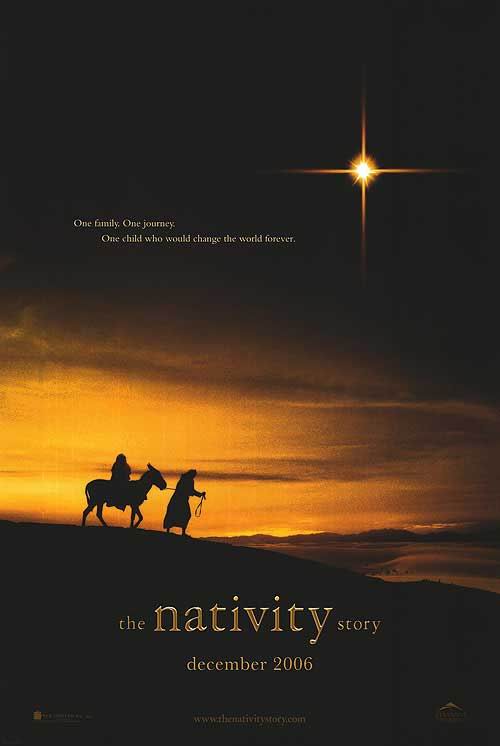 We went to see The Nativity Story today. It was much better than I anticipated. It set the political background and the Roman occupation extremely well and bought home the shame that Mary's family must have felt. Herod was well played and his paranoia came over well. I'd certainly recommend seeing it. It seemed to be pretty faithful to the Gospels. Though I'm not sure that the magi would have arrived so soon after the shepherds.
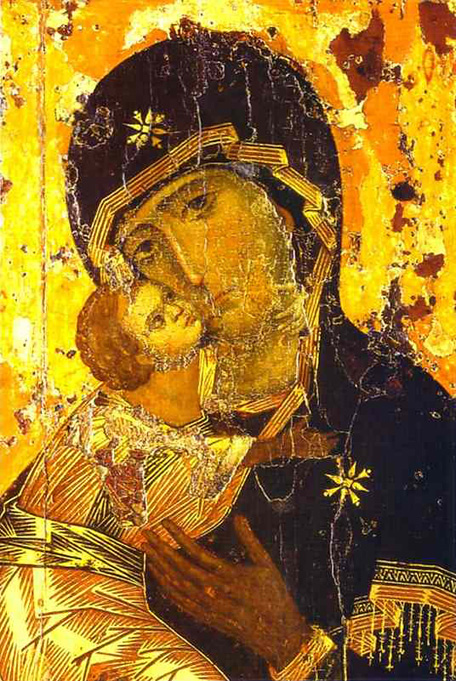
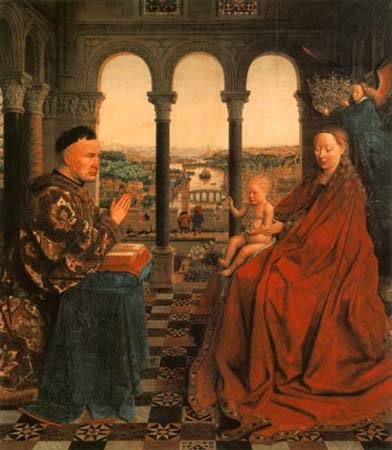
... when nature is made autonomous it is destructive. As soon as one allows an autonomous realm one finds that the lower element begins to eat up the higher.The Christians worldview knows nothing of dualism - there is no battle between nature and grace - no one aspect is greater than the other. In the Christian worldview grace restores nature.

"It's she that makes it always winter. Always winter and never Christmas; think of that!
The kind of cultural renewal that will move North American culture beyond the liberal hegemony is the work of more than one or two generations. With this in mind, and without giving up the long-term dream of transforming the culture, Christians must learn how to live with the reality of a liberal cultural hegemony—with authenticity and integrity, but at the same time with prudence and patience, courtesy and civility.

Fiji's so-called coup is by no means a fait accompli.There is stern resistanceof a peaceful and courageous kind stirring from the villages and islands.Suva may be under the Military's heel but they do not have it their own way. Not at all.Please keep this matter in your prayers and bring it to the attention of your churches, associations, schools.
"If liberalism attempts to force issues of faith into private compartments, and if this curtails the scope of the redeeming power of faith in Christ, integrating our work with our faith is perhaps the best way to address the deficiencies of liberalism."


