An accidental blog

"If God is sovereign, then his lordship must extend over all of life, and it cannot be restricted to the walls of the church or within the Christian orbit." Abraham Kuyper Common Grace 1.1.

Monday, 23 October 2006

Dooyeweerd bibliography (1915-1986)

Below is a bibliography of the writings of Herman Dooyeweerd from 1915-1987. One from 1987 onwards will follow shortly. I’d appreciate knowing if I have missed any of his works or if any of the details are incorrect.

Update 24th October 2006: my thanks to Isabella Guthrie-McNaughton, librarian ICS, for substantial corrections to this listing. 3 November 2006: thanks to Theo Plantinga for some corrections to the Dutch. Any remaining errors are of course my own! 19 November 2006 - I have added all the subsequent updates and a few more references.

1915
De neo-mystick en Fr. van Eeden’ in Almanak van het Studentencorps aan de Vrije Universiteit 1915 [Free University Student Almanak]: 134-160. Translated by J. Glenn Friesen here .)

1917
De ministerraad in het Nederlandsche staatsrecht. (Thesis, Vrije Universiteit te Amsterdam) Amsterdam: Wed. G. Van Soest, 1917.
1920‘Het vraagstuk der gemeentemonopolie in het belang der volksgezondheid hoofdzakelijk beschouwd in het licht van de nieuwe opvattingen in zake de dedrijfsvrijheid Themis LXXXI: 126-151.
1922
Staatsbemoeiing en individueele vrijheid Staatsbemoeiing en individueele vrijheid. Handelingen van de Vereeniging voor Wijsbegeerte des Rechts 7: 31-38.
1923-1924
‘Het Calvinistische beginsel der souvereinteit in eigen kring als staatkunde beginsel nederland en Oranje 4 (1923): 98-99, 185-189; 5 (1924): 8-15 27-31, 71-76.
1924-1927‘In de strijd om een christelijke staatkunde;proeve van een fundering der calvinstische levens- en wereldbeschouwing in hare wetsideeAntirevolutionaire Staatskunde [Antirevolutionary politics], 1 (1924-25), 7-25, 62-79, 104-118, 161-173, 189-200, 228-244, 309-324, 433-460, 489-504, 528-542, 581-598, 617-634; 2 (1926): 244-265, 425-445; 3 (1927) (driemaandelijksch ergaan) 142-195.
1925
Calvinisme en Natuurecht. Referat voor de Calvinistiche Juristeen Vereeniging. Amersfoort: W. van Wijngen.
Leugen en waarheid over het Calvinisme Nedeland en Oranjie 6 (4): 81-90.
1926
De Beteekenis der Wetsidee voor Rechtswetenschap en Rechtsphilosophie. Kampen: J.H. Kok (inaugural address)

Calvinisme contra Neo-Kantianisme naar aanleiding van de vraag betreffende de kenbaarheid der goddelijke rechsorder Tijdschrift voor Wijsbegeerte 20: 29-74.

Tweeerlei kritiek: om de principieele zijde van het vraagstuk der medezeggenschap Antirevolutionaire Staatskunde 2: 1-26.
Het oude problem der christelijke staatkunde Antirevolutionaire Staatskunde 2: 63-84.
De band met het beginsel: inzake het vraagstuk der medezeggenschap. Nederland en Oranje 7: 1-18, 33-40.
1927
De oorsprong van de anti-these tusschen Christelijke en Humanistische wetsidee in hare beteekensi voor de staatkunde Antirevolutionaire Staatskunde, driemaandelijks 1: 73-107.

Vraag en antwoord’ Antirevolutionaire Staatskunde (driemaandelijks) 1: 142-195.

1928
De universaliteit der rechtsgedachte in de idée van den kultuurstaat’ in Almanak van het Studentencorps aan de Vrije Universiteit (Amsterdam: N. V. Dagblad en Drukkerij): 103-121.

Het juridisch causaliteitsprobleem in het licht der Wetsidee’ Antirevolutionaire Staatskunde, driemaandelijksch organ 2 (1): 21-121.

Beroepsmisdaad en strafvergeldig in’t licht der wetsidee’ Antirevolutionaire Staatskunde, driemaandelijks 2: 233-309, 389-436.
Beginsel of utiliteit?’ Nederland en Oranje 9.

‘De consequentie der calvinistische wetenschapsbeschouwing: verlag rede Jaarboek der Vrije Universiteit te Amsterdam: 36-38.

Vergeldende gerechtigheid verbiedt de doodstraf Handelingen van de Vereeniging voor Wijsbegeerte des Rechts 14 (2): 9-14.

1929-1930
‘De dietsche cultuurgedachte uit calvinistisch oogpunt bezein. Jaarboek van het Dietsch Studentenverbond: 44-47.
1930
De bronnen van het stellig recht in het licht der wetsidee: Een bijdrage tot opklaring van het probleem inzake de verhouding van rechtsbeginsel en positief recht. Antirevolutionaire Staatskunde 4: 1-59, 224-263, 325-362; 8 (1934): 57-94.
‘De structuur der rechtsbeginselen en de methode der rechtswetenschap in het licht der wetsideWetenschappelijke Bijdragen Angeboden door hoogleraren der Vrije Universiteit ter Gelgenheid van haar Vijftig-jarig Bestaan. 20 October 1930. door F. W. Grosheide et al. Amsterdam: Dagblad en Drukerij De Standaard: 223-266.

Grondslag en doel.
1931
De Crisis in de Humanistische Staasleer: in het licht eener Calvinistische kosmologie en kennistheorie. Amsterdam: W. Ten Have.
Bespreking van ‘Annalen der critische philosophie’. Themis 92: 439-444.

‘De juridische uit leggingsmethoden en hare grondslagen’. Handelingen van de Vereeniging voor Wijsbegeerte des Rechts 16 (2): 20-24, 46.

‘De zin der politiek’. Handelingen van de Vereeniging voor Wijsbegeerte des Rechts 17 (2): 15-21, 28, 31.

1932
Norm en feit: Een kritische beschouwing naar aanleiding van het geschrift van Mr. S. Rozemond over Kant en de Volkenbond’’. Themi XCIII: 155-214.

De theorie van de bronnen van het stellig recht in het licht der wetsidee’ Handelingen van de Vereeniging voor Wijsbegeerte des Rechts XIX (1932-1933) 19 (1): 1-28; 19 (2): 1-10, 24-31 It was also published in: Mensch en Maatschappij 9 (1933), p. 340-396.

De Zin der Geschiedenis en de Leiding Gods’ in de Historische ontwikkeling. Publicates van de Reunisten-Organisatie van N.D.D.D.
Het Amsterdamsche rapport inzake de medezeggenschap van het personeel in de gemeentebedrijven en -diensten. ARS 8: 71-86, 121-132, 157-68.

1933
‘De grondwet van de nieuwe Duitse evangelische kerk en de positie der Gereformeerden in de Landskerken’De grondwet van de nieuwe Duitse evangelische kerk en de positie der Gereformeerden in de ‘Landskerken’’. ARS 9: 433-446.

Lotgevallen der universiteit’. Jaarboek der Vrije Universiteit te Amsterdam.

1933-37, 1940-45, 1946-53‘Presidential speeches for the Protestant-Christelijke Reclasseringsvereeniging.

1934
De zin der geschiedenis vanuit der Openbaring. Vox Theologica 5: 117-122.

1935
De wetsbeschouwing in Brunner’s boek Das Gebot und die Ordnungen’’ Anti-revolutionaire staatkunde IX: 334-374.
Het vraagstuk van het organisch kiesrecht in een nieuw stadium’. Almanak van het studentencorps aan de Vrije Universiteit: 105-121.

1935-6
De Wijsbegeerte der Wetsidee. 3 Volumes. Amsterdam: H. J. Paris, 1935-1936.

1936
Het dilemma voor het Christelijk wijsgeerig denken en het critisch karakter van de wijsbegeerte der wetsidee. Philosophia Reformata 1 (1): 3-16.

Het tijdsprobleem en zijn antinomieen op het immanentiestandpunt’. Philosophia Reformata 1 (2) (1936): 65-83; 4 (1) (1939): 1-28.

Wat de wijsbegeerte der wetsidee aan Dr. Kuyper te danken heeft. De Reformatie 63-65.
Gelooven en denken Gelooven en denken.

‘Syllabus 1936.

1937‘De beteekenis van de wijsbegeerte der wetsidee voor de theorie der menschelijke. Philosophia Reformata 2(2): 99-116.

‘De gevaren van de geestelijke ontwapening der Christenheid op het gebied van de Wetenschap’. Geestelijk weerloos of weerbaar? (samengesteld door J.H. de Goede, Jr.) Amsterdam : Mij Holland: 143-204.

‘De wijsgerige grondslagen van het fascisme: DiscussiebijdrageDe wijsgerige grondslagen van het fascisme: Discussiebijdrage. Handelingen van de Vereeniging voor Wijsbegeerte des Rechts 24 (2): 58-65.

Grondproblemen in de leer der Rechtspersoonlijkheid. Themis 98.

Response to the curators of the Free University by Dooyewerd and Vollenehoven translated by J. Glenn Friesen.

1938
Beginselen en werkelijkheidseischen’. Orgaan ten Dienste der Prot.-Chr. Reclasseerings-vereeniging (July- Aug).

‘De wijsgerige grondslag der democratie’. Handelingen van de Vereeniging voor Wijsbegeerte des Rechts 25 (2): 33-42, 59-61.

Geloof en wetenschap. 26-28.

1938 -39
De niet-theoretische vooroordelen in de wetenschap: critiek op een oncritische critiek. Philosophia Reformata 3 (1938): 193-201 and Vox Theologica 10 (1939): 103-109.

Recht en Historie Assen: G. F. Humelen.

1939
De transcendentale critiek van het wijsgerig denken: Een bijdrage tot overwinning van het wetenschappelijk exclusivisme der richtingen. Synthese IV: 314-339. Dordrecht: D. Reidel.

Kuyper’s wetenschapsleer’. Philosophia Reformata 4 (4): 193-232.

Das naturliche rechtsbewusztsein und die erkenntnis des geoffenbarten Gottlichen gesetzes . ARS 13(2): 157-182.

‘De weg der differentatie in strafrecht en reclasseering’. Orgaan ten Dienste der Prot.-Chr. Reclasseerings-vereeniging (July-Aug).

‘Politiek en ethiek’. Handelingen van de Vereeniging voor Wijsbegeerte des Rechts 26 (2): 37-45

1940
Het tijdsprobleem in de wijsbegeerte der wetside’. Philosophia Reformata 5 (3): 160-182; 5 (4): 193-234. Also published: ‘Het tijdsprobleem in de Wijsbegeerte der Wetsidee’. [Loosduinen]: Electrische Drukkerij Kleijwegt, 1940. (Gereformeerde Psychologische Studievereeninging). A provisional translation by J. Glenn Friesen is available here .

1940-41
De ‘Theorie de l’institution’ en de staatsleer van Maurice Hauriou: parts I, II and III. Anti-Revolutionaire Staatkunde 14: 301- 347; 15: 42- 70.
1941
Grondthema’s van ‘t Wijsgeerig denken van ‘t’. Philosophia Reformata 6: 172-173.

De transcendentale critiek van het wijsgerig denken en de grondslagen van de wijsgeerige denkgemeenschap van het avondland’. Philosophia Reformata 6: 1-20.

Een tweegesprek met Prof. Ovink over dogmatische en critische wijsbegeerte’ Gereformeerd Theologisch Tijdschrift 42: 209-227.

De vier religieuze grondthema’s in den ontwikkelingsgang van het wijsgeerig denken van het Avondland : Een bijdrage tot bepaling van de verhouding tusschen theoretische en religieuze dialectiek’. Philosophia Reformata 6: 161-179.

Boekspreking: Pos. Philosophie der Wetenchappen’. Vox Theologica 12: 85-90.

1942
De leer der analogie in de Thomistische Wijsbegeerte en in de Wijsbegeerte der Wetsidee: naar aanleiding van het verslag van de achtste algemeene vergadering der vereeniging voor thomistische wijsbegeerte : ‘de analogie van het zijn’’. Philosophia Reformata 7 (1): 47-57.

De leer van den mensch in de Wijsbegeerte der Wetsidee’. Correspondentie-bladen 7 (Dec): 134-143.
De zin der geschiedenis’. (Door J.D. Bierens de Haan). Assen: Van Gorcum: 17-27.
1943-46
De Idee der Individualiteits-Structuur en het Thomistisch substantiebegrip: Een critisch onderzoek naar de grondslagen der Thomistische zijnsleer’. Philosophia Reformata 8 (1943): 65-99, Philosophia Reformata 9 (1944): 1-41, Philosophia Reformata 11 (1946): 22-52.

1944
‘Aan de genarale synode der Gereformeerde Kerken in Nederland te UtrechtAan de genarale synode der Gereformeerde Kerken in Nederland te Utrecht’ and D. H. Th. Vollenhoven.

‘Enkele opmerkingen inzake de ‘Richtlijnen’ betreffende een toekomstige bedrijfsorganisatie’.

1945
‘Het Calvinisme oorsprong en waarborg onzer consitutioneele vrijheden?: Bijdrage tot het vraagstuk van de verhouding van de Christelijke vrijheid tot de politieke vrijheden’. Amsterdam: Ten Have.

‘'s Hoogen Raads beleid tijdens de bezetting’. Nieuw Nederland: christelijk cultureel sociaal dagblad 1(2): 2.

1946
‘De verhouding van individu en gemeenschap rechtsphilosophisch bezien’. Algemeen Nederlands tijdschrift voor wijsbegeerte en psychologie 39: 5-12.

1946-47
Translation of: ‘Grondproblemen der Wijsgerige Sociologie’: ten lectures given by Prof. Dr. Herman Dooyeweerd in the School of Engineering at Delft, The Netherlands, 1946-1947 by Magnus Verbrugge (Published in Dutch in Stellingwerff (ed.)
(1962)).

1947
‘Introduction to a Transcendental Criticism of Philosophic Thought’. Evangelical Quarterly, XIX: 42-51.

Tien voordrachten over sociologie’. Syllabus 1946-1947 van de Stichting Studium Generale aan de Technische Hoogeschool te Delft.

1948
Transcendental Problems of Philosophic Thought: An Inquiry into the Transcendental Conditions of Philosophy. Grand Rapids: Eerdmans.

Het Wijsgeerig Tweegesprek tusschen de Thomistische Philosophie en de Wijsbegeerte der Wetsidee’. Philosophia Reformata 13: 26-31, 49-58.
Een nieuw geschrift over Hauriou’s leer der ‘Institution’ /Een nieuw geschrift over Hauriou’s leer der ‘Institution’ ‘. Bestuurswetenschappen 2: 1-15.

‘Grondproblemen der sociologie’. Nieuw Nederland: maandblad voor economie, staatkunde en cultuur 3 (1-13, 15, 20)

‘Introduction a une critique transcendentale de la pensee philosophique’.
Library of the tenth International Congress of Philosphy, v. 2. Amsterdam : L.J. Veen: 70-82.

‘Standen en klassen in de samenleving’. Nieuw Nederland: christelijk cultureel sociaal dagblad 12 (3).


1949
Reformatie en Scholastiek in de Wijsbegeerte. Franeker: T. Wever.

Bespreking van : ‘De Beteekenis van het subject in de moderne waarde-philosophie onder het licht der Wetsidee’ by J. P. A. Mekkes ‘. ARS 19 (11): 405-6.

‘De sociologische verhouding tusschen recht en economie en het probleem van het Zgn ‘economische recht’ . Opstellen op het gebied van recht, staat en maatschappij aangeboden aan

Prof. Dr. A. Anema en Prof. Dr. P.A. Diepenhorst bij hun afschied van de Vrije Universiteit door oud-leerlingen, Januari 1949. Edited by Herman Dooyeweerd et al. Amsterdam: S. J. P. Baker: 221-265.

De vooronderstellingen van ons denken over recht en samenleving in de crisis van het moderne Historisme : een critische overpeinzing naar aanleiding van Mr. H. W. Scheltema’s

‘Beschouwing over de vooronderstellinging van ons denken over recht’.Themis: 193-248.

‘Het historische element in Groen’s staatsleer Het historische element in Groen’s staatsleer’ in Groen’s ‘Ongeloof en revolutie,’ een bundel studien edited by L.C. Suttorp et al.

Opstellen op het gebied van recht, staat en maatschappij aangeboden aan Prof. Dr. A. Anema en Prof. Dr. P.A. Diepenhorst bij hun afschied van de Vrije Universiteit door oud-leerlingen, Januari 1949. edited by Dooyeweerd. Amsterdam: S. J. P. Baker.

Strafrechtelijke problemen bij de gevangenishervorming. Orgaan ten dienst der Protestants-Christelijke Reclasseringsvereniging 17 (6-7) 1-12.

1950
Bespreking: Kranenberg’ De Grondslagen der Rechtswetenschap’. Themis: 89-98.

De strijd om het schriftuurlijk karakter van de Wijsbegeerte der Wetside’. Medelelingen van de Vereniging voor Calvinistische Wijsbegeete (July): 3-6.

Aard en voorwaarden der wetenschap Aard en voorwaarden der wetenschap. Geloof en Wetenschap: Levensbeschouwing en levenshouding van de academicus. Utrecht : N.V. Dekker and Van De Vegt: 15-32.

De modale structuur van het juridisch oorzakelijkheidsverband . Series Mededelingen der Koninklijke Nederlandse Akademie van Wetenschappen 13(5).

De strijd om het souvereiniteitsbegrip in de moderne rechts- en staatsleer : uitgewerkte rede ter gelegenheid van de 70e herdenking van de stichting der Vrije Universiteit op 20 Oct. 1950. Amsterdam: H J Paris.

Geloof en Wetenschap : Levensbeschouwing en levenshouding van de academicus. Utrecht-Nijmegen : Dekker & van de Vegt.

Natuurlijke Godskennis . Christelijk Schoolbad (Baarn) 41 (27 April): 1; (4 May): 1.

Wat is rechtswetenschap? Interfacultaire colleges aan de Vrije Universiteit te Amsterdam, cursus 1949-1950.

1951
The contest about the concept of sovereignty in modern jurisprudence and political science. Free University Quarterly 1: 85-106.

Mr. E. H. Jacob’s ‘Juridisch modernisme en het staatrecht van onze tijd’. Themis : 348-351.
1952
Ter nagedachtenis van mijn vriend Prof. Dr. Ph. Kaohnstamm’ Mededelingen van de Vereniging voor Calvinistische Wijsbegeerte (Sept): 11-12.

1953
Berust het volkenrecht nog op universal erkende grondslagen?’. Handelingen van de Vereniging voor Wijsbegeerte des Rechts XLVII, 2nd part.

Over de methode van begripsvorming in de rechtwetenschap. Een nadere critische beschouwing van Prof. Mr. R. Kranenburg’s De Grondslagen der Rechtswetenschap, Juridische kennisleer en Methodologie’. Themis 114 (3): 298-340.

1954
De analogische grondbegrippen der vakwetenschappen en hun betrekking tot de structuur van den menschelijken ervaringshorizon Mededelingen der Koninklijke Akademie van Wetenschappen 17 (6): 171-192. Amsterdam: Noord-Hollandse Uitgevers Maatschappij.
[Translated by Robert D. Knudsen as ‘The analogical concepts’]

La secularisation de la science. La Revue Reformee 5: 138-157. (Presented at the first congress of the International Association for Reformed Faith and Action, Montpellier, France, in 1953.)
'De leer van de mens in de Wijsbegeerte der Wetsidee’ Sola fide 7 (2): 8-18.

De wijsbegeerte en het hoger onderwijs in de rechtswetenschap De wijsbegeerte en het hoger onderwijs in de rechtswetenschap. Algemeen Nederlands tijdschrift voor wijsbegeerte en psychologie 46 (4): 191-194.

Perikelen van een historistische rechtstheorie : Een critische beschouwing van de ‘Inleiding tot de studie van het Nederlandse Recht’ door Prof. Mr. L.J. van Apeldoorn. Themis

Probleem van die Christelike wysbegeerte, II. Die Gereformeerde vaandel.
24 (2): 21-30.

1953-58
A New Critique of Theoretical Thought. 4 Volumes. Translated by David H. Freeman et al. Amsterdam: H. J. Paris; and Philadelphia: Presbyterian and Reformed Publishing Company. Translation and revision of the Dutch De Wijsbegeerte der Wetsidee (1935-6).

1956
Enkele losse grepen uit de discussie ter jaarvergadering 1956’ Correspondentie-bladen XX (June): 41-45.

1957
Wijsbeeerte en Geschiedenis. Referaat gehouden op de conferentie van de organisatie van studneten in de geschiedenis in Nederland te Arnhem.

De verhouding tusschen individu en gemeenschap in de Romeinsche en Germaansche eigendomsopvatting.

Wezen en gronslagen van het rechtWezen en gronslagen van het recht. Publikatie (Nederlands Gesprek Centrum), no. 15

1958
De verhouding tussen wijsbegeerte and theologie en de strijd der faculteiten’. Philosophia Reformata 23: 1-21, 49-84.

Maatstaven ter onderkenning van progressieve en reactionaire bewegingen, Rede 150-jarig bestaan Koninklijke Akademie van Wetenschappen. Amsterdam: Noord-Hollandse Uitgevermaatschappij, 1958.

The criteria of progressive and reactionary tendencies in history’ Verslag van de plechtinge viering van het honderdvijftigjarig bestaan der Koninklijke Nederlandse Akademie van Wetenschappen. Amsterdam: 213-228.

Dictaat- Encyclopaedie der Rechtwetenschap

Een nieuwe studie over het Aristotelisch begrip der gerechtigheid.
Themis

Mouvements progressifs et regressifs dans l’histoire Mouvements progressifs et regressifs dans l’histoire. La Revue Reformee 36 (9)

Philosophie et theologie La Revue Reformee 35 (3): 48-60.

Cinque conferences donnes au Musee social a Paris.La Revue Reformee 39 (3): 1-76.

1959
Schepping en evolutie’. Philosphia Reformata 24 (3-4): 113-159.
Vernieuwing en bezinning: om het reformatorisch grondmotief .Zutphen : J.B. van den Brink. (Articles originally appeared in Nieuw Nederland)

1960
In the Twilight of Western Thought: Studies in the Pretended Autonomy of Philosophical Thought. Nutley, New Jersey: The Craig Press, 1960.

‘Van Peursen’s critische vragen bij A New Critique of Theoretical Thought’, Philosophia Reformata 25 (1960): 97-150.

‘Christianity, Humanism and the European Future’ Delta, Winter issue: 39-41.
1961
‘De staatsvrije sfeer,’ Themis 80: 177-182.
De taak ener wijsgerige anthropologie en de doodlopende wegen tot wijsgerige zelfkennins’ Philosophia Reformata 26: 35-59.
Het typisch structuurprincipe van de staat en de leer der staatsdoeleinden’ Weekblad voor Privaatrecht, Notarisambt Registratis (Egges-number) 92 (Dec, 9, 1961), 507-513.

Wijsbegeerte de Wetsidee:’ Christelijke Enclyclopedie. Kampen: J. H. Kok, 2nd ed. VI, 618-622.
1962
Verkenningen in de wijsbegeerte, de sociologie en de rechtsgeschiedenis. Christelijk perspectief I Ed., J. Stellingwerff. Amsterdam: Buijten en Schipperheijn.
Encyclopaedia van der Rechtswetenschap. Vol. III ‘De bronnen van het stellig recht’. Amsterdam (mimeo).

Encyclopaedia van der Rechtswetenschap. Hoofdstuk V. Amsterdam: Bureau Studentenraad VU.

1963
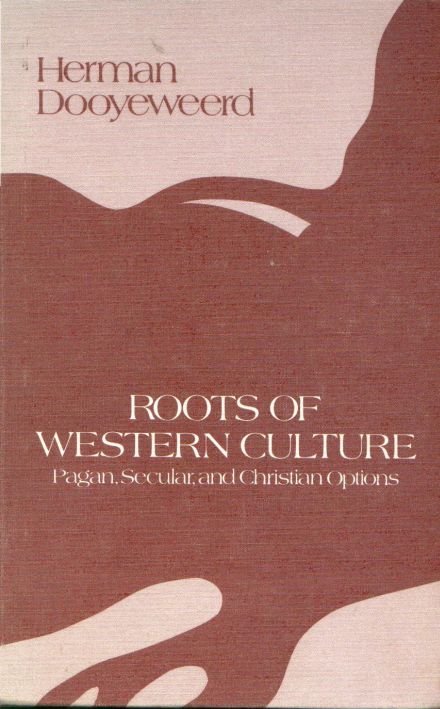
Vernieuwing en bezinning om het reformatorisch grondmotief. 2nd enlarged edn. Zutphen: J. B. Van den bring, 1963. The English title is Roots of Western Culture: Pagan, Secular, and Christian options. Trans. by John Kraay. Toronto: Wedge Publishing Foundation, 1979.

De waarde der grondwet’ Handelingen van de Vereniging voor Wijsbegeerte des XLVII. Zwolle: Tjeenk Willink: 20-23

1964
De verhouding tussen rechtsfilofie an rechtssociologie’ Feestbundel, aargeboden aan Prof. Dr. Ferdinand van Goetham (Louvain): 557-576.

‘Sociology of law and its philosophical foundations’ translated by John Kraay.
The centre and the periphery’. Lecture at the ACP (Provisional translation by J. Glenn Friessen 2005)
1965
‘Het oecumenisch-reformatorisch grondmotief van de Wijsbegeerte der Wetsidee en de grondslagen der Vrije Universteit’.
Philosophia Reformata 31: 3-15.
1966
‘The Secularization of Science’. Translator, Robert D. Knudsen. International Reformed Bulletin, IX (July): 2-17. (Translation of ‘La secularisation de la science’ (1954))
‘Het gesprek tussen het Neo-Thomisme en de Wijsbegeerte der Wetsidee’. Tijdschrift voor Filosofie en Theologie 27 (2): 202-213. (Festschrift for Prof. H. Robbers)
Het oeumenisch-reformaterisch grond-motief’ Philosophia Reformata 31: 3-15.
Herdenking van Anne Anema (10 februari 1872-18 februari 1966). Jaarboek der Koninklijke Nederlandse Akademie van Wetenschappen.

Gesprek met de hoogleraren Dooyeweerd en Van Peursen over de vraag: Is de gereformeerde wereld veranderd? (with C A van Peursen) Libertas ex Veritate (Jan)
1967
‘Die Philosophie des Gesetzesidee und ihre Bedeutung fűr die Rechts - und Sozialphilosophie, I, Einfűhrung’.
Archiv fűr Rechts- und Sozialphilosophie, LIII: 1-30, 465-515.

Herdenking van Anne Anema,’ Jaarboek van de Konink1ijke Nederlandse Academie Wetenschappen, 1966 - 1967. Amsterdam: Noordhollandse Uitgeversmaatschappij.

Encyclopaedie der Rechtswetenschap. Amsterdam : SRVU- Uitgave
1968
The Christian Idea of the State. Translated by John Kraay. Nutley (N.J.): The Craig Press.
The analogical concepts’. Translation of ‘De analogische grondbegrippen der vakwetenschappen en hun betrekking tot de structuur van den menselijken ervaringshorizon’ by Robert D. Knudsen (mimeo).
1969
Wat is die mens? Bloemfontein : Sacum Beperk (Translation of What is Man? from Twilight)
1971
‘Cornelius van Til and the transcendental critique of theoretical thought’. Jerusalem and Athens: Critical Discussions on the Philosophy and Apologetic of Cornelius Van Til. Edited by E.R. Geehan. Nutley: Presbyterian and Reformed Publishing Company: 74-89.
‘Sociology and law and its philosophical foundations’. Truth and Reality: Essays Dedicated to H G Stoker Braamfontein.
Na vijf en dertig jaren’. Philosophia Reformata 36: 1-10.
1972
De sekularisasie van die wetenskap II De sekularisasie van die wetenskap II .
Tydskrif vir Christelike Wetenskap Tydskrif vir Christelike Wetenskap (Translation of ‘La secularisation de la science’.)

1973
Het juridisch wilsbegrip en de juridisch-normatieve uitlegging van rechts-handelingen. Speculum Langemeijer Zwolle : Tjeenk Willink.

1974
De actualiteit van de schepping: Gesprek met Prof. Dr. H. Dooyeweerd, 9 mei 1974 (with Sander Griffioen et al.)internationaal Christelijk Studiecentrum.
1975
‘De Kentheoretische Gegenstandsrelatie en de Logische Subject-Objectrelatie’.
Philosophia Reformata 40 (3-4): 83-101.
The last interview of Dooyeweerd by Pieter Boyles (translated by J. Glenn Friesen).
1979
‘The problem of the relationship of nature and grace in the Calvinistic law-idea’. Anakainosis 4: 13-15
Roots of Western culture: Pagan, Secular and Christian Options. Wedge: Toronto
1983
The limits to state interference in the world of enterprise (as seen from a Biblical perspective). Journal of Christian Reconstruction 10 (1): 115-127. (Translation of speech delivered in 1931 by Magnus Verbrugge.)
1986
A Christian Theory of Social Institutions. The Herman Dooyeweerd Foundation: La Jolla CA.
Grenzen van het theoretisch denken.Geschiedenis van de wijsbegeerte in Nederland.
no date given
‘The theory of man: thirty-two propositions on anthropology’. Translated by ? A translation of: 'De leer van de mensch in de Wijsbegeerte der Wetsidee'.

Sunday, 22 October 2006

Parable of the pounds Lk 19:11ff

I'm speaking at the church service this morning on Luke's parable of the pounds. Here the gist of what I'm sayng.

Ask a Westerner today to summarise the message of this parable and he would probably respond, ‘As Christians, we should use our gifts wisely and responsibly.’ But is that what the story means?

When trying to understand any text we need to take into account several aspects: the text, the reader, the author and the historical setting. A response such as the above only takes into account the twentieth-century reader and his or her cultural context and worldview. We also need to take into account the text, what the author intended and the historical setting. This is not the time for a session on hermeneutics, so without spelling out these different aspects let's look at the parable.

There is undoubtedly some connection between the parable of the talents in Matthew 25.14-30 and this one, but they are different enough to be regarded as distinct stories. Not least the value of a talent, about 6,000 denarii and a denari is about one day's wage for a labourer, and a pound (or mina) which is equivalent to about three months wages. Several elements are unique to Luke’s version. Most particularly, in Matthew we are told of ‘a man going on a journey’; here, it is a nobleman going to a distant country to secure ‘royal power’ for himself. He is successful, despite opposition, and on his return he has his enemies put to death.

There are many layers of meaning in this parable, but how would a poor first-century Jew in occupied Palestine have understood it? Presumably, she would have identified most with the servant who had achieved the least. Now, according to the tradition of Jewish oral law in the Mishnah, this man had done nothing wrong in wrapping the money in cloth to keep it safe. He was obliged merely to make good any loss.

Many of us today assume that the nobleman in the story represents Jesus. This identification would have been puzzling to the original hearers, if not absurd. The Jewish historian Josephus records that in 4 BC Archelaus, the son of Herod the Great, had to go to Rome to confirm that he would inherit his father’s throne. At the same time, a delegation of 50 Jews also went to Caesar, to protest that they did not want him to rule over them. The opening lines of the parable seem to be a deliberate reference to that recent history. The people who first heard the story must have taken the nobleman to be not Jesus but the tyrannical Archelaus.

The nobleman is thus no hero. He seems to take pleasure in robbing the poor to reward the rich and to delight in the slaughter of his enemies, and is interested more in profit than in the welfare of his people. Not surprisingly, his servants fear him.

How are we to understand the parable, then? Luke’s editorial comments in verse 11 provide some clues. Jesus is in Jericho, on his way to Jerusalem 17 miles away, and the disciples imagine that the coming of his kingdom is imminent. He has just had his encounter with Zacchaeus, which Luke recounts in the first 10 verses of this chapter. The tax collector who had grown rich by exploiting the poor – not unlike Archelaus – has had his life turned around, and has experienced immediate salvation (Lk 19:9).

So, it is not surprising that the disciples are optimistic that the kingdom has all but come. The fact that one of the oppressors has just given half of his possessions to the poor and has paid back fourfold anyone he has cheated must have seemed like a foretaste of it. Now, as they approach Jerusalem, they are expecting that Jesus will seize power and establish the kingdom of God. It is this misconceived hope that Jesus is answering. In effect, he is saying, ‘If you want to play power games, look what happens: the rich get richer and the poor get poorer. Don’t oppose those in power by using their own methods!’

And all this just before the Passover, a time when messianic expectations were at their peak. Many of the Jews were awaiting someone who would free them from the Roman occupiers, and from collaborators such as Archelaus and Zacchaeus.

Jesus’ strategy is very different: he is not going to Jerusalem to seize power. It is no accident that Luke places this parable immediately before his ‘triumphal’ entry into Jerusalem (19:28-44). The fact that Jesus rode in on a donkey would have undermined any ridiculous thoughts of a military coup. It is almost as if he were saying, ‘My way of becoming king is not like Archelaus’.’ Jesus dealt with his enemies not by putting them to death but by dying himself.

The parable was not told, then, to show that if we have gifts and talents we should use them wisely or lose them. Rather, it is a warning that if we try to win power in the way that ‘the world’ does, all that will result is that the oppressed will experience only greater oppression. Instead, we are to follow the example of the man on a donkey, who gave up all to attain all.

Saturday, 21 October 2006

Center and the periphery by Dooyeweerd

Glenn Friesen ahs translated a 1964 lecture by Dooyeweerd 'Center and periphery: the philosophy of the law idea in a changing world'.

Glenn notes:
Dooyeweerd's January, 1964 lecture, toether with the discussion that followed, is a very important text for reformational philosophy. Marcel Verburg refers to excerpts from it, in his book Herman Dooyeweerd: Leven en werk van een Nederlands christen-wijsgeer (Baarn: Ten Have, 1989)[‘Verburg’]. But the entire lecture and discussion have never been published, and never translated into English.

Friday, 20 October 2006

Dooyeweerd from Twentieth-Century Encyclopedia of Religious Knowledge

Dooyeweerd, Herman (1894-1977)

Dutch theologian. Born in Amsterdam, he graduated from the Free University there, and was assistant director of the Kuyper Institute, The Hague (1922–26), before appointment as professor of the philosophy of law in the Free University (1926–65). His major work, A New Critique of Theoretical Thought (4 vols., 1953–58), challenged the “pretended autonomy” by which philosophical thought asserts self-sufficient independence from divine revelation. He attacked speculative metaphysics, insisting that true knowledge of God and self-knowledge come from the working of God’s Word and Spirit in the heart. Accepting the concepts of general revelation and common grace, he held that neither provides any foundation for natural theology based on man’s unaided reason. Moreover, orthodox theology was no guarantee of true spiritual understanding; the latter comes through submission of the whole person to the message of Holy Scripture concerning “redemption by Jesus Christ.” Acceptance or rejection of this was “a matter of life and death to us, and not a question of theoretical reflection.” In 1935 Dooyeweerd cofounded the journal Philosophia Reformata, and was prominent in the establishment of the Association for Calvinistic Philosophy (later called Christian Philosophy). From 1948 he was a member of the Royal Dutch Academy of the Sciences.

Charles M. Cameron

From The Twentieth Century Encyclopedia of Religious Knowledge, editor J.D. Douglas, consulting editor, with Robert G. Clouse et al (Grand Rapids, Baker, 1991)

Thursday, 19 October 2006

Richard Russell on 1 Cor 1-2 (part 2): the 'foolishness' of the cross

If you asked the Corinthians or the Ephesians (Paul was writing from Ephesus) or the Athenians why they regarded the preaching of the cross as foolish what are they likely to have said? Paul didn’t spell it out in his letter, as its readers would have known this already - but we don’t without some research. So for starters here of a few of the objections they would have had - to which Paul would have had to reply in detail if he was to win them over - more apologetics than preaching. No wonder he spent years in some of these places. This should sensitise us for evangelism in our culture and other cultures. Also unless these issues are worked through pagan ideas will re-appear in the life of the church and be regarded as solidly Christian. Indeed this is precisely what has happened.

1. The immortal glitterati gods and goddesses on mount Olympus are a self-centred aristocracy - partying and fighting - who have little concern with mortal humans. Their occasional concern usually involves seducing beautiful women or bringing tragedy on some talented and ambitious man who is getting above his station...getting a bit too god-like for comfort. The idea of a god sacrificing himself for mere mortal was utterly unthinkable. Mortals existed in order to serve the gods with worship and sacrifices in their temples (the temple of Aphrodite- Venus- was huge with 1000 prostitute priestesses)- and to be their playthings -not the other way round.(Just like the 400,000 slaves in Corinth existed to serve their masters amongst the 250,000 freemen).

2. Even if the gods had compassion on mortal man - which they don't - they cannot save him from death and cannot resurrect him. Fate is a stronger impersonal power which even the gods cannot overcome.

3. Even philosophers who wanted a "higher" "more spiritual "idea of deity end up with a self-preoccupied deity. Aristotle's god is "Thought-thinking -about-itself" - who neither created the world nor loves it -indeed is quite oblivious to it. He - or it? -has other things on his mind - himself!

4. The idea of an immortal taking on mortal flesh was regarded as both impossible and abhorrent. Flesh and matter were intrinsically evil so any incarnation would make the one incarnated evil by definition.

5. The Greeks regarded history as cyclical - so the very idea of a directional history was strange to them. This of course is what we have in the unfolding plan of God from creation to re-creation with Jesus’ life, death, resurrection and second coming at the centre of it.

6. The Greeks had various idea of the afterlife none of which involved glorious bodily resurrection. Some held we all went into a grey ghostly world of shades in an underworld - a dismal sort of minimal life, all the joy and colour and pleasure drained away. Others, like Plato suggested that a tiny minority (philosophers mostly -he would say that!) could escape the fate of reincarnation (as humans, slugs or whatever) so that their rational souls currently imprisoned in bodies( yuk!) could escape up into the unchanging heaven of static perfection to simply be for ever.
7. For the Greeks the gods were Greek....not barbarians! So they didn't take well to any deity who was Jewish... a foreign deity! No immigrant gods!

8. Underlying all this the Greeks had no conception of Creator and creation., and the love and commitment of the Creator for his creatures. For them there was simply the higher unchanging world and the world of flux, change and decay around us; a "natural "world and a "spiritual" world .Both were eternal. There would never be a re-newed re-united heaven and earth indwelt by God-with-us, Emmanuel!

Isn't the whole biblical revelation about things so glorious - even more so when you consider the pagan alternative. The tragedy is that many aspects of paganism were brought into the church by church fathers- theologians!- and have depressingly hung around ever since in spite of reformations, renewals and revivals. We need an even more determined effort in our time to get back to the Bible! and to examine the last 2000 years of church history with prophetic eyes wide open!

Richard A. Russell

Sunday, 15 October 2006

Richard Russell on 1 Cor 1-2 and anti-intellectualism (part 1)

These notes represent the thoughts of Richard Russell after reflecting on someone else’s sermon on 1 Cor 1 and 2.

1.Tell me if I am being unduly sensitive here as a former professional philosopher and currently writing a book on Christian philosophy...but I did feel an underlying anti-intellectualism running through the sermon which I don't believe has good warrant from the Bible generally or from the passages referred to from 1 Corinthians.

The speaker claimed (rightly) that Paul was very highly educated. He also claimed that at his conversion "all his cleverness, all his learning is gone in a trice". Yes his worldview is transformed from Pharasaic Judaism (centred on Israel , the law and the temple) to a recognition that Jesus is the promised Messiah of God. This means that all his education/ cleverness and learning is now dedicated to another vision - as is clearly manifest in his writings and debates with brilliant and sophisticated political/cultural/intellectual /religious leaders throughout the Roman world. If Paul had become un-educated, stupid and simple he could have never written and done what he did...he could have never been the apostle to the Gentiles.

The opposition Paul encounted on his travels was not the dismissal of some simpleton with some half-baked "simple Gospel" - he would simply been seen as a joke. Rather it was his penetrating criticism of the very religious and philosophical pre-suppositions of classical pagan culture that produced both converts and enemies. No different in essence from the Old Testament prophets exposing the idolatry behind cultural practices. To cap it all I am struck by the finesse of Jesus' argumentative and debating skills, his logical penetration of underlying issues, his use of evidence and parrying questions...already happening by the time he was 12 years old. No wonder that a leading philosopher at the University of California has recently produced a paper with the title "Jesus the logician" ! And there was no doubt that Jesus was a politician (and political theorist) articulating his views about the nature of a just and happy society. Not surprisingly wherever the Church has been reformed and renewed we find we find leaders - Luther, Calvin ,Comenius, Cromwell, Wesley , Carey, Kuyper,etc.— whose intellectual capacities are fully engaged in clarification and controversery concerning the Biblical message, the state of the church and the culture.

2. Where does the anti-intellectual bias come from in our church culture? This is a complex story here so let me pick out a few threads.

First the 18th century Enlightenment saw "penetrating reason" as the glory of human nature (as had the pagan Greek philosophers). In reaction the 19th century Romantic movement posited "deep feeling" instead and vilified "reason". Romanticism was embraced by the Evangelicalism of the time and the concepts of "head" and "heart" came into currency as basic categories with which to interpret human reality. "Head" is dodgy, superficial, shallow, unspiritual and ungodly. "Heart" by contrast is authentic, deep, real, spiritual and godly. Likewise whereas the Enlightenment had seen cultured rational educated adult men as the people in touch with reality, this was inverted by Romanticism. So it idealised the uneducated, the unsophisticated, the immature , the simple—children, peasants and women.(Have you ever wondered why men are such a minority in (evangelical) churches and the men you do find can seem a bit wimpy and domesticated?)

It may come as a bit of a shock that this head/heart analysis is completely unbiblical...indeed anti-biblical. The Scriptures use the word translated "heart" not to mean merely the seat of emotionality but as the deepest centre of human identity and therefore the source of all our ways of being—acting, willing, speaking, thinking as well as feeling. Biblically there is no "head". Indeed "the head"(="the reason" or "the mind") is a philosophical joke. It has turned a function of the heart "thinking "( a doing verb) into a noun as if it was a thing "the mind". So head/heart talk is unedifying nonsense...we should ban it!

Secondly, the mass marketing mentality involved in the origins of modern mass evangelism. The pressure here is to make the gospel of the Kingdom of God into a straightforward consumable product reducible to a few spiritual laws, a few simple texts or a easy formula, so that a "sale" of the "product "can be clinched after the shortest of conversations. Then you publish the "sales" figures—so millions more want the "product". And a very good living can be enjoyed by the captains of this industry like the tele-evangelists, God's sales men. All this seems a million miles from the fullness and richness of the "great commission" given by Jesus in Matthew 28. (It may not come as a surprise that many of the key people in the birth of the modern American advertising industry have demonstrable evangelical backgrounds—adverts far more manipulate our desires and fears rather than inform us clearly and honestly about the product in question. The advertisers all preach "another Gospel"— we can be saved, made happy, made popular, made exclusive, made younger, made secure, made powerful , made beautiful and desirable, etc,etc—by "simply" ("simply" again) purchasing their goods or services. And they know (but do we know ?) we are not just purchasing a product but a lifestyle, a worldview.

3. Exposition of Corinthians. The speaker said that Paul admits that the Gospel is complete foolishness. To say that is to agree with the pagan philosophers. Paul to the contrary is actually saying that the Gospel is the objectively deep wisdom of God for us, and the pagan philosophers are fools for not recognising it, and so their "wisdom" is spurious. The passage from Isaiah 29:14 about God destroying the "wisdom of the wise" is about the "wise" in Judah thinking than an alliance with Egypt can save them when threatened by Assyria. This has nothing to do with some implied animosity on God's part towards intelligence or wisdom which are beautiful gifts of the Creator not to be despised in the fashion of the Romantics. The pagan philosophers end up abusing their intellectual gifts by putting them at the service of a false view of reality which they pit against the way things really are.(So even God's little people are better off than they are). And what a waste - their God-given gifts could enable them to be Paul's fellow workers and equals. They really would be able to rattle the bars of classical pagan culture "from the inside"! They are missing out on key jobs in the Kingdom of God in order to defend a worldview and culture which has no future and is built on sand.

4. Philosophy has a vital role in human life and society. It is a response to the big worldview questions that every human needs to ask: Who am I? Where am I? What's wrong with the world? What's the remedy? In our society many people are scared of these questions. Often they turn the question of the meaning of life into a joke, like Pilate when he mockingly and ironically asked Jesus "What is truth?" without waiting for a reply. So escapism - overwork, drugs, home -improvement, sport, computers, art, children, drink, sex, anything and everything - is the order of the day - anything to stop that primeval call of God "Where are you Adam?" echoing in our minds. This is a call to take adult responsibility before our Creator for what we are doing in his name -as we must for we bear his image and represent him on earth.

But even if we try to avoid philosophical questions we cannot avoid philosophical presuppositions about human rights and justice, the status of animals, the scope of science, the point of education, the best economic system, the validity of war, the causes of crime, the relationships between nations, the human prospect for the future and much more.

So we simply can't just "reject” philosophy—we can't avoid it. It can be quite amusing to listen to those who reckon they are a philosophy free zone who have their thinking and speaking structured by all sorts of dubious philosophical distinctions and categories e.g. practical/theoretical, fact/value, head/heart, fact/theory, subjective/objective, individual/society, absolute/relative, time/eternity. So instead of being conformed to the escapism and immaturity of our violent, sick, sad, stressed society the Christian community should enthusiastically and rigorously engage with all these questions – after all we are the only people who should dare to do so – if all the treasures of wisdom and knowledge are hidden in Christ as Paul maintains in Colossians. Our job is to disclose and display these treasures before a watching and cynical world which has nearly given up hope that there can be any good news from anywhere. The fruit of this engagement will be Christian philosophy rooted in the great narrative of creation, fall and restoration through Christ, through whom and for whom all things exist.

5. The Cross; just a brief comment. The speaker focussed exclusively of the reconciliation of the individual to God as the significance of the cross. Jesus died in my place so my soul will go to heaven. If this is taken to be the heart of the Gospel then it is deeply reductionistic if not a travesty. Paul's gospel is so much bigger and more glorious. In Colossian 1:19-20 he writes: "For God was pleased to have all his fullness dwell in him, and through him to reconcile to himself all things, whether things on earth or things in heaven, by making peace through his blood shed on the cross." In short through the second Adam all the baleful consequences of the fall – the alienations between heaven and earth, people and God, people and people, people and the non-human creation- would be overcome, and the shalom of God through Christ would characterise everything.

Also it will not be my "soul "going to "heaven" but rather my body being resurrected , finding its final home in the renewed earth – as Romans 8 explains.( The soulish stuff comers right out of pagan philosopher Plato!) As for heaven, it is plainly unmarketable. Who in their right mind wants to "go to heaven" if heaven is thought of as something beyond space and time, beyond description with lots of light, angels and worship for eternity? You really need to be desperate to find such an alien place attractive – a raging toothache or worse might do the trick – "Someone put me out of my misery!".. Much ancient philosophy and oriental religions (eg Buddhism) despair of the world and want to transcend it somehow. But we know that God so loved the cosmos and that Jesus is the saviour of the cosmos – that the kingdoms of this world will become the kingdom of or Lord and of his Christ, and he will reign for ever and ever. (Rev.11:15).

Saturday, 14 October 2006

Tortoise

Tortoise are an excellent Chicago-based post-rock band.  I have recently purchased the excellent value Lazararus Taxon, a 3 CD 1 DVD box set for £13!  This set from you Tube is on the DVD:


The highlight of the DVD is the band playing with three drummers at a Jazz Fest - awesome!

Also on You Tube are:

A 30 min live set

Four-day interval video

Clip from ICA the Show


Monday, 9 October 2006

Runner blog


The H. Evan Runner blog has added a podcast - an excerpt from one of Runner's lectures from the 1980s. There are also notes from 11 lectures on the site - it is interesting to compare them with Theodore Plantinga's notes of Runner's lectures in the 1960s.

Sunday, 1 October 2006

Steen pages


I've now added a Pete Steen pages to the All of Life redeemed website. There are several book reviews by him, a paper on 'Time and eternity' and an interview with him by Bert Witvoet.

My thanks go to Perry Recker, Bill Gram-Reefer and Pete's son, Todd Steen for help in putting up the pages.

Friday, 29 September 2006

Friend of Kuyper


We have friends of the earth, friend of emergent and now friends of Kuyper. Friend of Kuyper is a new blog by Bob Robinson devoted to all things kuyperian. Bob is Area Director for Northern Ohio with the CCO (Coalition for Christian Outreach). Bob is in hospital at the moment recovering from open-heart surgery, so he and his family would sure appreciate our prayers! See Bob's blog for details: here.

Monday, 25 September 2006

The Reading Room

I have just come across an offshoot of Theo Plantinga's website: The Reading Room.

There are a number of excelelnt articles here, including ones by William Harry Jellma, James Olthuis, EH. Evan Runner, Danie Strauss, Harry Van Dyke, Lambert Zuidervart and an MA thesis by Daniel Mullins.

Olthuis, Strauss and Zuidervaart all explore how close Dooyeweerd and Vollenhoven were in their thinking.

Friday, 22 September 2006

Byron Borger on Pete Steen

This weeks' Comment has a piece by Byron Borger on Pete Steen.

Pete Steen was an itinerant philosopher and Christian worldview activist, a pioneer visionary in the cultural movement Comment serves. Many of the readers of Comment will have heard his name, even though he died nearly twenty-five years ago. It engenders now, as it did when the man was alive, a mixed array of reactions (sometimes within the same person). The tired old saying, "you either love him or hate him," doesn't really do Pete justice. Usually—if you knew him at all—you both loved and hated him. But mostly loved.

For more on Pete Steen see:
Perry Recker 'Peter Steen - A life in our times' Christian Renewal Sept 1984.
Steen Fest documents

Update
Adrienne Dengerink Chaplin's article in Catapult 'Art, faith and Warhol' mentions Pete Steen. She ponders:

When doing my research and reading on Andy Warhol over the past weeks, the thought occasionally occurred to me, "What if Pete Steen would have met Andy Warhol as a student? What if the CCO would have been around when Andy Warhol went to the Carnegie Institute of Technology here in Pittsburgh? What if Pete Steen had discussed the interconnections between religion and art with the future 'pope of pop'?" It's an interesting thought, isn't it? What if they would have met?

Phrases Christians should avoid

  • Full-time Christian ministry: it implies that some are not involved in Christian ministry - we are all full-time for God!
  • Secular: what does this mean? All of life is religion - the only thing secular is sin.
  • Laity: it implies that there are some second-class Christians. The Scriptures know nothing of the distinction of clergy and laity - we are all saints and we are all priests.
  • Nature: it's not nature it's creation. Nature implies some autonomous entity that exists apart from God.
Any other suggestions?

Tuesday, 19 September 2006

All of Life Redeemed

There are two more additions to All of Life Redeemed:

Keith Sewell Review of Dooyeweerd's Roots of Western Culture [pdf format] Originally published in the Australian Newsletter: Foundation for Christian Studies 17 (1980): 8-12

C. Thomas McIntire Dooyeweerd in North America [pdf]
This article was published in D. F. Wells (ed.), Reformed Theology in America: A History of Its Modern Development (Grand Rapids: Eerdmans, 1985) and in Dutch Reformed Theology in America (Grand Rapids: Baker, 1989)

I have also put up Keith's review on my Roots blog: here.

Saturday, 16 September 2006

Philosophical arguments

One important issue in philosophy is to recognise arguments and contradictions. This may help:

Del Ratzsch: interview and book review

Del Ratzsch is interviewed here on science and design.

Below is a review I wrote for Science and Christian Belief 15 (1) (2003): 90-91 of Ratzsch's important book Nature, Design and Science.

Del Ratzsch

Nature, Design and Science: The Status of Design in Natural Science
State University of New York Press, 2001, 220 + x pp. pb. $18.95/ £10.50
ISBN 0-7914-4894-0.

Del Ratzsch will be familiar to most readers as the author of The Battle of the Beginnings and the excellent introduction Philosophy of Science, which has now been revised and updated as: Science and its Limits. In fact Nature, Design and Science (NDS) is a book length version of one of the chapters from Science and its Limits.

NDS deals, from a philosophical perspective, with the status of design in science: it seeks to examine the question of whether of not design is legitimate in scientific contexts. It comes in four parts. The first deals with ‘Design basics’. Here Ratzch takes care to define and distinguish between important concepts such as design, pattern, order, counterflow and artifacuality. At times I found this a little hard going, but the distinctions are important and crucial to the book’s argument.

With the preliminaries out of the way, Part II deals with ‘Supernatural design’. Here Ratzsch looks at possible ways of identifying design in nature; he concludes: ‘design explanations of structures and phenomena in nature can be rationally legitimate’ (75).

The ‘Boundaries of scientific legitimacy’ come under scrutiny in part III. Here he ably undermines the notion that the empirical or what is ‘natural’ can provide a demarcation between legitimacy and illegitimacy in science.

In the final part ‘The permissibility question’ is examined. In Chapter 9 Ratzsch examines several reasons for adopting methodological naturalism, he finds them all wanting: ‘there are no completely compelling cases for an unnuanced policy of banning from science the ideas of design or of a supernatural activity in nature’ (127). Chapter 10 examines the ‘positive considerations in favor of permitting [design and supernatural] concepts in science’; he finds that they ‘can in principle be of scientific, empirical, explanatory relevance’ (136). He also concludes that there are ‘at least some positive payoffs from permitting discussion of design in science’ (147). Not only is design legitimate, it is also useful.

There is an Appendix, which has a critical evaluation of William Dembski’s The Design Inference. It also contains thirty-nine pages of notes, a seven- page bibliography and a five-page index .

Nature, Design and Science is an important book; it will need to be read by both proponents of, and objectors to, design in science. Proponents will find that it will help to refine their position; objectors will need to refute the arguments if the current methodological naturalism is to remain the consensus. Neutrals reading it will find it hard to remain neutral, as the arguments are persuasive!

Thursday, 14 September 2006

Christian Labour Unions

What's Christian about a union? There are two - at least - labo(u)r unions that are Christian: CLAC in Canada and CLA of the USA. According to the Christian Labor Association site:

Our name reflects our Christian principles of democracy, freedom, justice, responsibility, and respect for all. The Christian Labor Association is inclusive, not exclusive.

The CLA does not expect members to be Christians. Members are attracted to the CLA by its labor relations policies, its principles, its common-sense approach to workplace issues, and by the services it offers. The CLA does not discriminate, nor does it tolerate discrimination.

What else does the "Christian" in the CLA's name mean?
  • work is not just a job, not just a pay check, it should be a meaningful way for people to earn a living and contribute to society
  • respect for all persons in the workplace as human beings created in the image of God
  • justice in the workplace, whether it's about pay, benefits, work relations, or conflicts that arise, people expect and deserve to be treated fairly
The CLA also produce a newsletter that is available in pdf form here. [HT: OwlB]

Fundamentalism and environmentalism

Audubon magazine  has an e-correspondence between E. O. Wilson, Richard Cizik (an evangelical) and stuart Pimm.  They ask the question 'can religion and environmentalism find common ground in the 21st century?'

Saturday, 9 September 2006

Reformational publishing project

Kerry Hollingsworth has announced the The Reformational Publishing Project . Kerry writes:

The Project will parallel the work of the Dooyeweerd Translation Project  of the Dooyeweerd Centre by publishing a select number of key works of the colleagues and students of Dooyeweerd rather than the actual writings of Dooyeweerd himself. The criteria for selection of titles is that the work in question demonstrate a clear utilization of the systematics of the Philosophy of the Cosmonomic Idea.

Published works will bear the imprint of Paideia Press which the Reformational Publishing Project has reactivated. During its former active period, Paideia published 273 titles.

The first work to appear under the revived imprint will be Egbert Schuurman's Technology and The Future. This work will be followed by the Collected Writings of H. Evan Runner, and then four other works we are presently working on. They are also pulling together a number of thematic collections by some of the best Reformational systematic thinkers.
HT <thinknet>

Wednesday, 6 September 2006

Roots of Western Culture


Having completed the first draft of a study guide to Dooyeweerd's In The Twilight of Western Thought I'm now embarking on one for his Roots of Western Culture. I plan to follow a similar format for the Twilight guide: a brief summary, review questions, discussion questions and furtehr resources. That's the plan anyway!

Sunday, 3 September 2006

Re/formation Institute

Calvin Fox, who blogs here, has just launced a new web site: Re/formation Institute. He has some interesting articles on epistemology, basic logic, philosophy of math[s] and philosophy of science. He describes his 'conversion' to neocalvinism:

My entrance into Neocalvinism (also known as Kuyperism) has comethrough my personal study of the Reformed Faith, especially the Doctrines of God, the Sovereignty of God, the Kingdom of God, the Book of Revelation, the Book of Genesis and the subjects of "Powers", World Views and Cornelius Van Til's Presuppositionalism and papers coming out of the ICS back in the 70's. In other words, many streams have led into this river. Most of all, I have been driven for years to find a way to see all of life redeemed and lived under the Authority of Christ. That turns out to also be the driving vision of Neocalvinism. I discovered some of the writers I read, such as Evan Runner, Al Wolters and Hans Rookmaaker, do or did, have connections with the Dutch Heritage and Reformational Movement. Probably, the earliest influence along these lines was none other than Francis Schaeffer (who was not Dutch).

Thursday, 31 August 2006

More Bruce Wearne interviews

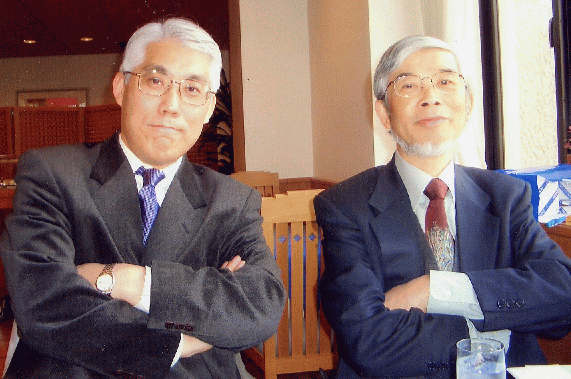
There is an interview by Bruce Wearne with two Japanese professors: Professors Eiichi Yamamote and Michiya Murata on the All of Life redeemed website. It gives a fascinating insight on Christianity in Japan.

Professor Eiichi Yamamoto, who teaches economics at Kwansei (on the right) Gakuin University in Nishinomiya to the east of Kobe, and Professor Michiya Murata (on the left) , teaches sociology of religion and ethics at Hannan University in South Osaka.

Tuesday, 29 August 2006

A brief biography of Herman Dooyeweerd

A brief biography of Herman Dooyeweerd 7th October 1894 – 12th February 1977

Dooyeweerd loved art and music and was an accomplished pianist, he enjoyed detective stories and was a supporter of Ajax, the famous Amsterdam football team, but it is not for these things that Dooyeweerd is remembered. He was the pioneer of the school of ‘the philosophy of the cosmonomic principle’ or more simply reformational philosophy.

He has been described as one of the foremost philosophers of the Netherlands. Dr. P.B. Cliteur, [1] wrote in 1994: ‘Herman Dooyeweerd is undoubtedly the most formidable Dutch philosopher of the 20th century. ... As a humanist I have always looked at “my own tradition” in search for similar examples. They simply don't exist. Of course, humanists too wrote important books, but in the case of Herman Dooyeweerd we are justified in speaking about a philosopher of international repute.’

G.E. Langemeijer, attorney general of the Dutch Appeal Court and chairman of the Royal Dutch Academy of Sciences, wrote in the Trouw [2] that Dooyeweerd was ‘the most original philosopher Holland has ever produced, even Spinoza not excepted’.

Giorgio Delvecchio, an Italian neo-Kantian philosopher, viewed Dooyeweerd as ‘the most profound, innovative, and penetrating philosopher since Kant’. [3]

More recently philosopher Alvin Plantinga stated that “Dooyeweerd's work was comprehensive, insightful, profound, courageous, and quite properly influential.” [4]

Dooyeweerd was born on 7th October 1894 in Amsterdam to Hermen Dooijeweerd, an accountant, (1850-1919) and Maria Christina Spaling (1862-1948). Maria was Hermen’s second wife, his first had died leaving him three daughters. Herman was the only boy of a family of five children.

Dooyeweerd’s father was greatly influenced by Abraham Kuyper and Dooyeweerd, who became a Christian at a young age, was immersed in kuyperian thought and neo-calvinism. He would have heard Kuyper’s newspaper articles read aloud at home and he attended a Christian school whose headmaster Dr J. Woltjer was an associate of Kuyper.

In 1912 he attended the Free University (Vrije Univeriteit, VU) in Amsterdam. There he studied law. He was disappointed with the VU as he expected to get a good grounding in the kuyperian worldview. The VU had been founded in 1880 by Kuyper and in Dooyeweerd’s time there were only three faculties. The law faculty only had three professors: Fabius, Anema and Diepenhorst. In 1917 he received his doctorate for a thesis entitled: ‘De Ministerraad in het Nederlandsche Staaatsrecht’ (Cabinet Ministers under Dutch Constitutional Law’).

He then took up the post of an assistant tax collector in Friesland. In 1918 he moved to Leiden where he had the post of an assistant to a municipal councillor. He was then asked to become the deputy head of the Public Health department in The Hague.

During this time, he studied independently legal philosophy. He found that there was much conflict between the different approaches to legal philosophy and this made him convinced that there was a need for a ‘genuinely Christian and biblically based insight and foundation’. [5]

Dooyeweerd began to correspond with his brother in law D. H. Th Vollenhoven – Vollenhoven, also a graduate of the VU, had married Dooyeweerd’s sister in 1918. In these correspondences Dooyeweerd expressed a desire to ‘work out the philosophical foundations of science and of developing a theistic position, along Calvinist lines’. [6]

In May 1921 Vollenhoven became a pastor in The Hague and this gave the two more time to talk together and develop their ideas.

In October 1922 the newly founded research institute of the Ant-Revolutionary Party, a party associated with Kuyper, appointed the 27-year-old Dooyeweerd the first director. This gave Dooyeweerd the time and opportunity to develop his philosophical ideas. [7] He married on Jantiena Wilhelmina Fernhout on 19th September1924.

It was during this time that he developed the idea of the religious root of theoretical thought – the idea that all the sciences are dependent on pre-theoretical presuppositions.

He worked for the ‘Kuyper Institute’, as it was known, for four years. He then accepted an offer to become professor of law at the VU, a position he held for 40 years until his retirement in 1965 at 70.

His brief at the VU was to teach ‘Introduction to the Science of Law’, the ‘History of traditional Dutch law’ and ‘Jurisprudence’. He replaced the ‘Introduction’ with an ‘Encyclopaedia of Legal Science’.

It was at the VU that Dooyeweerd completed his De Wijsbegeerte der Wetsidee (Amsterdam: 1935-36). This was translated into English in 1953 as The New Critique of Theoretical Thought. This translation contained extensive revisions and additions. His next planned project was Reformation and Scholasticism in Philosophy [8] and then the Encyclopaedia of Legal Science. [9] He was not able to complete these fully during his lifetime.

He founded and was editor in chief (1936-1976) of the journal Philosophia Reformata.

After the Second World War he travelled extensively to Switzerland, South Africa, France, Belgium, the United States – including several times to Harvard University - and Canada. It was the lectures during one of the tours to North America that formed the basis of In the Twilight of Western Thought (1960).

During 1945 to 1948He wrote a series of articles in the weekly Nieuw Nederland these formed the basis for his book Roots of Western Culture (1979).

In 1948 he was inducted into the Royal Academy of Dutch Sciences.

Dooyeweerd was a prolific author and wrote around 200 articles and books. The last article he wrote was for Philosophia Reformata in 1975.

Dooyeweerd’s son had this to say of him:

Dooyeweerd was a gifted man but in ways of a very down-to-earth person with his feet on the ground. We in the family loved him dearly and are, we think justifiably, proud of him. We remember him as someone who was humble before his God and always strove to be in his service. In the days just before his death I personally witnessed how he struggled greatly with the fact that in his own eyes he had not done all that he seemingly felt God had called him to do.

Footnotes

1. President of the `Humanist League' in The Netherlands and professor of philosophy at the Technical University of Delft. Cited in Witte Jr.

2. October 6, 1964. On the occasion of Dooyeweerd’s 70th birthday. Cited in Witte Jr.

3. Cited in Witte Jr.

4. In ‘Christian philosophy at the end of the twentieth century’.

5. Dooyeweerd Jr p. 107.

6. Henderson p. 27.

7. According to Witte Jr: “His work in these four years culminated in five major articles, including a fifteen-part tract ‘In the Struggle for a Christian Politics’ [Herman Dooyeweerd, "In den strijd om een Christelijke Staatkunde. Proeve van een fundeering der Calvinistische levens- en wereldbeschouwing in hare Wetsidee," I Antirevolutionaire Staatkunde (henceforth A.R.S.) 7-25 62- 79, 104-118, 161-173, 189-200, 228-244, 309-324, 433-460, 489-504, 528- 542 581-598, 617-634, (1924-5); 2 A.R.S. 244-65, 425-445 (1926). A.R.S. was the monthly journal of the Dr. Abraham Kuyper Foundation, which Dooyeweerd edited for several years. This work will appear as volume B5 of the Collected Works of Dooyeweerd.] and an important monograph ‘Calvinism and Natural Law’ (contained in volume B1 of the Collected Works of Dooyeweerd).”

8. The three volume work has now recently been published by Edwin Mellen Press as A5, A6 and A7 of the Collected Works of Herman Dooyeweerd series.

9. The first volume of this has now been published (translated by Robert D. Knudsen) by Edwin Mellen as A8. A9-11 will appear shortly.

Bibliography

Witte Jr., John, ‘Introduction’ in A Christian Theory of Social Institutions, by Herman Dooyeweerd, trans. Magnus Verbrugge. (Paideia Press: Ontario, 1986)

Herman Dooyeweerd Jr, ‘Herman Dooyeweerd – a biographical sketch’ in Herman Dooyeweerd Christian Philosophy and the Meaning of History (Edwin Mellen Press: Lewsiton,1996).

R. D. Henderson Illuminating Law: The Construction of Herman Dooyeweerd’s Philosophy 1918-1928 (Vrije Uiversitet: Amsterdam, nd.)

Herman Dooyeweerd ‘The Last Interview of Dooyeweerd’ in J.M. van Dunné, P. Boeles and A.J. Heerma van Voss (eds): Acht civilisten in burger (Zwolle: W.E.J. Tjeenk Willink, 1977). (Translated for study purposes by Dr. J. Glenn Friesen)

H. Evan Runner Dooyeweerd’s passing and appreciation The Banner 1977

Monday, 28 August 2006

In the Twilight of Western Thought

I have recently updated my blog/study guide on Dooyeweerd's In the Twilight of Western Thought - chapter 8 'What is man [sic]?' is now up.

I have also put on All of life Redeemed Paul Otto's paper on the different versions of Twilight as a pdf:
Paul Otto 'In the twilight of Dooyeweerd's corpus: the publishing history of In the Twilight of Western Thought and the future of Dooyeweerd studies' Philosophia Reformata 70 (2005) 23-40.
Also, Gregory Baus has made available here two audio lectures by Henk Geertsema, he discusses some of the issues that arise out of the first two chapters of Twilight

Sunday, 27 August 2006

Some useful free on-line tools

If you are looking for a book in a nearby library then try World Cat.


According to WordCat there are only seven copies of Roy Clouser's excellent book The Myth of Religious Neutrality (2nd edn) in British libraries! Two at the British library in Wetherby, and copies at Cambridge, Oxford, London and Leeds Universities and one at West Malling in Kent.

And there is - according to WordCat - only one copy of Yong Joon Choi's Herman Dooyeweerd's Transcendental Critique in a UK library: Edinburgh University.

Though I must admit I was pleased to see that a copy of a book I once I co-wrote The Earth is the Lord's is available in six libraries - including Dublin, Oxford and Cape Town!


Google have recently released two new useful tools: notebook and writely a web word processor that enables sharing of documents and collaboration on documents.

Saturday, 26 August 2006

George Coyne - "replaced "?

According to Beliefnet Revd George Coyne has been replaced as the director of the Vatican Observatory.
Pope Benedict XVI has appointed a new director of the Vatican Observatory, replacing the Rev. George Coyne, a long-serving Jesuit astronomer and a vocal opponent of "intelligent design" theory.

It was unclear if the replacement of Coyne, the observatory's director since 1978, reflected a sense of disapproval within the Vatican over his opposition to intelligent design -- the idea that the world is too complex to have been created by natural events alone.

Book meme

Paul Otto and Russ Reeves have both responded to my tag on the book meme. Both note that the Bible fits each of the categories. Paul writes:
Before I answer the questions (see below), I’ll offer the disclaimer that the Bible fits almost every category (and I’m not a pietist!): it changed my life; I’ve read it more than once (or I’m trying to); I’d want it on a desert island (but I like to pose the question, what five books of the Bible would you pick if you had to?); it makes me laugh; it makes me cry; while I can’t wish it had been written, I often wish it included more; sometimes I wish it hadn’t been written because of the demands it places on me (ignorance is bliss, they say); I’m currently reading it (currently in the Psalms); and, yes, I’ve read and am reading the Bible, but I so often find myself ignorant of much of the wisdom, mystery, and knowledge of the Scriptures that I share the sentiment that we sometimes have about books we’ve been meaning to read.

Friday, 25 August 2006

C. T. McIntire pages

I have now added the Thomas McIntire pages to the All of Life Redemeed website.

Thomas is a historian who taught for a while at the Institute for Christian Studies, Toronto and is now a professor at the University of Toronto.
He is currently writing a World History of Modern Christianity and has recently published a book on Herbert Butterfield: Herbert Butterfield: Historian as Dissenter (Yale University Press)

Sunday, 20 August 2006

At last!

After a little subtle encouragement Rudi Hayward - a philosophy teacher - is now blogging at Intermezzo. Rudi is another prerson who has come to the reformational movement via Richard Russell’s Christian Studies Unit.

Friday, 18 August 2006

Human beings, as we know them, developed from earlier species of animals: true or false? This simple question is splitting America apart, with a growing proportion thinking that we did not descend from an ancestral ape. A survey of 32 European countries, the US and Japan has revealed that only Turkey is less willing than the US to accept evolution as fact.
'Why can't America believe in evolution?' New Scientist 19 August 2006.

Creation/evolution survey

In an article 'How did we get here?' in The Guardian, Harriett Swain reported the following:

In a survey last month, more than 12% questioned preferred creationism - the idea God created us within the past 10,000 years - to any other explanation of how we got here. Another 19% favoured the theory of intelligent design - that some features of living things are due to a supernatural being such as God. This means more than 30% believe our origins have more to do with God than with Darwin - evolution theory rang true for only 56%.

The survey in question was carried out by OpinionpanelResearch. The full results are available here.
What is interesting is the narrow range of options given for question 1:

People have different explanations about life on earth and how it came about. Which of these statements best describes your view?

The 'evolution theory' - Humans developed over milliosn of years from less advanced forms of life. God has no part in this process (56%)

The 'creationist theory' - God created humans in their present form within the last 10,000 years. (12%)

The 'intelligent design theory' - Some features of living things are best explained by the intervention of a supernatural being, e.g. God. (19%)

Don't know/ other (13%)

the church and postmodern culture: conversation

A new blog has started the church and postmodern culture: conversation. It's hosted by Baker Academic and hosted by Geoff Holsclaw. At present they are discussing at Jamie Smith's book Who's Afraid of Postmodernism? That's another one of those books that I haven't yet read but mean to. [HT jonnybaker]

Wednesday, 16 August 2006

I've been tagged - book meme

Gideon Strauss has tagged me. I've been a little slow in responding - and blogging - as I've been in Germany visiting my brother and his family.

1. One book that changed your life: Creation Regained by Al Wolters.

2. One book that you’ve read more than once: Knowing With The Heart by Roy Clouser

3. One book you’d want on a desert island: Assuming that the Bible is included, then The New Critique of Theoretical Thought by Herman Dooyeweerd -to give me time to read it carefully.

4. One book that made you laugh: Any of the Disc World books by Terry Pratchett. The first page of the fist book I read of his (Reaper man ) had my sides aching:
The Morris dance is common to all inhabited worlds in the multiverse.

It is danced under blue skies to celebrate the quickening of the soil and under bare stars because it's springtime and with any luck the carbon dioxide will unfreeze again. The imperative is felt by deep-sea beings who have never seen the sun and urban humans whose only connection with the cycles of nature is that their Volvo once ran over a sheep.

It is danced innocently by raggedy-bearded young mathematicians to an inexpert accordion rendering of "Mrs Widgery's Lodger" and ruthlessly by such as the Ninja Morris Men of New Ankh, who can do strange and terrible things with a simple handkerchief and a bell.

And it is never danced properly.

Except on the Discworld, which is flat and supported on the backs of four elephants which travel through space on the shell of Great A'Tuin, the world turtle.

And even there, only in one place have they got it right. It's a small village high in the Ramtop Mountains, where the big and simple secret is handed down across the generations.

There, the men dance on the first day of spring, backwards and forwards, bells tied under their knees, white shirts flapping. People come and watch. There's an ox roast afterwards, and it's generally considered a nice day out for all the family.

But that isn't the secret.

The secret is the other dance.

And that won't happen for a while yet.


5. One book that made you cry: The Hobbitt by J. R. Tolkein

6. One book that you wish had been written: Dooyeweerd for Dummies by Mark Roques, Richard Russell or Roy Clouser.

7. One book that you wish had never been written: Can't think of anything specific - but anything that degrades sex.

8. One book you’re currently reading: The Man Who Smiled by Henning Mankell and The Myth of Religious Neutrality by Roy Closer (again)

9. One book you’ve been meaning to read: Rainbows for a Fallen World by Calvin Seerveld - I know, I know I should have read it years ago.

10. Now tag five people: Paul Otto and Elbert Bass- in an attempt to get them blogging again, Russ Reeves, Maggi Dawn, Kenn Hermann and Gregory Baus (who said I could count?).

Friday, 28 July 2006

Peter Jones on Gnosticism

Peter Jones, of CWIPP, was interviewed in World Magazine regarding the gnostic roots of of the DaVinci Code here. He defines gnosticism thus:
Gnosticism is formed from the Greek term gnosis meaning knowledge, but it means here a particular form of knowledge, namely "spiritual experience." Like all pagan spirituality, so-called "Christian" Gnosticism engages in "sacred technologies" to access the higher, spiritual self, the self that is part of God.

In this essentially out-of-body experience, all physical and this-worldly restraints, like rational thinking and a sense of specific gender, fall away. In a word, the experience of "enlightenment" is both the rejection of the goodness of the physical creation and an acquisition of the knowledge of the divinity of the human soul.


This sounds very much like the sort of stuff advocated by the DVD I listened to mentioned in a previous post. Though I have to say that the gnostic conception of god is very different to the more orthodox view of God portrayed by the speaker.

Thursday, 27 July 2006

An image of gnosticism


This picture illustrates the gnostic need to get out of the 'natural' and into the 'supernatural'.

The gnostic worldview

Since watching a DVD from Toronto Airport Church, I've been thinking how much gnosticism has seeped into the church.  There is no doubt that the person on the video I watched has been used by God and yet his theology is infused with some aspects of gnosticism.

Below are some of my initial thoughts on what constitutes a gnostic worldview.


What is God like?

There are two gods a false creator god (demiurge) and the true god (pleroma); they are fighting for supremacy.

What is reality?

Reality is dualistic: everything is spiritual - our true self – and everything is material - foul and evil. 

What does it mean to be human?


We are strangers living in a flawed world.  We are part material (made by the demiurge) and part spiritual (a fragment of the true divine essence: a "divine spark").  We are largely ignorant of this divine spark within us.  Death releases us from the prison of the material body.  If there has not been a substantial work of gnosis by the soul than the divine spark will be hurled back and embodied into the physical world again.

There are two classes of human: the pneumatics and the hyletics.  The pneumatics are ready for liberation; the hylectics recognise only the physical reality and they mistake the demiurge for the one true god.

What is wrong with the world?


Metaphysical alienation: the world is flawed because it was created in a flawed manner; the fault is the creator's.  It is the product of a lesser god who was unable to create a world of permanence.  Humans need to be freed from this world of pain, suffering and death, freed from this material existence.  The problem is that we are ignorant of the divine spark within us.


What's the remedy?

Deep within humans is a divine spark that connects us with the true god, who is hidden from creation.  Our only hope is to acquire the information we need to perfect ourselves and evolve out of our current physical state.  Jesus descended from the spiritual realm to make available the knowedge (gnosis) necessary for self-perfection.

Vallentius :
“the human mind lives in a largely self-created world of illusion from whence only the enlightenment of a kind of Gnosis can rescue it.”

Our bodies and souls are part of this corrupt, flawed creation; redemption is only for the spirit. 

Wednesday, 26 July 2006

God and Caesar: a question


In Mt 22:15ff, Mk 12:13ff and Lk 20:20ff the Pharisees and Herodians come to Jesus in an attempt to catch him out by asking him 'Is it lawful to pay taxes to Caesar or not?' Jesus responds by asking them to show him a coin with Caesar's image on it and he answers:
'Therefore render to Caesar the things that are Caesar's, and to God the things that are God's'.
I was wondering what people understood by this phrase of Jesus'. Answers in the comments, if you dare, please!

Tuesday, 25 July 2006

Baroness Warnock answers questions

The Independent has Baroness Mary Warnock answering a series of questions from readers.  She respnds to questions like: is there a God?  What proof do I have of my own existence?  is it ever right to kill innocents in war? What happens when we die? and Do you like being described as Britain's philosopher queen?

Luther and Dylan

In a recent <thinknet> post, Roy Clouser wrote, quoting Luther:
Faith and trust of the heart make both God or an idol. If your faith is right you have the true God, if not you have an idol. But whatever your heart clings and entrusts itself to is, I say, really your God. (Commentary on the 1st commandment)
And in another place, in more typically Luther-fashion he put it: Man is like a jackass; somebody always rides his back and it's either God or the Devil.
This reminds me of St Bob:
But you're gonna have to serve somebody, yes indeed
You're gonna have to serve somebody,
Well, it may be the devil or it may be the Lord
But you're gonna have to serve somebody.
http://www.bobdylan.com/songs/serve.html

Saturday, 22 July 2006

H. Evan Runner blog

There is a new blog devoted to the life and work of H. Evan Runner.  At present there are notes from a series of lectures that Runner gave in the 1980s, a review of Dooyeweerd's NCTT by Runner, numerous weblinks and a review by Rushdoony on a previous incarnation of Runner's book The Relation of the bible to Learning.


Friday, 21 July 2006

Dialogue and Antithesis


Yong-Joon Choi's dissertation on Dooyeweerd Dialogue and Anthithesis - available from the CSU here - has now been published by The Hermit Kingdom Press.

It is also available on-line on Andrew Basden's Dooyeweerd pages: here.

Rev. Dr. Yong-Joon Choi is the Visiting Professor of Philosophy at the Vancouver Institute for Evangelical Worldview and the Senior Pastor of Hanbit Korean Church in Cologne, Germany. Rev. Dr. Choi received his Ph.D. in Philosophy from Potchefstroom University in South Africa and holds the Doctorandus degree in Philosophy from the Free University of Amsterdam, the M.Div. degree from Westminster Theological Seminary in Philadelphia, and B.A. in Sociology from Seoul National University.

Tolle, Blogge - the return

Tolle Blogge (ie Russ Reeves) is back, this time on Wordpress:

This blog began in March, 2002 (originally hosted at Blogspot, though someone is currently squatting on the old url), around the same time as Daily Kos (this blog had a few million fewer hits, though a great deal more wisdom, if I do say so myself - quality over quantity). This is back when it was possible to place all Christian blogs together on one “semi-definitive” list.

The very first post was on Herman Bavinck (on creation, covenant, grace, and gratitude) followed soon after with a eulogy for H. Evan Runner. The blog went on to cover everything from theology to history to politics to baseball. The plan for the future is to focus more narrowly on history, historical theology, and Christian liberal arts education, though the blog, like my mind, may wander. Welcome and thanks for reading.

Evangelicals in the Public Square


Evangelicals in the Public Square is a new book by J. Budzisewski (Baker Book House, 2006). He takes a look at Francis Schaeffer, Abraham Kuyper, Carl F. H. Henry and John Howard Yoder. Experts on the four evngelicals respond to Budzisewski - including John Bolt on Kuyper. Apparently, Budzisewski argues that 'in addition to Scripture, the evangelical political movement should be informed by the tradition of natural law.'

Tuesday, 18 July 2006

Myodicy updated

Theo Plantinga has updated his Myodicy pages.  In the latest issue he looks at:

Is the reformational movement losing its sense of itself as a separate stream because of the rise and use of new technologies? Or is verzuiling still alive and well? Click here to read the third installment of Theodore Plantinga's informal history of the reformational movement, in which verzuiling is explored.

Can anything whatsoever be questioned? Or does a community have the right to place certain beliefs beyond the bounds of debate? What is the Dutch Reformed understanding of this issue? Click here to read "It Goes Without Saying: Reflections on Vanzelfsprekendheid."

What did Evan Runner teach his students back in the 1960s? Click here to read the third installment of Theodore Plantinga's notes on Runner's Introduction to Philosophy class.

Mustard Seed in Australia

I have just put up an early article by Keith Sewell from Vanguard May-June 1972: 'Mustard seed in Australia' on the All of life redeemed website. It takes a look at the the reformational movement in Australia in the very early seventies.

Monday, 17 July 2006

Two new blogs on the block

RefWrite has yet another blog; this time on wordpress: correspondence refWrite.  At present there are contributions from the <thinknet> discussion group on panentheism.

Jeremy Ive - a thinknetter, a vicar in the CoE and more - has started a blog: Trinitarian  and  Reformational.

Sunday, 16 July 2006

A few links

This week's Comment comes from Gideon Strauss: Making the most of college: asking the big questions.

Kenn Hermann returns to blogging after a short break with a review of Roy Clouser's The Myth of Religious Neutrality. I'm resisting the temptation to read it as I am in the process of writing a review of Roy's book too.

Paul Robinson has also returned to blogging after a sojourn in the States - he has posted some links to three great papers - one of which has already appeared on AoLR:
David Koyzis has some great observations on a new book by Stephen J. Grabill Rediscovering the Natural Law in Reformed Theological Ethics - be sure to check out the comments.

Wednesday, 12 July 2006

Kate Rusby @ Chepstow Castle


On Saturday we went to see the wonderful Kate Rusby in an open air concert in the grounds of Chepstow Castle - it was an amazing event. Kate's voice is so clear and pure - and she has a wonderful Barnsley accent.

Here's a short clip of her in action from the BBC Radio 2 Folk awards in 2004 (it uses Real Player).

Thursday, 6 July 2006

Monty Python and philosophy

Here's a lecture on 'Themes in contemporary analytic philosophy as reflected in the work of Monty Python' by Gary Hardcastle.  Unfortunately, the link to the Bruce's philosopher's song doesn't work there - but this one does (warning - strong language):

Wednesday, 5 July 2006

Reconnoitering Dooyeweerd's theory of man


I have just put up a paper on AoLR from Philosophia Reformata by Philip Blosser 'Reconnoitering Dooyeweerd's theory of man'. The pdf is here.

Philip Blosser maintains a blog: 'Musings of a pernicoious papist'. His home page is here.

Saturday, 1 July 2006

Imagination, image of God and wisdom of God ... in Dooyeweerd's philosophy


Gennn Friesen has updated his Studies related to Herman Dooyeweerd site with a large paper on 'Imagination, image of God and wisdom of God: theosophical themes in Dooyeweerd's philosophy' (It is also available as a pdf here.)


The Dutch Christian philosopher Herman Dooyeweerd (1894-1977) is more relevant today than ever before. Postmodernism is questioning the validity of modernism’s rationalistic and dualistic thought. It attempts to fully temporalize all of humanity’s existence and concerns, and it rejects any role of the transcendent. And in its emphasis on our historical constructs of reality, postmodernism has relativized all values, leaving both our everyday praxis and our theoretical thought without any foundations. Postmodernism is acutely aware of this lack of foundations. A key postmodern theme has been the discovery of what many call a post-critical (or post-liberal) position concerning the possibility of a re-enchantment of life and of the cosmos, based, in part, on a hermeneutics of retrieval. But just what is it that postmodernism is seeking to retrieve? And how do we re-enchant our world after the devastation to the foundations caused by the hermeneutics of suspicion?

I believe that Dooyeweerd’s philosophy, and in particular his ideas of imagination, help us to answer these questions. For Dooyeweerd, our acts of imagination do not only play a role in our aesthetic and artistic creations. Imagination is also fundamental to our act of perceiving the world, and to both our pre-theoretical and our theoretical knowledge. In our acts of imagination, we retrieve the wisdom of the past, a wisdom that reflects God’s Wisdom or Sophia. This is therefore an answer to one problem posed by postmodernism.