Almost two years ago I posted some details of Abraham Kuyper's family.
Above is an update of his family tree. (Click on the image to enlarge.)
Since then thanks to Harry Muytjens there is more information on Guillaume Kuyper and his wife Henriette Storm van Leeuwen.
Guillame became the major of Stedum. The picture below was taken at his inauguration from Nieuwsblad van het Noorden (August 18th, 1932):
They were buried buried in the graveyard of the small village "Stedum" in the province of Groningen. Harry kindly provided these images of their graves:
Saturday, 22 February 2014
Friday, 21 February 2014
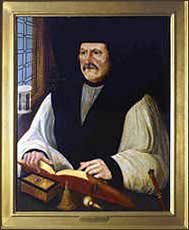
British Calvinists: Matthew Parker (1504-1575)
Matthew Parker (1504-1575) was one of the White Horse Inn members and one of the Marian exiles. On his return he was made Archbishop of Canterbury (1559-1575) by Elizabeth I. It was thought she appointed him as he was a moderate man.
Parker was a keen bibliophile and his library was bequeathed to Corpus Christi College, Cambridge. Under Henry VIII Parker had been the Master of Corpus Christi. He was a friend of Martin Bucer and preached at Bucer's funeral in 1551.
He played a key role in the Book of Common Prayer and helped produce the Bishop's Bible.
Some of Parker's works are available here: http://www.prdl.org/author_view.php?a_id=1365
Further reading
Brook, Victor John Knight. 1965. A Life of Archbishop Parker. Oxford: Clarendon Press.
Thursday, 20 February 2014
British Calvinism: The Marian exiles
In the first starting phase of Calvinism in Britain occurred during the reigns of Henry VIII and Edward VI. The second suffering phase saw almost 300 became martyrs at the hands of Mary Tudor I (Bloody Mary) in her five year reign.
She was staunchly Catholic and sought to undo all that these Reformers had done.
Under persecution some 800 Reformers sought exile on the Continent from 1553-1558. As a result they came into contact with European Calvinists and many became radicalised and more vehemently Calvinistic. When Mary I died many of them returned home with the intention of carrying out Reform. Queen Mary's wanton persecution of the Reformers also had the effect of alienating the English against her and so made them far more receptive to the Reformers when they returned.
C H Garret in her 1938 The Marian Exiles provided a census of around 800 of those who left England and took refuge in Reformed cities including Geneva, Zurich, Aarau, Basel, Emden, Frankfurt and Strasbourg.
The influential marian exiles who returned included:
Matthew Parker (1504-1575)
George Wishart (1513-1546)
John Knox (1514-1572)
Edmund Grindal (1519-1583)
William Whittingham (c 1524-1579)
The third settlement phase of Calvinism was brought about by the return of these Marian exiles during the Elizabethan settlement.
The influential marian exiles who returned included:
Matthew Parker (1504-1575)
George Wishart (1513-1546)
John Knox (1514-1572)
Edmund Grindal (1519-1583)
William Whittingham (c 1524-1579)
The third settlement phase of Calvinism was brought about by the return of these Marian exiles during the Elizabethan settlement.
Review of Howison's God's Mind in that Music
God's Mind in That Music
Theological Explorations through the Music of John Coltrane
Jamie Howison
Eugene, Oregon: Cascade Books, 2012.
ISBN 978-1-62032-156-0
Pbk, 250pp, £18
Pbk, 250pp, £18
A recent trend in theology has been theology for and through the arts - in the first art is understood in the light of theology, the second asks the question "What can the arts bring to theology?" Howison’s book takes the latter approach but within a narrower scope: the life and music of John Coltrane.
Coltrane is the first, and probably, only jazz musician who has had a church formed in his name: Saint John Will-I-Am Coltrane African Orthodox Church, which is part of the African Orthodox Church. He was bought up in the African Methodist Episcopal Zion church orthodox and recognised the spirituality behind his music even if it was a misdirected spirituality. As Edgar has written “All music articulates a two-way relation to spirituality”. Coltrane then provides an excellent case study for a theological appraisal of his work. Howison has done that and he writes as a fan; throughout his passion for Coltrane shines through. Calvin Seerveld sums up the project very well: “You could think about his music as glossolalia, and you are the interpreter now, struggling to see what the tongues are saying …” (p 18)
The first three chapters place Coltrane in context. The first chapter examines theology’s engagement with music, the second a brief personal view of jazz and the third chapter a brief biography of Coltrane. These chapters are helpful especially to those who know little of Coltrane’s background. Chapters 4-10 then examine key pieces by Coltrane. These for me were the best part of the book. Here Howison’s love for, and knowledge of, Coltrane shine through. Music, like any other cultural activity, is not divorced from a context and Howison helpfully places each piece in its historical context. He then exegetes the music. The book then has to be taken with Coltrane’s music to get the best out of it.
Neither Begbie nor Rookmaaker were ill-disposed towards free jazz. They thought that it was “breaching musical norms” and was “more and more anarchistic” (Rookmaaker), and a blind alley, a break from tradition (Begbie). Hence, Howison provides a helpful other-perspective to their views. Howison is at his best describing and looking at the background to Coltrane’s work. The theological explorations are for me the weakest aspect - at worst they tend towards a moralising point, but at best they do offer some important insights. If you love Coltrane you’ll find listening to him more satisfying after reading this book; if you don’t love Coltrane do yourself a favour and listen to him then read this book.
Pieces of music examined/ exegeted by Howison:
- My Favorite Things from My Favorite Things (Atlantic 1961) and Live at the Village vanguard Again (Impulse, 1966)
- Naima from Giant Steps (Atlantic, 1960) and Wise One from Crescent (Impulse 1964)
- Alabama from Live at Birdland (Impulse 1964)
- A Love Supreme (Impulse, 1966)
- Ascension (Impulse 1966)
- The Father, Son and Holy Ghost from Mediations (Impulse, 196)
- Attaining from Sun Ship (Impulse, 1966)
Howison has a blog that develops some of the themes in his book here.
Jan de Bruijn's Pictorial Biography of Kuyper from @eerdmansbooks has arrived
At last, the long-awaited pictorial biography of Kuyper from Eerdmans has arrived - weighing in it at over 1kg:
Tuesday, 18 February 2014
British Calvinists: John Bradford (1510-1555)
Some of his writings are available here: http://www.prdl.org/author_view.php?a_id=1464
Monday, 17 February 2014
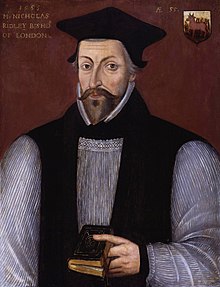
British Calvinists: Nicholas Ridley (1500-1555)
Nicholas Ridley (1500-1555) was one of the member so the White Horse Inn discussion group that met at Oxford. He was also one of the Oxford Martyrs along with Latimer and Cranmer.
Under Cranmer Ridley was made Bishop of Rochester. One of his first acts was to replace the altars with tables in the churches. When Edward VI died Ridley was a strong supporter of Lady Jane Grey and signed letters giving her the throne. However, Mary Tudor (bloody Mary) took the throne and Ridley was sent to prison in the Tower of London.
Ridley, Latimer and Cranmer were all tried for heresy in Oxford. On 16 October Ridley and Latimer were burned at the stake.
Some of Ridley's works are available here: http://www.prdl.org/author_view.php?a_id=475
Sunday, 16 February 2014
Neo-Calvinism and Roman Catholicism Conference 4-5 Sept 2014 Rome, Italy
Theme
Roman Catholicism was a world player when neo-Calvinism began to develop from the second half of the nineteenth century onwards. At that time, both Catholicism and Protestantism went through substantial changes. For the neo-Calvinists, Catholicism functioned as both an antagonist and an ally in their struggle to uphold religion in the modern age of ‘rerum novarum’. The neo-Calvinists were the first Protestants to cooperate openly with Roman Catholics in politics and on social issues. Theologically they were particularly interested in neo-Thomism, but remained critical of Roman Catholicism until after the Second World War and the Second Vatican Council.
The conference will focus on the theological, ecclesial, philosophical, political, social and cultural interactions between the two traditions: in what ways did they influence and approach each other, on which aspects did they continue to differ and why, and how could their relationship over a century and a half best be described?
Call for Papers
The conference organisers welcome proposals for short papers. Proposals (approximately 300 words) should be sent to g.harinck@vu.nl by March 30th, 2014. Conference papers will be in English.
Registration
The conference registration fee is €90, which includes a warm lunch and drinks. Conference places must be reserved by email (g.harinck@vu.nl) by May 30th, 2014.
Location and Accommodation
The conference will be held at:
The Lay Centre at Foyer Unitas Institute
Largo della Sanità Militare, 60 (close to the Colosseum)
00184 Rome
Italy
Participants are responsible for finding their own accommodation. The organisers suggest Foresteria del Monastero di San Gregorio al Celio (contact: Mrs. Loretta, forgreg@tiscali.it) as a well-priced, comfortable and close-by option.
Thursday, 13 February 2014
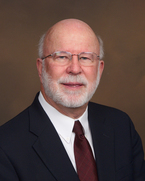
Interview with James W Skillen
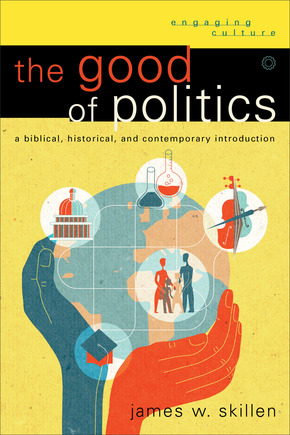
James Skillen helped found the Center for Public Justice (CPJ), an independent, nonpartisan organization devoted to policy research and civic education for which he served as executive director and president. He is also the author of the forthcoming book published by Baker Academic called The Good of Politics. He kindly took the time out of his busy schedule to answer my questions.
Many thanks for agreeing to this interview Jim.
Could you start by telling us
something about yourself? In particular what started your interest in politics?
My interest in politics came very late, not really until I was finishing
my doctoral dissertation. I grew up in a Christian family, met my future wife
when we were in high school in Central Pennsylvania, and went off to college
(Wheaton, in Illinois) with the hope of playing baseball and preparing for
medical school. I did make the baseball team but became more interested in
philosophy than physics so I majored in philosophy.
During my sophomore year in college (1963-64) I discovered Abraham
Kuyper and Herman Dooyeweerd, and reading them changing my life. I pursued
philosophy and biblical studies from that time on, through seminary and then,
after Doreen and I married, for year at the Vrije Universiteit in Amsterdam. My
decision to take up political studies at Duke University was because I knew too
little about social, economic, and political life, and since Dooyeweerd was a
philosopher of law, I figured I needed to understand law and politics in order
to understand him. I wrote my dissertation at Duke on the development of
political theory in The Netherlands, with special reference to Dooyeweerd.
It was during our last year at Duke that a friend invited me to become
part of a group that was trying to start some kind of political or civic
organization. I did so, and that was the first time that I really asked myself,
"What does it mean to be a citizen and not just study politics and
law?" During nine years of teaching political science and philosophy at
three Christian colleges I got deeper and deeper into helping to found what
became the Center for Public Justice.
Which thinkers or resources
have you found most helpful in how you approach politics from a Christian
perspective?
Clearly the Kuyper tradition was the shaping influence of my approach to
politics. The work of Kuyper and Dooyeweerd framed my outlook and my questions
about public life from a Christian point of view. Along the way, beginning in
graduate school, I learned a great deal from many other people and political
movements that would take too long to list here.
Your new book has a provocative
title The Good of Politics as Christians don't think that
there is any good in politics. What is the good of politics? And what is the perspective
you take in the book?
One of my main aims in this new book is to show that the long-standing
Augustinian view that government was given because of sin is not biblical. The
responsibility of government to restrain evil and to punish evil doers (Rom.
13) arises because of sin, but governing of political communities is one of the
responsibilities that is inherent in our identity as the image of God, given
with creation. Parts One and Two of the book work through the biblical texts
and the historical development from Augustine onward to show this, along with
much more.
This means that just as humans have been created for THE GOOD OF
friendship, marriage, family life, agriculture, science, the arts, education,
and much more, so we have been created for THE GOOD OF life in political
communities. If that is true, then we have to learn how to pursue such a good
as part of what it means to be the human servants and stewards God made us to
be.
I am intent in this book on showing that all of the dimensions of life I
just mentioned, including political life, reveal something of who God is in
relation to us, as the Bible says over and over again. God is the bridegroom of
his bride, the parent of his children, the shepherd of sheep, the vineyard
keeper, the rabbi-teacher of disciple-students, and the king of his kingdom,
the lord of all lords, the lawmaker and adjudicator of justice, the peacemaker,
and so forth and so on. In Christ we are to become like our Father in heaven
who sends rain and sunshine on the just and unjust alike, and that entails efforts
to work for public justice for all.
It has often been said that a
personal faith shouldn't affect public politics - how would you respond to
that? Should we become Christian secularists in terms of politics?
The Bible emphasizes from start to finish that everything we are and
have belongs to God and should be offered up to God as an offering of praise.
Christian faith is not one "package" among others that we carry
around with us in this age. It entails a way of life—the way of bearing fruit,
the way of loving God with all our hearts, souls, and strength, the way of
following Christ in discipleship in all things. There is nothing about us and
our lives that should not be guided by our faith in Christ, who told us that
all authority in heaven and on earth has been given to him (Matt. 28). The
question is not WHETHER politics should be practiced as part of our way of life
in Christ but HOW it should be practiced. In that sense there is no
"secular" part of life if one means by "secular" those things
that are not related to or owed to God.
Frequent reference to a "secular state" often means a state
that does not establish a church or that is not controlled from above by a
religion. That usually suggests the division between sacred and secular that I
am rejecting. I would prefer to speak of an impartial or non-discriminatory
political community that treats people of all faiths equitably, fairly, justly.
That is the kind of political community that Christians should advocate and
support, because God has not given us the responsibility to try to separate
good seeds and weeds in the field of the kingdom. That view of political life
comes from biblical Christianity, not from modern secularism.
How does politics relate to the
kingdom of God? Can we bring in the kingdom through politics?
God's kingdom is the way God is governing the creation toward the end of
the fulfillment of all things in the presence of God (by sight, not longer by
faith). That is not something that Christians can "bring in" or
"make happen" by political or any other means. By the very nature of
our creaturely identity in God's image, however, we do have many
RESPONSIBILITIES in service to God, the king, master, teacher, friend, guide,
parent, and bridegroom. Among those responsibilities is to serve our neighbors
justly, to do justice, to administer justice (Heb. 11:33). And that is what
should control our civic lives in political communities such as Great Britain,
the U.S., and every other country in which Christians live. Just as family life
and education, agriculture and music performance are part of our lives and
should be offered up in thankful service to God through Christ, so should civic
life be practiced in that way. Being a faithful parent or a good farmer does
not aim to bring in the kingdom; it is part of what it means to follow a way of
life in service to Christ the Lord and King of all creation.
Is God a Republican?
The range of approaches Christians take to politics is highly diverse,
and in those countries that have political parties vying for elections and
entering into government, the variety of approaches is very great. This is the
realm of HUMAN RESPONSIBILITY, not of God's authority and disclosure. God isn't
a Republican or a Democrat or a Socialist (or whatever) any more than he is a
soybean farmer or a cattle rancher, a violinist or a french horn player. The
Bible is not like Greek philosophy that is in search of the ideal form of
government. The Bible is NORM oriented rather than FORM oriented. God calls us
to respond to his call to do justice; it is our responsibility to build
political communities and forms of government to do that. There is no ideal
form of Christian government if one is thinking in terms of monarchy,
democracy, a republic, or a benevolent dictatorship.
What advice would you give to
Christians who want to get involved in politics?
My advice to someone interested in getting involved in politics would be
much like advice I would give to someone who wants to get involved in sports,
or music, or farming, or medicine. Count the cost, begin as an apprentice,
learn from those who are mature in the practice of that responsibility. In our
day that will undoubtedly entail study and reading, probably in university life
and beyond.
And my emphatic advice would be to do it in community. Learn from what
other Christians are and have been doing. Develop a community of friends,
advisers, qualified practitioners around you to help guide you and who can learn
from you. Look to them also as the ones who will help to hold you accountable.
Political life is part of a way of life, just as family life, farming, and the
practice of medicine and law. These are not "projects" or
"events" or "excursions." They are VOCATIONS in which the
practitioners pursue wisdom to follow the right path of service.
Are there any other projects in
the pipeline?
I retired from the Center for Public Justice not only to be able to
spend more time with children and grandchildren but also to have time to write
and do some speaking and mentoring. The new book, The Good of Politics, has three parts to it, the first on biblical
revelation, the second on some of the most important developments in political
life and political philosophy in the West, and the third on political practice
and responsibility. Each of those parts serves as a kind of introduction to the
three major books I am now writing (and hope to finish writing, Lord willing).
There will probably be some smaller projects along the way, but those three
books engage me now.
What do you do for fun?
Doreen and I like music, reading, and walking—and of course being with
our children and grandchildren. In addition, I like to play golf, when I can.
What books are you currently
reading?
I have quite a number of books on different tables that I dip into when
I feel like it and/or that engage me more deeply in current writing projects.
Among them at the moment are a new book of edited essays by Erich Auerbach, the
influential literary critic of several decades ago; a history of Alabama, where
we just took up residence near our daughter and family; and a recent biography
of Dag Hammarskjold, UN Secretary General in the 1950s and early 1960s.
What music are you listening to
at the moment?
We have many CDs that are mostly of classical music. And we like to
attend concerts whenever there is a good one. Recent "listenings"
have included works by Berlioz, Bach, Mendelssohn, Franck, Brahms, and
Schumann.
British Calvinists: John Hooper (c.1495-1555)
John Hooper (c.1495-1555) was, under Edward VI, the bishop of Gloucester (1551-1553) and Worcester (1552-1554). Hooper had to leave the country during Henry VIII's reign. He went to the continent where he became more familiar with the ideas of Zwingli, Bucer and Bullinger. On his return to England he helped pave the way for the Stranger churches in Glastonbury and London.
These stranger churches were set up by foreigners in England during the Reformation. The first stranger church in England was an Italian church in 1547 by Bernardino Ochino. In 1550 a Dutch church in Austin Friars, London was established by royal charter. The Polish reformer John a Lasco (Jan Łaski) (1499 – 1560) was the first superintendent of the Dutch church. Hooper became good friends with a Lasco. These stranger churches were seen as models for a Protestant church in England.
When Hooper was consecrated as bishop he at first refused to wear the traditional bishop's vestments. Hooper regarded them as being vestiges of Roman Catholicism. For his refusal he was imprisoned; his refusal broke the 1549 Act of Uniformity. Another British Reformer, Nicholas Ridley, disagreed with Hooper. Calvin was sympathetic to Hooper's views, but he counselled Hooper to go ahead with the practice as it wasn't important enough to justify refusing the post of bishop. Hooper was eventually consecrated as bishop of Gloucester in 1551. Hooper had to wear vestments when preaching to the king, but not as a daily habit.
The Dutchman Maarten Micron described Hooper as "the future Zwingli of England".
He died at the stake in Gloucester.
Some of Hooper's works can be found here: http://www.prdl.org/author_view.php?a_id=349
Monday, 10 February 2014
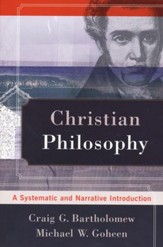
Bartholomew and Goheen Christian philosophy - a short review
Christian Philosophy
A Systematic and Narrative Introduction
Craig G. Bartholomew and Michael W. Goheen
Grand Rapids: Baker Academic, 2013
A fuller review will be published in Koers.
Christian Philosophy, though self-contained, is the third of a trilogy of excellent books. The first The Drama of Scripture (2004) showed us our place in the biblical story, the second Living at the Crossroads (2008) (see my review here) provided a missional focus for a Christian worldview. Christian Philosophy provides a superb overview of philosophy from a distinctively Christian perspective, based on scripture and a Christian worldview.
What has been needed for a long time is a book accessible to Christian undergraduates that provides a navigation around the difficult terrain of philosophy; a book that takes both philosophy and the Christian faith seriously and addresses the concerns that Christian have with philosophy This is that book.
This book should be compulsory reading for Christians at university whatever their discipline. Christian pastors owe it to those in their congregations who intend to go to university to make sure that they get a copy and inwardly digest it. I don’t apologise for being so effusive about this book - it is that good.
Contents
Introduction
Part 1: Approaching Christian Philosophy
1. Why Philosophy?
2. Faith and Philosophy
Part 2: The Story of Western Philosophy
3. Ancient Pagan Philosophy: The Pre-Socratics to Socrates
4. The High Point of Greek Philosophy: Plato, Aristotle, and Their Legacy
5. Medieval Synthesis Philosophy: Augustine to Abelard
6. The Middle Ages: Aristotle Rediscovered
7. The Renaissance and Reformation
8. Early Modern Philosophy: Bacon to Leibniz
9. Modern Philosophy: Hume to Schleiermacher
10. Modern Philosophy: Romanticism to Gadamer
11. Postmodernism and Philosophy Today
Part 3: Christian Philosophy Today
12. Christian Philosophy Today
13. Reformed Epistemology
14. Reformed Epistemology Applied
15. Reformational Philosophy
Conclusion
Annotated Further Reading List
Index
British Calvinists: Thomas Cranmer (1489-1556)
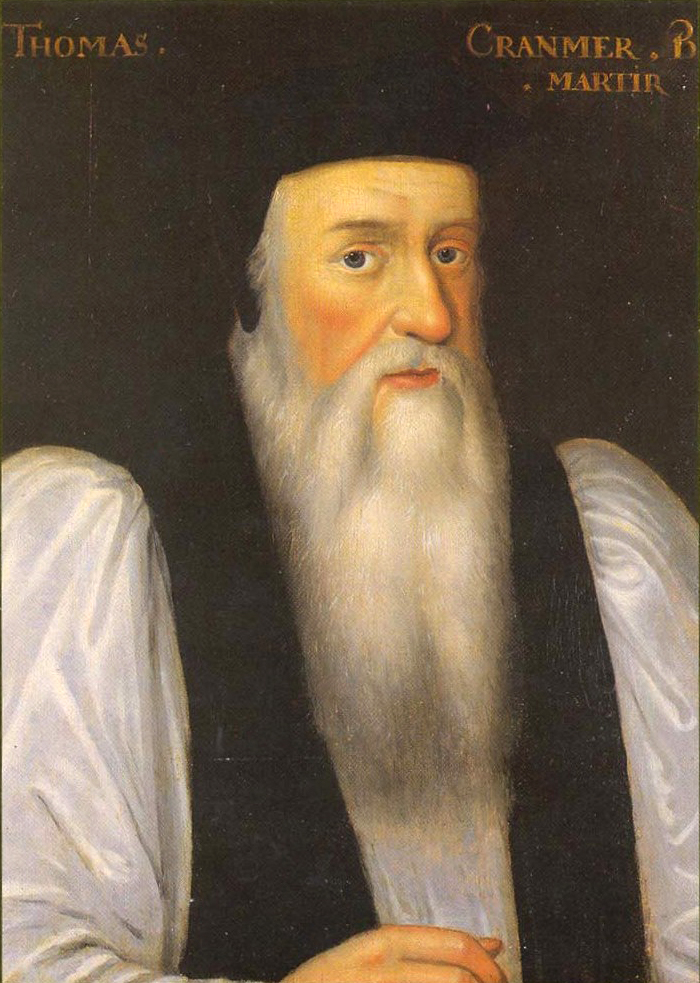
Thomas Cranmer (1489-1556) was born in Aslockton, Nottinghamshire. He had much influence with Henry VIII and was appointed by Henry to the see of Canterbury in 1533. He declared Henry's marriage to Catherine of Aragon invalid.
The 1533 Act of Supremacy severed the ties with Rome and established a Church of England with Henry as the "supreme head".
Cranmer helped compile the Book of Common Prayer (BCP) which helped shape the broadly Calvinistic direction of the Church of England. The 1549 Act of Uniformity passed under the rule of Edward VI meant that only the BCP could be used in churches in the land, this meant that many of the Roman Catholic practices could not be practised.
It was Cranmer who appointed the European Calvinists Peter Martyr Vermigli and Martin Bucer as Regius Professors of Divinity at Oxford and Cambridge respectively. These he hoped would help train up Protestant priests.
Cranmer's 42 articles also helped push the CoE in a moderately Calvinistic direction. When Edward died and Mary I (bloody Mary) took to the throne there was a return to Catholicism and she attempted to eliminate Protestantism. In 1555 the year, Latimer and Ridley were burnt, Cranmer was tried for heresy and in 1556 he too was burnt at the stake.
It was during this time many left the country and were known as the Marian exiles. This meant that many came into direct contact with Calvinists in places such as Geneva, Zurich, Basel and Strasbourg.
Many of Cranmer's works are available here.
Sunday, 9 February 2014
Saturday, 8 February 2014
Friday, 7 February 2014
British Calvinists: Miles Coverdale (1488-1569)
Miles (aka Myles) Coverdale (1488-1569) was one of the White Horse Inn crew at Oxford. He is most famous for his translation of the Bible into English.
He was born in Yorkshire and died in London. He is buried in St. Bartholomew's Church, London.
In 1523 he joined the Austin frairs in Cambridge, where was introduced to Reformed ideas.
He spent some time on the Continent but returned to England in 1539 but then in 1540 had to go into exile in Germany. He returned once more to England in 1548 and became Henry VIII's chaplain and then bishop of Exeter in 1551. When Mary I took to the throne he once more had to seek refuge this time in Denmark and then Wesel and Bergzabern. He finally was able to return to England in 1559.
His Coverdale Bible, the first complete English Bible, was printed in October 1535. He was closely involved with the printing and publication of the Great Bible. He also contributed to the Geneva Bible, a Bible that was replete with Calvinistic notes and annotations.
Coverdale's translation of the Psalms is used the Anglican Book of Common Prayer.
His Bible is available here .
J. H. Merle D’Aubigne described him as "a man distinguished by his zeal for the gospel of Jesus Christ."
Coverdales works can be found here.
Wednesday, 5 February 2014
British Calvinists: Hugh Latimer (c.1487 – 1555)
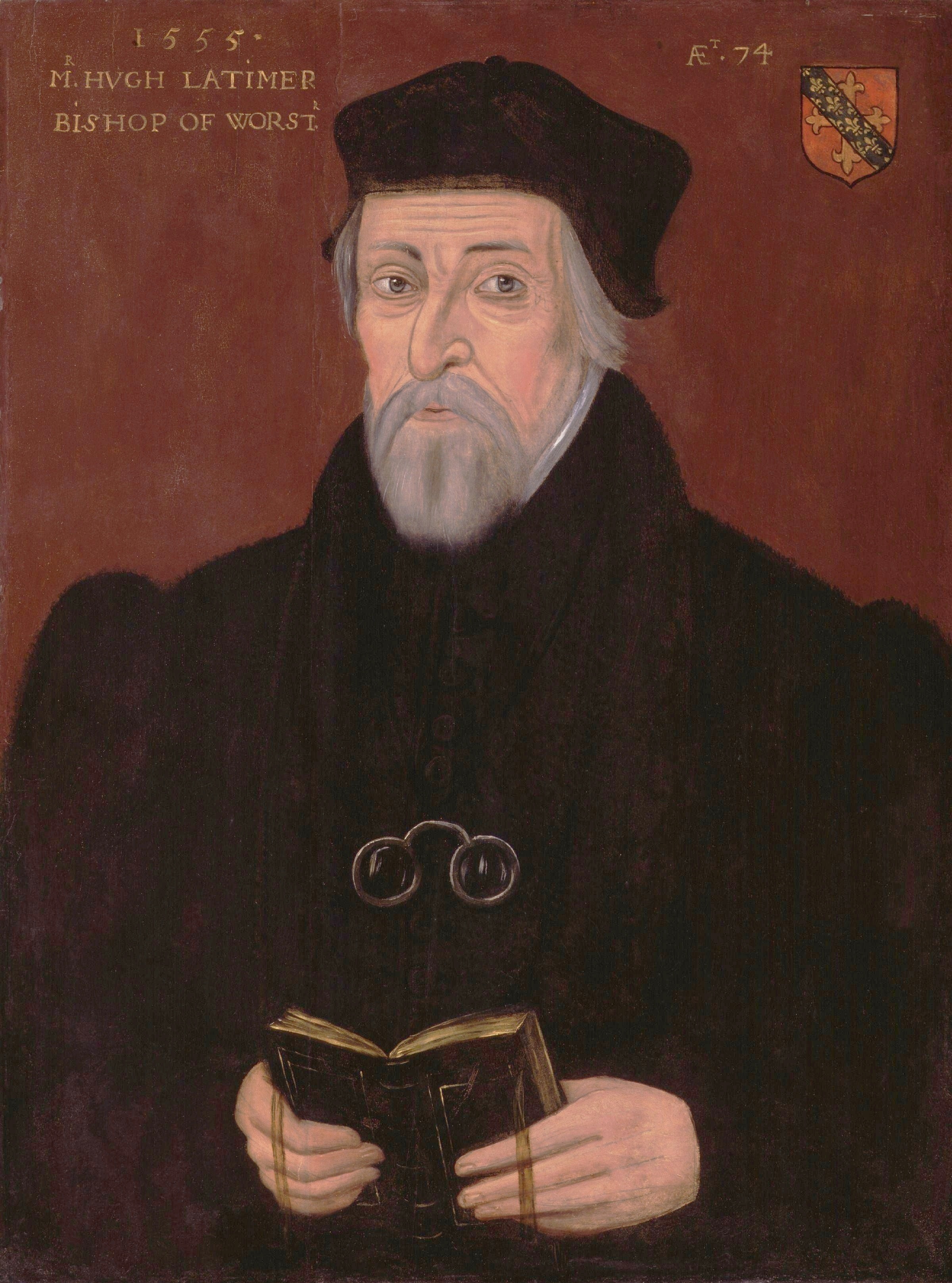
Hugh Latimer (circa 1487 – 1555) was one of the three "Oxford Martyrs of Anglicanism". The others were Ridley and Cranmer. All three were put to death for their faith under the reign of Mary, who became known as "bloody Mary".
He was born in Leicestershire and educated at Cambridge University. he was bought up as a devout Roman Catholic - it was the default religious position at the time.
He met with other Reformers at the White Horse Inn in Cambridge - it has now been demolished but a blue plaque marks its place:
Others who attended included Miles Coverdale, William Tyndale, Matthew Parker, Thomas Cranmer, Robert Barnes, Matthew Parker and Thomas Bilney. It was Bilney (c.1495-1531) who first organised these meetings and he was instrumental in Latimer's conversion. Latimer said of Bilney: "By his confession I learned more than in twenty years before".
Latimer then became an ardent supporter of the Reformation in England. He sided with Henry VIII over his divorce and then became Henry's chaplain. He later became the Bishop of Worcester but resigned in protest at Henry's refusal to allow more reform. He was a popular preacher under Edward's reign. But when Mary came to the throne he was arrested, tried and sentence to death for heresy.
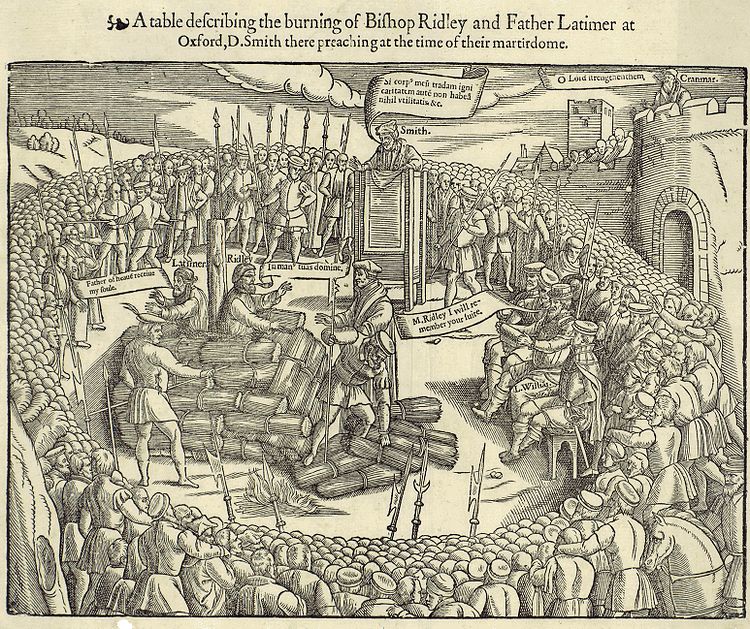
Latimer's final words when burnt at the stake with Ridley on 16 October 1555 were: "we shall this day light such a candle, by God's grace, in England, as I trust shall never be put out."
Ridley and Latimer at the stake
Some of Latimer's sermons can be found here
Some of Latimer's works can be found here.
Tuesday, 4 February 2014
Monday, 3 February 2014
British Calvinists: introduction
The history of British Calvinism is a complicated one. Perhaps for that reason it has largely been neglected. It's partly true what Strikwerda in John Bratt (ed.) The Rise and Development of Calvinism writes “The beginning of English Calvinism and its churches are very complicated and obscure. It is the story of a minority church which had to live” (p.107)
Christopher Dawson (1934) had this to say about it:
"Calvinism, today, is almost completely terra incognita to the ordinary educated Englishman. We see the mark that it has left on history, but we no longer understand its spirit. It is like the bed of a dry torrent whose cliffs and boulders bear witness to the gigantic force of which it was, once, the channel."
Spirit of the Oxford Movement. London: Sheed & Ward, p. 28
in a series of occasional posts I intend to provide a few pen portraits of some key British Calvinists. The list is not intended to be exhaustive. But may well include some or all (and others) of the list following this post. The list below is chronologically (by birth) and then alphabetical (by surname)
The term 'Calvinist' is not without problems. It is modified by a number of different prefixes (including hyper-, high-, low-, neo-, new-, classic-, moderate-) and has become associated worth the 5 points of TULIP. The points were first formulated at the Synod of Dordt - though the acronym TULIP dates back only to the early twentieth century. Those included in the list may well have modified their Calvinism with one of the prefixes, I have been inclusive rather than exclusive in including them.
For each one I hope to include why they are important, their key works, some quotes and what others may have said about them. This may well be adapted as the series progresses.
Chronological order of some British Calvinists
Hugh Latimer (1487-1555)
Miles Coverdale (1488-1569)
Thomas Cranmer (1489-1556)
John Hooper (c.1495-1555)
Nicholas Ridley (1500-1555)
Matthew Parker (1504-1575)
John Bradford (1510-1555)
George Wishart (1513-1546)
John Knox (1514-1572)
Edmund Grindal (1519-1583)
William Whittingham (1524-1579)
Thomas Cartwright (1535-1603)
Lawrence Chaderton (1536-1640)
Edward Dering (c.1540-1576)
John Field (1545-1588)
Walter Travers (c. 1548–1635)
John Rainolds (1549-1607)
Henry Barrowe (c 1550-1593)
John Greenwood (c. 1550-1593)
Robert Browne (1550-1633)
William Perkins (1558-1602)
Paul Baynes (c.1560-1617)
Henry Jacob (1563-1624)
Arthur Hildersham (1563-1632)
John Forbes (1568 -1634)
Thomas Gataker (1574-1654)
Joseph Hall (1574-1656)
William Ames (1576-1633)
John Davenant (1576-1641)
Richard Sibbes (1577-1635)
William Twisse (1578-1646)
William Gouge (1578-1653)
James Ussher (1581-1656)
John Ball (1585-1640)
Joseph Mede (1586-1638)
John Preston (1587-1628)
John Forbes (1593-1644)
John Spilsbury (c. 1593-1668)
John Davenport (1597-1670)
Jeremiah Burroughes (1599-1646)
Edward Reynolds (1599-1676)
Hanserd Knollys (1599-1691)
Tobias Crisp (1600-1643)
Samuel Rutherford (1600-1661)
Edmund Calamy (1600-1666)
Thomas Goodwin (1600-1680)
John Trapp (1601-1669)
Joseph Caryl (1602-1673)
John Lightfoot (1602-1675)
Isaac Ambrose (1604-1662)
Samuel Bolton (1606-1654)
John Milton (1608-1674)
Thomas Brooks (1608-1680)
Thomas Adams (1612-1653)
Richard Baxter (1615-1691)
John Owen (1616-1683)
William Kiffin (1616-1701)
William Gurnall (1617-1679)
Thomas Manton (1620-1677)
Thomas Watson (c. 1620-1686)
David Clarkson (1622-1686)
Matthew Poole (1624-1679)
Edward Fisher (1627-1656)
Stephen Charnock (1628-1680)
John Bunyan (1628-1688)
John Flavel (1630-1691)
John Howe (1630-1705)
Isaac Chauncy (1632-1712)
Joseph Alleine (1634-1668)
Benjamin Keach (1640-1704)
Robert Traill (1642-1716)
Daniel Williams (1643-1716)
Joseph Hussey (1660-1726)
Matthew Henry (1662-1714)
John Skepp (1675-1721)
Anne Dutton (1692-1765)
John Gill (1697-1771)
John Brine (1703-1765)
Daniel Rowland (1713-1790)
George Whitefield (1714-1770)
Howell Harris (1714-1773)
William Romaine (1714-1795)
Benjamin Beddome (1717-1795)
Anne Steele (1717-1778)
John Collett Ryland (1723-1792)
John Newton (1725-1807)
Robert Hall Sr (1728-1791)
Benjamin Francis (1734-1799)
Abraham Booth (1734-1806)
Thomas Haweis (1734-1820)
Caleb Evans (1737-1791)
Samuel Medley (1738-1799)
Augustus Toplady (1740-1778)
William Huntingdon (1745-1813)
John Rippon (1751-1825)
John Sutcliff (1752-1814)
Robert Hawker (1753-1827)
Charles Simeon (1759-1836)
William Carey (1761-1834)
John Sutcliff (1752-1814)
William Steadman (1764-1837)
Robert Haldane (1764-1842)
Joseph Kinghorn (1766-1832)
Samuel Pearce (1766-1799)
Christmas Evans (1766-1838)
Joshua Marshman (1768-1837)
William Ward (1769-1823)
Joseph Ivimey (1773-1834)
William Gadsby (1773-1844)
Alexander Carson (1776-1844)
John Stevens (1776-1847)
Andrew Fuller (1782-1815)
Christopher Anderson (1782-1852)
Joseph Irons (1785-1852)
William Nunn (1786-1840)
Andrew Reed (1787-1862)
John Kershaw (1792-1870)
William Rushton (1796-1838)
J. C. Philpot (1802-1869)
William Tiptaft (1803-1864)
William Knibb (1803-1845)
James Wells (1803-1872)
William McKerrow (1803-1878)
William Cunningham (1805-1861)
J C Ryle (1816-1900)
Alexander Maclaren (1826-1910)
C H Spurgeon (1834-1892)
Henry Wace (1836-1924)
James Kidwell Popham (1847-1937)
Thomas Houghton (1859-1951)
William Sykes (1861-1930)
John R. Mackay (1865-1939)
Donald Maclean (1869-1943)
Henry Atherton (1875-
Arthur W. Pink (1886-1952)
Martyn Lloyd-Jones (1899-1981)
G N M Collins (1901-1989)
E F Kevan (1903-1965)
R Tudor Jones (1921-1998)
E. L. Hebden Taylor (1925-2006)
Alphabetical list of some British Calvinists
Thomas Adams (1612-1653)
Joseph Alleine (1634-1668)
Isaac Ambrose (1604-1662)
William Ames (1576-1633)
Christopher Anderson (1782-1852)
Henry Atherton (1875-
John Ball (1585-1640)
Henry Barrowe (c 1550-1593)
Richard Baxter (1615-1691)
Paul Baynes (1560-1617)
Benjamin Beddome (1717-1795)
Samuel Bolton (1606-1654)
Abraham Booth (1734-1806)
John Bradford (1510-1555)
John Brine (1703-1765)
Thomas Brooks (1608-1680)
Robert Browne (1550-1633)
John Bunyan (1628-1688)
Jeremiah Burroughes (1599-1646)
Edmund Calamy (1600-1666)
William Carey (1761-1834)
Alexander Carson (1776-1844)
Thomas Cartwright (1535-1603)
Joseph Caryl (1602-1673)
Lawrence Chaderton (1536-1640)
Stephen Charnock (1628-1680)
Isaac Chauncy (1632-1712)
David Clarkson (1622-1686)
G. N. M. Collins (1901-1989)
Myles Coverdale (1488-1569)
Thomas Cranmer (1489-1556)
Tobias Crisp (1600-1643)
William Cunningham (1805-1861)
John Davenant (1576-1641)
John Davenport (1597-1670)
Edward Dering (c.1540-1576)
Anne Dutton (1692-1765)
Caleb Evans (1737-1791)
Christmas Evans (1766-1838)
John Field (1545-1588)
Edward Fisher (1627-1656)
John Forbes (1568 -1634)
John Flavel (1630-1691)
Andrew Fuller (1782-1815)
William Gadsby (1773-1844)
Thomas Gataker (1574-1654)
John Gill (1697-1771)
Thomas Goodwin (1600-1680)
William Gouge (1578-1653)
John Greenwood (c. 1550-1593)
Edmund Grindal (1519-1583)
William Gurnall (1617-1679)
Robert Haldane (1764-1842)
Joseph Hall (1574-1656)
Robert Hall Sr (1728-1791)
Howell Harris (1714-1773)
Robert Hawker (1753-1827)
Thomas Haweis (1734-1820)
E. L. Hebden Taylor (1925-2006)
Matthew Henry (1662-1714)
Arthur Hildersham (1563-1632)
John Hooper (c.1495-1555)
Thomas Houghton (1859-1951)
John Howe (1630-1705)
William Huntingdon (1745-1813)
Joseph Hussey (1660-1726)
Joseph Irons (1785-1852)
Joseph Ivimey (1773-1834)
Henry Jacob (1563-1624)
R Tudor Jones (1921-1998)
John Kershaw (1792-1870)
William Kiffin (1616-1701)
Joseph Kinghorn (1766-1832)
Benjamin Keach (1640-1704)
E. F. Kevan (1903-1965)
Hanserd Knollys (1599-1691)
William Knibb (1803-1845)
John Knox (1514-1572)
Hugh Latimer (1487-1555)
John Lightfoot (1602-1675)
Martyn Lloyd-Jones (1899-1981)
John R. Mackay (1865-1939)
Donald Maclean (1869-1943)
Alexander Maclaren (1826-1910)
Thomas Manton (1620-1677)
Joshua Marshman (1768-1837)
William McKerrow (1803-1878)
Joseph Mede (1586-1638)
Samuel Medley (1738-1799)
John Milton (1608-1674)
John Newton (1725-1807)
William Nunn (1786-1840)
John Owen (1616-1683)
Matthew Parker (1504-1575)
Samuel Pearce (1766-1799)
William Perkins (1558-1602)
J. C. Philpot (1802-1869)
Arthur Pink (1886-1952)
Matthew Poole (1624-1679)
James Kidwell Popham (1847-1937)
John Preston (1587-1628)
John Rainolds (1549-1607)
Andrew Reed (1787-1862)
Edward Reynolds (1599-1676)
Nicholas Ridley (1550-1555)
John Rippon (1751-1825)
William Romaine (1714-1795)
Daniel Rowland (1713-1790)
William Rushton (1796-1838)
Samuel Rutherford (1600-1661)
John Collette Ryland (1723-1792)
J. C. Ryle (1816-1900)
John Sutcliff (1752-1814)
Richard Sibbes (1577-1635)
Charles Simeon (1759-1836)
John Skepp (1675-1721)
John Spilsbury (c. 1593-1668)
C. H. Spurgeon (1834-1892)
William Steadman (1764-1837)
Anne Steele (1717-1778)
John Stevens (1776-1847)
John Sutcliff (1752-1814)
William Sykes (1861-1930)
Walter Travers (c. 1548–1635)
William Tiptaft (1803-1864)
Augustus Toplady (1740-1778)
Robert Traill (1642-1716)
John Trapp (1601-1669)
William Twisse (1578-1646)
James Ussher (1581-1656)
Henry Wace (1836-1924)
William Ward (1769-1823)
Thomas Watson (1620-1686)
James Wells (1803-1872)
William Whittingham (1524-1579)
George Whitefield (1714-1770)
Daniel Williams (1643-1716)
George Wishart (1513-1546)
Saturday, 1 February 2014
Kenneth Stewart's Restoring the Reformation - a very brief review
Kenneth J. Stewart poses and answers the question: did the British evangelicals ‘restore the Reformation’ in Francophone Europe? He examines the role of the British in the Reveil movement that started in Geneva.
The consensus has been that Robert Haldane was the catalyst for this revival. This stems largely from the “tendentious” biography by his nephew Live of the Haldanes. The Scot Haldane visited Geneva in 1816-17, it seems he was under the impression that Geneva and the continent was almost devoid of evangelicals. Stewart shows that this was largely unfounded.
Haldane’s legacy included the mentoring of a number of young theological students and passed on to them his separatist and restorationist ideas.
The answer to Stewart’s question seems to be only partly.
Subscribe to:
Posts (Atom)