An accidental blog

"If God is sovereign, then his lordship must extend over all of life, and it cannot be restricted to the walls of the church or within the Christian orbit." Abraham Kuyper Common Grace 1.1.

Friday, 7 September 2007

This book sounds interesting ....

Microclesia has been blogging through Frank Viola's Pagan Christianity (Present Testimony Ministry, 2003) (it will be re-released with george Barna as a co-author shortly). [ht faithmaps]

Here are a few extracts from Microeclesia on Viola:

Viola spends a few chapters showing 2nd-5th century Greek and Roman influence on Xn gathering, preaching, and hierarchy formation - and shows just how far we’ve drifted from the simplicity of “being” church - gathering together in Acts-like communities.

The notion of “going to church” / “church building” / paid clergy giving a “sermon in church” (etc.) would have been unknown to early Christ followers. The concept of church with “paid experts up front dispensing religious information” appears to be a third-century confluence of Greek sophistry and Roman judicial hierarchy.

Viola shows how Protestantism simply rearranged the ecclesial deck chairs of middle-ages Catholicism, including the elevation of religious experts (pastors, etc.) that effectively “run the show.” Says Viola, “…after the smoke cleared from the Reformation, we ended up with the same thing that the Catholics gave us – a selective priesthood!”

“The modern pastor is the most unquestioned element in modern Christianity. Yet he does not have a strand of scripture to support his existence… Rather, the modern pastor was born out of the single-bishop-rule first spawned by Ignatius and Cyprian. The bishop evolved into the local presbyter. In the Middle Ages, the presbyter grew into the Catholic priest. During the Reformation, he was transformed into the preacher, the minister, and finally the pastor – the man upon whom all of Protestantism hangs. To juice it down to one sentence: The Protestant pastor is little more than a slightly reformed Catholic priest.”

If I had to distill Pagan Christianity into one sentence, it would be this: We have institutionalized, centralized, formalized, stratified, professionalized, academized, and mega-fied something that was intended to remain organic, holistic, distributed, participative, fluid, and deeply communal.

Viola concludes, “Herein lies the root and stem of Christian education. It is built on the Platonic idea that knowledge and spirituality are the same… (ital mine) Greek philosophers Plato and Aristotle (both students of Socrates) are the fathers of modern Christian education. To use a biblical metaphor, modern Christian education, whether it be seminarian or Bible college, is serving food from the wrong tree: the tree of the knowledge of good and evil rather than the tree of life…”


Powered by ScribeFire.

Monday, 3 September 2007

Christian work

Dorothy L. Sayers from 'Why work?' in Creed or Chaos:

The only Christian work is good work done well. Let the Church see to it that the workers are Christian people and do their work well, as to God: then all the work will be Christian work, whether it is Church embroidery, or sewage-farming. As Jacques Maritain says: 'If you want to produce Christian work, be a Christian, and try to make a work of beauty into which you have put your heart; do not adopt a Christian pose.' He is right. And let the Chruch remember that the beauty of the work will be judged by its own, and not by ecclesiastical standards. Let me give you an illustration of what I mean. When my play The Zeal of Thy House was produced in London, a dear old pious lady was much struck by the beauty of the four great archangels who stood throughout the play in their heavy, gold robes, eleven feet high from wing-tip to sandal-tip. She asked with great innocence 'whether I selected the actors who played the angels for the excellence of their moral character?' I replied that the angels were selected, to begin with, not by me but by the producer, who had the technical qualifications for selecting suitable actors - for that was part of his vocation. And that he selected, in the first place, young men who were six feet tall, so that they would match properly together. Secondly, angels had to be of good physique, so as to be able to stand stiff on the stage for two and a half hours, carrying the weight of their wings and costumes, without wobbling, or fidgeting, or fainting. Thirdly, they must be able speak verse well, in an agreeable voice and audibly. Fourthly, they must be reasonably good actors. When all these technical conditions were fulfilled, we might come to the moral qualities, of which the first would be the ability to arrive on the stage punctually and in a sober condition, since the curtain must go up on time, and a drunken angel would indecorous. After that, and only after that, one might take character into consideration, but that - provided his behaviour was not so scandalous as to cause dissension among the company - the right kind of actor with no morals would give a far more reverent and seemly performance than a saintly actor with the wrong technical qualifications. The worst religious films I ever saw were produced by a company which chose its staff exclusively for their piety. Bad photography, bad acting, and bad dialogue produced a result so grotesquely irreverent that the pictures could not have been shown in churches without bringing Christianity into contempt. God is not served by technical incompetence; and incompetence and untruth always result when the secular vocation is treated as a thing alien to religion.

Saturday, 1 September 2007

Odds and sods


Powered by ScribeFire.

Sunday, 26 August 2007

Josiah - a man of reform

These are the slides for a talk I gave at a church service this morning on Josiah (2 Kings 23)

Saturday, 25 August 2007

Dooyeweerd's theory of man

Glenn Friessen has just posted Dooyeweerd's 'The theory of man in the philosophy of the law idea: 32 propositions on anthropology'. Glenn writes:

It is not known who made the first English translation, as distributed by the ICS mimeo. I have made some spelling corrections and grammatical changes. The original underlining in the typewritten translation has been replaced by italics, as in the original. The propositions marked with an asterisk [*] include both the original Dutch and the English text. For those propositions, this is a new translation. More importantly, I have used W.J. Ouweneel’s book De leer van de mens (Amsterdam: Buijten & Schipperheijn, 1986) in order to include extra material that Dooyeweerd added to these propositions. Ouweneel found this extra material in Dooyeweerd’s unfinished manuscript De mens: Inleiding tot de anthropologie van de Wijsbegeerte der Wetsidee (typescript volume II, pages 753-898, Dooyeweerd Archives, Amsterdam, dated approximately 1942). I follow Ouweneel’s practice of inserting this extra material for these propositions between the markers <>. This unfinished manuscript was to be volume III of Dooyeweerd’s Reformation and Scholasticism, but he did not complete it. In his 1964 lecture, Dooyeweerd indicated that he still did want to finish it, although he said that Volume 2 of that planned trilogy, which was supposed to be a polemic directed against Roman Catholicism, had lost its point. This is because recent developments in Catholic theology (la nouvelle théologie) had resulted in that book having lost its point. He says that Roman Catholic theology is now moving in a direction opposed to scholasticism; it has now raised the following ideas: (1) it speaks about man’s radical corruption (2) it opposes any split between a domain of philosophy belonging to natural light of reason and a domain of theology belonging to the divine light of revelation (3) it denies the autonomy of thought (4) it affirms the religious center of man.


Powered by ScribeFire.

Friday, 24 August 2007

Odds and sods

There are no crosses in Makoto Fujimura's paintings. No images of Jesus gazing into the distance, or serene scenes of churches in a snow-cloaked wood.
Fujimura's abstract works speak to his evangelical Christian faith. But to find it takes some digging.

Monday, 20 August 2007

On Dawkins - a compilation of links

A reducio ad absurdum: The Dawkins Delusion


Dawkins' websites

God Delusion
  • William Lane Craig examines Dawkin's 'argument for atheism' here.
  • Macht has started to blog through Dawkins' God Delusion. I and II. As always, Macht has some insightful comments.
  • Alister McGrath 'The Dawkins delusion'


Reviews

In general


Book responses to Dawkins

Audio
  • God Delusion Debate David Quinn vs. Richard Dawkins Click Here to listen
  • Is God a Delusion? Atheism and the Meaning of Life Alister McGrath Click Here to listen
  • God Delusion Debate Alister McGrath vs. Richard Dawkins Part 1 and Part 2.
  • Dawkins and McGrath chaired by Joan Bakewell here.

Video

  • Dawkins Q&A session on the God Delusion:


Dawkins answering questions


Sunday, 19 August 2007

The prodigal God as good shepherd

A talk by Calvin Seerveld on 'The prodigal God as good shepherd' is available here (wma format).


Powered by ScribeFire.

Saturday, 18 August 2007

Odds and sods

Andrew Linzey, Director of the Oxford Centre for Animal Ethics, writes a piece in the Church Times on 'First hit the pets, then the people': 'Christians need to act on the link between animal and human abuse'.

Jazz and philosophy? Sounds like a great mix Douglas Grouthius has an article in October's The Philosopher's Magazine on 'Swinging in class'. [HT Douglas Grouthius]

Also from Douglas are two mp3 sermons: 'What would Jesus say to a relativist?' and 'What would Jesus say to a new ager?'

A discussion between Hugh Ross and Victor Stenger on the latter's book God: The Failed Hypothesis [HT Debunking Christianity]

Nigel Warburton has recently posted the chapter on Hume's Dialogues Concerning Natural Religion as an mp3 here.

Powered by ScribeFire.

Friday, 17 August 2007

Turing on maths

This piece is taken from the play/ film 'Breaking the Code'. The screenplay was by Hugh Whitemore based on Alan hodges biography. Dilly Knox asks Alan Turing to explain in 'general terms' his research. This is Turing's response. It is a great summary of twentieth-century mathematics from Russell to Turing.

A few words of explanation ...in general terms?

Well, erm, it’s about right and wrong in ... general terms...It’s a technical paper in mathematical logic. but it’s also about the difficulty of telling wrong from wrong. You see people think, that well, most most people think that in mathematics we always know what is right and wrong, not so, not anymore. It’s a problem that has occupied mathematicians for forty or fifty years.
How do you tell wright from wrong?

Bertrand Russell has written a book on it his Principia Mathematica – his idea was to break down all mathematical concepts and arguments into little pieces and then show they can be derived from pure logic. Well it didn’t quite work out that way and after many years of intensive work all he was able to show was that it was terribly difficult to do anything of the kind; but it was an important book. Important and influential it influenced both David Hilbert and and Kurt Godel. It’s rather like what physicsts call splitting the atom. As analysing the physical atom has led to a new kind of physics so the attempt to analyse these mathematical atoms has led to a new kind of mathematics.

David Hilbert took the whole thing a stage further. I don’t suppose his name means much if anything to you? Wel there you are you see, it’s the way of the world people never really seem to hear about the really great mathematicians. But Hilbert looked at the problem from a completely different angle He said that if we are to have any fundamental system for mathematics, like the one Russell was trying to work out

It must satisfy three basic requiremts: consistency, compelteness and decidability.

Now consistency means you won’t ever get a contradiction in your own system, in other words you will never be able to follow the rules of your and end up with showing 2 + 2 = 5.

Completeness means that if any statement is true there must be some way of proving it by using the rules of your system

and decidability means, well decidability means that there must exist some method, some definite procedure or test which can be applied to any given mathematical assertion and which will decide whether or not that assertion is provable.
Now Hilbert thought this was a perfectly reasonable set of requiremtns to impose.

But within a few years Kurt Godel showed that no system for mathematics could be both consistent and compete and he did this by constructing a mathematical assertion, which said in effect: This assertion cannot be proved.
Classic paradox! This assertion cannot be proved. Well, either it can or can’t
If it can be proved we have a contradiction and the system is inconsistent
If it cannot be proved then the assertion is true. But it can’t be proved, which means the system is incomplete.
Thus mathematics is either inconstent or incomplete. It’s a beautiful theorm. It’s quite beautiful. I think Godel’s theorem is the most beautiful thing I know.

The question of decidabilty was still unsettled. Hilbert thought there should be one single clearly defined method of proving whether mathematical assertions were provable. The decision problem he called it the entscheidungsproblem. In my book on computable numbers I wanted to show that no one method can work for all questions, solving mathematical problems requires an infinite supply of new ideas. It is one thing to make this claim it is a monumental task to prove it. I needed to examine the provability of mathematical assertions past present and future. How on earth was it it be done?

Eventually one word gave me a clue – people had been talking a bout a mechanical process and process that could be applied mechanically to mathematical problems, a process without requiring any human invention or ingenuity – machine; that was the crucial word. I conceived the idea of a machine. A Turing machine which would be able to scan mathematical symbols, it read them if you like it would read a mathematical assertion and then arrive at a verdict whether that assertion was provable. I was able to show that Hilbert was wrong. My idea worked.


Tuesday, 14 August 2007

John Forbes Nash Jr on ET messages and mathematical ideas

How could you," began [George] Mackey, "how could you, a mathematician, a man devoted to reason and logical proof ... how could you believe that extraterrestials are sending you messages? How could you believe that you are being recruited by aliens from outer space to save the world? How could you ...?"
Nash looked up at last and fixed Mackey with an unblinking stare as cool and as dispassionate as that of any bird or snake."Because," Nash said slowly in his soft, reasonable drawl, as if talking to himself, "the ideas I had about supernatural beings came to me the same way that my mathematical ideas did. So I took them seriously."


Sylvia Nasar A Beautiful Mind (Faber and Faber: London, 1998; p. 11)

Sunday, 12 August 2007

More on Dawkins

Richard Dawkins has started to look at new age therapies on a UK TV (Ch4) programme due to go out tomorrow: details here.

In today's Observer Neil Spencer one of Dawkins's 'enemies of reason' responds.


Nigel Calder in an interview on 'orthodoxies and experts' given on an Australian programme decribes Dawkins's view of evolution as 'out of date':
http://www.idnet.com.au/files/pdf/ssw_20070811.mp3
[HT Uncommon Descent]

William lane craig examines Dawkin's 'argument for atheism' here.

A new webiste from Michael penfold: atheistdelusion
I now regard Richard Dawkins as a dangerous enemy of truth, not the 'advocate for disinterested truth' he likes to style himself. As for my humble biology teacher, he is to be pitied for uncritically believing and teaching what he saw in the textbooks. It's the Dawkinses of this world who are the real culprits in this deception. For a number of years I quietly contemplated 'doing something about it' but my annoyance at Dawkins never went any further - that is, until September 2006, when his book The God Delusion came out. After carefully reading through it I concluded there was a need for a comprehensive website exposing Darwin's Rottweiler Charles Simonyi calls him. You're on that site now.

Friday, 10 August 2007

Odds and sods

Thursday, 9 August 2007

Enkapsis

Paul Robinson has recently posted something on enkapsis. Here is Robert Knudsen's take on it, from Anakainosis 1(2) pp 4-5.

Enkapsis by Robert D. Knudsen

The term "enkapsis" had its origin in the work of Martin Heidenhain. It was taken over by Theodore Haering, through whom it became better known. The word, which may be said to mean "encapsulation", derives from the Greek enkaptein.

As used in the Philosophy of the Cosmonomic Idea, the term refers to individuality structures in relation, the relation being such that one or more individuality structures are enclosed, or encapsulated, by another, but not in such a way as to be parts of a whole. The relation is such, furthermore, as not to destroy the individuality structure or structures of what has been encapsulated. Further yet, the relation is such that the structure or structures taken up in an enkaptic relation­ship assume new characteristics and activities. They are, it is said, "opened up". The relationship, therefore, is not simply an external one.

When an enkaptic relationship is dissolved, an individuality structure bound up in it reverts to its free form and again assumes the character­istics proper to it.

If in an enkaptic relationship we are not confronted with a whole/part relationship, we are also not confronted with levels. Indeed, one or more individuality structures are encapsulated in another. That is, however, not as levels, where a "higher" level might reach down only to a certain point. Instead, what encapsulates another individuality structure embraces and qualifies the entire enkaptic whole. That is not to say, however, that it assimilates what is encapsulated in it.

In a plant, for example, which embraces enkaptically what are non-liv­ing substances, we have what is a living organism. The entire plant is a living organism, even though it contains non-living indiviuality structures.

The form of a statue, which is aesthetically qualified in an objective fashion, encapsulates the material out of which the statue is made. The material indeed imposes certain limitations on the artist; but the finished product is an aesthetically qualified whole.

Dr. Robert D. Knudsen [was] Associate Professor of Apologetics at Westminster Theological Seminary, Chestnut Hill, Philadelphia, Pa. 19118. He is a contributing editor of Philosophia Reformata and Editor-elect for the Dooyeweerd Publication Committee.

Wednesday, 8 August 2007

Monday, 30 July 2007

Odds and sods

We believe in one God, the main God of a number of Gods(1), who acquired His place as Supreme Being over a long period of time by living a righteous life(2), the Father Almighty, Maker one of the Makers (3) of heaven and earth, and of all things visible and invisible (and Who is married, by the way) (4);

And in one Lord Jesus Christ, the Son of God, one of the spirit children of God (Lucifer being another), (5) the Only-begotten, Begotten of the Father before all worlds, Light of Light, Very God of Very God, Begotten, not made; of one essence with the Father (6) by whom all things were made: Who won God’s favor by agreeing with God’s plan of salvation when Lucifer disagreed,(7) and who was called Jehovah in the Old Testament(8).

Who for us men and for our salvation came down from heaven, and was incarnate of the Holy Spirit and the Virgin Mary, of a physical relationship between God the Father and Mary, (9) and was made man, and was married at the wedding in Cana (10);

And was crucified also for us under Pontius Pilate, and suffered and was buried;

And the third day He rose again, according to the Scriptures;

And ascended into heaven, and sitteth at the right hand of the Father in the celestial kingdom, the highest of the three kingdoms of heaven;(11) And He and Joseph Smith (12) shall come again with glory to judge the quick and the dead, Whose kingdom shall have no end.

And we believe in the Holy Spirit, the Lord, and Giver of Life, Who proceedeth from the Father, Who with the Father and the Son together is worshiped and glorified, Who spake by the Prophets;

And we believe in one, holy, catholic, and apostolic Church. in the Mormon Church, which restores Christianity to the form it had in the time of the apostles.(13)

We acknowledge one Baptism – for both living and dead – (14) for the remission of sins as long as that baptism is conducted by the Mormon Church (15)

We look for the Resurrection of the dead which will be presided over by Joseph Smith,(16)

And the Life of the world to come. And Joseph Smith. (17) Amen.


Powered by ScribeFire.

Holiday Reading

Thursday, 26 July 2007

Albert Weideman on RRP

The Reformational Publishing Project are to publish a book by Albert Weideman Beyond Expression: A Systematic Study of the Foundations of Linguistics. In the meantime there are 11 articles by Weideman on the RRP site: here.

Powered by ScribeFire.

Maths as rhyme?

I have recently read Vern Poythress's paper 'Mathematics as a rhyme'. Below are a few of my initial observations.

His idea as maths as a poem is an interesting idea, but I am not so sure as to how fruitful it is. It seems to be little more than Kepler/Galileo's idea that maths is the language of the universe.

I am not convinced of the metaphor of maths as a rhyme within the poem of the universe. It has too many resonances with the two books concept for my liking!

Not all poems rhyme!

If the poem is created by a poet, then the poet takes things he has not created (letters, words) to create the poem using rhyme etc. This suggest that God (poet) creates the universe (poem) using uncreated maths!

If maths is the rhyme what are the words?

He does makes some good points regarding mathematics; including:

Maths is a distinct science

It is not reducible to other sciences

Its regularities are a reflection of the faithfullness of God

There is at lest some degree of a posteri character within the knowledge of maths, even though it gives the impression that its truths are a priori

He subverts the view that maths is necessary rather than contingent. [ Though I would contend that it is necessary for creatures, but contingent for the Creator.]

Maths is personally structured [I'm not totally sure what he means here], for intelligibility there must be a personal interpreter.

There is a good discussion of reductionisms of logicism, formalism, intuition and empiricism - he shows the attractiveness of reductionism: "stimulating as a metaphor inadequate as ultimate explanation" [could this be said of maths as a rhyme within the poem of the universe?]

He shows the irreducibillity of the subparts of maths to one another.

GM Organisms lecture

Wednesday, 1st August, 8 pm @ WYSOCS


Dr. Uko Zylstra, Professor of Biology and Academic Dean of Calvin College, Grand Rapids, Michigan, will visit WYSOCS on 1st August to give a lecture on:


GENETICALLY MODIFIED ORGANISMS - creation confounded?


Followed by a discussion at 9 pm on
THE PLACE AND TASK OF A CHRISTIAN UNIVERSITY in today's world
Details here.


Powered by ScribeFire.

Wednesday, 18 July 2007

"A Rocha: "Why Should Christians Care for Creation?" (10:05min)"

A Rocha: "Why Should Christians Care for Creation?" (10:05min)

10 min 5 sec -
Description: A Rocha is an international Christian nature conservation NGO working to show God's love for all creation. This video features theologians (John Stott, Alister McGrath, James Jones) and scientists (Ghillean Prance, Simon Stuart) who talk about the biblical basis for creation care.

If you're having trouble watching the video, try copying the following URL into your browser:
http://video.google.com/videoplay?docid=2887099263216835896&q=McGrath+Dawkins&pr=goog-sl

Reformational philosophy by Blosser

Catholic philospher Philip Blosser has a brief overview of reformational philosophy. He writes:
Any intellectual wading more than ankle-deep into the work of these Reformational Philosophers soon realizes that he would be a fool to ignore the wealth of theoretical insights yielded by them over the last century. Dooyeweerd is probably among the two or three greatest Christian philosophers of the twentieth century from any tradition, period. I say this as a Catholic with more than a passing acquaintance with the work of Etienne Gilson, Jacques Maritain, Gabriel Marcel, John Courtney Murray, Bernard Longergan, and Alasdair MacIntyre, not to mention Karol Wojtyla. This is a philosophical tradition, in my opinion, with which every serious thinker ought to be acquainted and conversant.


Powered by ScribeFire.

Monday, 16 July 2007

Pop philosophy podcasts

Gregory Baus, in the comments to my previous post, points out that Open Court have a series of podcasts of chapters from the Pop Goes Philosophy series, a series similar to the Blackwell 24 and philosophy book I mentioned.


Powered by ScribeFire.

Sunday, 15 July 2007

24 and philosophy

It had to happen a book on 24 and Philosophy. Availbale in October from Blackwells.


24 and Philosophy is a book you just can't do without. It's all here, folks: the reason Presidents trust him; how Jack cuts through the lies and ambiguities; why he puts his life on the line for others; and how he knows which knee cap to blow out to get that all-important next lead. With the help of twenty "24 crazed" philosophers, you'll figure out what makes this guy tick, and much much more.

* A witty, but philosophical exploration of the popular television series 24, now in its sixth season
* Addresses pressing ethical issues relating to torture, terrorism and warfare
* Raises fascinating questions about knowledge, loyalty, and suspicion
* Explores in-depth the character and behaviour of Jack Bauer
* Written by philosophers who are all serious fans of the show

[HT Between two worlds]

Powered by ScribeFire.

Inner compass

Inner Compass is a programme produced at Calvin College that explores how we make decisions about ethical, religious and social justice issues.

Recent episodes (each one is about 75 Mb) include:
Other episodes are available to listen using Real Audio:
  • #516 The Meaning of Easter
  • #423 Stem Cells: What's Coming
  • #414 All Tech'd Out: No Computers in Class
  • #406 Family-Based Youth Ministry
  • #401 Learning Disabled or Lazy?
  • #222 Internet Pornography
  • #218 Chrisitan Counseling: Two Views
  • #118 Trying Juveniles as Adults
  • #101 Baptism When: Infancy or Later?


Powered by ScribeFire.

Saturday, 14 July 2007

Gene Haas on 'Creational ethics is public ethics'

The Journal for Christian Theological Research has just published an article by Gene Haas on 'Creational ethics is public ethics':
This paper presents the framework and key doctrines relevant to public moral engagement as found in the Reformed or neo-Calvinist tradition shaped by Abraham Kuyper and his disciples. My thesis is that Christian ethics is public ethics because it is creational ethics. Christian ethics has a place in the public arena because it is the articulation of the creational moral order that constitutes and guides all human beings. Neo-Calvinism considers the creation order as foundational. The fall of creation and its redemption must be understood in relation to this foundational doctrine. But the creational order also shapes the nature of Christian involvement in the public domain. The final section highlights some implications of this for involvement in public life.


Powered by ScribeFire.

Wednesday, 11 July 2007

Steenfest

Bill Gram-Reefer has set up a new website steenfest.org to continue the Pete Steen Festchrift Project.;

The aim is to "To nurture ongoing community building, we hope this site can also be a resource for news about allied efforts at large including but not limited to:

news and events from friends and allied organizations
book announcements
articles and reviews
"can you help me find" requests (books, people, jobs, etc.)
job openings
conference papers
celebrations and anniversaries
topical discussions on issues of the day (be nice)
comments and suggestions on the project
share photos of Pete or current family and friends."

There are also loads of pictures of Pete Steen on Flickr.

And don't forget that Pete's book on Dooyeweerd is being uploaded on the Steen Pages at All of life redeemed.

Bruce Wearne's Skillen Bibliography

Bruce Wearne's annotated Skillen bibliography gets a mention here:

Sunday, 8 July 2007

Biography of Herman Bavinck


A biography of Herman Bavinck is available at Reformation 21 part I and part II, the author is Ron Gleason.

Powered by ScribeFire.

Saturday, 7 July 2007

Tom Wright at WYSOCS

The two talks by Tom Wright given at the WYSOCS 21st birthday event are now available on the Reformational UK site.


Powered by ScribeFire.

Tuesday, 3 July 2007

Odds and sods

Adrian Warnock has now switched to: http://adrianwarnock.com/.
He also has a great 37-question quiz on the atonement.

Chris Tilling of Chrisendom is looking at universalism.

Jonathan Kvanig has posted some articles of his on 'Destiny and purpose' here.&nbsp; Including an essay on 'Universalism and the problem of hell'. [HT prosblogion]

Guy Davies, the exiled preacher, has been conducting a number of interviews with Christian bloggers, including Cynthia Nielsen


Powered by ScribeFire.

Saturday, 30 June 2007

The religious dimension of technology

This is a piece I wrote in 1993 for the journal RE Today (Summer 1993).

More Clouser on AoLR

I've recently added links to the responses to Roy Clouser's paper Prospects for Theistic Sciencethat appeared in the ASA's journal Perspectives on Science and Christian Faith and have also posted Roy's "Replies to the Comments of Le Morvan, Halvorson, and Ratzsch on ‘Prospects for Theistic Science’” and his responses to the letters his article provoked Author’s Reply to Two Letters Regarding ‘Prospects for Theistic Science’”.

Monday, 25 June 2007

Robert Knudsen's Dooyeweerd course outline

Here is the course outline of the '4751 The Philosophy of Herman Dooyeweerd' taught by Robert Knudsen at Westminster Theological seminary during 1974-75.

THE PHILOSOPHY OF HERMAN DOOYEWEERD
Course Outline

I. Introduction

II. Background Study

A. Kantianism

1. Immanuel Kant
2. The Marburg School of Neo-Kantianism
3. The Baden School of Neo-Kantianism

B. Phenomenology

III. Dooyeweerd's Critique of Kantianism and Phenomenology

A. Kantianism

1. Lack of a Cosmological Foundation
2. Failure to Solve the Problem of Synthesis
3. The Kantian 'Ideas' Do not Transcend the Cosmic Diversity of Meaning
4. Kantian Epistemology Dominated by the Motive of Nature and Freedom

B. Neo-Kantianism
1. Consistent Application of the Dogma of the Atuonomy of Theoretical Thought
2. The Distinction of Norm and Fact
3. The Distinction of Form and Content

C.Phenomenology

1. The Crisis of Foundations
2. The Self-Sufficient of Theoretical Thought
3. The Primary Field of Consciousness
4. The Transition to Irrational Phenomenology

IV.The Transcendental Problems of Philosophy: A Critique of Theoretical Thought

A. The Problem of Antithesis
1. Pre-Theoretical and Theoretical Thought
2. The Problem of Time
3. The Structure of the Antithetical (Gegenstand) Relation

B. The Problem of Synthesis

C. The Problem of the Self
D. Self-Knowledge and Knowledge of God in the Grip of the Religious Ground Motives


V. Some Major Critics of Dooyeweerd

A. William Young
B. Vincent Brummer
C. Hendrik Stoker

D. C. Van Til


VI. Concluding Reflection: The Religious Source and Intent of Christian Transcendental Philosophy

Sunday, 24 June 2007

Thursday, 21 June 2007

Odds and sods

Macht has an excellent book proposal

The evangelical ecologist links to an mp3 of Jay Richards talking about ’ a proper Christian approach to the environment’


The Outrageous Idea of Academic Faithfulnesss: A Guide for Students is new book co-written by Derek Melleby [HT Friend of Kuyper]


jonny baker is interviewed by Alan Roxburgh


Gregory Baus interviews John Muether

Word processors reviewed

Zaine Riding of the Great software list has reviewed word processing packages. [ht lifehack] He concludes:


For myself, here are my own personal choices within each category and the briefest reasons why.


Major Word Processor

StarOffice/OpenOffice, because of its universal file format in ODF, it's roadmap, and the fact that it is Open source.

Runner-up: Microsoft Word 2007, because it's essentially a desktop publishing app now.


Second-tier Word Processor

TextMaker for its polish, accurate .doc conversion, and multi-platform support.

Runner-up: 602Text, for its stability.


Online Word Processor
Zoho Writer, because of its strong HTML formatting and feature set unique to any word processor online or desktop, and its ODF support.

Runner-up: Google Docs, because it's fast, easy, and never loses a document nor lets you make a mistake.

Wednesday, 20 June 2007

Reformational papers

Here's the list of the reformational papers that were in the boxes I recently received. (It's cut and paste from a spreadsheet, hence the poor spacing). If anyone would like to see a copy of a paper let me know and I'll see what I can do - on the understanding it is for personal study purposes only. Some of them, eg nos 32 and 91, are far too large to copy and some of them are in foolscap and can't be copied easily. I'm hoping I can get copyright permission to post some of them on AoLR.


Author Date Title Type Publisher
1 Antonides, Harry 1972 The Yugoslav experiment in worker' self-government mimeo
2 Antonides, Harry 1973 Worker's control Book review The Guide
3 Antonides, Harry 1974 A new manifesto? (Canada) Ltd Book review The Guide
4 Antonides, Harry 1974 The dilemma of Canadian socialism Book review The Guide
5 Antonides, Harry 1974 The precious homestaed Book review The Guide
6 Antonides, Harry nd Some thoughts on Christian social action; The basis of secular trade unions; The freedom to work booklet (no publisher details)
7 Boer, John H nd Biblical quotations on justice, stewardship and economics mimeo AACS
8 Boonstra, R, Vander Nat, P, Kraay, JN 1967 The Christian view of society mimeo
9 Borger, Byron nd Book review mimeo
10 Borger, Byron nd faith, word and life view, and philosophy photocopy of article
11 Botha, M E nd, after 1976 Objectivity under attack mimeo
12 Broodt, Peter J 1976 The limits of ownership pamphlet (photocopy)
13 Brouwer, John 1978 The year of jubilee mimeo ICS
14 Brouwers, A nd, after 1966 Pragmatism and language mimeo
15 Carson, David M 1974 The Dutch experience - what is Christian politics part 3 article (photocopy) The Christian Patriot
16 Carvill, R L Profile of Tom Skinner photocopy of article Vanguard
17 CFF 1978 Big clout for a little guy leaflet The Rural Voice
18 Chapaincy Study team 1980 Toward a normative role fo the prison chaplain mimeo
19 Christian Democratisch Appel Election profile 1977-1981: Not by bread alone mimeo
20 CLAC 1974 Submission to the Royal Commisions inquiry on certain sectors of the Building Industry commissioner his honor Harry wasberg mimeo
21 Clouser, Roy nd Dooyeweerd's metathetical critique ad itss application to Descartes and Heisenberg mimeo AACS
22 Cramp, A 1974 Danger (and opportunity): men at work photocopy of article The Guide
23 de Gaay Fortman, W F nd Aims and Purposes of Christian Trade-Unions mimeo
24 De Graaf, A 1974 Christian education: learning to see photocopy of article Vanguard
25 De Graaf, A nd By what standard? photocopy of article
26 De Jong, Judith 1976 History of psychology: a critique mimeo
27 DeGraaf, A (ed) 1970 Curriculum Development workshop socila studies outline mimeo ICS
28 Dengerink, Jan D 1963 The state and christian education in the Netherlands photocopy of article Int Reformed Bulletin
29 Dengerink, Jan D 1965 The necessity of Christian universities mimeo AACS
30 Dengerink, Jan D 1981 Philosophy and sociology: response to D F M Strauss mimeo
31 Dengerink, Jan D 1981 The Christian and modern democracy photocopy of book chapter Where are We Now? UPA
32 Dooyeweerd, H 1970 Reconstruction and reformation mimeo
33 Dooyeweerd, H nd Sociology of law and its philosophical foundations mimeo
34 Dooyeweerd, H nd The contest about the concept of sovreignty in modern jurisprudence and political science mimeo
35 Dooyeweerd, H nd The theory of man: 32 propositions on anthropology mimeo
36 Downie, Rex nd First ammendment and Christian education mimeo
37 du Preez, Jannie 1974 The Holy Spirit in the book of Revelation photocopy of article RES Theological Bulletin
38 ECSA nd Born again to justice: replacing violence with love photocopy of mimeo
39 Eells, Robert J 1973 What is Christian politics? photocopy of article The Christian Patriot
40 Eves, Barbara A 1982 Community and aging mimeo ICS
41 Fackerell, Edward D 1979 Teaching science in christian perspective booklet PUCHE
42 Fackerell, Edward D nd, after 1969 A sketch of problems in relativistic gravitation theory mimeo
43 Forbes, Richard (aka Albert Gedraitis?) 1968 Humanism and human rights photocopy of booklet
44 Gedraitis, Albert 1970 The task of the Christian economist mimeo
45 Gedraitis, Albert Shall we join the revolution mimeo
46 Getkate, H and Jansen, J 1967 The covenant of the 20th century or 'let my people go' mimeo
47 Goudzwaard, Bob 1970 Incomes and their distribution: study outline mimeo Patrimonium
48 Goudzwaard, Bob 1971 Income differentials adrift mimeo
49 Goudzwaard, Bob 1975 Socioeconomic life - a way of confession photocopy of article Int Reformed Bulletin
50 Goudzwaard, Bob 1980 Toward reformation in economics mimeo ICS
51 Goudzwaard, Bob 1980 Types of government economic policy mimeo ICS
52 Goudzwaard, Bob and van Baars, John Norms for international economics mimeo
53 Grant, George Faith and the multiversity mimeo
54 Greene, Bonnie 1970 Who is the one? photocopy of article Vanguard
55 Greene, Bonnie 1971 The inequality of mercy in America photocopy of article Vanguard
56 Griffioen, Sander 1972 Origins and growth of revolutionary tought: outline of lectures mimeo ICS
57 Griffioen, Sander 1977 The cry for more and more mimeo ICS
58 Griffioen, Sander 1978 The economy is our christian business offprint Calvinist-contact
59 Griffioen, Sander 1981 Facing the New Corporatism booklet CLAC
60 Griffioen, Sander and Stubbs, Peter 1978 Dependency and Marxist theory mimeo
61 Groenewold, H J 1978 Multiculturalism: Can Trudeau's liberalism tolerate it? photocopy of book Paideia Press
62 Haan, B J 1972 Politics and the kingdom mimeo NAfCPA
63 Haan, B J nd Christian action and the church mimeo NACPA
64 Hagan, Lowell A 1974 J K Galbraith Economics and the Public Purposer photocopy of article Vanguard
65 Hardy, Lee 1979 Seminar: Phenomenological value theory (Hartmann's ethics) mimeo
66 Hark, Hendrik 1982 The articulation of belief mimeo ICS
67 Hart, Hendrik 1962 Dewey's logic photocopy of article ?
68 Hart, Hendrik 1977 The impasse of rationality today: a precis mimeo ICS
69 Hart, Hendrik 1980 Criticl reflections of Wolterstorff's reason within the bounds of religion mimeo ICS
70 Hart, Hendrik 1980 The re-cognition of science and knowledge mimeo ICS
71 Hart, Hendrik 1963-64 Anthropology: some questions and remarks mimeo Christian vanguard
72 Hart, Hendrik nd Problem of time: an essay mimeo ICS
73 Hart, Hendrik Scientific method mimeo
74 Hart, Hendrik Transcendental method: logic or nature of a fact mimeo
75 Hart, Hendrik and Olthuis, John 1979 Theses on science and revelation mimeo ICS
76 Hendriksen, Daniel P 1969 From paradigm to practice in linguistics mimeo
77 Hexham, Irving R 1974 Calvinism and cculture: a historicl perspective Offprint Crux
78 Hexham, Irving R 1979 Calvinism & culture: a historical perspective offprint Crux
79 Heyns, Johan A 1977 The biblical view of righteousness photocopy of article RES Theological Bulletin
80 Hills, G A 1974 A philosophical approach to landscape planning photocopy of article Landscape Planning
81 Hoitenga, Dewey J nd Christianity and the professions mimeo AACS
82 Holland, Daniel Woodrow Jr nd A political bibliography mimeo
83 Hoogendoorn, Case 1978 The legal enforcement of morals mimeo APJ Conf
84 Hughes, Philip E nd Pico Della Mirandola 1463-1494 photocopy of article
85 Hulst, J B 1972 Tomorrow's task mimeo NACPA
86 Hyser, Joel 1974 Philosophy of science interim seminar mimeo
87 Jones, David C 1978 Who are the poor? photocopy RES Theological Bulletin
88 Jones, Peter R 1973 The apsotel paul: a second moses to the new covenant community mimeo
89 Kennalt, Thomas nd Explorations: Out of concern for the church photocopy of article Vanguard?
90 Kline, Meredith G 1978 Comments on an old-new error photocopy of article WTJ
91 Knudsen, Robert D 1963 Symbol and Myth in Contemporary Theology book - mimeo
92 Knudsen, Robert D 1971 Philosophia Reformanda: Reflections on the philosophy of Herman Dooyeweerd mimeo WTS
93 Knudsen, Robert D 1972 VIII Sociology - syllabus mimeo WTS
94 Knudsen, Robert D 1974 The philosophy of Herman Dooyeweerd- syllabus mimeo WTS
95 Knudsen, Robert D 1977 The encounter of Christianity with secular science - syllabus mimeo WTS
96 Knudsen, Robert D nd Abstract: Dooyeweerd's doctrine of science mimeo
97 Kraay, John 1966 revelation and existentialism mimeo
98 Kuyper, Abraham (Transl de Vries, J H) 1963 Science impaired by sin mimeo
99 Linda Leenders 1977 Max Scheler's view of man as unique mimeo ICS
100 Lyon, David 1977 Reciprocity and responsibility in sociology mimeo ICS
101 Lyon, David 1978 Secularization: processes and interpretation mimeo ICS
102 Manley, Elizabeth 1973 Review of Gardner Abortion photocopy of article Vanguard
103 Marcel, P Ch 1966 The Holy Spirit: witness to the Father photocopy of article Int Reformed Bulletin
104 Marshall, Paul 1978 A consideration of the utility and limits of mathematical techniques in political analysis mimeo ICS
105 Marshall, Paul 1980 The basis of human rights in Canada photocopy of article The Guide
106 Marshall, Paul nd, after 1970 Individualism and the Puritans mimeo
107 Marshall, Paul Some recent conceptions of operationalism and operationalizing photocopy of article Phil Ref
108 Marshall, Paul et al. 1980 Te realtion of paradigm and worldview, and the implications of paradigms for the social sciences and professions mimeo ICS
109 McCarthy, Rockne 1971 The foolishness(?) of a Christian political movement: does it make sense? mimeo NACPA
110 McCarthy, Rockne 1979 The controversy over public funding for schools 1978 photocopy of article The Banner
111 McCarthy, Rockne The conflict of spirits in America mimeo
112 Miller, Vincent P, Jr 1971 The use of accessibility concepts as controls in geographic research Offprint Pennsylvania Academy of Science
113 Miller, Vincent P, Jr 1975 Trade-offs between man and nature Offprint
114 Miller, Vincent P, Jr 1977 Development and the environment an unscientific addendum mimeo
115 Miller, Vincent P, Jr On science and competence in the Christian world view mimeo
116 Miller, Vincent P, Jr Thomas Kuhn, sme of his contemporaries, and the interdisciplinary studies photocopy of article
117 Nijkamp, Peter 1976 Towards a society withput a perspective? mimeo ICS
118 Notohamidjojo, O The necessity and mission of Christian universities in modernising Asia photocopy of article
119 Nykamp, Peter 1977 Socio-ethicl aspects of labour mimeo ICS
120 Olthuis, James 1971 America walking the way of the WASP photocopy of article Vanguard
121 Olthuis, James 1972 The word of God and hermeneutics mimeo ICS
122 Olthuis, James 1973 The word of God and biblical authority mimeo ICS
123 Olthuis, James 1974 Towards reconstruction in ethics: a proposal mimeo RES Theological Bulletin
124 Olthuis, James 1975 Interpreting the unique focus of the scriptures mimeo
125 Olthuis, James 1975 The word of God and creation mimeo ICS
126 Olthuis, James nd Ambiguity is the key photocopy of article Int Reformed Bulletin
127 Olthuis, James nd Must the church become secular? mimeo
128 Olthuis, James nd The word of God and science mimeo ICS
129 Olthuis, James nd Values and valuation mimeo ICS
130 Olthuis, James nd Visions of life and ways of life: the nature of religion mimeo ICS
131 Olthuis, James and Zylstra, Bernard 1969 Schools in the christian community mimeo
132 Olthuis, John A 1972 Ireland's agony photocopy vanguard
133 Olthuis, John A 1974 Can less be more? photocopy CJL Foundation Newsletter
134 Olthuis, John A 1975 We use too much enegy photocopy of article CJL Foundation Newsletter
135 Olthuis, John A nd A place to stand photocopy of booklet
136 Preideger, Steve nd Truth and knowledge in G C Berkouwer mimeo ICS
137 Schrotenboer, Paul G 1964 Freedom and justice for all photocopy of booklet CJL Foundation
138 Schrotenboer, Paul G 1965 Motives of christian higher education mimeo
139 Schrotenboer, Paul G 1966 The reformed ecumencal synod photocopy of article Int Reformed Bulletin
140 Schrotenboer, Paul G 1968 The many faces of proclamation photocopy of article Int Reformed Bulletin
141 Schrotenboer, Paul G 1968 Unity worthy of the gospel photocopy of article Int Reformed Bulletin
142 Schrotenboer, Paul G 1970 Foundations and change photocopy of article Int Reformed Bulletin
143 Schrotenboer, Paul G 1970 The crisis in American politics mimeo NACPA
144 Schrotenboer, Paul G 1970 World relief in the mission of the church photocopy of article Int Reformed Bulletin
145 Schrotenboer, Paul G 1972 Rethinking missions - in kingdom perspective photocopy of article Int Reformed Bulletin
146 Schrotenboer, Paul G 1972 The marks of the institutional church photocopy of article Int Reformed Bulletin
147 Schultz, Forrest W 1979 Abstracts of the research papers of FW Schultze mimeo
148 Schuurman, Egbert 1978 The scientialisation of modern culture photocopy of article Phil Ref
149 Schuurman, Egbert nd Technology in Christian perspective photocopy of article Int Reformed Bulletin
150 Sinnema, Donald 1972 Anaximandros mimeo
151 Sinnema, Donald 1973 The toledoth of the sons of Noah: Gn 10:1-11:9 mimeo ICS
152 Sinnema, Donald 1975 The uniqueness of the certitudinal discourse mimeo ICS
153 Sinnema, Donald 1976 Luther and Calvin on Chrstianity and politics mimeo ICS
154 Sinnema, Donald 1978 An exposition of Rom 9:1-29 mimeo ICS
155 Sinnema, Donald Kingdom of the sky offprint Vanguard
156 Skillen, James W 1973 The kingdom of God and earthly politics photocopy of article Int Reformed Bulletin
157 Skillen, James W 1975 International justice is it possible? photocopy of article Int Reformed Bulletin
158 Skillen, James W nd Constantine and the American bicentennial mimeo
159 Spykman, Gordon J 1972 The institutional church in history photocopy of article Int Reformed Bulletin
160 Stafleu, M D 1968 Individuality in Physics mimeo
161 Stafleu, M D 1979 The isolation of a field of science photocopy of article Phil Ref
162 Stafleu, M D nd The mathematical and the technical opening up of a field of science photocopy of article Phil Ref?
163 Stafleu, M D nd Theories as logically qualified artefacts (1) photocopy of article Phil Ref?
164 Stafleu, M D nd Metric and measurement in physics photocopy of article Phil Ref?
165 Stafleu, M D nd Analysis of time in modern physics mimeo
166 Stafleu, MD 1966 Quantum physics and the philosophy of the cosmonomic idea

Monday, 18 June 2007

John Frame on Dooyeweerd and the word of God

John Frame has been involved in debates with reformationals over the nature of the word of God. The Frame-Poythress site has now uploaded a number of articles by Frame critiquing the Dooyeweerdian position here. Including an article from Vanguard in which James Olthuis responded, unfortunately, Olthuis's response is not available on the site.

Powered by ScribeFire.

Odds and sods

Tom Wright video and mp3 on the resurrection. [ht NT Gateway weblog

On-line database [ht lifehacker]

14 resources that are not wikipedia

Cool brainstoming apps

Warburton on Spinonza's ethics (mp3). Other mp3 from Warburton's book are available here.

Here's my recent GCSE Maths blog - started for my GCSE maths group. It includes some YouTube clips I made specifically for maths revision - you can tell it's me by the hairy arms.

Friday, 15 June 2007

Pete Steen pages - update


The first two chapters from Pete Steen's The Structure of Herman Dooyeweerd's Thought have now been added to the Steen pages of All of life redeemed.

A new reformational blog/ website

Reformational UK is the idea of Rudi 'Intermezzo' Hayward. It was mooted at last year's first UK Reformational get together in Leeds. It's a blog/ website that attempts to link UK reformationals. Check it out.

Thursday, 14 June 2007

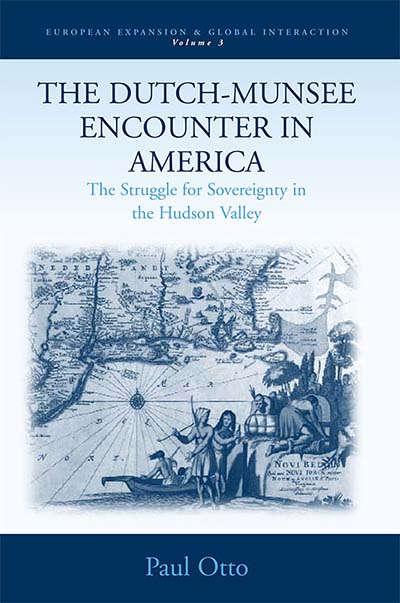
Paul Otto's The Dutch-Munsee Encounter in America


'Part-time' reformational blogger and full-time historian, Paul Otto, has a new book: The Dutch-Munsee Encounter in America.

Seventeenth-century North America witnessed the encounter of numerous European nations and Native American groups. In the Hudson Valley, where the Dutch established New Netherland, Dutch and Munsee Indians met and interacted in myriad ways. Employing a frontier framework, this volume considers how Dutch-Munsee relations developed over the life of the colony. At each stage of European colonization—first contact, trade, and settlement—the Munsees faced the increasing imposition of Dutch societal structures and sovereignty over them. In response, the Munsees variously chose accomodation, resistance, or acculturation. The volume concludes with a suggestive afterword in which the author applies his frontier framework to Dutch-indigenous relations in the Cape Colony of southern Africa.

Wednesday, 6 June 2007

Jim Skillen annotated bibliography

Bruce Wearne has completed Public Justice for All, an annotated bibliography of the works of Jim Skillen it is 142 pages and covers 338 articles, papers and books by Skillen. It is available in pdf here. It celebrates 40 years of publishing by Skillen.

Tuesday, 5 June 2007

Albert Weideman pages on AoLR

Albert Weideman, professor and Director of the Unit for Academic Literacy of the University of Pretoria, South Africa, now has his own pages on All of life redeemed. I have put up 12 of his papers:

Monday, 4 June 2007

philosophy bites

Philosophy bites is a new philosophy blog by Nigel Warburton and David Edmonds.&nbsp; Can and should philosphers contribute to public life? is the issue explored by Mary Warnock in an interview with Warburton and Simon Blackburn examines Plato's cave.&nbsp; Coming soon is an interview with Stephen Law on the problem of evil.


Powered by ScribeFire.