An accidental blog

"If God is sovereign, then his lordship must extend over all of life, and it cannot be restricted to the walls of the church or within the Christian orbit." Abraham Kuyper Common Grace 1.1.

Monday, 13 March 2006

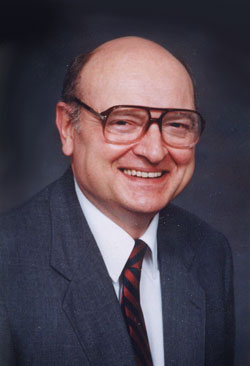
Ronald H. Nash dies

Ronald Nash, former professor of the Southern Baptist Theological Seminary, has died.

He was the author of over 35 books on theology, philosophy and apologetics. He also wrote a critique of Dooyeweerd: Dooyeweerd and the Amsterdam Philosophy (Zondervan, 1962). There he concluded:

Inasmuch as it is the purpose of tis book to prepare the way for more profitable discussions of this new philosophy in the future, it would seem some suggestions are in order.

First of all, there should be exerted in all future writings of this philosophy a greater effort to avoid the ambiguity and problems of terminology that are to be found in all of the previous publications. Good thinking is never complimented by and should never be accompanied by poor communication.

Secondly, I believe attempts should be made to come to grips with the objections raised by others and myself.

Thirdly, I believe that Dooyeweerd's American disciples should extend the implications of his philosophic thought to the peculiar American and English brands of philosophy such as Logical positivism and the school of linguistic analysis.

We have yet to hear the last of either for or against the Philosophy of the Idea of Law. I trust that this brief study may help point out the future discussions of it should take.
p. 105.

Other details of Nash can be found here, here and here. [HT Albert Gedraitis]

Thursday, 9 March 2006

Idéia Fiksa

Guilherme Carvalho, a Christian who lives in Brazil, has a blog Idéia Fiksa in Portugese - an English translation of it is here. He has some excellent links in his sidebar - including some Dooyeweerd links! He describes himself as:

...a Christian, astonished and frightened for being Coram Deo! I see the establishment of bridges between the faith and the culture contemporary as the biggest challenge of the Christianity today.

Translation courtesy of Babel Fish Translation.

It's well worth checking out - especially if you can speak Portugese - he has an amusing cartoon on ID.

Wednesday, 8 March 2006

Radix perspectives

Kenn Hermann has now added an 'Everythought captive to Christ' section on his Radix Perspectives blog. This companion site includes material Kenn has used to teach 'thinking Christianly' and 'Christian worldview'. At present there are four items:

Tuesday, 7 March 2006

National Science Week 10-19 March

10th-19th March is National Science Week.

Ruse and Dennett

Michael Ruse and Daniel Dennett have had an 'interesting' conversation'; see here.

Ruse accuses Dennett and Dawkins of being:

...absolute disasters in the fight against intelligent design ... neither of you are willing to study Christianity seriously and to engage with the ideas - it is just plain silly and grotesquely immoral to claim that Christianity is simply a force for evil, as Richard claims - more than this, we are in a fight, and we need to make allies in the fight, not simply alienate everyone of goodwill.

Update: the exchange between Dennett and Ruse can be seen in full here.

Richard Dawkins


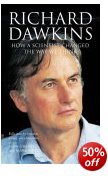
Richard Dawkins: how a scientist changed the way we think is to be published shortly to commemorate 30 years since the publicatiion of Dawkins' imfamous Selfish Gene. Dawkins is an evangelist for atheism and is one of the talking heads the media - in the UK at least - wheel out when they like some soundbites regarding religion and science. What is suprising is the Dawkins is the professor of public understanding of science and yet still hold to an out-moded view of science!


My friend Mark Roques - who hasn't yet got a blog, but should - has recently written this brief piece on Dawkins:

Richard Dawkins and Reason

In recent articles about Richard Dawkins and his crusade against ‘religion’ no-one has noticed that Dawkins is committed to a worldview that destroys rationality and scientific objectivity. He claims on numerous occasions to be the very voice of ‘reason’ and the sneering opponent of ‘religion’. This is abject nonsense.

For Dawkins humans are a gathering of selfish genes. Each gene has its own craving for survival. Reality is nothing but a vast collection of genes pulling in different directions. If we buy into this aggressive dogma then we are forced to conclude that our own existence is illusory. At the end of the day reality is a barren wasteland of deceiving, little liars who resemble Alphonse Capone and Jimmy ‘The Weasel’ Fratianno. Selfish genes are masters of spin, manipulation and illusion. Organised crime flourishes in every nook and cranny of this Darwinian universe.

Press home the implications of the deceiving gene and scientific rationality vanishes in a puff of smoke. We do not believe anything because it is true. We believe what we believe because gifted con-artists (selfish genes) control and tyrannise our intellectual activities. Reason is not autonomous; it is merely the by-product of genetic crime.

Dawkins should remind us of the Greek god Cronus who swallowed his own children. His selfish gene theory devours both science and reason.

Mark Roques


Two good books dealing with Dawkins are:


Alister McGrath has a mp3 of his lecture on Dawkins, 'Has science eliminated God?'

Monday, 6 March 2006

ID and Dover: the debate goes on

Alvin Plantinga argues that 'Whether ID is science isn't semantics'. According to Plantinga Judge Jones's arguments for his conclusion that science is not science are unsound.

Robert Pennock maintains that the battle to get ID into schools was lost at Dover and that it's tiem to lay down swords.

Also see Steve Fuller's piece and Robin Colins piece. Fuller looks a two criteria for defining science and Collins thinks that although ID may not be science it might be fruitful outside of physcis.

Sunday, 5 March 2006

In other languages

You can now read my blog in other languages - thanks to Google - see the new additions to the side bar.

links

rejesus has some resources on The Da Vinci code [HT jonnybaker]

Kenn Hermann's article on Christian education from the Reformed Journal is now on-line as a pdf.

Kenn has also some posts on being a Christian student at his Radix Perspectives.

Black Squirrell books have some great second-hand books including M D Stafleu's Time and Again.

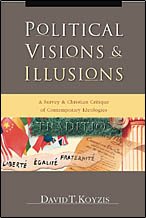
Timothy Sherrat has an article on' Prophetic politics goes to Washington?' in CPJ's Capital Commentary [HT David Koyzis]. Incidentally, if you are interested in politics then David's book Political Visions and Illusions is a must read. It is clear readable and chock full of insight and wisdom - it is worth every penny; get it here from Richard Russell's CSU.

Owlb of refWrite has two other blogs worth checking out: Orthography and Christian Homomemo.

Christians in Engineering and Technology's Newsletter for March 2006 is here.

Friday, 3 March 2006

Mathematics as art (literally)

The art of Justin Mullins. This is his 'Beauty' (1988):


PowerPoint and technology

Kenn Herman at Radix Perspectives has some excellent blogs of late. Of particular interest is his piece on Christian faith and the classroom, provocatively entitled Confessions of faith do not belong in the classroom. He provides some important guidelines; including:

  • Don’t substitute your confession of faith in Christ for academic rigor
  • Don’t substitute a season of prayer for a season of intense study

He also has an interesting post on the ubiquity of PowerPoint, with links to an article by Edward Tufte 'PowerPont is evil'. Tufte notes: Power corrupts. PowerPoint corrupts absolutely'. It's a shame that he didn't use Powerpoint to put over his message.

Thinking of PowerPoint, Macht points us to a PowerPoint on the philosphy of technology by Mark De Vries.

And thinking of a reformational approach to technology brings me back to Kenn's blog - he has some excelent posts on computers; including one 'Toward a reformatinal ontology of computers'

Skillen on the Bible

Comment are continuing the excellent series on the Bible with an article by Jim Skillen: 'Reading the Bible in public'.

Tuesday, 28 February 2006

Intelligent design links

Ted Davis's article 'Intelligent design on trial' originally published in Religion in the News 8(3) Winter 2006 is now available on-line as a pdf: here.

Peter Williams, a philosopher with Damarius Trust, also has an on-line article on 'Theistic evolution and design in dialogue' at UCCF's apologetic website bethinking. It takes the form of a dialogue between a Christian biologist who advocates theistic evolution, a Christian philosopher who subscribes to ID, and agnostic who is also an IDer and a server in a university restaurant. In part it responds to a critique of ID by Denis Alexander.

Lenten blog on Volf's Free of Charge


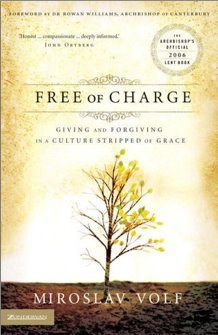
Jason Clark has set up a new blog to blog through Miroslav Volf's Free of Charge during Lent. The blog is here.

Sunday, 26 February 2006

Is there a maths gene?

The University of Cambridge Department of Experimental Psychology is looking into the question: Is there a maths gene? At present they are looking for volunteers with Grade A at A-level, or a score of 700 or more on the maths section of the American SAT 1.


The project comprises two phases. In Phase 1 you will be asked to complete an online maths test. This will take about 20 minutes. You will then be asked to invite your siblings to participate, if they also have a Grade A maths A Level. In Phase 2, you will be invited to donate a DNA sample via a simple, quick and non-invasive cheek swab.

Once you and your sibling have both returned a DNA sample, you will be entered into a prize draw to win £250 (or equivalent in other currency) worth of Amazon vouchers to share. The draw will take place once data collection for this project is complete.

All participants must be aged 16 years or over. This study has been approved by the University Ethics Committee, all information remains confidential, and in Phase 2, DNA will be stored anonymously. You may withdraw your participation at any time without having to give a reason.


This though does raise the question - if there is a maths gene, do we screen students before admitting them to A-level maths, or even before going to study a maths degree at university? That would certainly improve retention and achievement! Do genes really determine who we are?

There is no evidence to suggest that genes do determine who we are, although we are influenced by them. If they did determine who we are then someone with a kleptomania gene might be able to plead 'it wasn't me guv, wot did it, it was me genes.'

Baus on societal sphere sovereignty

Gregory Baus has posted a copy of his paper on 'Dooyeweerd's societal sphere sovereignty' on his Reformatische blog. Bruce Wearne has already make some interesting remarks on the paper - see the comments.

Sphere sovereignty (Souvereinitet in eigen kring) is a concept developed by Abraham Kuyper and developed on a more philosophical foundation by Dooyeweerd. It insists that created boundaries have an intrinsic nature that should be affirmed and respected; for example, the church should be the church and not a business, or a school.

Gregory takes Dooyeweerd's conception and applies it to relationships between civil governments, societal communites and institutions.

Saturday, 25 February 2006

Science and faith mp3s

The Veritas Forum at Maclaruin Institute have recently added some more mp3 talks to their site. These include a two-part discussion on Science and faith with Jed Macosko, Ed Combe and Alan Padgett (part 1, part 2).

Touchgraph blog tree

Here's my blog family tree according to touchgraph google browser [HT jonnybaker]


Friday, 24 February 2006

More by Seerveld

The wonderful Comment, the magazine of the Work Research Foundation, has another article by Calvin Seerveld . They have made available his piece 'Reading the Bible like a grown up child' as html and as a pdf. In the coming weeks the paper version of Comment will deal with reading the Bible - Gideon Strauss's excellent introduction is here.

Thursday, 23 February 2006

The philosophy and theology of kissing

Cynthia Nielsen's Per Caritem blog has a post on the philosophy of kissing, which includes the following:

Socratic kiss
. Really a Platonic kiss, but it's claimed to be the Socratic technique so it'll sound more authoritative; however, compared to most strictly Platonic kisses, Socratic kisses wander around a lot more and cover more ground.

Kantian kiss. A kiss that, eschewing inferior "phenomenal" contact, is performed entirely on the superior "noumenal" plane; though you don't actually feel it at all, you are, nonetheless, free to declare it the best kiss you've ever given or received.

Ben Myers, inspired by this, at Faith and theology looks at the theology of kissing:


Augustine: You awaken me to delight in your mouth, and my lips are restless until they're kissing you.

Luther: If the Word of God tells me to kiss, then I will kiss—and let the pope, the world and the devil be damned!

Adolf von Harnack: Jesus' own simple teaching about kissing was immediately eclipsed by the early Christians' Hellenistic approach to kissing.

Karl Barth: "I kiss you." There are three related problems to consider here. I kiss you. I kiss you. I kiss you.

Hans Urs von Balthasar
: Kissing is not only true and good, but it is beautiful.

Hans Küng: The Church's approach to kissing is in urgent need of the most radical and most far-reaching reform.

Wolfhart Pannenberg: One's first kiss is a proleptic anticipation of all that is still to come.

N. T. Wright: Every kiss is a dramatic enactment of our return from exile.

Billy Graham: Will you walk down the aisle and kiss me tonight? Will you do it tonight? You many never have another chance—you might be dead tomorrow!

Gerd Lüdemann
: After many years of careful research, I have decided to kiss my faith goodbye.


To which other have added:

Calvin(ism ): Even though you don't deserve me, I chose to kiss you.

Moltmann: A kiss is a present promise of the future hope. Yeah baby!

Karl Rahner
: We are all "anonymous kissers"

Marcus Borg: I'd like to kiss you again, for the first time.

Thomas Aquinas: "There are five ways to prove the existence of a kiss...."

Walter Brueggemann: "There is the kiss and the counterkiss and if one wins, we both lose."

Stanley Hauerwas
: "In the community established upon the principle of nonviolence, the question 'whom should I kiss' never arises - since to refuse to kiss is itself an act of violence. We kiss not because Jesus recommended it, but because in Jesus we discover that God is a kisser. So you'd all better damn well pucker up."

To which we might add:

Dooyeweerd: "Give us fifteen kisses - one for each modal aspect."

Monday, 20 February 2006

Saturday, 18 February 2006

Un blog accidental

Parlez-vous francais? If so then check out my blog in French here.

Science and religion quotes

...if the 'intelligent force' us so darn clever, how do you explain Dagenham?

Neil Willis 'Surfers' paradise' Third Way Winter 2006 29(1): 17

Thursday, 16 February 2006

Nestle get their maths wrong!

According to Nestle the makers of Smarties, Canadians eat enough Smarties to go round the Earth 350 times. A Grade 6 maths class in Ontario decided to put this claim to the test. It seems Nestle were wrong!

You can check their maths: according to Nestle Canadians eat 4 billion Smarties a year - the circumference of the Earth is approximately 40 000 km.

Friday, 10 February 2006

Can you find 30 books of the Bible?

There are 30 books of the Bible in this paragraph. Can you find them?

This is a most remarkable puzzle. It was found by a gentleman in an airplane Seat pocket on a flight from Los Angeles to Honolulu keeping him occupied for hours. He enjoyed it so much he passed it on to some friends. One friend from Illinois worked on this while fishing from his john boat. Another Friend studied it while playing his banjo. Elaine Taylor, a columnist friend, was so intrigued by it she mentioned it in her weekly newspaper column. Another friend judges the job of solving this puzzle so involving, she brews a cup of tea to help her nerves. There will be some names that are really easy to spot. That's a fact. Some people, however, will soon find themselves in a jam, especially since the book names are not necessarily capitalized. Thruthfully, from answers we get, we are forced to admit it usually takes a minister or scholar to see some of them at the worst. Research has shown that something in our genes is responsible for the difficulty we have in seeing the books in this paragraph. During a recent fund raising event, which featured this puzzle, the Alpha Delta Philemonade booth set a new sales record. The local paper, The Chronicle, surveyed over 200 patrons who reported that this puzzle was one of the most difficult they had ever seen. As Daniel Humana humble puts it, "the are all right there in the plain view hidden from sight." Those able to find all of them will hear great lamentations from those who have to be shown. One revelation that may help is that books like Timothy and Samuel may occur without their numbers. Also, keep in mind, that punctuation and spaces in the middle are normal. A chipper attitude will help you compete really well against those who claim to know the answers. Remember, there is no need for a mad exodus, there really are 30 books of the Bible lurking somewhere in the paragraph waiting to be found.
From Call of Kenya (Jan.-Mar.2006, a quarterly publication of Bible Translation and Literacy, East Africa: Nairobi Kenya.
[HT Peter Ruest ASA Mailing list]


Hans Rookmaaker complete works

Rookmaaker's complete works is now available on CD.

Hans Rookmaaker

There is an interesting piece on Hans Rookmaaker in Jan/ Feb 2006 Books and Culture . William Edgar writes:


During his lifetime, Hans Rookmaaker guided a great host of students into a strategy for understanding their times and working within their society with courage and creativity. His best-selling Modern Art and the Death of a Culture (IVP, 1970) was nothing short of a ground-breaking study of the surrounding culture, both in its threats and its promises. He dared to make sense of the steps to modern art by noting the general trend from a theocentric world to an absurd universe that lay behind the pictures. Malcolm Muggeridge, himself a returned prodigal, gave it a ringing endorsement on the pages of Esquire. Following in the tradition of the historian Groen van Prinsterer, the theologian-statesman Abraham Kuyper, and the philosopher Herman Dooyeweerd, Rookmaaker believed there was a spiritual background to Western painting which was the key to unlocking its meaning. However, unlike amateur attempts to reduce art to philosophy, Rookmaaker led the reader on a visit to hundreds of paintings, writings, and musical numbers, pausing to scrutinize their composition and motifs.

In another article Richard Russell has written:

Dooyeweerd's ideas profoundly influenced Hans Rookmaaker, playing a crucial role in his conversion, explicitly shaping his academic works like Synthetist Art Theories and implicit in his more popular writings like Modern Art and the Death of a Culture. In turn, Rookmaaker introduced Francis Schaeffer to some of Dooyeweerd's themes---a dependency that Schaeffer rarely, if ever, acknowledged.


Also on Rookmaaker:
Tapes available:
http://www.englishlabri.org/christianityandthearts.htm
http://www.englishlabri.org/thechristianlife.htm
http://www.soundword.com/l-abri-rookmaaker--hans.html

Biography

Linette Martin Hans Rookmaaker: A Biography (Hodders, 1979)

Laurel Gasque Hans Rookmaaker: An Open Life

A brief bio and description of the Rookmaaker archives held at Wheaton college here.


On Rookmaker

The importance of Hans Rookmaaker


Marleen Hengelaar-Rookmaaker (editor) The Complete Works of Hans R. Rookmaaker (Piquant, 2002/3)


details
reviews


Art needs no justification (IVP, 1978) on-line version

Update: thanks to Gregory Baus the links have been updated and should work now.

Tuesday, 7 February 2006

Review of Michael Ruse

The latest edition of Ars Disputadi - the on;ine journal of philosophy of religion - has a 15-page review of Michael Ruse's The Evolution-Creation Struggle by Stephen Craig Dilley. The abstract of the review reads:


In The Evolution-Creation Struggle, Michael Ruse seeks to answer, ‘Why is there so much controversy surrounding evolutionary theory?’ He does so by tracing the historical development of the theory and the two major reactions to it. These major reactions, for and against, are not just views about science, but full blooded ‘rival religions.’ They each have a system of origins, morality, and eschatology. So the conflict over evolutionary theory persists because it is a clash between incompatible worldviews. This review praises Ruse’s analysis on a number of points but also argues that he stumbles in three ways. First, he fails to explain that a key aspect of the origins debate concerns disagreement about the definition of science. Second, Ruse improperly uses his own (problematic) definition of science, with little argument, in order to rule competing views out of science. Third, Ruse misrepresents the epistemology of non-Darwinians as relying on faith, emotion and mystery instead of evidence, and reason.

Sunday, 5 February 2006

e-scatology

Eric Kamphof - the author of the Vollenhoven thesis here - has now started blogging here. He describes himself as:
... an ascetic misanthrope with a great love for people. Go figure. And yeah, I'm a Christian, but the hounds of heaven have sharp teeth, so I'm not terribly triumphalistic about it. I'm into reformational philosophy, post-structuralist feminism and medieval philosophy. It's a disparate mess, but the grand synthesis resolves itself with my deep
interest in philosophical anthropology.

Tags: , ,

A creation crisis in Christian colleges?

Is there a creation crisis in Christian colleges? Kurt Wise thinks so.


Technorati Tags:

Friday, 3 February 2006

History news

Albert Gedraitis has recently started a History news section on his Reformational Clisosophy website. His most recent entry is on Burkean conservatism.


Technorati Tags:

Eric Kamphof's Vollenhoven thesis now on-line

I have just put up Eric J. Kamphof's ICS thesis on Vollenhoven on-line on the All of Life Redeemed website. It is available as a 183 page pdf here. Eric tells me that the more creative Vollenhovians love it, but the more conservative hate it!

Robert Sweetman writes in the Vollenhoven newsletter:
Eric Kamphof successfully defended his master’s thesis entitled, “The Triunity of Life: On the Unity of the Vollenhovian Project” on 4 October 2004. The thesis represents a very creative interaction with the “English Vollenhoven”. ... The thesis explores whether Vollenhoven’s logic and epistemology might provide a fruitful perspective from which to view the unity of Vollenhoven’s systematic and historical work. But the thesis moves beyond Vollenhoven in taking a number of independent positions on the relationship between normative and structural law, between the law of the Spirit and positive law, and on the nature of the thus-so and the genetic determinations.

Saturday, 28 January 2006

A new template

It is almost a year since I started blogging - so I thought it was time to change my template. I like this one as it is plain and simple.

All of life redeemed update: van Woudenberg

I have now added some more pages to the All of Life Redeemed website. Rene van Woudenberg, a professor of philosophy at the Free University, has kindly agreed to put four of his articles on the site (my thanks to Gregory Baus for first sending me these articles). The articles are:


I have also changed the template of the main index page - let me know what you think of the template. I may well change all the pages to this.


Epistemology as Theology

James Beilby, the editor of Naturalism Defeated? Essays on Plantinga's Evolutionary Argument against Naturalism, has a new book out soon on Plantinga: Epistemology as Theology (Ashgate, 2006):

Alvin Plantinga is arguably one of the most influential philosophers of our time. Much of his career has been devoted to explaining and defending the intellectual acceptability of Christian belief. Recently he has developed a comprehensive, rigorous, and distinctively Christian religious epistemology.

This book presents the development of Plantinga's religious epistemology before considering Plantinga's mature religious epistemology in detail. Locating Plantinga's most recent work in the context of his theological assumptions, his previous work on religious epistemology, and in the context of the current debate over how knowledge should be characterized, Beilby blends theological and philosophical discussion to offer a unique perspective on Plantinga's influential proposal.

,

Friday, 27 January 2006

Seerveld's cultural guidelines

This week's Comment looks again at the work of Calvin Seerveld. Gideon Strauss looks at Seerveld's cultural guidelines for artists. Gideon writes:

I am convinced that these guidelines are not only helpful to artists, but that they can be transposed to almost every sphere of human action. What I am going to try and do in this article is to generalize the guidelines, to show how they can provide us with hints for engaging culture beyond the realm of the arts.

Tags:

Thursday, 26 January 2006

What is your ecological footprint?

Take the ecological footprint quiz to see how many hectares are need for your lifestyle. I needed 2.8 hectares, which would mean 1.6 planet earths are needed if everyone lived as I do! I think mine was lower than the UK average because we eat as much organic food as we can and I use public transport to get to work.
[HT maggi dawn]

Tuesday, 24 January 2006

History of Reformational Movement part 5

Theodore Plantinga's History of the Reformational Movement has been updated [HT Rudi Hayward on thinknet] with part 5: When the Scriptures fell open:
Cornelis Veenhof (1902-83) experienced the early days of the reformational movement as a student. In this excerpt from one of his books, he tells about the excitement generated by Dooyeweerd, Vollenhoven and Schilder during the 1930s. The book is Om de "Unica Catholica": Een beschouwing over de positie van de bezwaarden onder en over de synodocratie (Goes: Oosterbaan Le Cointre, 1949). This excerpt is taken from pages 52-56 (translation mine). -Theodore Plantinga

John Frame and the 'Amsterdam' theology

John Frame's polemical critique of Dooyeweerd - though Frame acknowledges it was more a critique of 'Toronto' (ostensibly the early days of the ICS) than Dooyeweerd - is now on-line (HT Gregory Baus via thinknet). The Amsterdam Philosophy: A Preliminary Critique is available here. It is part of a project to put all John Frame's and Vern Poythress's works on-line. One day we might see something similar for Dooyeweerd and Vollenhoven!!

Frame in a 2005 preface to the on-line edition writes:
This booklet was published by Pilgrim Press in 1972, in the midst of some theological warfare. Representatives of the Amsterdam Philosophy were then taking a militant stance against traditional Reformed theology, and the controversy created partisan battles on the campus of Westminster Seminary, where I was a very young professor. It also threatened to split churches, Christian schools, and other Christian organizations. As a member of a committee of the Ohio Presbytery of the Orthodox Presbyterian Church, I was asked to write a brief study of the movement, and the booklet resulted. Originally it was published together with another essay by Leonard Coppes, the Chairman of the Committee.

As I read the booklet today, I think my tone was far too shrill. The booklet also contains far too much smart-alecky stuff. I suppose I could have entirely rewritten it, but that would have made my 1972 efforts look better than they were. I prefer now to let readers judge me as I deserve, warts and all. I also think that the basic points of the pamphlet were never answered, though I received a lot of invective, and a lot of undocumented charges that I just didn’t know Dooyeweerd. On those issues also, I will let readers judge.

Andrew Basden has responded to Frame's original booklet here. Wether or not Andrew has answered the basic points of Frame's critique let the 'readers judge'.

Tags

Sunday, 22 January 2006

Saturday, 21 January 2006

Runner's Introduction to philosophy - 2nd instalment


Theodore Plantinga has now added a second instalment to 'Runner's introduction to philosophy'. The notes cover lecture 16 on human identity to lecture 26 (law and religion). The lectures took place at Calvin College where Runner was professor of philosophy from 1951-1981. He died in 2002.

The first instalment is available here.

H. Evan Runner never wrote an introduction to philosophy, but from these notes we can see the contours of his approach.

Al Wolters has written of Runner's importance here.


Tags: ,

Friesen, Dooyeweerd and the Encyclopedia of the Science of Law


Dooyeweerd's Encyclopedia of the Science of Law Volume 1 , translated and published in 2002, has come under scrutiny by Glenn Friesen. Glenn has examined the first 100 or so pages of the first volume and has found some problems with the translation and interpretatrion of Dooyeweerd. Glenn maintains:

There are also many statements in the Introduction and in the footnotes to the text that attempt to “correct” Dooyeweerd’s philosophy. These statements are based on philosophical ideas that are not Dooyeweerd’s own.

To a large extent, these attempts to correct Dooyeweerd appear to be a result of the longstanding tendency in reformational philosophy to interpret Dooyeweerd’s philosophy in terms of the philosophical framework developed by his brother in law, Dirk Vollenhoven.

Glenn has done Dooyeweerd studies a great service by making public his critique here, it was originally submited to the Dooyeweerd Centre, and no doubt there will be further discussion.
[HT Theo Plantinga Thinknet]


Tags:

Theistic philosophers on the web

Theistic philosophers on the web is just that - a list of 132 theistic philosophers.

If you classify yourself as a philosopher and a theist and want to be on the list contact them at:
phil_theist [at] mailexcite.com


Technorati Tags: ,

Online papers in philosophy

The blog suitably titled Online papers in philosophy reports on changes to webpages hosting philosophical papers - there is an impressive list.


Technorati Tags: ,

Calvin Seerveld

Calvin Seerveld, is senior member emeritus of philosophical aesthetics at the Institute for Christian Studies, Toronto. He was senior member of Professor of aesthetics 1972-1995. Before that he was one of the original faculty of Trinity Christian College in Chicago. He received his PhD in philosophy and comparative literature from the Free University in Amsterdam in 1958.


He is perhaps best-known as the author of Rainbows for the Fallen World (1980), a semi-popular introduction to Christian aesthetics.


His other books include:

  • Voicing God’s Psalms (with audio CD) (2005)
  • In the Field’s of the Lord: A Seerveld Reader (ed Craig Bartholomew) (2000)
  • Bearing Fresh Olive Leaves: Alternative Steps in Understanding Art (2000)
  • Take Hold of God and Pull (1999)
  • A Christian Critique of Art and Literature (1995/1963)
  • On Being Human: Imaging God in the modern world (1988)
  • The Greatest Song, in critique of Solomon (1988/1967 & video 2001)
Seerveld's books are available from Tuppence Press (in North America) and the Christian Studies Unit (in the UK) and Piquant (in the UK)


On-line works include the following:

Gideon Strauss' Seerveld texts


A Christian tin-can theory of man
Reformational Christian philosophy and Christian College education


Visual and audio media


Tapes are available from here

mp3 on imagination

Brief quicktime clip


On Seerveld:


Gregory Baus Seerveld’s Hineinlebenshaltung


Byron Borger


Reviews of Seerveld's books:
  • In the Fields of the Lord here
  • Bearing Fresh Olive Leaves here

Update

Some more on-line articles:

Update 2
J. Mark Bertrand on Seerveld here

Tags: ,

Friday, 20 January 2006

Seerveld on cultural guidelines for artists

Calvin Seerveld has an article 'The strategy of giving away gifts: cultural guidlines for artists' in this week's WRF Comment.

How, wonders Toronto philosopher and professor Calvin Seerveld, can modern art—from advertising to architecture, painting to PR—be a language of healing insight, if Christian artists themselves cannot distinguish their art as Spirit-lit, collaborative, and patient?

Calvin G. Seerveld is Senior Fellow Emeritus in Aesthetics at the Institute for Christian Studies in Toronto, and the author of several influential books, including Rainbows for the Fallen World.


Tags: ,

Spoken worship

Gerard Kelly, who used to attend my mate Richard Russell's church, has started a new blog: Spoken Worship for his poetry. He has made the poetry available for use in worship events. [HT jonny baker]


Technorati Tags: , ,

Skillen on Christian politics

In the Bruce's interview Jim Skillen answers the question: 'How would you sum up your Christian politics?'

In his second letter to the Corinthians, Paul writes that believers have become carriers of God's reconciliation in Christ. In other words, God is reconciling - rectifying, setting right, restoring - "the world to Himself in Christ" and "has committed to us the message of reconciliation". That process continues to unfold right up to the moment at the feet of Him who sits on the throne, on the footstool where we dwell in God's one and only throne room. Just before this Paul reminds us, "We live by faith not by sight."

Tags: ,

Thursday, 19 January 2006

Jim Skillen interview


An interview by Bruce Wearne with Jim Skillen has been put on the All of Life Redeemed website. It was first published in the Fiji Daily Post.

Jim is the president of the Center for Public Justice and is author of numerous books on politics, including:
Articles on-line by Jim include:
Reviews:
MP3 interview

Update

In the comments Gregory notes that an article by Skillen on Kuper is available on his Kuyperian site here.

Another article on same-sex marriages is here.

And there is another interview here.

On Iraq and a just war here.

Christian politics in the 21st century


Tags: ,

Monday, 16 January 2006

Plato's beard

The largest philosophy department in the US (Notre Dame) now has its own unofficial blog: Plato's Beard

Tags: ,

More new music

Mark in a comment to my previous blog recommends Last FM as a way of finding new music. See his comments about it on his blog here. My last fm profile is here.

Other places of finding some new music are: MP3blog.ch (this is particularly good for post-rock); epitonic, music.download.com and 3hive. All of them offer free and legal downloads.

Google has recently introduced a new music search, which may prove useful.

Tags: ,

Sunday, 15 January 2006

New music

If you want to find more music that sounds like your favourite bands then try Pandora. Type in the name of your fav and they will stream music of a similar style. Unfortunately, only US citizens can register to access it for more than 20 mins.

On-line philosophy conference

There is to be an on-line philosphy conference. For details see the new On-line philosophy conference blog.

Tags: ,

More philosophy blogs

Want to find a philosophy blog? Try the EpistemeLinks database here. It has almost links to nearly 100 philosophy-related blogs using filters. The filters include; title, author and topic.

A search for 'Philosophy of Religion' blogs yields:
Prosblogion

A search for 'Philosophy of Science' has:
Obscure and Confused Ideas
Philosophy of Biology
Studi Galileiani

A search for blogs by 'Philosophy Departments' gives:
Daily Phil
Desert Landscapes
Fake Barn Country (the link provided for this is old it's now here)
Hesperus/Phosphorus
Orange Philosophy
Saint Lawrence Philosophy Blog
Show-Me the Argument
The Web of Belief
This Is Not The Name Of This Blog (this is not there anymore)
UCSB Philosophy Blog
Undetached Rabbit Parts (this blog finished in Dec 2005)
and last but not least a blog from my old University:
University of East Anglia Philosophy
which has moved to here.

Tags: ,

Best blond(e) joke in the world?

This may well be the best blond(e) joke in the world: here.

I don't feel (too) bad about posting blond(e) jokes - as my 8-year old is blonde and tells them.


Tags: ,

Saturday, 14 January 2006

Philosophical blogs

A list of blogs, compiled by philosopher David Chalmers, 'devoted to topics in and around analytic philosophy, or that are by analytic philosophers' are to be found here.

Tags: ,

Calvin Seerveld on Reformational Christianity

...by 'Calvinian faith-tradition' and 'Reformational Christianity' - which is my pedigree for thinking, for developing a philosophy, for reading Scripture and praying, for living daily life - I mean (1) a life that would be deeply committed to the scriptural injunction not to be conformed to patterns of this age, but to be re-formed by the renewal of our consciousness so that we will be able to discern what God wills for action on earth (cf. Romans 1:12); and (2) an approach in history which honours the genius of the Reformation spearheaded by Martin Luther and John Calvin in the sixteenth century, developed by Groen van Prinsterer and Abraham Kuyper in the nineteenth century, as a particular christian cultural tradition out of which one can richly serve the Lord; and (3) a concern that we be communally busy re-forming as an ongoing way rather than standing pat in the past tense (ecclesia reformata semper reformanda est).

Calvin Seerveld (Paternoster Press, 1999, pp. xvi-xvii)


Tags: , ,

Three useful resource blogs

I have discovered three useful resource blogs: Christian Journals, Christian MP3s and Christian Scholars. These contain a plethora of links to - as one might suspect - journals, mp3s and Christian scholars. They are maintained by Angus Nicolson, who also blogs here. He also has a blog Christian Scholars Past - although at the moment that's a blank!

Tags: , ,

Friday, 13 January 2006

Plantinga audio files

Apollos.ws lists the following audio files by Alvin Plantinga available on-line:
Evolutionary Arguments against Naturalism (Real Media)
The God Problem
Is Christian Scholarship Possible?
Pluralism: Defense of Religious Exclusivism
Warrant and Proper Function chapter 1
Alvin Plantinga and Hilary Putnam Discuss God's Existence
Against Materialism
Theism, Atheism, and Rationality


Tag:

Apollos.ws

Apollos.ws is an excellent website for 'Christian research and eduction'. At present they have Research databases for Philosophy of Religion and Biblical Studies. There are lists of recommended books, audio/ visual media, online articles and a course project.
We want to begin an initiative to give the public access to complete college courses online, free of charge, taught by some of the greatest contemporary Christian thinkers.


In the Twilight of Western Thought - study guide

I have updated my study guide to Dooyeweerd's In the Twilight of Western Thought on my In the Twilight of Western Thought blog. A guide to chapter 7, Dooyeweerd's third and final lecture on the relationship of theology and philosophy, is now on-line.


Technorati Tags: ,

Thursday, 12 January 2006

The Abraham Kuyper Society

Man-san 'Sander' Chan, who is studying at the Free University , has started a new blog: The Abraham Kuyper Society. He writes:

The reasons for founding an Abraham Kuyper Society are the following:
- Studying the works by Abraham Kuyper in groups of students and others who are interested, from different professional and scientific disciplines.
- Reintroducing a complete and coherent Christian worldview at the Vrije Universiteit Amsterdam (founded by Abraham Kuyper in 1880).
- Studying the relation between Christian religion, politics, society and science.- Honouring God with all our minds.


Technorati Tags: ,

Wednesday, 11 January 2006

All of life redeemed site - one-year old

The All of life redeemed website is now one-year old. It has grown at a fantastic pace. At present there are the following articles available from the site - in no particular order:

Clouser, Roy Reason and Belief in God
Clouser, Roy Is There a Christian view of Everything from Soup to Nuts?
Clouser, Roy Is Theism Compatible with Evolution?
Clouser, Roy Two Watersheds of Biblical Interpretation
Clouser, Roy Is God Eternal?
Clouser, Roy A Critique of Historicism
Clouser, Roy On the General Relation of Religion, Metaphysics, and Science
Clouser, Roy A Sketch of Dooyeweerd's Philosophy of Science" in
Clouser, Roy The Uniqueness of Dooyeweerd's Program for Philosophy and Science: Whence the Difference?"
Clouser, RoyGenesis and Science on the Origin of the Human Race
Clouser, Roy Divine Accommodation: An Alternative Theory of Religious Language
Clouser, Roy Religious Language: A New Look at an Old Problem
Clouser, Roy A Critique of Descartes and Heisenberg
Clouser, Roy Aristotle's Theory of Incontinence
Wolters, Al On Vollenhoven's Problem-Historical Method
Strauss, D F M An Analysis of the Structure of Analysis (The Gegenstand-relation in discussion)
Strauss, D F M Reductionism in Mathematics: Philosophical Reflections
Strauss, D F M Does it make sense to distinguish between the natural sciences and the humanities?
Strauss, D F M Historical and systematic considerations relevant to an assessment of the position of the university.
Strauss, D F M Reason: Its Kaleidoscopic ideological interface.
Strauss, D F M The contemporary challenge to Christian scholarship.
Strauss, D F M How “rational” is “rationality”?
Strauss, D F M The Achilles' heel of positivism.
Strauss, D F M Is a Christian Mathematics possible?
Strauss, D F M The “Copernican turn” of biology in the 20th Century
Strauss, D F M Science and Scholarship in Historical Perspective
Strauss, D F M Intellectual influences upon the reformational philosophy of Dooyeweerd
Strauss, D F M Philosophical Perspectives on Leisure, Play and Sport.
Strauss, D F M The best known but least understood part of Dooyeweerd's philosophy.
Wearne, Bruce John Dawkins Versus John Calvin
Wearne, Bruce Christian Students In The University Crisis
Wearne, Bruce Evangelicals And Their Political Problems With Christian Education
Wearne, Bruce A Free University And Professional Formation
Wearne, Bruce Voluntary Student Unionism
Wearne, Bruce A Christian Study Centre and the Re-Formation Of Academic Qualifications
Wearne, Bruce Interview with Adolpho de la Sienra Garcia
Russell, Richard In Defence of Dooyeweerd and of Christian Philosophy
Russell, Richard Dooyewerdian diagrams
Tol, Anthony In memoriam: Vollenhoven
Roques, Mark Pub philosophy: Engaging the Great Philosophers with Beer, Cigars and Crisps
Roques, Mark The Rennaisance
Roques, Mark Maths and the Disenchanted Cosmos
Roques, Mark The Enlightenment
Roques, Mark Romanticism
Russell, Richard Dooyeweerdian Diagrams
Richard Russell In defence of Dooyeweerd
Gousmett, Chris Creation order and miracle according to Augustine
Gousmett, Chris A latter day Augustinian: Diemer on creation and miracle
Gousmett, Chris Miracles: signs of the coming kingdom
Gousmett, Chris Descartes and the theory of contingency
Gousmett, Chris The Christ of the Spirit in Athanasius and Kuyper
Gousmett, Chris Dooyeweerd on Faith and apostasy
Sewell, Keith The Idea of a Free Christian University
Sewell, Keith A High Challenge for Tough Times
Sewell, Keith That Was Then, This is Now
Sewell, Keith (ed) Hendrik Van Riessen The University and its Basis
Sewell, Keith (ed) Jan D. Dengerink The Necessity of Christian Universities
Sewell, Keith The Eclipse of History and the Crisis in the Humanities
Sewell, Keith The Bible, Science and Scholarship
Fackerell, Edward The Relationship Between Mathematics and the Christian Faith'
Fackerell, Edward A Christian perspective on teaching mathematics'.
Bishop, Steve Beliefs shapes mathematics
Bishop, Steve Mathematics and the myth of neutrality
Wolterstorff, Nick Dooyewerd: an appreciation

My thanks to all who have agreed to post their papers on-line.


Technorati Tags:

Monday, 9 January 2006

South African philosopher Danie Strauss has a new book published: Reintegrating Social Theory. According to the blurb:

When dealing with the key concepts of sociology the coherence between this discipline and the other academic disciplines automatically emerges. In order to transcend the shortcomings of one-sided sociological theories it is necessary to hold on to the worthwhile contributions made by each of them. This goal requires an analysis of basic concepts such as social order, social stratification, social constancy and dynamics, social differentiation and integration, social sensitivity, solidarity and consciousness, social consensus and conflict, social power and control, and social symbolism, meaning and interpretation. This work therefore aims at a reintegration of social theory by including a discussion of sociological trends of thought that have been prominent during the past two centuries. It turned out that the opposition between atomistic (individualistic) and holistic (universalistic) theories practically cuts through all sociological schools of thought


Technorati Tags: ,

Against the grain

Kenn Hermann has now started a blog: Against the grain. He writes:
This is a miscellany ….. Expect entries ranging from the just war and Iraq to Herman Dooyeweerd’s philosophy to Intelligent Design to favorite old books to the philosophy of technology to the implications of following Christ in a consumer culture and academia to . . . . You get the idea, very little is out of bounds. It will also be occasional, as workload and the Muse dictate.

Sounds like a blog worth reading!
Technorati Tags: , ,

Sunday, 8 January 2006

All of life redeemed update

I have been updating the mathematics section of the All of Life Redeemed website - I have added some links to books and papers and have added two important papers by the Australian Edward Fackerell. The papers are: The relationship between mathematics and the Christian faith and A Christian perspective on teaching mathematics'. I have also added pdfs of two papers of mine: Mathematics and the myth of neutrality and Beliefs shapes mathematics. All four papers argue from the perspective that Jesus is lord of all and that the all includes mathematics.

Technorati Tags: , ,

Saturday, 7 January 2006

G K Chesterton quote

I have never been able to find a reference for the often-quoted phrase attributed to G. K. Chesterton:
When a man stops believing in God he doesn't then believe in nothing, he believes in anything.
Now it turns out that Chesterton didn't even say or write it! According to The American Chesterton Society, it is probably an amalgam of these two quotes, found in Chesterton's Father Brown stories:
It's the first effect of not believing in God that
you lose your common sense.
["The Oracle of the Dog" (1923)]

You hard-shelled materialists were all balanced
on the very edge of belief - of belief in almost anything.

["The Miracle of Moon Crescent" (1924)]


Technorati Tags:

Friday, 6 January 2006

God and proofs

Hence every effort to 'prove' God is a denial of Him. In all such rationalistic proofs, God is brought before the logic of man's mind and required to 'justify' and 'prove' His existence. The god who is then derived or or 'proven' is the god of man's imagination, not the living God of Scripture. To prove means to establish by evidence, to show to be true, to test, and to verify. We cannot prove God. He is the Source of all proof. We are rather proven, tested, or verifed by Him. He alone can justify.

R J Rushdoony Systematic Theology Volume I (Ross House Books: Vallecito, 1994) p.661. [HT Forrest Schultz]


Technorati Tags:

Bands to look out for in 2006

Blueneck from Somerset
Fuzzylights from Cambridge
Ef from Gothenburg
Evaporatia report from Switzerland
Change of Plans from Istanbul

Technorati Tags: ,

Thursday, 5 January 2006

The 46 best-ever freeware utilities

Thanks to deli.icio.us I have come across a list of 'The best-ever freeware utilities'. It's a great list and includes a lot of my faves.

Technorati Tags:

Wednesday, 4 January 2006

A new blog and a defunct blog

Derek Melleby of Aslan is on the Move has launched a new blog. It is the blog of the Center for Parent/ Youth Understanding (CPYU) College Transition Initiative.

Sadly it looks like Russ Reeves Tolle, Blogge is now defunct - shame.


Technorati Tags: , ,

Monday, 2 January 2006

del.icio.us

I have been using del.icio.us - a social bookmarker - for a few months now, but have always found it easier to use ctrl+D in Mozilla Firefox; but no longer! Thanks to jonny baker I have now found an add-in to Mozilla (here) that means at a click of a mouse the website can be added to del.ico.us and the tags easily inserted.


Another of the hundreds of reasons why Mozilla Firefox is far superior to ie.

You can check out my del.icio.us links here. The great thing about del.icio.us is that others' tags can be accessed; so for example check all the Dooyeweerd tags here and all the neocalvinism tags here.

Sunday, 1 January 2006

Sigur Ros - live in Iceland - and other music

A superb 132 min webcast of the Icelandic group Sigur Ros is available from here playing live in Reykjavik in November 2005. It is truly awe inspiring.

A search engine I have recently come across is the wonderfully titled singing fish. It will find many audio and visual files. It gives 120 responses for Damien Rice, 355 for Keith Jarrett, 6 for Esmerine, 137 for Kate Rusby, 302 for Bruce Cockburn but sadly none for Stafraenn Hakon or Godspeed You! Black Emperor. For S. Hakon you'll have to go here - and click on sounds. For GY!BE try here for an amazing mp3 of a live concert.

Update: there are some excellent mp3s of Stafraenn Hakon playing live here.

Technorati Tags: , ,