Are we insulting God? The Christian life is not a task.

"If God is sovereign, then his lordship must extend over all of life, and it cannot be restricted to the walls of the church or within the Christian orbit." Abraham Kuyper Common Grace 1.1.
Saturday, 2 March 2013

Jaroslav Pelikan on tradition
Tradition is the living faith of the dead; traditionalism is the dead faith of the living. Tradition lives in conversation with the past, while remembering where we are and when we are and that it is we who have to decide. Traditionalism supposes that nothing should ever be done for the first time, so all that is needed to solve any problem is to arrive at the supposedly unanimous testimony of this homogenized tradition.
US News and World Report 26 July 1989.
Friday, 1 March 2013
Jamie Smith interviews Nicholas Wolterstorff
There is an excellent interview of Nicholas Wolterstorff by Jamie Smith in the recent issue of Comment.
They discuss the changes that have taken place within philosophy in North America, which is largely dominated by Christians ush as Wolterstorff, Plantinga, Stump and Van Inwagen.
They discuss the changes that have taken place within philosophy in North America, which is largely dominated by Christians ush as Wolterstorff, Plantinga, Stump and Van Inwagen.
JS: So it was not like there was this group of Christian
philosophers in some smoky backroom who were sitting around hatching a
plot to change the field?
NW: No. We began with much more modest ideas than that. I was a graduate of Calvin College, a convicted Kuyperian. So I did not think that philosophy was some sort of "neutral" enterprise. I thought one engaged in philosophy qua Christian, or qua materialist, or whatever. My hope was that there would be space for me, and friends of mine, to engage in philosophy qua Christians. I don't think we visualized much more than just having space to do that.
Wednesday, 27 February 2013
Abraham Kuyper: A Pictorial biography Jan de Brujin

Details here.
Tuesday, 19 February 2013
Herman Bavinck bibliographies by Willem J. de Wit
Willem J. de Wit has done all Herman Bavinck scholars an excellent service. He has made available two bibliographies of Bavinck works:
1. Literature and and about Bavinck
2. Literature by Bavinck

1. Literature and and about Bavinck
2. Literature by Bavinck
Going Dutch in the Modern Age
 John Halsey Wood's doctoral dissertation is soon (May 2013) to be published by Oxford University Press.
It is marketed as "One of the first books about the Dutch Protestant social activist and public theologian Abraham Kuyper". A touch of an overstatement me thinks!
Going Dutch in the Modern Age
Abraham Kuyper's Struggle for a Free Church in the Netherlands
John Halsey Wood Jr.
OUP USA Oxford Studies in Historical Theology
256 pages | 235x156mm
978-0-19-992038-9 Hardback
Contents
Acknowledgments
Chapter One: Going Dutch in the Modern Age
Chapter Two: The Emergence of a Free Church Ecclesiology, 1863-1867
Chapter Three: The French Revolution as an Ecclesiological Crisis: Abraham Kuyper's Sacramental Ecclesiology
Chapter Four: A Believers' Church: Kuyper's Ecclesiology for Reformation
Chapter Five: The Ins and Outs of Baptism: The Development of Kuyper's Theology of Baptism
Chapter Six: Theologian of the Revolution: Abraham Kuyper's Radical Proposal for Church and State
Chapter Seven: Private Church and Public Theology
Notes
Bibliography
Index
Sunday, 10 February 2013
Saturday, 9 February 2013
Common Grace Revisited by Engelsma
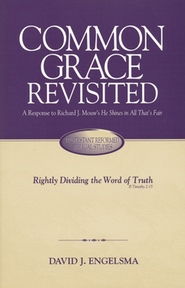
A Response to Richard J. Mouw’s He Shines in All That’s Fair<
David J. Engelsma
Grandville: MI: Reformed Free Publishing Association, 2003
ISBN 0 916206 81 5; pbk, xii + 100pp.
John Frame in his article on Machen’s warrior children identifies 21 areas that they disagreed upon. Surprisingly, common grace is not mentioned. And yet in 1924 it split a church denomination. Herman Hoeksema (1886-1965) took exception to the three points of common grace adopted by the Christian Reformed Church. The result was that Hoeksema formed the Protestant Reformed Church. David Engelsma is a professor of Dogmatics at the Theological School of the Protestant Reformed Church.
This book, as the subtitle shows, is a response to Mouw’s excellent little book He Shines in All That’s Fair. This book started as a series of editorials in The Standard Bearer, Mouw and Engelsma that debated the topic in September 2003 (see below). Despite their differences Mouw and Engelsma treat each other with respect and civility. There are no ad hominems here.
Engelsma focuses on Mouw’s approach, but does look at Kuyper and Bavinck who he sees as the originators rather than Calvin. Calvin he maintains is “not a main theme in the theology of John Calvin. It is not even a theme. It is barely mentioned” (p. 15).
Engelsma argues that common grace is not in Calvin, not in the scriptures and not in the Reformed creeds.
He identifies three reasons for the acceptance of common grace by Mouw:
The seemingly good deeds of justice, kindness and mercy of the non-Christian (Ch 5);
Mouw’s empathy for the ungodly (Ch 6); and
The “power and warrant of the Christian’s earthy life in the world” (Ch 7)Engelsma also dislikes the term culture: “it is not a biblical term” (p. 53) (but then neither is the Trinity); it is he claims "ambiguous and unhelpful” (p. 54).
There are three issues that common grace help address these are: “the continuing existence of the earth after the fall” (p. 54); an account for “the Christian’s life in society as well as in neighbourhood” (p. 55); and “the justification for the Christian’s use and enjoyment of the interventions and products of the wicked” (p. 55). However, for Engelsma, God’s providence rather than common grace accounts for these points. It is the confusion of common grace and providence that is the fundamental error of those who adhere to common grace.
Engelsma has highlighted a number of key issues that can arise out of a (misuse) of common grace doctrine. He highlights some consequences of common grace, these though are misuses of the doctrine. He is concerned that common grace may lead to worldliness. This is an important point that we need to be aware of. Common grace rightly understood and not misused does not negate the antithesis. It does not have to lead to universal saving grace – despite Engelsma’s protestations. Kuyper held to both common grace, particular grace and the antithesis without the contradictions and tensions Engelsma seems to imply would be there.
His replacement of providence with common grace doesn’t quite work. There is much overlap between providence and common grace; though at times the terms as used in Engelsma’s book can be exchanged without any change in meaning. I welcome Englesma’s book – even if I don’t agree with its main premises – it does provide a warning about what may arise out of the misuse of common grace. But as often been said the corrective to misuse is not disuse (or denial) but right use.
Friday, 8 February 2013
Roy Clouser video recordings
These recordings of Roy Clouser are taken from the Wrestlers Class of National Presbyterian Church, 4101 Nebraska Avenue, NW, Washington, DC USA.
HT Gregory Baus
| Presenter Name(s) | Title | Course Date | Click for recordings |
|---|---|---|---|
| Roy Clouser | Reformed Theology and the Myth of Religious Neutrality (2 of 2) | 4/25/2010 | Link |
| Roy Clouser | Can we Know that God is True? | 5/15/2011 | Link |
| Roy Clouser | The Idea of a Christian Philosophy | 3/11/2012 | Link |
| Roy Clouser | The Dutch Philosopher Dooyeweerd's Theory of Reality | 3/18/2012 | Link |
HT Gregory Baus
Tuesday, 5 February 2013
Proverbs Reconstructed

Gus Dallas
Westbrow Press, Bloomington IN, 2011
How should we read Proverbs? Unfortunately, this book doesn't help. It divorces Proverbs from its context, historically, culturally and canonically. It provides a model of how not to read Proverbs. Essentially it lists all the Proverbs under separate headings such as Abomination, Adultery, Adversity, Advocate, Anger, Answer, Anxiety, Age, Animal, Ant, Apple, Argue, Associations, Atonement, Authority - to list just the A categories. The proverbs are then sorted into these categories under good or bad sections. Such a cut and paste approach may appeal to some; but not to me. It makes Proverbs into a set of cookie promises.
Fortunately, I didn't have to spend money to get this book - I was provided with an electronic review copy. Don't waste your money buying this. If you want to know how to read Proverbs you'd be much better buying Craig Bartholomew's booklet Reading Proverbs with Integrity (Grove Books, 2001). Sadly, it is integrity that this book lacks.
When Herman met Jack part 2
Continuing a Conversation Between C S Lewis and Herman Dooyeweerd - imagined by Paulo Ribeiro
CSL - Herman I heard of your problems with the Gestapo during the war. I am so glad you knew Amsterdam better than those sniffing dogs.
HD - Oh, I also realized that since 1933 you were denouncing the Nazis in your Pilgrims’ Regress and then in the Screwtape Letters and in Mere Christianity you mentioned the Nazis several times and the Gestapo twice.
CSL – But I am not sure that if they had invaded I could find a safe place in Oxford - especially at the University. Some professors would be glad to see me go somewhere.
HD – Sad times, indeed. But it is good to know that in the religious centre of our existence we can transcend time.
CSL – Without forgetting that except in the present the eternal be can met.
HD – I heard of your Inklings group - - - does the pub where you meet serve good meals?
CSL – Yes, I forgot the time - - - let us walk there.
To be continued: on music
Monday, 4 February 2013
When Herman met Jack
A Conversation Between C S Lewis and Herman Dooyeweerd
Imagined by Paulo Ribeiro

CSL - Good evening Herman. Welcome to Magdalene College. Feel yourself comfortable. By the way, I just completed reading the first volume of your splendid and prolific NCoTT and I very much liked your concept of “meaning as the mode of being of all that is created.” It reminded me of a discussion I had with Prof. Tillyard in which I said to him: "Either there is significance in the whole process of things as well as in human activity, or there is no significance in human activity itself.... If the world is meaningless, then so are we; if we mean something, we do not mean alone."
 HD – Oh, yes Jack, that is great and reminds of a point you made in The Abolition of Man – that “If nothing is self-evident, nothing can be proved – that there are some premises that can't be reached as conclusions.” - - - I made that very clear in all my writings. But we need to go further and affirm that “the direction of philosophical thought to the totality of meaning implies critical self-evaluation.”
CSL – Indeed, Herman - - - - Would you like some tea or a stronger drink?
HD – I would love some whisky, if I could.
CSL – Oh, yes - that will gives us the tonic we need for continuing our conversation. [going to get the whisky] - - By the way, when I gave the Riddell Memorial Lectures at Durham University in 1943 I got a certificate for an honorary doctor – I wish they had presented me with a box of whisky.
To be continued
Friday, 25 January 2013
The antithesis and common grace
I've been thinking recently about Kuyper's idea of the antithesis and common grace. This image came to mind:

I'm aware that in a sense the antithesis runs through all our hearts - but illustrating that might prove more difficult.
Any ideas how this could be improved?

I'm aware that in a sense the antithesis runs through all our hearts - but illustrating that might prove more difficult.
Any ideas how this could be improved?
Tuesday, 15 January 2013

Sunday, 13 January 2013
Saturday, 12 January 2013
Bob Goudzwaard: Finding An Alternative to Over-Development

Finding An Alternative to Over-Development.
It is published as an e-book (pdf) on All of Life Redeemed - both the UK and Asian sites.
Table of Contents
Preface - Putting First What is Given
Economic Theory & the Normative Aspects of Reality (1961)
The Global Economy & Climate Change. (December 1, 2006)
Underlying Causes of the Global Economic Crisis (January 20, 2009)
Living Faithfully in a Rapidly Changing World (May 12, 2011)
Peeling the Onion (November 2, 2011)
Money, Magic, Greed & the Power of Illusions (December 1, 2011)
A Way Forward: the Financial Crisis, Climate Change & Public Justice for All (December 2012)
[Abstracts]
Economics, Christianity & the Crisis: Kuyper's Heritage and Relevance Today (January 2013)
Reformed Christian Economics.
Available here.
Wednesday, 9 January 2013
Koers - Bulletin for Christian Scholarship 77(2) - now available
Koers - Bulletin for Christian Scholarship
Vol 77, No 2 (2012)
Table of Contents
Developing a scientific culture through supervision (11 pages)
Danie F.M. Strauss
Empowering and disempowering students in student– supervisor relationships (8 pages)
Salome Schulze
A critical consideration of ethical foundations for the accounting profession (7 pages)
Pieter Buys, Susan Visser, Merwe Oberholzer
Human reproductive cloning and biotechnology: Rational, ethical and public concerns (9 pages)
M.E.S. (Elbie) van den Berg
A post-Jungian perspective on the psychological development of Afrikaner cultural identity (10 pages)
Martina Kotzé, Loura Griessel
How should agriculture produce enough food for the world? (8 pages)
Petrus Simons
Changes in epistemic frameworks: Random or constrained? (10 pages)
Ananka Loubser
The capability of national education systems to address ethnic diversity (10 pages)
Charl C. Wolhuter, Ferdinand J. Potgieter, Johannes L. van der Walt
Another look at education from a Christian stewardship perspective (7 pages)
Johannes L. van der Walt
’n Skoolhoof se persepsies van die verwesenliking van Christelike waardes in ’n Suid-Afrikaanse laerskool: ’n Gevallestudie (10 pages) Gertruida M. Steyn
Contextualising theological education in Africa by doing theology in a missional hermeneutic (8 pages)
H. Jurgens Hendriks
Proverbs 31:10−31: A passage containing wisdom principles for a successful marriage (9 pages)
Robin Gallaher Branch
Vroue se belewenis van eensaamheid na die verlies van ’n lewensmaat: ’n Beskrywing van narratiewe pastorale betrokkenheid (9 pages)
Annamarie de Beer, Jan-Albert van den Berg
Pastorale berading aan persone geaffekteer deur MIV (8 pages)
Francois G. Minnie, George A. Lotter
Book Reviews
Danie Strauss: Philosophy as discipline of disciplines (3 pages)
Sander Griffioen
Christus Jesus, die Krag van God en die Wysheid van God (2 pages)
H. Dijkstra
Tanzanian Christian eco-ethics: Beyond ethics and theology (2 pages) Jean du Toit
Die herhaalde verskyning van transendensie in verskeie kulturele fenomene (1 page) Anné H. Verhoef
Contributions on the interplay between technology, culture and development (2 pages) G.P. van Rheede van Oudtshoorn
Kan ons nog in God glo? (1 page) F.P. Kruger
ʼn Heuristiese model van vier tipes transendensie (2 pages) Anné H. Verhoef
Valuable contribution to the study of multilingualism in South Africa (2 pages) G.P. van Rheede van Oudtshoorn
Vol 77, No 2 (2012)
Table of Contents
Developing a scientific culture through supervision (11 pages)
Danie F.M. Strauss
Empowering and disempowering students in student– supervisor relationships (8 pages)
Salome Schulze
A critical consideration of ethical foundations for the accounting profession (7 pages)
Pieter Buys, Susan Visser, Merwe Oberholzer
Human reproductive cloning and biotechnology: Rational, ethical and public concerns (9 pages)
M.E.S. (Elbie) van den Berg
A post-Jungian perspective on the psychological development of Afrikaner cultural identity (10 pages)
Martina Kotzé, Loura Griessel
How should agriculture produce enough food for the world? (8 pages)
Petrus Simons
Changes in epistemic frameworks: Random or constrained? (10 pages)
Ananka Loubser
The capability of national education systems to address ethnic diversity (10 pages)
Charl C. Wolhuter, Ferdinand J. Potgieter, Johannes L. van der Walt
Another look at education from a Christian stewardship perspective (7 pages)
Johannes L. van der Walt
’n Skoolhoof se persepsies van die verwesenliking van Christelike waardes in ’n Suid-Afrikaanse laerskool: ’n Gevallestudie (10 pages) Gertruida M. Steyn
Contextualising theological education in Africa by doing theology in a missional hermeneutic (8 pages)
H. Jurgens Hendriks
Proverbs 31:10−31: A passage containing wisdom principles for a successful marriage (9 pages)
Robin Gallaher Branch
Vroue se belewenis van eensaamheid na die verlies van ’n lewensmaat: ’n Beskrywing van narratiewe pastorale betrokkenheid (9 pages)
Annamarie de Beer, Jan-Albert van den Berg
Pastorale berading aan persone geaffekteer deur MIV (8 pages)
Francois G. Minnie, George A. Lotter
Book Reviews
Danie Strauss: Philosophy as discipline of disciplines (3 pages)
Sander Griffioen
Christus Jesus, die Krag van God en die Wysheid van God (2 pages)
H. Dijkstra
Tanzanian Christian eco-ethics: Beyond ethics and theology (2 pages) Jean du Toit
Die herhaalde verskyning van transendensie in verskeie kulturele fenomene (1 page) Anné H. Verhoef
Contributions on the interplay between technology, culture and development (2 pages) G.P. van Rheede van Oudtshoorn
Kan ons nog in God glo? (1 page) F.P. Kruger
ʼn Heuristiese model van vier tipes transendensie (2 pages) Anné H. Verhoef
Valuable contribution to the study of multilingualism in South Africa (2 pages) G.P. van Rheede van Oudtshoorn
Sunday, 6 January 2013
Catch the Vision by John J. Murray

Roots of the Reformed Recovery
The Men and Movements of the mid-20th century
John J. Murray
Evangelical Press, Darlington, 2007
ISBN 978-0-85234-667-9
191pp; pbk; £7.99.
This is a look at the "rediscovery" of Reformed theology in Britain during the mid-twentieth century. It is very accessible and readable. It is however, rather a selective view. It is a hero view of history. There are a number of 'heroes' that are honoured. Most notably, Dr Martin Lloyd Jones, others that get honourable mentions are Jim Packer, Geoffrey Williams and the Evangelical Library, Iain Murray and the Banner of Truth and surprisingly, John Murray (not the author of the book), who was a Brit but who spent most of his time in the USA at Westminster Seminary. Others have bit parts: notably: E. J. Poole-Connor, A. W. Pink, W. J. Grier and J. Elwyn Davies.
The emphasis here is on the Calvinism that stems from the Puritans. No mention is made of Kuyperian Calvinism. Murray, the author (not the WTS Murray), held pastorates in Oban and Edinburgh, so one would have thought the Scottish influence would be to the fore, but that is not so. The part played by the Free Churches in Scotland seems to be minimised. Others absent are the Sovereign Grace Union and the Strict and Particular Baptists.
The roles of the English and the Welsh are well documented here and it provides a good overview of the roles played by Lloyd Jones, the Evangelical Library and the Banner of Truth. There is a useful timeline stretching from 1899 (the birth of DMLJ) to 1981 (the death of DMLJ) and a chronology of John Murray.
Subscribe to:
Posts (Atom)


