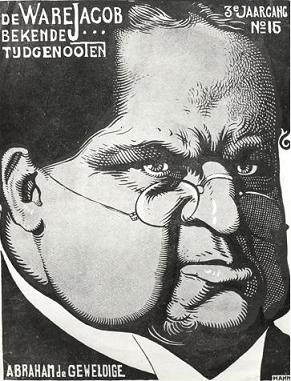
The full text of Abraham Kuyper's Work of the Holy Spirit and Encyclopedia of Sacred Theology are now available on-line, thanks to the Abraham Kuyper Center of Public Theology at Princeton Theological Seminary.

"If God is sovereign, then his lordship must extend over all of life, and it cannot be restricted to the walls of the church or within the Christian orbit." Abraham Kuyper Common Grace 1.1.

Abstract. It is misleading to speak of warfare between science and Christian theology, as Andrew White did in 1896. White also was mistaken in exaggerating the conflict between the church and Galileo and Copernicus. The more important issue between science and theology has to do with the mechanistic interpretation of nature. When he introduced the principle of inertia in his natural philosophy, René Descartes insisted that God's immutability renders it impossible for God to intervene in the creation. He reduced the idea of God to a deistic notion by speaking of motion exclusively as a property of bodies. Even though Isaac Newton offered a different view, the Cartesian view dominated subsequent thinking. This made dialogue with theology difficult. Michael Faraday, followed by Albert Einstein, introduced the idea of field; bodily phenomena were subordinated as manifestations of fields. The precursor of the idea of field is the Stoic idea of spirit, which is close to the biblical concept of spirit. Thomas Torrance and I have taken this concept of field as an occasion to reopen dialogue. Mechanistic thinking accounts for the tension between Darwinian thought and theology. In principle the tension can be resolved, because the Bible itself asserts that all living things were brought from the earth—that is, organic life emerged from inorganic matter. Thus, emergence, contingency, and novelty are consistent with Darwinian evolutionary thinking. Contingency can be related conceptually to the activity of God in creation.
But what of the nature of the “God” who emerges from such reflections? As a Christian, I am forced to ask whether this God that might be discerned within the ordering of things bears a direct relationship with the God and Father of our Lord Jesus Christ. Is there a secure theological link between the anthropic principle and the incarnation?
There could be – but it is not already there. It needs to be constructed. ...
Andrew Basden Enriching humanist thinking
Doug Blomberg Teachers Living the curriculum
Henk Stoker The ethical dilemma of ‘unethical’ religious movements
Ralph Vunderink Love, power and justice
Bennie van der Walt A shame-/versus a guilt-orientated conscience: an explanation for difference between African and Western ethics
Hans Burger The significance of ‘being in Christ’ for Christian ethics
Harry Cook These all look to you: Darwin and Psalm 104
Rudi Hayward Naïve experience and differentiated practices
Michael Heyns The transcendentalness of the moral order
Yasunori Ichikawa God, man and nature in the Christian and Japanese-Shintoistic views, implications for environmental ethics
Ananka Loubser Nature vs culture in sustainable environmental management
Martin Rice Moral intuitionism: moral properties as directly perceived, non-mysterious parts of the world
Jonathan Chaplin Public justice as a political norm
Giacomo Carlo Di Gaetano The reception of reformed epistemology in the Italian philosophical context
Peter Stoker Christian ethic and the concept of creation
Danie Strauss Legal rights for plants and animals
Pieter Vos Educating for Autonomy: Reconstructing a Moral Ideal
Marc de Vries Ethics and the increasing complexity of technology
Albert Weidman Integrity and accountability in applied linguistics
To find God is something completely different from proving God.

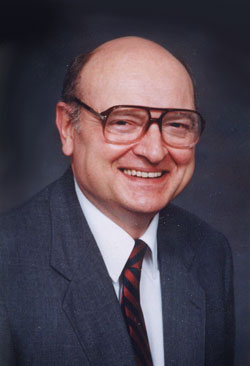 Ronald Nash, former professor of the Southern Baptist Theological Seminary, has died.
Inasmuch as it is the purpose of tis book to prepare the way for more profitable discussions of this new philosophy in the future, it would seem some suggestions are in order.
First of all, there should be exerted in all future writings of this philosophy a greater effort to avoid the ambiguity and problems of terminology that are to be found in all of the previous publications. Good thinking is never complimented by and should never be accompanied by poor communication.
Secondly, I believe attempts should be made to come to grips with the objections raised by others and myself.
Thirdly, I believe that Dooyeweerd's American disciples should extend the implications of his philosophic thought to the peculiar American and English brands of philosophy such as Logical positivism and the school of linguistic analysis.
We have yet to hear the last of either for or against the Philosophy of the Idea of Law. I trust that this brief study may help point out the future discussions of it should take.
...a Christian, astonished and frightened for being Coram Deo! I see the establishment of bridges between the faith and the culture contemporary as the biggest challenge of the Christianity today.
...absolute disasters in the fight against intelligent design ... neither of you are willing to study Christianity seriously and to engage with the ideas - it is just plain silly and grotesquely immoral to claim that Christianity is simply a force for evil, as Richard claims - more than this, we are in a fight, and we need to make allies in the fight, not simply alienate everyone of goodwill.



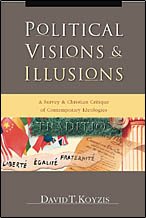 Timothy Sherrat has an article on' Prophetic politics goes to Washington?' in CPJ's Capital Commentary [HT David Koyzis]. Incidentally, if you are interested in politics then David's book Political Visions and Illusions is a must read. It is clear readable and chock full of insight and wisdom - it is worth every penny; get it here from Richard Russell's CSU.


