- ... any student or professional, in any field of study, can gain instant access to intelligent design research associated with their discipline.
- ... every research project related to intelligent design is summarized and arranged into highly usable research articles that can be taken straight to the lab or library for research application.
- ... all the research resources are set up in a wiki, where anyone interested can collaborate and contribute as they research intelligent design.
That is exactly what we are doing at ResearchID.org. ResearchID.org is a wiki knowledgebase compiling information and knowledge related to intelligent design, written by you! Take a look at our About page for more details.

"If God is sovereign, then his lordship must extend over all of life, and it cannot be restricted to the walls of the church or within the Christian orbit." Abraham Kuyper Common Grace 1.1.
Thursday, 29 June 2006
ResearchID.org
ResearchID.org is a new wiki - an online encyclopaedia devoted to intelligent design. Its founder is Joey Campana. He describes it as a website where:

World Cup Final: Germany v Greece?
It won't be Germany v Greece this year - but here's the highlights of a previous year's International Philosophy final; suprisingly Greece have left out Thales:
HT plurality of blogs
HT plurality of blogs
Saturday, 24 June 2006
Fernhout pages

I have now added the Harry Fernhout pages to All of life redeemed. Harry is the president of King's University College, Edmonton.
There are two articles by him in pdf on the site:
- Education in a pluralist society (1996)
- Christian schooling: telling a worldview story from Crumbling Walls of Certainty ed Ian Lambert and Suzanne Mitchell (Gracewing, 1998)
Friday, 23 June 2006
Seerveld's Comment
This week's Comment is from Calvin Seerveld who offers six useful suggestions for a christian student at a secular university: 'Making the most of college: studying ourselves to death'.
James Olthuis pages


At present there are Chapter 1, Chapter 6 , Chapter 7 from his first book Facts, Values and Ethics: A confrontation with twentieth century British moral philosophy in particular G. E. Moore (Second edition, Assen: Van Gorcum, 1969). More papers will follow!
Again my thanks to Geoff Wilson for making these scans of James's book available.
Thursday, 22 June 2006
Seerveld pages

Calvin Seerveld now has his own pages on All of life redeemed. I have put up the following articles as pdfs:
- God's gifts our thank offering - an interview
- Reading the Bible and understanding art
- A Christian tin-can theory of man
- Pain is a four-letter word
- Philosophy as schooled memory
- Reading the Bible like a grown-up child
- The gift of artistry - God's clothing for human life
(My thanks to Geoff Wilson for scanning these articles.)
Most of Calvin's books can be purchased through the Tuppence Press. A great place to start if you are new to Seerveld is In the Fields of the Lord: A Calvin Seerveld Reader edited by Craig Bartholomew. It has an excellent introduction to the thought of Seerveld by Gideon Strauss and Craig Bartholomew.
Another site that has some excellent Seerveld resources is: Seerveld Texts.Wednesday, 21 June 2006
Zygon 41 (June 2006)
The latest volume of Zygon is out. It includes and article by Henk Geertsema: 'Cyborg: myth or reality?'
Abstract. The idea of cyborg often is taken as a token for the distinction between human and machine having become irrelevant. In this essay I argue against that view. I critically analyze empirical arguments, theoretical reflections, and ultimate convictions that are supposed to support the idea. I show that empirical arguments at this time rather point in a different direction and that theoretical views behind it are at least questionable. I also show that the ultimate convictions presupposed deny basic tenets of traditional Christianity, while their claim to be based on science confuses scientific results with their interpretation on the basis of a naturalistic world-view.
Schuurman pages

Egbert Schuurman, now has his own Schuurman pages as part of the All of life redeemed website. I have put up two of his papers on a Christian approach to technology:
- Information society: cultural impoverishment or enrichment (c. 1983)
- A confrontation with technicism as the spiritual climate of the West (1996)
Professor Schuurman (1937 - ) is a professor of Reformational
philosophy at the Universities of Delft and Eindhoven and at the
Agricultural University of Waneningen in the Netherlands. He is also a
member of the Senate of the Dutch parliament. He studied under
Dooyeweerd and Van Riessen at the Free University in Amsterdam.
Tuesday, 20 June 2006
All of life redeemed update
Dick Stafleu's 'Quantum physics and the philsophy of the cosmonomic idea' (translated by H. Kiefte from 'Quantumfysica en wijsbegeerte der wetsidee' Philosophia Reformata (1966) 126) has been added to the Stafleu pages;
and two book reviews:
as well as an early paper by Roy Clouser 'Puritanism on Authority' fromAnakainosis have been added to the Clouser pages.
Update: I've just added two papers on art and aesthetics by Duncan Roper:
and two book reviews:
- Review of Body, Soul, and Life Everlasting by John Cooper
- Review of The Challenge of Marxist and NeoMarxist Ideology for Christian Scholarship. Ed. John Vander Stelt
as well as an early paper by Roy Clouser 'Puritanism on Authority' from
Update: I've just added two papers on art and aesthetics by Duncan Roper:
Friday, 16 June 2006
Russ Reeves in Comment on history
This week's Comment has an article by historian Russ Reeves and former blogger: 'Making the most of college: learning from history'. He begins by examining Santayana's aphorism: 'Those who cannot remember the past are condemned to repeat it', which reminds me of the poet Steve Turner's twist on it: 'History repeats itself - it has to, nobody listens'.
Reeves rightly concludes:
Reeves rightly concludes:
Christians cannot find true identity or purpose in a purely naturalistic understanding of history. It is only through a God who saves his people in history through the sacrifice of Christ. The touchstone for history is not my history, but Christ's history. I need to make sense of the world less through the lens of my experience and more through Christ's. History is the terrain we travel, and we should know it well, but Christ is our compass.
Wednesday, 14 June 2006
Football videos
A great own goal
Ronaldinho six shots at goal and he can't even score!
And if you get fed up with watching football - here's a book to read:

Ronaldinho six shots at goal and he can't even score!
And if you get fed up with watching football - here's a book to read:
Sunday, 11 June 2006
The semi-Pelagian narrower catechism
Maggi Dawn spotted this one: The semi-Pelagian narrower catechism at Manilla Drive - it certainly made me smile!
Friday, 9 June 2006
Five habits of the passionate book lover
Byron Borger, in this week's Comment, looks at learning to love good books. He writes of the five habits of the passionate book lover:
- Make a schedule. Don't postpone your reading to the end of the day when you are most tired. Serious reading takes some serious commitments. Use the library or another favorite, quiet spot;
- Carry a book with you almost all the time. You can dip in during 'down time' or during unexpected free time. You needn't be anti-social or a show-off about your bookwormish habits. Still, you'd be surprised how much reading you can do on the run;
- Talk to people you trust about what they most enjoy and what they are reading. Talk about books with people you admire. Find a book-buying mentor and a bookseller who cares about you and your literacy and intellectual development. Read book reviews from a variety of sources;
- Read in an interdisciplinary way. Wisely chosen novels can obviously enhance your non-fiction course work in pleasurable ways. Some good books come through serendipity and whim, but it may be helpful to have a plan, at least a list; and
- Stretch yourself occasionally by reading the more serious books. Perhaps, explore a new and unexpected topic for a year, reading several similar books or books by the same author. But don't read exclusively arcane and heavy stuff. Light fare and sweets can enhance any diet.
Wednesday, 7 June 2006
Football crazy?
The UK it seems has gone football crazy. Red and white flags are going up all over the place - even on cars. Rather naively I assumed that flags on cars were a message of support to our boys in Germany, however, I was soon put right by this e-mail I received recently:
There is concern over the current driving standards in England, so the Department of Transport have devised a scheme to identify poor and dangerous drivers.
This system will allow all road users to recognise the potentially hazardous and dangerous ones, or those with limited driving skills. From the middle of May 2006 all those drivers who are found to be a potential hazard to all other road users will be issued with a white flag, bearing a red cross.
This flag clearly indicates their inability to drive properly. These flags must be clipped to a door of the car and be visible to all other drivers and pedestrians.
Those drivers who have shown particularly poor driving skills will have to display two flags: One on each side of the car to indicate an even greater lack of skill and limited driving intelligence.
Please circulate this to as many other motorists as you can, in order that drivers and pedestrians will be aware of the meaning of these flags.
Thank you for your co-operation.
Department of Transport.
Monday, 5 June 2006
Stafleu: Time and Again
I have just put up a pdf of the first chapter of Marinus Dirk Stafleu's excellent Time and Again book on the Stafleu pages of All of life redeemed. The first chapter provides an excellent overview of how Dooyeweerd's ideas relates to physics.
There is a review of Time and Again here, by Arnold Sikkema. He concludes:
There is a review of Time and Again here, by Arnold Sikkema. He concludes:
Stafleu’s Time and Again demonstrates the utility of the PCI for physics in a convincing way. Even physicists who are not Christians will find themselves often agreeing with it albeit for completely different reasons. The two main successes of Stafleu are, in my view, an insightful analysis of the development of physics from antiquity through classical to modern as a systematic opening up of creation, and the description of “having” properties as being in the law more than in the entity.
Sunday, 4 June 2006
Brian Leftow Interview
There is a interview with Brian Leftow, the Nolloth professor of philosophy at Oxford, here.
Saturday, 3 June 2006
Neocalvinists and crime fiction
Many neocalvinists it seems have an affection for crime fiction. Al Wolters admits to liking Swedish whodunnits, Roy Clouser likes P D James, Colin Dexter, Reginald Hill and Gideon Stauss has recently blogged about his five favourite crime authors:
He has also written a fine piece about why read crime fiction:
My three favourite UK authors are Ian Rankin, who writes about Rebus in Edinburgh, Peter Robinson whose detective, Inspector Banks, is based in Yorkshire and Mark Billingham - set in London. Rankin and Robinson have both written about a dozen books and are all well worth reading (Rankin is more consitent than Robinson) particularly in chronological order as it is interesting to see how the characters develop. Billingham has written about four books all of which are very good.
My favourite US detective is Harry Bosch written by Michael Connolley.
I have recently started to read some Swedish detectives, particularly good is Henning Mankell (Kurt Wallander - though my favourite of Mankell's doesn't feature Wallender The Return of the Dancing Master) and Ake Edwardson - though I have only been able to get hold of one title by Edwardson Sun and Shadow.
I've just obtained from my local library 'A Rejkjavik Murder Mystery' Tainted Blood by Arnaldur Indridason. I've become interested in things Icelandic ever since discovering the music of Stafraen Hakon. So I'm really looking forward to starting this book; reading while listening to Hakon and sipping a great Islay malt (I know it's not Icelandic - but hey who cares!). I'm fresh out of Ardbeg, so it will have to be Bruichladdich. mmmmm
Perhaps one day we'll see a Dooyeweerdian detective who solves the crime by examining the different modal aspects in the crime and identifying the groundmotive and worldview of the culprit by looking at how (s)he commits the crime.
My favourite crime novelists are strong on character and place: Jim Fusilli (my latest discovery) writes about New York City, George Pelecanos about Washington, D.C., Laura Lippman about Baltimore, Scott Turow about Chicago (although fictionalized as "Kindle County"), and P.D. James about London.
He has also written a fine piece about why read crime fiction:
Perhaps crime stories also attract readers because they offer a relatively simple and direct version of that which attracts us in all stories. If N.T. Wright is correct when he follows Vladimir Propp in arguing that we as human beings are hard-wired for stories with a particular structure, then crime novels offer perhaps the most abstracted and uncomplicated contemporary expression of that ur-structure of story. Which, for a fun read on the beach or in a plane, may be just the thing for many of us.I also enjoy reading crime fiction. So I thought I'd make some recommendations.
My three favourite UK authors are Ian Rankin, who writes about Rebus in Edinburgh, Peter Robinson whose detective, Inspector Banks, is based in Yorkshire and Mark Billingham - set in London. Rankin and Robinson have both written about a dozen books and are all well worth reading (Rankin is more consitent than Robinson) particularly in chronological order as it is interesting to see how the characters develop. Billingham has written about four books all of which are very good.
My favourite US detective is Harry Bosch written by Michael Connolley.
I have recently started to read some Swedish detectives, particularly good is Henning Mankell (Kurt Wallander - though my favourite of Mankell's doesn't feature Wallender The Return of the Dancing Master) and Ake Edwardson - though I have only been able to get hold of one title by Edwardson Sun and Shadow.
I've just obtained from my local library 'A Rejkjavik Murder Mystery' Tainted Blood by Arnaldur Indridason. I've become interested in things Icelandic ever since discovering the music of Stafraen Hakon. So I'm really looking forward to starting this book; reading while listening to Hakon and sipping a great Islay malt (I know it's not Icelandic - but hey who cares!). I'm fresh out of Ardbeg, so it will have to be Bruichladdich. mmmmm
Perhaps one day we'll see a Dooyeweerdian detective who solves the crime by examining the different modal aspects in the crime and identifying the groundmotive and worldview of the culprit by looking at how (s)he commits the crime.
Marius Dirk Stafleu pages

Dick Stafleu, a retired physicist from the Netherlands, now has his own pages on All of Life Redeemed. There is also a new book of his there: Relations and Changes.
I first came across Stafleu through his Time and Again book. It was the first reformational book I tried to read - most of it went straight over my head at first - but it repays close attention. I found it riveting and mind blowing, for the first time I saw that it was possible to think christianly about physics.
Thursday, 1 June 2006
Bob Goudzwaard pages
I have now added a set of pages for christian economist Bob Goudzwaard. There are so far three articles by him on the pages:
- Christianity and economics (1996) [pdf]
- Globalization, exclusion, enslavement (1996) [pdf]
- Bible and economy: two reflections [pdf]
Roy Clouser pages
I have added two more papers to Roy Clouser's pages on All of Life Redeemed:
- "Genesis regained" paper presented at the Templeton Science and Religion Conference June 2006, Philadelphia, Pennsylvania
- "Social norms and religious belief" a paper delivered at a number of conferences. (Thanks to Geoff Wilson, for making this available.)
Sunday, 28 May 2006
Yet more AoLR
I added a few more things to All of Life Redeemed. Bruce Wearne's three interviews with Mark Roques - originally prepared for the Fiji Daily Post - are now added: here, here and here (all pdfs).
Don't forget to check out Mark's own excellent and multi-media website:

Don't forget to check out Mark's own excellent and multi-media website:
Saturday, 27 May 2006
All of Life Redeemed website update
Blogging may have been a little slow of late - but I have been busy with All of Life Redeemed.
A paper on reformational philosophy in New Zealand - by Petrus Simons - has been added to the personal perspectives section:
Chris Gousmett's pages have been updated with the following articles and sermons:
- Cornerstone values [pdf]
- Economics in Christian perspective [pdf]
- Faith in the unseen [pdf]
- Free from condemnation [pdf]
- God has concealed himself in Jesus [pdf]
- God keeps his promises [pdf]
- God the creator of time [pdf]
- Hope of the resurrection [pdf]
- Humanity of Jesus [pdf]
- Jesus ate in their presence [pdf]
- Old age, new age, age to come [pdf]
- Realising your purpose in life [pdf]
- The glory of the unseen God [pdf]
- The Lord will come with the storm [pdf]
- The true temple of God [pdf]
Friday, 26 May 2006
Music videos
If Prosthesis can post some of his favourite music videos so can I!
- Godspeed You Black Emperor Albanian
- Godspeed You Black Emperor Nuclear Film
- Soft Machine From 1970
- Robert Wyatt Gharbadzeghi
- Tortoise Live (30 mins worth!!)
- Keith Jarrett trio
- Keith Jarrett Autumn Leaves
- Bill Bruford Back to the beginning
- Gong Have a cup of tea
- Miles Davis and John Coltrane So What
- John Coltrane Naima
- Nick Drake River Man
- Nick Drake Day is Done
- Radiohead High and Dry
- Terje Rypdal in studio 1
- Damien Rice The blower's daughter
- Damien Rice Cannonball
- Bruce Cockburn Night train
- Van Der Graaf Generator Theme one
- Van Der Graaf Generator Undercover man
- Explosions in the sky Six days at the bottom of the ocean
- Joni Mitchell Coyote
- Joy Division Love will tear us apart
Tuesday, 23 May 2006
IAPCHE
IAPCHE, International Association for Promotion of Christian Higher Education, produce a newsletter, Contact, that is available as a pdf from their website.
Each issue includes a scholarly paper that promotes Christian higher education. Some of these papers are avilable on tier website. These include:
Each issue includes a scholarly paper that promotes Christian higher education. Some of these papers are avilable on tier website. These include:
- Professing God in History Class by Harry Van Dyke
- Churchland, Kandel, and Dooyeweerd on the Reducibility of Mind States by Prof. Gerrit Glas
- The Soul of the Curriculum: A Framework for Integral Christian Education Dr. Hubert R. Krygsman
- Reformational Christian Philosophy and Christian College Education by Dr. Calvin Seerveld
- Why should a university exist? by Dr Calvin Seerveld
- Scholarship at the corssroads by Dr Michael Goheen
Monday, 22 May 2006
More on the Da Vinci Code
Scott McKnight on his Jesus Creed blog has an outline of a talk he did on the Da Vinci code. He makes an excellent point: the Da Vinci Code's central factor is that Jesus was married:
Another excellent article is by Nancy Calvet-Koyzis 'Re-sexualizing the Magdalene: Dan Brown’s Misuse of Early Christian Documents in The Da Vinci Code ':Everything in the DVC rests on one fact: Jesus was married.
1. To disprove this, one must have proof to assert it.
2. Statistics: since all Jewish males were married, Jesus was.
3. The Gnostic Gospels indicate this.
4. Mary Magdalene and Jesus were married.First, Christians are not afraid of marriage.
Second, when we would expect a wife to appear, she does not: at Crucifixion (mother Mary, Mary Magdalene, John told to take care of Mary, the mother); 1 Cor 9:5: Paul could easily have appealed to Jesus.
Third, Christians told the truth about Jesus’ life: Mark 6:3; Mary as a sotah become na’ap; Joseph as a disgraced tsadiq.
Fourth, Jesus’ teachings about celibacy could well indicate personal life: Matthew 19:10-12; Mark 9:42-48
Fifth, the Gnostic Gospels are (1) late and (2) do not say Jesus was married.
Sixth, had the Magdalene been married, she would have been called “wife of Jesus” and not “from Magdala”.
In his overwhelmingly popular novel, The Da Vinci Code, Dan Brown states that he describes all documents “accurately” when he asserts the theory that Mary Magdalene had a sexual relationship with Jesus, was married to him and bore his children. In this article I will examine the sources for Brown’s ideas and compare them to the actual documents–particularly the Gnostic gospels –that he claims to have carefully described. I will argue that Brown not only misrepresents the documents that he claimed to have used but that he actually replicates the errors of the early church by concentrating on Mary’s sexual status rather than upon her status as the apostle to the apostles.
Bruce Wearne
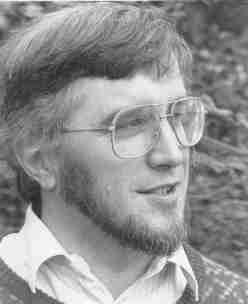
Bruce Wearne's pages on All of Life Redeemed have been updated: a few links to some on-line papers have been added and two articles posted:
- "Ticket and Travel - 20 propositions" contribution to Tramjatra a community arts project linking trams in Melbourne and Kolkata.
- "Deism and the Absence of Christian Sociology" Philosophia Reformata (2003) 1, 14-35
On-line articles by Bruce include: - "Scripture and Tradition in Enlightenment Thought," Evangelical Review of Theology 19.2 (1995): 167-175.
- Review of "Bob Goudzwaard's Reforming economics: Close Engagement and Vision for Accountable Stewardship
- "The Politics of Embryonic Stem-Cell Research"
- "Political Party Twilight in Australia"
- "Shameless or shamefaced? Australia's Iraq Dilemma"
Bruce also has his own website. There you can read: - about Christian sociology,
- Christian Radical Reflections
- The Diary of Henrietta Dubb
- Bible Story Telling
Sunday, 21 May 2006
No Magic Wand
David Caudill and Lewis LaRue have a new book soon to be published: No Magic Wand: The Idealization of Science in Law (Rowman and Littelfield, July 2006). A brief excerpt can be read here.
Caudill and LaRue argue that “science is no magic wand that can solve all social problems.” To imagine that it can do so is to idealize science. The idealization of science by judges and lawyers in court cases is the chief focus of No Magic Wand, but the authors point out that much the same thing often goes on in legislative policy making and in government administration.
Saturday, 20 May 2006
The Chaplins and the arts
According to Gideon Strauss, Jon Chaplin and his wife Adrienne Dengerink Chaplin are moving back to the UK. Jon is to be the director of the Institute for Christian Ethics at Tyndale House.
You can hear a conversation with Adrienne on the place and responsibilities of Christian artists in their communities here. See also here.
Speaking (or rather writing) about the arts, Geoff Hall is leading a day conference on Art Depreciation:
You can hear a conversation with Adrienne on the place and responsibilities of Christian artists in their communities here. See also here.
Speaking (or rather writing) about the arts, Geoff Hall is leading a day conference on Art Depreciation:
Edvard Munch got stressed about it; Kandinsky denied its value and Paul Klee found it too horrific to paint - this dayschool explores why so many artists and critics have found the project of making art in and about the twentieth century a traumatic experience.
Dayschool from 10 am to 4 pm on Saturday 17 June 2006 at Department of History of Art, 43 Woodland Road, Bristol.
Sunday, 14 May 2006
All of life redeemed update
I have made one or two changes to the All of Life Redeemed web pages recently; these include:
- Guillame Groen van Prinsterer gets his own page
- Index for Philosophia Reformata updated and subscription details added
- Personal perspectives section added and a paper by Ricardo Quadros Gouveais
Friday, 12 May 2006
Does the first testament support slavery? (part 2)

Context
The meaning of any passage is context-dependent. Its context has many aspects, these include: literary, historical-cultural and canonical (cf Bauckham 1988). An examination of these different aspects will shed light on our discussion of slavery.
i The literary context. Leviticus 25:44-46 is perhaps the most explicit text in the support of slavery; it is the only place in the Holiness Code (H) - a term coined by A Klostermanmn in 1877- where there is discrimination against “temporary residents” (Patrick 1985). Its immediate literary context is that of the sabbath and Jubilee legislation, where slaves, animals and land are included in its provision. Opening up the context a little wider places it within H (Lev 17-26). The Israelite concept of holiness was not a narrow personal ethic, as unfortunately so much contemporary evangelical thinking nothing was excluded from the sphere of God’s holiness. Kaiser sees holiness as the “central organizing feature of Old Testament ethics” (1983 p139). It was the purpose of the book of Leviticus to expound the Law which would separate Israel out as the holy people of God; Israel was to be holy because God is holy. It may be in this context that the discrimination against aliens is to be understood: it reemphasised the distinctiveness of Israel, particularly as verses 44-46 are concluded by “you must not rule over your fellow Israelite ruthlessly”. Israel as God’s slaves were “forbidden to enslave one another” (Wright 1984, p199).
ii Historical-cultural context. Slavery was part and parcel of the social order of the ancient Near East (Wolff 1974, p199; Van der Ploog 1972 p76; Boeker 1980, p156); there were five major causes of slavery (Van der Ploog 1972, p78; Boeker 1980, p72):
• from prisoners of war;
• the sale of children by impoverished parents;
• voluntary enslavement caused by, for example, lack of employment and the need of protection;
• insolvency; and
• those born into slavery.
In the Near East slaves were the property of another (Van der Ploog 1972, p85); they were essential to the economic order and had no rights. They were treated as merchandise (Boeker 1980, p77) and even had a redeemable cash value (30 shekels) (Heaton 1956, p148). The code of Hammuurbai (CH), discovered in 1902 at Susa on an eight-foot-high black stele, was the law code of Hammurbai the king of Babylom (c. 1792-50 BCE); it recognised three classes of people awleum, the normal free citizens; muskenum, members of a social group that was free but dependent upon the crown; and slaves. The CH contains a death penalty for negligence in the settlement of a slave (§ 7); the death penalty for anyone who conceals a slave (§ 19); and (§ 17) a reward for the capture and return of a runaway slave.
Israel’s law was in marked contrast to this; they had all but abolished slavery. (This may have been because of Israel’s long history as a nation of slaves, which gave them empathy with other slaves.) Hebrews were to be released in the seventh year (Ex 21:2; Deut 15:12); they were not to be released empty handed (Deut 15:13); slaves could choose to remain with their masters (Deut 15:16) - the fact that some took up this option shows that slavery was preferable for some to freedom. The Law also offered protection from physical abuse (Ex 21:26-7); though perhaps the most radical provision in the Law was the law of asylum (Deut 23:15ff) (cf CH § 19,17). This law almost gave the slaves a right to runaway, though it presumes that the runaway will be the exception (Wright 1983, p182).
iii The canonical context. The most comprehensive way examining the canonical context is through the framework creation, fall and redemption.
The creation narratives are explicit: all of humanity is the image-bearer of God. This is in contrast to the ancient Near East texts. Amenophis III an Egyptian king, is described by the god Irmon as “my living image” (Clines 1968, p85). Esarhaddon, a seventh century BCE Assyrian king was described as the “very image of Bel” (cited in Clines 1968. p83). In an Assyrian state letter the following appears:
A (free) man is the shadow of god, the slave is as the shadow of a (free) man; but the king is like unto the (very) image (mussulu) of god (cited in Clines 1968, p84).
 In the ancient Near East the kings, not the rest of humanity, were the image of God (Clines 1968, p85); consequently, humanity were devalued (Walsh 1990) - according to the Enuma Elish (VI.5), the Babylonian epic of creation, they were created from the blood of Tiamat to be slaves for the gods (kings):
Blood will I compose, bring a skeleton into being,
Produce a lowly, primitive creature, ‘Man’ shall be his name:
I will create lullu-amelu – an earthly ‘puppet’-man.
To him be charged the service that the gods may then have rest...”
(cited in Winton Thomas 1958, p12).
In contrast, the Israelite creation epic by asserting that all humanity is made in the image of God it declares that all humanity has equal value (cf Job 31:13-15). It not only “inspires the notion of equality” (Wolf 1974, p202) it undermines the Babylonian basis of slavery.
The fall deformed and distorted God’s good creation. The task of imaging God is made all that much harder (Bishop 1989, p7): the ground becomes cursed (Gen 3:17). Noah finds two ways of attempting to undo the curse (Gen 9). He gets drunk (v21) - the principle of working is diminished; and slaves (v25-6) obviate the need to work the cursed ground (Coombs 1988, p281). Slavery, then, is a result of the fall; the first time it is mentioned in the biblical canon is in the context of a curse (Wright 1983).
The exodus event was a focal point for the nation of Israel, it marked their redemption from slavery and had ramifications for how they treated slaves (eg, Lev 19:42; 25:42). They had been an oppressed people, so they were not to oppress others. Hence the slavery laws although not abolishing slavery - probably unthinkable in the cultural climate - treated it as abnormal and went a long way to humanising it, so much so that it could properly be called “service” rather than “slavery”. Slaves even had rights under Israelite legislation (Kaiser 1983, p98), they could participate in the sabbath rest (Lev 25:6; Ex 20:10) and were almost treated as part of the family.
The prophets were vehement in their attack against the dehumanisation of humanity; none more so than Amos. He denounces both Tyre and Edom for oppressive slave trading - the verb “to sell” in Amos 2:6 is used for the selling of slaves (Soggin 1987, p47). God demands socio-economic justice even for slaves.
Jesus had very little to say about slavery, though that does not mean he advocated it; he was also silent about piracy and arson (Swartley 1983, p51).
The apostle Paul in his articulation of the gospel shows how it cut across all barriers, and that in Christ slavery (as is nationalism and sexism) is abolished (Gal 3:28). Paul accepted the slave Onesimus as a son (Philemon 10), and asked Philemon to take him back “as a dear brother” (Philemon 16); a far cry from the Greek and Roman slavery of the time, when the slave was regarded as an “instrument that can talk” (Boeker 1980, p157).
Neither Israel’s laws, Jesus or Paul advocated the abolition of slavery, though they all pointed in that direction. At the consummation, heralded by the return of Jesus, there will be no slavery on the new earth there will be a new order (Rev 21:1-4). The shalom between humanity, the earth and God, ruptured by the fall will be restored (Is 2:49; 9:5; 11:6-9; 35:1; 66:17). Slavery, human oppression of human, will be a thing of the past we will all live in shalom with each other.
Conclusion
Israel provides us with a model or paradigm for today; this does not mean we accept all the laws in toto: the difference in cultural horizons shows the futility of that approach. The laws are not blueprints, we have to understand them in their context and recognise the direction in which they point (Bauckham 1988).
It is the underlying principles behind the laws that are important: we need to embrace the spirit not the letter of the law (compare Paul’s disregard of the law of asylum (Deut 23:15ff) in Philemon 16).
By looking for the God’s intention behind the laws it removes any problems in cultural transposition, as the norms underlying the- laws will not have changed. It also means that we will not have to divide up the law into any false categories, such as civil/ceremonial, as the purpose of the law would transcend such divisions.
Discovering the intention of the law involves seeing Israel as a paradigm, seeing if there is any development in the law, recognising the role of the fall and seeing what cultural factors influenced the character of the laws. It is not-a trivial task; but it does enable us to draw upon the strengths of the other approaches and to avoid their weaknesses. The purposes of God behind all the Old Testament laws reflect his will not only for Israel, who were to be a light to the nations, but also for the whole of creation; they transcend time, place and situation. Consequently, they will be equally valid today for church and world.
So, where does that leave us with slavery? The purpose and intention of the First Testament slavery laws are, at least, threefold:
- they reveal the abnormality of slavery
- they took steps to alleviate its dehumanising effects and
- they pointed towards its abolition.
Embracing the underlying principles, or spirit, of the law would not mean accepting slavery but to work for its abolition, as in fact people like Wilberforce did.
However, slavery is not a problem that was solved two-hundred years ago, it is still something that confronts us today! In the Sudan, Dinka children are sold into slavery; child slaves are used in the stone quarries of Haryana State, India; and six-year-olds are sold for up to £75 in Bangkok to work in sweat shops. To take the First Testament seriously is to do something about it.
For more information about slavery today
References
Richard Bauckham The Bible and Politics (SPCK/Third Way, 1988).
Steve Bishop “Towards a biblical view of environmental care” Evangel 7 (1989) 7-8.
Hans Jochen Boecker Law and the Administration of Justice in
Old Testament and Ancient East (SPCK,1980).
David A Clines “The image of God in man” Tyndale Bulletin 19 (1968) 53-103 .
Eugene Coombs “Has YHWH cursed the ground’? Perplexity of interpretation in Geneis 1-5” in Ascribe to the Lord ed. L Eslinger and G Taylor (JSOT, 1988).
John Goldingay Approaches to Old Testament Interpretation (IVP, 1981)
Joh Goldingay “Divine ideals, human stubborness, and scriptutural innerancy” Transformation 2 (4) (1985) 1-4.
E W Heaton Everyday Life in Old Testament Times (Batsford,1956).
WaIter C Kaiser Toward Old Testament Ethics (Academie, 1983).
Bruce Kaye Using the Bible in Ethics (Grove Booklets no 13, 1976).
Roger Nicole “A response to John Goldingay” Transformation 2 (4)
(1985) 4-5.
Denis Nineham Use and Abuse of the Bible (Macmillan, 1976).
Dale Patrick Old Testament Law (SCM, 1985).
J A Soggin Amos (SCM, 1987).
Willard M Swartley Slavery, Sabbath, Women and War (Herald Press, 1983)
A C Thiselton The Two Horizons (Paternoster, 1980).
J P M Van det- Ploog “Slavery in the Old Testament” Vestus Testament Suppl. vol 22 (1972) 72-87
Brian Walsh Subversive Christianity (Regius Press, 1990)
Gordon Wenham “The perplexing Pentateuch” Vox Evangelica XVII (1987) 7-21.
D Winton Thomas (ed.) Documents From Old Testament Times (Nelson, 1958)
Tuesday, 9 May 2006
The truth about Da Vinci
The truth about Da Vinci is a new website devoted to issues raised by Dan Brown's Da Vinci Code
Sunday, 7 May 2006
Does the first testament support slavery? (part 1)
How can we apply the first Testament laws today? This is an important issue for Christian social issues and one I hope to go some way to answering by examining the Bible’s attitude to slavery. This is particularly relevant today with the Stop the Traffik campaign in its infancy.
The issue of slavery provides a poignant example of how our world-and-life view influences our interpretation of scripture. In the nineteenth century there was a lively debate among Christians about the ethics of slavery: “to argue against slavery in 1850 was to argue the inspiration and inerrancy of the authorative word of God” (Swartley 1983, p199). It is immediately apparent that those who strongly opposed the abolition of slavery were those who stood to benefit directly from it. The Quaker John Woolman claimed that:
The love of ease and gain are the motives in general of keeping slaves, and men are wont to take hold of weak arguments to support a cause which is unreasonable” (cited in Swartley 1983, p55)
In using the scripture for self-justification they failed to let themselves be confronted by the text and let the scriptures affect their prior assumptions. If the scriptures are to have more than a paper authority we should approach them with the full knowledge that we have our presuppositions and be willing for the scriptures to challenge them. This much we can learn from the nineteenth-century slave owners.
The issue of slavery is hermeneutical rather than exegetical, that is, it is a matter of interpretation rather than an explanation of certain texts. The Old Testament does on the face of it present a good case for slavery (see especially Lev 25:4446). But then other Old Testament texts suggest we should adhere to strict dietary laws (Lev 11:1-21) and stone blasphemers (Lev 24:14) - who would advocate these commands for today? There have been several ways that Christians have responded to the accusation that the Old Testament supports slavery today. I shall briefly examine six of them.
1. The scriptures are wrong
This is the approach of R. H. Preston (1976); he accuses the scriptures of being wrong in its attitude not only to slavery but also women, capital punishment and homosexuality. This response is wholly inadequate for several reasons: (i) it is arbitrary; who is to say which part of the scriptures is correct and which part wrong? If it is wrong over these issues might not it also be wrong over Jesus’ incarnation and resurrection? (ii) It is a response that is shaped by cultural forces;
2. Cultural distance
Denis Nineham (1976) suggests that we cannot understand the scriptures - and hence its approach to slavery - because of the cultural distance between us and Old Testament times. We cannot understand the Bible author’s world, because we are too far removed from it, therefore we cannot hope to interpret what they wrote. Nineham is right in pointing out the problem of cultural distance; interpreting the scriptures is not a trivial task. But yet the difference between the two horizons, the text’s and the reader’s, are not insurmountable as Thiselton (1980) has shown.
There are, of course, discontinuities between”
3. Dividing the law
Justin Martyr (c. 100-165 AD) first made the distinction between civil, ceremonial and moral aspects of the Law (Kaiser 1983,p412); hence civil and ceremonial - which would include slavery - would not be binding for us today, whereas the moral would. This division is arbitrary and artificial. Christopher Wright (drawing upon Anthony Phillips) divides the Law into: criminal, civil, family, cultic and charitable (Wright 1983, p151ff). Over-riding any categorisation we need to recall that all the ‘Law is God’s law’ (Wright 1983, p159).
Another similar approach is to divide the law into legislative and creation material (Kaye 1976, p8). The legislative material is concerned with the maintenance of the cult and part of the structure of the covenant, its context is
4. Development
This is a view articulated by Gordon Wenham when he states “slave laws are steps being taken towards the elimination of slavery, towards a world where all men are equal and free” (Wenham 1986, pl0). God presents his laws in instalments, slowly moving to the ideal.
If we unreservedly accept this view, then an unacceptable implication follows: the authority of the text is dependent upon Jesus undermines this when he talked about divorce, he based his arguments on the early creation narratives (Mk 10:1-6, cf Gen 2)
5. Condescension: accommodating the fall
It is important to remember that we live in a world tainted by the fall, hence Jesus explains that the divorce laws were for “your hardness of hearts” (Mk 10:1-6). The Old Testament laws reflect the sinfulness of humanity (Goldingay 1985, p2); they reflect the way the world is, not the way it should be. The Old Testament laws seek to “make slavery work with as little injustice as (Goldingay 1981, p59).
The problems with this principle of condescension are twofold (i) why then does God give us ideal standards? and (ii) it could open up the door to further depravity (Nicole 1985, p5)
6.
An approach developed by Chris Wright (1983, pp40-45; 1984) sees
Using
These different approaches are not of course mutually exclusive. The first approach for those who hold to the authority of the scriptures is unacceptable; but the rest, to varying degrees contain elements of the truth. Nineham’s approach in the extreme is ludicrous but it does serve to remind us that the scripture does have its own context and any responsible interpretation must take that into account. It is to the problem of context that I will examine in part 2.
References
Richard Bauckham The Bible and Politics (SPCK/Third Way, 1988).
Steve Bishop “Towards a biblical view of environmental care” Evangel 7 (1989) 7-8.
Hans Jochen Boecker Law and the Administration of Justice in
Old Testament and Ancient East (SPCK,1980).
David A Clines “The image of God in man” Tyndale Bulletin 19 (1968) 53-103 .
John Goldingay Approaches to Old Testament Interpretation (IVP, 1981)
Joh Goldingay “Divine ideals, human stubborness, and scriptutural innerancy” Transformation 2 (4) (1985) 1-4.
E W Heaton Everyday. Life in Old Testament Times (Batsford,1956).
WaIter C Kaiser Toward Old Testament Ethics (Academie, 1983).
Bruce Kaye Using the Bible in Ethics (Grove Booklets no 13, 1976).
Roger Nicole “A response to John goldingay” Transformation 2 (4)
(1985) 4-5.
Denis Nineham Use and Abuse of the Bible (Macmillan, 1976).
Dale Patrick Old Testament Law (SCM, 1985).
J A Soggin Amos (SCM, 1987).
Willard M Swartley Slavery, Sabbath, Women and War (Herald Press, 1983)
A C Thiselton The Two Horizons (Paternoster, 1980).
J P M Van det- Ploog “Slavery in the Old Testament” Vestus Testament Suppl. vol 22 (1972) 72-87
Brian Walsh Subversive Christianity (Regius Press, 1990)
Gordon Wenham “The perplexing Pentateuch” Vox Evangelica XVII (1987) 7-21.
D Winton Thomas (ed.,) Documents from Old testament Times (Nelson 1958)
Richard Russell

I have now added some more articles by Richard Russell to the Russell pages of All of Life Redeemed:

- In defence of Dooyeweerd Spectrum 23 (2) (1991):147-59 [pdf]
- Natural theology: is it scriptural? Anakainosis 8(3) March 1986 pp 6-8 [pdf]
- Where is Francis Schaeffer going? Vanguard [pdf]
- Going round the prickly pear of British education (Interview) Vanguard 11(5) Sept-Oct 1981 pp 16-17[pdf]
Saturday, 6 May 2006
Neocalvinism ....Abraham Kuyper? Maybe.
Comment's series on neocalvinism continues with an article by Clifford Blake Anderson, Curator of Reformed Research Collections in the Princeton Theological Seminary Library 'Neocalvinsism .... Abraham Kuyper? Maybe?'
In my engagement with Abraham Kuyper at Princeton Seminary, I do not seek to repristinate his worldview, much of which belongs, after all, to a quite different time and place. I do seek to learn from Kuyper how to construe Christianity as a comprehensive faith with implications for every sphere of life. I and others have discovered in Kuyper's theology a rich resource for fostering interdisciplinary conversation between theologians and professionals from other disciplines.
Friday, 5 May 2006
All of life redeemed update
I have now added the Roper pages to the All of Life redeemed site. Duncan is a NZ reformational thinker. His paper on Euler and the Konisberg bridges: some lessons for the philosophy of mathematics is now available.
I've also put up a pdf of Gregory Baus's paper on Dooyeweerd's societal sphere sovreignty: neither tax based nor laissez-faire. Gregory also gets a mention on Joe Carter's Evangelical outpost.
I've also put up a pdf of Gregory Baus's paper on Dooyeweerd's societal sphere sovreignty: neither tax based nor laissez-faire. Gregory also gets a mention on Joe Carter's Evangelical outpost.
The Bible in Transmission
The Bible in Transmission's Spring 2006 is now on-line. It has an excellent article by WYSOCS David Hanson: God's service from operation to arias.
One way and another, but without any Damascus road experiences, my career and my calling became that of full-time Christian service as an ENT Surgeon and lecturer in a provincial teaching hospital. I stress “full- time Christian service”. It is not the source of the pay- cheque that determines the matter; it’s the awareness “that I am not my own, but belong, body and soul, in life and in death, to my faithful Saviour”. I am called a Christian because “I share in his anointing as prophet, priest and king – to confess his name, to present myself to him as a grateful living sacrifice, to strive against all evil in this life and afterwards to reign with Christ over all creation for all eternity.”
Tuesday, 2 May 2006
Speaking of war and peace
The Banner, the magazine of the Christian Reformed Church (CRC) in North America, has online a debate between Jim Skillen and Kathy Vandergift - both were involved in the drafting of the recently published report on War and Peace. They were both asked what they would have liked the report to sayand why they settled for what it does say.
Friday, 28 April 2006
Neocalvinism ... Yes, but ...
Comment magazine continues its series on neocalvinism with an article by Janel Curry
Formerly an anabaptist, in neocalvinism Janel Curry has found an intellectual framework that allows her to negotiate between the pitfalls of both Enlightenment modernism and postmodernism, and find a cohesive solution to the problems posed by both in her discipline. But . . . while positioning herself as a scholar operating from the neocalvinist tradition, Curry offers a warning and issues a challenge to 21st-century neocalvinists.
Thursday, 27 April 2006
Knudsen on Dooyeweerd on 24 CDs
I've just spotted a 24 CD series by the late Robert Knudsen on Dooyeweerd here.
Saturday, 22 April 2006
The importance of worldview
... by Craig Bartholomew: here.
...we must realize just how powerfully Biblical Christianity is worldview-based. You know, one of the things that I've learned as well is that when you read the Bible, you don't take your worldview glasses off, you read the Bible with your normal worldview glasses. And if you're a white South African, you only read Romans 13 and you don't read all those other texts in Revelation which describe the state as demonic and as the Babylon of this world. And then the only thing you see is that good Christians obey and support the government. You read the Bible with your worldview-based glasses on.
Wiki toolbar
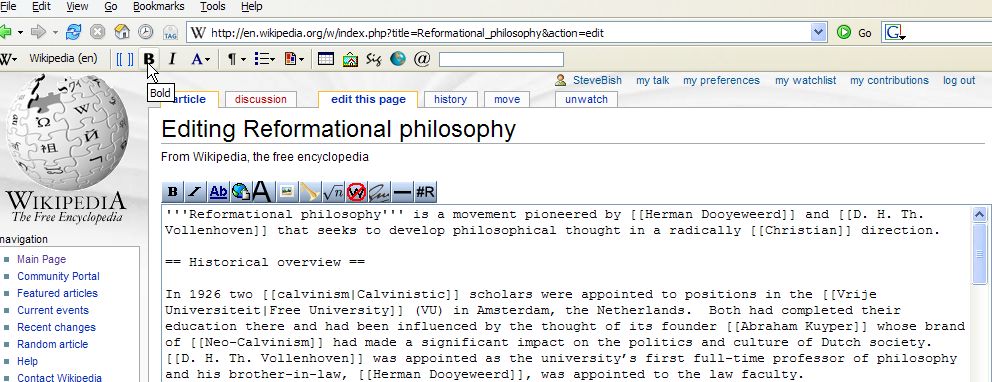
There is now a wiki toolbar add-on for Mozilla here. It makes editing wiki pages so much easier. Yet another reason to use Mozilla Firefox!

Dooyeweerd's New Critique for Sale
It's not often Dooyeweerd's magnum opus comes up for sale secondhand - but PsychoBabel books have it for sale: volume I-II and volume III-IV
Dooyeweerd, Herman A New Critique of Theoretical Thought, Volumes I-II. The Necessary Presuppositions of Philosophy, Ontario, Canada: Paideia Press, 1984., Second Edition. Hard Cover. Very Good/No Jacket. 0888151527 Clean Copy £ 50.00
Dooyeweerd, Herman A New Critique of Theoretical Thought, Volume III-IV. The Structures of Individuality of Temporal Reality, Ontario, Canada: Paideia Press, 1983., Reprint. Hard Cover. As New/No Jacket. 0888151527 Clean Copy £ 50.00
Neocalvinism ... yes
This week's Comment continues the theme of neocalvinism. Harry Van Dyke answers: Yes - do we have a choice? He opens:
Both its teachings and its historical record leave us little choice but to embrace neocalvinism as the way to go when engaging culture. First off, neocalvinism is a comprehensive outlook on life and the world, a full-fledged worldview, one that is a match for every ideology that we encounter and often collide with in our daily lives. Secondly, the neocalvinist worldview equips the wide-awake Christian like no other option for being busy in God's world and witnessing to the gospel in its healing power for every human endeavour that we come across in today's complex social and cultural world.
Wednesday, 19 April 2006

Tuesday, 18 April 2006
Friday, 14 April 2006
Idiotsavant
I have just spotted a blog by Jeff Cavanaugh: Idiotsavant. Jeff describes himself as:
a confessionally Reformed student of God's Word, whose interests and free time are increasingly devoted to theology and the intersection of philosophy, art, literature, and politics--that is, culture--with the Christian life.
Thursday, 13 April 2006
Neocalvinism ...no: why I am not a neocalvinist
This week's Comment continues the theme of neocalvinism with Daniel Krauss' piece 'Neocalvinism.. no: why I am not a neocalvinist'.
Wednesday, 12 April 2006
Worldview illustration
This advert for playstation 2 is an excellent illustration of how worldviews (jam jars) shape our lives. [HT jonnybaker - who sees it as a parable for the church]]
Monday, 10 April 2006
Stop the Traffik
 March 25th 2007 it will be the 200th anniversary of the abolition of the trans-Atlantic slave trade. There is now a global coalition Stop the Traffik working together to raise awareness of contemporary slave trading. There are details of how to get involved here.
Sunday, 9 April 2006
Brian Appleyard: Religion who needs it?
Brian Appleyard, author of Understanding the Present and a journalist for the Sunday Times, has written an intersting article in the newstatesman: Religion: who needs it? He concludes:
The same issue has an article by Lewis Wolpert: My evangelical son and me.
I would guess that at the Old Bailey we mostly swore by God because, in the face of all that sombre ceremony, we quietly accepted the demand - however unreasonable - that we belong to something larger than ourselves. I'd like to say it was a fleeting thing, scarcely worth mentioning: a mere habit, a reflex, perhaps even an embarrassment. I'd like to, but I'm afraid I can't.
Saturday, 8 April 2006
All scientists believe in God
All scientists - including agnostics and atheists - believe in God. They have to in order to do their work.
Vern S. Poythress 'Why scientists must believe in God: divine attributes of scientific law' JETS 46(1) (2003):111
Friday, 7 April 2006
Comment: James K A Smith

James Smith is the author of the latest Comment. Smith looks at 'Neocalvinism . . . maybe: a peek into my neocalvinist toolbox.
He writes he could still consider himself a neocalvinist if: neocalvinsists recover a deep sense of the antithesis; neocalvinism is understood as a catholic tradition; neocalvinism can welcome the Spirit's charismatic renewal; neocalvinism can think of the possibility of a 'Reformed monasticism'.
Many of his thoughts echo those of an earlier article in Comment by Al Wolters; Smith's Comment is likely to provoke much useful debate.
Thursday, 6 April 2006
E L Hebden Taylor
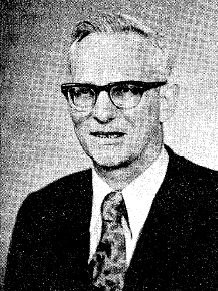 Revd Eustace (aka Stacey) Lovatt Hebden Taylor is an Reformational Anglican vicar (b 1925 in Katanga, Belgium Congo - the son of missionary parents). He has served in the Royal Navy and as a missionary in Alaska. He has been the rector of St Matthews, Montreal, Holy Trinity, Langley, UK and Greengates, Bradford, UK. He became the professor of History and Sociology at Dordt College. There he was described as:
One of the most colorful and eccentric professors in the history of Dordt College was Dr. E. L. Hebden Taylor. While he brilliantly developed a Reformed perspective in his unique brand of course materials, he was about as approachable as a prickly pear cactus. He was not distant in a negative way; it was just that his commitment to scholarship left little time or interest for interpersonal relationships with students.He is the author of:
- The New Legality: In the Light of the Christian Philosophy of Law (Craig Press/ P&R, 1967) available here as a pdf.
- Evolution and the Reformation of Biology (Craig Press, 1967) reviewed here.
- The Christian Philosophy of Law, Politics, and the State (Craig Press, 1969)
- The Reformational Understanding of Family and Marriage (Craig Press, 1970)
- Reformation or Revolution (Craig Press, 1970)
- The Origin and Nature of Modern Capitalism (Christian Studies Center, 1975)
- Economics, Money and Banking (Craig Press, 1978)
Articles
- The Reformation and the development of modern science Churchman vol 82 (2) (1968): 87-103.
- 'The death of the Lord' an interpretation His Dominion (Bracebridge, Ont.: The Society of St John The Evangelist) 1 May 1961.
- The state of British Christianity today Pro Rege June (1974) 17-22
Reformational journalism
The reformational movement has a long history of reformational journalism: Groen van Prinsterer was the editor in chief of a dialy newpaper De Nederlander and, of course, Abraham Kuyper was the editor of the De Standaard. And Dooyeweerd's The Roots of Western Culture originally began life as newspaper articles.
 Albert Gedraitis is continuing this reformational tradition with on-line journalism. His refWrite blog has now exapanded to three pages: refWrite page 1, refWrite page 2, and refWrite page 3.
 Albert Gedraitis is continuing this reformational tradition with on-line journalism. His refWrite blog has now exapanded to three pages: refWrite page 1, refWrite page 2, and refWrite page 3.
Monday, 3 April 2006
Philosophy of religion articles on Apollos

A number of philosophy of religion articles have been added to the Apollos.ws website; these include links to:
- Alvin Plantinga Ontological Argument
- Richard Swinburne Resurrection Argument
- James Sire Against Naturalism
- Gordon Pettit Free Will
- Stephen T. Davis Cosmological Argument
- Alexander Pruss and Michael Harbin Theistic Evolution
- Bradley Monton Intelligent Design Theory
- Jay Wood Miscellaneous Religious Epistemology
- John Hick and Richard Swinburne Problem of Evil
- Bruce Reichenbach Atonement
- Jeffery L. Johnson and Joyclynn Potter Miscellaneous Arguments for the Existence of God
The Evangelical ecologist
The Evangelical Ecologist is a blog worth checking out: "A Christian ecoblog - 'cause the world isn't ours to mess up Psalm 24:1."
Why the blog? I started it because I think there's a need for a conservative evanglical voice in the environmental movement today. Clearly, though, I'm not the evangelical ecologist. All of us who desire to care for God's creation while spreading the Good News of salvation through Jesus Christ are evangelical ecologists. And this site is here to help.
Sunday, 2 April 2006
Teaching history backwards?
Kenn Hermann has an interesting post on his Radix Perspectives about teaching history backwards; he also has a essay on this topic where he highlights seven pedagogical advantages of this approach.
Subscribe to:
Posts (Atom)


