An accidental blog

"If God is sovereign, then his lordship must extend over all of life, and it cannot be restricted to the walls of the church or within the Christian orbit." Abraham Kuyper Common Grace 1.1.

Saturday, 22 September 2018

Declaration on Sport and the Christian Life


From https://sportandchristianity.com/declaration/ for the declaration in full

These are the key points:

1. Sport has a legitimate place in the Christian life.

2. Sport touches all dimensions of human life.

3. Sport can be a means of spiritual formation.

4. Sport can glorify God.

5. Competition is an essential element of sport.

6. The true value of sport is inherent in the experience itself.

7. Sport has many benefits but they are conditional.

8. God created our bodies for His service and our enjoyment.

9. We do not control whether God favors one player or team over another.

10. Christian virtues are revealed in behaviors that go beyond obeying the rules.

11. Sport programs are a vital component of Christian education.

12. Sport is powerful.


The General Theory of Not Dancing

After the general theory of non-gardening we have:


From Lisa 1999.  Philosophers on Holiday 2(3):4.

The General Theory of Not-Gardening by Leszek Kolakowski

The General Theory of Not-Gardening
A Major Contribution to Social Anthropology, Ontology, Moral Philosophy, Psychology, Sociology, Political Theory, and Many Other Fields of Scientific Investigation

Leszek Kolakowski

From Ch 21 of Modernity on Endless Trial

Those who hate gardening need a theory. Not to garden without a theory is a shallow, unworthy way of life.

A theory must be convincing and scientific. Yet to various people, various theories are convincing and scientific. Therefore we need a number of theories.

The alternative to not-gardening without a theory is to garden. However, it is much easier to have a theory than actually to garden.

Marxist Theory

Capitalists try to corrupt the minds of the toiling masses and to poison them with their reactionary “values.” They want to “convince” workers that gardening is a great “pleasure” and thereby to keep them busy in their leisure time and to prevent them from making the proletarian revolution. Besides, they want to make them believe that with their miserable plot of land they are really “owners” and not wage-earners, and so to win them over to the side of the owners in the class struggle. To garden is therefore to participate in the great plot aiming at the ideological deception of the masses. Do not garden! Q.E.D.

Psychoanalytical Theory

Fondness for gardening is a typically English quality. It is easy to see why this is so. England was the first country of the industrial revolution. The industrial revolution killed the natural environment. Nature is the symbol of Mother. By killing Nature, the English people committed matricide. They are subconsciously haunted by the feeling of guilt and they try to expatiate their crime by cultivating and worshipping their small, pseudo¬natural gardens. To garden is to take part in this gigantic self-deception which perpetuates the childish myth. You must not garden. Q.E.D.

Existentialist Theory

People garden in order to make nature human, to “civilize” it. This, however, is a desperate and futile attempt to transform being-in-itself into being-for-itself. This is not only ontologically impossible; it is a deceptive, morally inadmissible escape from reality, as the distinction between being-in-itself and being-for-itself cannot be abolished. To garden, or to imagine that one can “humanize” Nature, is to try to efface this distinction and hopelessly to deny one’s own irreducibly human ontological status. To garden is to live in bad faith. Gardening is wrong. Q.E.D.

Structuralist Theory

In primitive societies life was divided into the pair of opposites work/leisure, which corresponded to the distinction field/house. People worked in the field and rested at home. In modern societies the axis of opposition has been reversed: people work in houses (factories, offices) and rest in the open (gardens, parks, forests, rivers, etc.). This distinction is crucial in maintaining the conceptual framework whereby people structure their lives. To garden is to confuse the distinction between house and field, between leisure and work; it is to blur, indeed to destroy, the oppositional structure which is the condition of thinking. Gardening is a blunder. Q.E.D.

Analytical Philosophy

In spite of many attempts, no satisfactory definition of garden and of gardening has been found; all existing definitions leave a large area of uncertainty about what belongs where. We simply do not know what exactly a garden and gardening are. To use these concepts is therefore intellectually irresponsible, and actually to garden would be even more so. Thou shalt not garden. Q.E.D.


[HT Richard Russell]

Someone else added:

Economic theory

Like any human process, gardening is a method to achieve some result — products if you will. The products of gardening are tangible and intangible. The tangible products of gardening are fruits and vegetables that can be eaten by the gardener. The intangible product of gardening is the “enjoyment” that some gardeners report by engaging in gardening itself.

In terms of tangible products we can show that gardening is an inefficient and wasteful process. The total cost of gardening starts with the direct costs such as seed, fertilizer, and tools. We add the opportunity cost of what might have been done with the land were it not a garden (the “highest and best use” of residential property). Lastly, we add the assumed labor cost of the gardener’s effort (which is by far the largest input). The sum of these direct and indirect costs show gardening to be a net capital loss activity. Indeed, it is more efficient for an individual gardener to buy all his produce from his neighborhood supermarket delivered from high-volume farms.

Knowing the direct and indirect costs of gardening, and the market value of the tangible products grown, we can deduce the value of the intangible “enjoyment” that gardeners report. We can show that, for the average gardener, the value of that enjoyment, when divided by labor hours invested in gardening, yields an extremely low “enjoyment per hour” quotient. Indeed, holding the dollar value constant, most gardeners could yield the same amount of enjoyment with FEWER hours (thereby having more hours available to generate other income) by attending movies. Or they could yield MORE enjoyment in the same amount of hours by doing virtually anything else.

Gardening is a irrational expenditure of resources, both capital and labor. QED

Saturday, 15 September 2018

Common Grace, Natural Law, and the Social Order


The Christian understanding of the created order is fraught with danger. Christians must carefully avoid two opposite forms of error. On one extreme, there is the tendency to conflate the created with the Creator, which leads to a kind of paganized divinization of the world. On the other, there is the temptation to conclude that this world holds merely illusory value and therefore can essentially be ignored or abused. A proper approach to the created order, however, holds together the temporal and the eternal, properly relating and valuing them both. 
This is a challenge for all Christian traditions, but has been especially acute for Protestantism. The Reformed tradition, in particular, has often been accused of having (and, in some cases, has understood itself as having) a pervasively negative view of the fallen world, leading to a devaluation of God’s creation. A major theme of the Reformation and its inheritors, however, is the need to rightly discern the ways that God continues to work, in preservation as well as redemption, amid the realities of sin.

The Dutch Reformed theologian Abraham Kuyper (1836-1920) engaged these challenges directly through his articulation of the doctrine of “common grace.” This doctrine is one of the most significant—and controversial—aspects of the great theologian’s legacy. A new multi-volume translation of his exhaustive treatment of the doctrine is intended to provide deeper insights into Kuyper’s understanding of this crucial, and oft-misunderstood, element of divine action. Kuyper’s work sheds light on the moral significance of common grace, especially for natural law, social order, and our contemporary challenges. ...

Politics, Church, and Kingdom: A Critique of Neocalvinist Politics by A.A. Van Ruler


translated by Ruben Alvarado

From the chapter “Church and State,” in Droom en Gestalte [Dream and Reality] (Amsterdam: Holland Uitgeversmaatschappij, 1947), pp. 189—214.

New version of Groen van Prinsterer's Unbelief and Revolution


Unbelief and Revolution
Full details here
Format: Print
$15.99
Overview
God’s word illumines the darkness of society.

Groen van Prinsterer’s Unbelief and Revolution is a foundational work addressing the inherent tension between religion and modernity. As a historian and politician, Groen was intimately familiar with the growing divide between secular culture and the church in his time. Rather than embrace this division, these lectures, originally published in 1847, argue for a renewed interaction between the two spheres. Groen’s work served as an inspiration for many contemporary theologians, and as a mentor to Abraham Kuyper, he had a profound impact on Kuyper’s famous public theology.

Harry Van Dyke, the original translator, reintroduces this vital contribution to our understanding of the relationship between religion and society.

Thursday, 30 August 2018

Completed concept map of Basden's Dooyeweerd

I have over the last few days posted concept maps taken from my interpretation of Basden's discussion of Dooyeweerd's philosophy from Chapter 3 of his book Foundations of Information Science


To complete the posts here's a black and white version of all the maps put together - click on the image to enlarge it.


Wednesday, 29 August 2018

Monday, 27 August 2018

Saturday, 25 August 2018

Friday, 24 August 2018

Thursday, 23 August 2018

Wednesday, 22 August 2018

Kuyperania 2017 - Koers 83(1)

My review of books and articles on Kuyper published during 2017 is now online at the Koers website.

Bishop, S., 2018. Kuyperania 2017. KOERS — Bulletin for Christian Scholarship, 83(1). Available at: https://doi.org/10.19108/KOERS.83.1.2361

In it I look at the following:


Bartholomew, C.G. 2017. Contours of the Kuyperian Tradition. Downers Grove, IL: IVP Academic.
De Brujine, A. 2017. Abraham Kuyper’s surprising love of the Jews. 
Journal of Reformed Theology, 11(1-2):24-46. 
De Jong, J.A. 2017. The heart and soul of Abraham Kuyper: reflections on his meditations. Calvin Theological Journal, 52(1): 37-61.
Douma,  J. 2017. Common Grace in Kuyper, Schilder, and Calvin: Exposition, Comparison, and Evaluation. Lucerna: CRTS Publications.
Eglinton, J. 2017.Varia Americana and race: Kuyper as antagonist and protagonist. Journal of Reformed Theology, 11(1-2): 65-80. 
Henderson, R. 2017a. The development of the principle of distributed authority, or sphere sovereignty. Philosophia Reformata, 82(1):74-79. 
Henderson, R. 2017b. Rumours of glory: Abraham Kuyper’s Neo-Calvinist theory of art, Pro Rege, 45(4):1- 9. Available at: http://digitalcollections.dordt.edu/pro_rege/vol45/iss4/1.
Jeom Ok Kin, Luther. 2017. A. Kuyper’s View of Sphere Sovereignty and the Korean Church: For its Preparation of the Post-Secular Society. Atlanta, GA: Covenant Innovation Pub.
Joustra, R. 2017. Abraham Kuyper among the nations. Politics and Religion, 1-23. 
Kennedy, S. 2017. Review of Pro Rege (volume 1) and Common Grace (volume 1) by Abraham Kuyper. International Journal of Public Theology 11(3): 365-367. 
Kuyper, A. 2017. On Islam: Abraham Kuyper Collected Works in Public Theology. Translated by Jan van Vliet; edited by James D. Bratt with Douglas Howard. Bellingham, WA: Lexham Press.
Kuyper, A. 2017. Pro Rege: Living Under Christ the King: Volume 2. Translated by Albert J. Gootjes; edited by John Kok and Nelson D. Koosterman. Bellingham, WA: Lexham Press.
Liou, J. 2017. Taking up #blacklivesmatter: A neo-Kuyperian engagement with Critical Race Theory. Journal of Reformed Theology, 11(1-2): 99-120. 
Mouw, R.J. 2017. Of pagan festivals and meta-narratives: Recovering the awareness of our shared humanness. Scottish Journal of Theology, 70(3): 251-263.
Pass, B.R. 2017. A shy hope in the heart? Religious journalism in Australia and the Kuyperian legacy. Stellenbosch Theological Journal, 3(1): 327–342.
Van der Velde, A. 2017. Johanna and Henriette Kuyper: Daring to Change their World. Philipsburg, NJ: P&R Publishing.
Van der Jagt, H. 2017. Coffee-colored Calvinists: Neo-Calvinist perspectives on race in the Dutch Colonial Empire. Journal of Reformed Theology, 11(1-2):47-64. 
Van Vliet, J. 2017. Islam according to journalist Abraham Kuyper. Pro Rege, 46(1): 12 - 25.
Wagenman, M. 2017. The Power of the Church: The Ecclesiology of Abraham Kuyper. Independently 
Published. 

Concept maps of Basden on Dooyeweerd (2 of 8) - starting points

Concept map of Basden's description of Dooyeweerd's philosophy: Starting points 


Tuesday, 21 August 2018

Concept maps of Basden on Dooyeweerd (1 of 8)

In a previous post, I put up some 'concept' maps of Danie Strauss' Introduction to Dooyeweerd. In the next few days, I'll post concept maps of Andrew Basden's description of Dooyeweerd's philosophy.

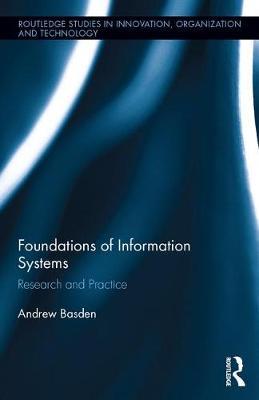
The maps are taken from Chapter 3 of Basden's excellent book Foundations of Information Systems.


Thursday, 16 August 2018

Recent articles from Glenn Friesen

Glenn Friesen has posted two interesting pieces on his blog:

by
J. Glenn Friesen
©2018

Abstract
Jonathan Chaplin’s analysis of Dooyeweerd’s philosophy is helpful in discussing (1) the state’s role in harmonizing and protecting individual and communal interests within various societal spheres and (2) Dooyeweerd’s ideas of public justice and public interest, which he uses to justify state intervention in other societal organizations. But Chaplin continues a conservative reading of Dooyeweerd. This is due to (a) his misunderstanding of the ideas of individuality structures and enkapsis (b) his misunderstanding of enkaptic relations among institutions, natural communities, organized communities and free associations, (c) a consequent incorrect distinction between internal and external functions of the state and (d) an inadequate discussion of the idea of human rights. Dooyeweerd’s use of enkapsis allows him to develop a view of societal sphere sovereignty very different from that of Abraham Kuyper, and one that allows the intervention of the state in other societal organizations because there is a one-way enkaptic relationship
And:
by Glenn Friesen
©2018

Abstract
Many writers claim to follow reformational principles, but have used these principles in very regressive and reactionary ways to support and to promote the political ideas of the religious right. They have used ideas of religious presuppositionalism, worldview and religious antithesis to argue that those who do not share their own worldview do not know the true facts. They have misused the idea of sphere sovereignty to argue for the minimal state. And they have rejected the idea of human rights and have discriminated against others. This complicity with right wing politics has become clearly evident in their support for the policies of President Trump.

Also, Glenn's piece I've mentioned before is now online: New Research on Groen van Prinsterer and the Idea of Sphere Sovereignty Philosophia Reformata

Tuesday, 14 August 2018

Concept map of Dooyeweerd's philosophy - based on Danie Strauss' outline

Danie Straus has written an excellent introduction to Herman Dooyeweerd's Philosophy (2015):

It is available as a pdf here.

I have attempted to summarise it in one concept map (the term is Novak's). Here it is (clicking on the image will enlarge it):


Here's the text outline of the map:


Dooyeweerd's philosophy by DFM Strauss
    1. Herman Dooyeweerd
      1. Dogma of the autonomy of theoretical thought
        1. Human reason
          1. Autonomous
          2. No prior theoretical assumptions
          3. Self-sufficient
      2. Early works
        1. 1920s Struggle for Christian Politics
        2. 1926 Inaugural lecture
          1. Free University
        3. 1931 Crisis in humanistic political theory
        4. 1935-36 NCTT
          1. Science of law
        5. 1917 PhD
      3. Philosophical trends
        1. Orderliness of creation
          1. A theoretical view of reality
            1. Can't be avoided
      4. Alternative approach
        1. Theoretical thought
          1. Theoretical view of reality
            1. Ground motive
              1. Christian scholarship
                1. Christian life and worldview
      5. Transcendental critique
        1. Theoretical thought can't have it's starting point within itself
          1. Then other aspects will be the sole mode of explanation
          2. Must transcend the diversity of all aspects
            1. Needs supra-temporal point of departure
      6. Ground-motives
        1. Communal driving forces
        2. Form-matter
        3. Creation, fall, redemption
        4. Nature-freedom
        5. Nature-grace
    2. Ultimate commitments
      1. Religion
        1. 1. Giving direction to all - life-encompassing
        2. 2. Faith
    3. Basic contours
      1. Creation
        1. Subject to God-given laws
      2. Creator
      3. Theory of Modal law-sphere
        1. Everyday experience
        2. The 'how' question
        3. Subject-object
          1. All function in all aspects
            1. Humans function actively in all aspects
            2. Plants object functions in post-biotic aspects
            3. Animals object functions in post-sensitive aspects
        4. Multi-aspect of humans
        5. Law side
        6. Factual side
          1. Presuppose
            1. Uniqueness
              1. Sphere-sovereignty
            2. Coherence
              1. Sphere universality
              2. Retrocipations 
              3. Anticipations
                1. Opened up through process of meaning disclosure
        7. Faith Ethical Jural Aesthetic Economic Cultural-historic Logical-analytical Sensory Biotic Physical Kinematic Spatial Arithmetical 
          1. Meaning-nucleus
            1. Irreducibility
            2. Indefinability
              1. Primitive terms
            3. Uniqueness
    4. Dimension of ontic time
      1. Time
        1. Embraces all aspects & entities
        2. Law side
          1. Time duration
        3. Factual side
          1. Time order
    5. Dimension of (natural & societal) entities
      1. Entities & events 
        1. Function in all modal aspects
      2. State
        1. Citizens
          1. Quantitative
          2. Alive
            1. Biotic 
        2. Territory
          1. Spatial
        3. Freedom of movement
          1. Kinematic
        4. Power of the sword
          1. Force
        5. Law enforcement
          1. Jural
        6. Tax paying
        7. Sense of belonging- feeling at home
          1. Sensory-psychic
        8. National identity
          1. Logical-analytic
        9. Political parties
          1. Credo
      3. Societies
        1. Differentiated
          1. Qualifying/ guiding functions
        2. Undifferentiated
          1. Extended family
          2. Sib/ clan
    6. Legacy of reformational philosophy
      1. Foundation for Reformational philosophy
        1. 5 yearly conferences
      2. Scholars
        1. Physics
          1. Stafleu
        2. Maths
          1. Strauss
        3. Biology
          1. Diemer
          2. Duyvene De Wit
        4. Linguistics
          1. Weideman
        5. Economic
          1. Goudzwaard
        6. Law
          1. Hommes
        7. Politics
          1. Koyzis
          2. Chaplin
        8. Theology
          1. Ouweneel
          2. Troost
      3. Universities
        1. Special chairs in the Netherlands
      4. Dooyeweerd's collected works
        1. Published
        2. Translated


Here are the sections from the complete map:


Monday, 13 August 2018

Concept mapping

Concept mapping was developed by Joseph Novak. In this biographical video clip he discusses some uses of concept maps:


And here's a concept map of a concept map:


David Ceri Jones (2015) Ch 6: conclusion