An accidental blog

"If God is sovereign, then his lordship must extend over all of life, and it cannot be restricted to the walls of the church or within the Christian orbit." Abraham Kuyper Common Grace 1.1.

Monday, 27 January 2014

Martyn Lloyd-Jones by John Brencher - a review

Martyn Lloyd-Jones (1899-1981)  and Twentieth Century Evangelicalism
Studies in Evangelical History and Thought
John Brencher
Paternoster: Milton Keynes, 2002
ISBN 
Pbk. xiv + 266pp  

Lloyd-Jones (DMLJ) has been credited with the revival of interest in Calvinistic theology in the UK during the twentieth-century. He has also been described as one of the greatest British preachers of the twentieth century. A number of biographies and studies of Lloyd-Jones have been published, notably those by Lloyd-Jones’s one-time assistant Iain Murray. This book by Brencher, a former President of the FIEC, began life as a PhD dissertation. In it he seeks to examine the significance of LLoyd-Jones in post- Second World War British evangelicalism. Brencher shows that DMLJ was a major force in evangelicalism and maintains that preaching was “Lloyd-Jones’s greatest contribution to twentieth-century evangelicalism”.

Brencher begins with a biographical chapter but then takes a thematic approach. He looks at his preaching, his leadership of Westminster Chapel, ecclesiology - or rather lack of it - and his approach to ecumenicalism. Brencher writes with respect for Lloyd-Jones but is not afraid to highlight weaknesses of the doctor’s position. 

Westminster Chapel was a great preaching centre, but it fells short of being a local church. Little emphasis was placed on baptism or the breaking of bread. It was very much a one man ministry: “it was an autocracy or at best a ‘begging dictatorship’” (78). Lloyd-Jones was sceptical about denominations. He was involved in the ecumenical scene but his approach was one of separation not inclusion. He had a particular distrust of Anglicanism and couldn’t understand why evangelicals such as John Stott and Jim Packer were committed to it. This was particularly apparent post-1966 after DMLJ’s call for evangelicals to come out of mixed denominations. His anti-Anglicanism Brencher suggests comes from DMLJ’s Welsh view of the English. 


Brencher provides us with a view of DMLJ that reveals him be be a flawed human being, but one who nevertheless God, in his grace and mercy, was able to use. As such it provides a helpful antidote to the other many hagiographic writing. Brencher concludes: DMLJ “was, without question, one of the greatest preachers of the twentieth century."


Sunday, 26 January 2014

Affairs of the heart: The Sermon on the Mount 5:21-

My notes for this morning's talk. (Slides in previous post)

The Danish philosopher Soren Kirkegaard apparently loved to tell stories. Here’s one of them:

There once was a little town of Ducks. Each Sunday the ducks waddle out of their homes and waddle down the High Street to their church building. They waddle into the sanctuary and squat in their proper pews. The duck choir waddles in and sings the opening psalm. Then the duck minister comes forward and reads from the duck Bible: “Ducks! God has given you wings! With wings you can fly! With wings you can mount up and soar like eagles. No walls can confine you! No fences can hold you! You have wings. God has given you wings and you can fly like birds!” All the ducks shouted “Amen!” and all waddled home.

Jesus also loved to tell stories. Stories that were hard hitting. People would gladly gather to listen to Jesus to tell his stories – even gather on a mount to listen.

The Sermon on the Mount is packed with wisdom, insight, understanding and it packs no mean punch. It subverts the dominant worldviews. This is an upside down kingdom.

I’m a great believer in putting things in context. In fact there are three things that are crucial to understanding the meaning of any biblical passage: context, context and context.

The biblical, historical-cultural and today’s contexts. We can’t do all that this morning. But let’s quickly look at the first. Where does the SoM fit into Matthew’s Gospel? And where does the passage we are looking at now fit into the Sermon on the Mount?

Matthew is split into 5 main parts with an introduction and an ending.
Intro – the coming of the king
Conclusion – the crucifixion and resurrection – the fulfilment of the kingdom

The 5 main parts have a narrative section and close with a teaching section.

The first main block of teaching is 5-7 the Sermon on the Mount – the kingdom values
The second is ch 10 the sending out of the disciples with the kingdom message
Third ch 13 are the parables of the kingdom
Fourth ch 18  sermon of the community of the kingdom
Fifth 23-25 is the coming of the future kingdom

We’ve had the be-attitudes. It’s important to note that they are not called the do-attitudes! The sermon on the mount is about conduct and character. But Jesus starts straight away by laying the foundation it’s about character first. Out of character comes conduct.

Jesus then looks at our role in society as salt, light and a city. We are the light of the world, but we can only be the light if we are resting in Jesus who is the light.

He then looks at his relationship with the law. He comes not to do away with it but to fulfil it. Our conduct flowing out of our character, shaped by Jesus is us, should out do even the teachers of the law!

We then come to 5:21 onwards. Our section for today. Jesus pick us the theme of the law but gives it an important twist.

He uses the phrase You have heard it was said …. But I tell you …
He uses it six times about:
  murder
  adultery
  divorce
  oaths
  revenge
  love

What Jesus was doing was not reinterpreting the law, he was deepening, not destroying, its demands

Jesus wants us to go deeper. It’s about character not just conduct.

This passage raises many important questions – which we can only gloss over here. (For those concerned about the issues of divorce, I wrote a paper for discussion here.)

Law looks at the surface act: murder and adultery, but Jesus takes it to its root.

The root of murder is anger.
The root of adultery is lust.

It’s all about the heart. What’s in our hearts overflows into our action.
Jesus gets to the heart of the matter and what matters is the heart.
It’s character not just conduct.


Anger obviously doesn’t lead to murder in every situation. But what Jesus says here is that it is liable to the same judgment –it’s the same to God.

Does this mean that anger is always sinful? Not necessarily. Jesus was angry. He didn’t sin.

Anger is a created part of human life. At times it can be the right response to sin.
Paul wrote Eph 4: “In your anger do not sin”. Implying that there was an anger that wasn’t sin.

Anger is part of the created structure.
We can take it in one of two directions: obediently or disobediently to God’s ways.

There is then a created structure to it which is good, but a direction in which we can take it. Anger can be good, but it can also be perverted and used wrongly.

We need to sanctify not suppress anger. One way to sanctify anger is reconciliation.

Jesus then goes on and focuses on reconciliation. Murder is the opposite of reconciliation.

Settle matters – get it sorted. Jesus is very serious about this. He gives two examples: the temple and the court.
For those who ha come to the temple it wasn’t a short waddle! They may have travelled for hours or even days to come. But Jesus says – leave your gift and go back home if you need to sort something out. Then do your worship.

Nothing says kingdom as reconciled relations.
Scot McKnight: “we must be intentional about reconciliation for it to become a pervasive lifestyle”
Lesslie Newbigin: "A gospel of reconciliation can only be communicated by a reconciled community" 

Will we waddle or will we fly?


Jesus then turns to adultery. But again he takes it deeper. He goes to the root of the issue.
The law is not enough – it begins with our hearts.

It’s all about the heart. What’s in our hearts overflows into our action.
Jesus gets to the heart of the matter and what matters is the heart.
It’s character not just conduct.

In the culture of the time it was the women who had to dress modestly, so as to prevent the males falling into lust. Jesus turns it around – he expects the men to control themselves.

Again Jesus shows how serious he is: cut out your eye or chop of your right hand if they cause you to sin. Some took this literally Origen of Alexandria chopped off his privates, Democritus blinded himself. In AD 325 the Council of Nicea had to forbid the practice.

Neither Origen nor Democritus found it solved the problem! The problem is the heart.

From adultery, Jesus moves on logically to the issue of divorce.
Scott McKnight has this important insight:

Divorce confuses the church today because marriage confuses. And marriage confuses the church today because love confuses. 

Gary Thomas wrote a book on marriage called Sacred Marriage. The subtitle of the book is a challenging question: What if God designed marriage to make us holy more than to make us happy?

We have swallowed the lie that marriage is primarily for us to be happy. Love is not about romance, self-expression and sexual satisfaction. It is that but it involves so much more than that.

Love is about commitment, self-sacrifice, it’s an act of commitment not feeling it’s about discipleship. When we get married the commitment we make to each other is I will not I do. Do is how you feel in the present but I will includes the future; it’s making a commitment. When we get that right then lust, divorce and adultery will be much less of a problem in the church.

The Sermon on the Mount is about conduct and character. Our conduct comes from our character. Our character comes form hearing and obeying what Jesus has said. It is difficult and hard it is challenging – but we need to stay close to him. He’s the one who helps us fly.


Will we waddle or will we fly home today?

Affairs of the heart Mt 5:21 ff slides for talk


Saturday, 25 January 2014

The other Sermon on the Mount


Then Jesus took his disciples up the mountain and gathering them around him, he taught them saying:

Blessed are the poor in spirit, for theirs is the kingdom of heaven.
Blessed are the meek.
Blessed are they who mourn.
Blessed are the merciful.
Blessed are they who thirst for justice.
Blessed are you who are persecuted.
Blessed are you when you suffer.
Be glad and rejoice for your reward in heaven is great.

Then Simon Peter said, Do we have to write this down?
And Andrew said, Do we have to turn it in?
And James said, Does spelling count?
And Phillip said, Will this be on the test?
And Bartholomew said, What if we don't know it?
And John said, The other disciples didn't have to learn this!
And Matthew said, When do we get out of here?
And Judas said, What does this have to do with real life?
And the other disciples likewise.

Then one of the Pharisees who was present asked to see Jesus' lesson plan and inquired of Jesus his terminal objective in the cognitive domain.

And Jesus wept.

Friday, 24 January 2014

The difference between charismatics and cessationists

The Diocese of Bath and Wells' twitter 'rules'


The Diocese of Bath and Wells have issued some helpful guidelines for its staff and clergy when tweeting:

  • Don't rush in 
  • Remember tweets are transient yet permanent
  • Be a good ambassador for the Church 
  • Don't hide behind anonymity
  • Be aware of public/private life boundaries
  • Maintain a professional distance 
  • Stay within the law 
  • Respect confidentiality 
  • Be mindful of your own security


Kirkegaard and the ducks - a parable


It is alleged that the philosopher Soren Kierkegaard, told a story about ducks. I've not been able to find the original source. But it goes something like this:

There once was a little town of Ducks. Each Sunday the ducks waddle out of their homes and waddle down the High Street to their church building. They waddle into the sanctuary and squat in their proper pews. The duck choir waddles in and sings the opening psalm. Then the duck minister comes forward and reads from the duck Bible: “Ducks! God has given you wings! With wings you can fly! With wings you can mount up and soar like eagles. No walls can confine you! No fences can hold you! You have wings. God has given you wings and you can fly like birds!” All the ducks shouted “Amen!” They sing the closing psalm and all waddled home.

Monday, 20 January 2014

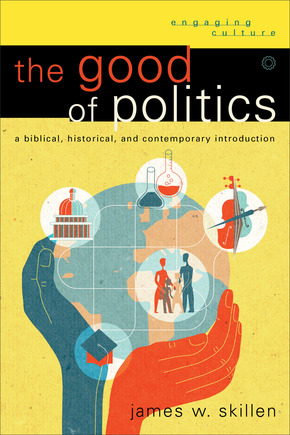
Jim Skillen's new book: The Good of Politics

The Good of Politics: A Biblical, Historical, and Contemporary Introduction
by James W. Skillen has just been announced by Baker Books and is due out in March.


It promises to be on of the best books of 2014. The contents look mouth-wateringly good:

Contents

Introduction
Part 1: The Biblical Drama
1. God's Kingdom Coming
2. The Revealing Image
3. Citizenship in the Kingdom
Part 2: Key Historical Developments
4. Constantine, Augustine, and the Fraught Future of "Christian"
Politics
5. From Augustine to the Splintering of Christendom
6. Nations, States, and Protestant Reformers
7. From the Reformation to Contemporary Engagement
Part 3: Engaging Politics Today
8. Viewpoint as Standpoint: Where Do We Begin?
9. Engagement for What Kind of Political Community?
10. Citizenship as Vocation
11. Family, Marriage, and Education
12. Economics and the Environment
13. Politics in One World
Index

Muether's Van Til - a review

Cornelius Van Til
Reformed Apologist and Churchman
(American Reformed Biographies)
John R. Muether
Phillipsburg, NJ: Presbyterian and Reformed, 2008
Hbk, 288 pp, £16.99
ISBN 978-0875526652

Cornelius Van Til (1895-1987) is seemingly something like marmite: either loved or hated. Or as Muether puts it: "…Van Til's readers could be divided into those who did not agree with him and those who did not understand him." (p 15) This excellent biography has certainly helped me to understand Van Til as a person a little more.

Van Til was the longest serving member of J Gresham Machen's then newly founded Westmister Seminary. He remained there teaching apologetics until his retirement in 1972. As a polemicist and controversialist he fought against modernism, arminianism, Barthianism, new evangelicalism, and Catholicism. He wasn't a populariser, and he regretted that he couldn't write as clearly and accessibly as Machen in Christianity and Liberalism. Nevertheless, John Frame described him as "perhaps the most important Christian thinker since Calvin.”

Van Til developed an apologetic method known as presuppositionalism. He maintained that
 "that unless God is back of everything you cannot find meaning in anything. I cannot even argue for belief in Him without already having taken Him for granted. And, similarly, I contend that you cannot argue against belief in Him unless you also first take Him for granted. Arguing about God's existence, I hold, is like arguing about air. You may affirm that air exists, and I that it does not, but as we debate the point we are both breathing air all the time. (In Why I Believe in God)
He attempted to forge a path between the views of Kuyper and Warfield. Francis Schaeffer was influenced by his approach though Van Til didn't fully approve of Schaeffer's adaptations; he thought that it wasn't consistent. For Van Til Calvinism was the most logical and consistent worldview. No other approach was consistent and he took it upon himself to point out where inconsistencies lay.

Muether posits that we can't understand Van Til's theological commitments without understanding his ecclesiology: "His apologetic was self-consciously ecclesiastical as much as theological" (p 15). Consequently, the biography focuses more on Van Til's ecclesiastical life than on other aspects of his long academic career. But this means that what it doesn't do in any depth is explain Van Til's more novel  ideas. But then perhaps that's going beyond what Muether aims to do. As Muether notes "To focus solely on Van Til's novelty fails to appreciate the many ways in which he tried to preserve tradition by standing on the shoulders of those who went before him."

For Van Til, and Kuyper before him, Calvinism alone does "full justice to the cultural mandates of Christ." The touchstone for Van Til was consistency. The problem with everyone else such as Schaeffer, Gordon Clark, Oliver Buswell and Barth et al was that they were not being, as Van Til saw it, consistent Calvinists.

Van Til comes over as someone who is zealous for truth and is keen to defend it at any cost. He seems to see things in black and white there are few greys. Perhaps because of this he was involved with a number of controversies. These are dealt with well in the book. Murther even suggests that the Clark-Van Til controversy should really be the Murray-Van Til controversy. His disagreements with Dooyeweerd are mentioned only briefly. The issue of common grace is dealt with somewhat more fully.

In the useful bibliographic essay that concludes the book Muether suggests books and papers that could provide more information on the novelties of Van Til. (Muether recommends Banshan's Van Til's Apologetic and Frame's Cornelius Van Til)

Muether writes with great respect and understanding for Van Til. He has drawn on a wide range of resources, including interviews with many of Van Til's  colleagues, family, and friends, as well as having access to many of Van Till's personal letters.

The book is a pleasure to read. It is well produced  - a rarity in these days of POD - and well written. It explains Van Til the man. It gave me a much better understanding of the motivations of Van Til and helped me to appreciate the man more. We can't ask more from a biography.


Contents
Series Preface 9

 Acknowledgments 11
 Introduction: Apologist and Churchman 15
 1. A Child of the Afscheiding 21
 2. “Fit Modesty and Unreserved Conviction” 41
 3. From Dutch Reformed to American Presbyterian 65
 4. Reformed or Evangelical? 91
 5. The New Machen against the New Modernism 119
 6. Through the Fires of Criticism 149
 7. Presbyterian Patriarch 179
 8. Steadfast, Unmovable, and Abounding 207
 Conclusion: Against the World, for the Church 229
 Notes 241
 Bibliographic Essay 265
 Index 279


Wednesday, 15 January 2014

Dirk H. T. Vollenhoven Reformed Epistemology - new from Dordt College Press

Reformed Epistemology: The Relation of Logos and Ratio in the History of Western Epistemology
by Dirk H. T. Vollenhoven
Translation and introduction by Anthony Tol
Edited by John H. Kok

$ 14.00. 170 pages paperback
ISBN: 978-0-932914-98-9

Overview

Dirk H. T. Vollenhoven (1892–1978) was professor of philosophy at the Vrije Universiteit in Amsterdam from 1926 to 1963 and one of the founders of Reformational philosophy.

As Anthony Tol explains in his general introduction to (his translation of) Vollenhoven’s 1926 inaugural address, the Reformed epistemology that Vollenhoven espouses here is essentially three-layered. Most basic is the intuition—the starting point of all knowing. It starts with discerning. Then there is knowledge. At this point language, communication, and judgments are relevant. The third layer is thought. Thought may disclose and renew or criticize and correct against the background of what we know. Thought is also central to concept formation. The factor that runs through these three layers is truth, taken realistically. It has its seat in the intuition of discerning. It is central to knowledge, for the essence of knowledge is said to be “possessing truth.” And in connection with thought, or more particularly in concept formation, the latter is described as “truth grasped in a form.”

Apart from advocating his own understanding of epistemology in this inaugural address, Vollenhoven takes issue with how epistemology is generally understood. The critique is cast in a historical overview. Vollenhoven is particularly critical of two features that were prominent during the first half of the 20th century, namely, scholasticism, which turns the religious presupposition of philosophy into an ontological feature of reality itself, and humanism, which interprets the responsibility that one has for one’s acts and dealings with one’s neighbor and the world as essentially derived from self-responsibility.
Vollenhoven ends his academic discussion with Husserl, who is portrayed as caught in a web of humanism (“creative Ego”; “idealism”) and a version of scholasticism. Vollenhoven counters this not only in the interest of “the free development of epistemology,” but also to forewarn Christian academics to withstand the temptations of synthesis with scholasticism and/or humanism, and to understand Christendom as calling for a different development, one that is informed and encouraged by different presuppositions.

Update: contents here


Calvin Seerveld Biblical Studies and Wisdom for Living - new from Dordt College Press

Biblical Studies and Wisdom for Living: Sundry writings and occasional lectures by Calvin G. Seerveld
John H. Kok, editor
Dordt College Press
ISBN 978-1-940567-05-1

In these 30-plus essays, talks, and articles, Seerveld opens Scripture in a variety of life contexts in which God’s people find themselves today. In both his professional studies and popular lectures Seerveld seeks to explicate, both devoutly and playfully, a biblical wisdom for daily living, convinced as he is that the Holy Spirit-given biblical writings bespeak God’s everlasting care and wisdom for us corporeal mortals. Just as Susanna Oppliger’s ceramic angel (on the cover) shelters the exhausted, scared Elijah (1998), waking him up to carry on the Lord’s appointed tasks, just so, suggests Seerveld, following Jesus Christ through this wonder-filled, troubled lifetime bodes strength and hope for the morrow.

Calvin Seerveld Normative Aesthetics - new from Dordt College Press


Normative Aesthetics: Sundry Writings and Occasional Lectures by Calvin G. Seerveld
John H. Kok, editor
Dordt College Press
ISBN 978-1-940567-00-6

Seerveld is convinced that philosophical aesthetics—systematic reflection on the nature and task of human imaginative life—will be normative when the thought is wholesome, edible, worth chewing, and builds the body of a community with joyful shalom. These 13 sundry writings and occasional lectures aim to spell out some of what this aesthetic imperative means for human imaginative acts, for the arts, and for the other acts and institutions where aesthetic functions play a role.

"We need either bigger needles or smaller camels"


HT Charles Strohmer via Thinknet
Original here

Friday, 3 January 2014

arXitecture - a christian approach to the built environment

I have recently come across a fascinating website that deals with the built environment from a Christian perspective: www.arXitecture.org.uk


The site is run by Leslie Barker "to promote an ethical approach (based on Christianity) to the study and practice of architecture, and to share the Good News of Christianity with other architects, especially those of Generation X onwards." He calls this the Great Commission for Architects:

The Great Commission for Architects has three components which interact in a circle which can be joined at any point.

GC is the Great Commission given by Jesus to all his followers Go and make disciples of all nations ... teaching them to obey everything I have commanded you.
CM is the Cultural Mandate developed from God's command to Adam and Eve to tend the garden, to fill the earth and subdue it, making use of its resources in a sustainable way for the equal benefit of all mankind, across the world, for the present and into the future.
CCPD is Continuing Christian Professional Development which applies the teaching of the Bible to professional development, here specifically for architects and planners. It covers not only the process and product but also the people (whether architects or not, professionals or not) who contribute to the built environment.

Kuyper's Common Grace #CG1.1 Chapter 25

25 The Probationary Command

The issue of language discussed in the previous chapter is important as when Adam and Eve  were told “in the day that you eat of it you shall surely die” it must mean something to them. If they did not understand this prohibitory command then humans are not culpable.
Adam knew nothing theoretical about the animals, yet they were not unfamiliar to him through “life contact”. 
“Man had been created in God’s image, and thus in human measure and human form, God mirrored his own knowledge in man’s consciousness. Man knew nothing by way of study, and even less from within himself. Neither did nature as such teach him. All his knowledge in which he had been created was light from God that glowed in the mirror of his consciousness” (233).
Adam would have filed a biology assessment yet his “immediate awareness nevertheless functioned impeccably”. Kuyper thus rejects the idea that Adam’s moral self-awareness was only awakened through the eating of the tree. Sin did bring an opening of the eyes, but sin brought darkness not clarity of insight. 

 The probationary command was a “sovereign ordinance based on nothing but the sovereign determination of God’s will” (235). It stands outside of the moral world order and of the law of God, “the eating or not of the tree was such as morally indifferent”. What mattered was not the tree but “but only that God presses upon man his absolutely sovereign will and forbids him something by virtue of that sovereignty.” (235)
“[I]f Adam had continued entirely to follow the good for the sake of the good, because that good drew him and comported with the inner exhortation and sense of his heart, then he would have been a lover of virtue but of such a kind that he would have denied the God of his life in whose image he had been created. “ (236) 

The content of the command is in one sense irrelevant as Kuyper in his final sentence notes: “The more insignificant the matter, the more decisively and certainly it would be clear whether obedience was because of God’s will.” (238)

Thursday, 2 January 2014

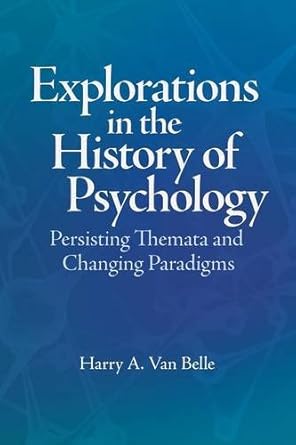
Harry Van Belle Explorations in the History of Psychology from Dordt College Press

Harry A. Van Belle, emeritus professor of psychology at The Kings University College, has a new book published by Dordt College Press:


Explorations in the History of Psychology
Persisting Themata and Changing Paradigms


Van Belle traces the history of psychology from its roots in Greek philosophy and includes a description of the later influence of the Hebraic-Christian mindset on that history. Subsequently, he follows the journey of psychology through the Middle Ages and the scientific revolution of the sixteenth century. Next, he describes the birth and trajectory of psychology proper during the nineteenth century and closes with a description of a number of the more contemporary schools of psychological thought. The underlying thesis of the text is that the history of psychology gives evidence of both continuity and discontinuity in interaction with one another. Thus, to do justice to the actual history of psychology one must take note of both persisting themata and changing paradigms.

Wednesday, 1 January 2014

Kuyper's Common Grace #CG1.1 Chapter 23

23 The Basis for Further Development

Humanity was in Paradise In good relationship with God, with a “perfect flawlessness”. What hen about development? With development comes a choice: development in accordance with God;s will or against it: “a choice that would correspond to the requirement implicit in the position of image-bearer or that would go against being that image.” (212)
“Adam had to move forward. The state of simply being a product of creation could not continue. He had to move from that state to go on to that second state, which would be the product of creation together with a choice of will. Man himself working in God’s work and as his work. Or, if he chose against God, working against God’s work and therefore immediately locked in punishment and curse by the reaction of God’s sovereignty.” (213)
Original righteousness was the starting point, but only a starting point. There had to be development.

Kuyper then turns again to the tree of the knowledge of good and evil. He prefers to call this tree “the tree of conscience” (215).  The tree of life, the other named tree, is found in other places in the scriptures but the tree of conscience is not.


The two trees, Kuyper maintains, show a duality in humanity. The tree of conscience relates to our body and the tree of life to our soul. He rejects a trichotomous view as being “twaddle” and “simply absurd” (216); “the duality of our existence is understood as a necessary [doctrine]” (219)

Tuesday, 31 December 2013

All of Life Redeemed Newsletter Volume 3 (2013)

Kuyper's Common Grace #CG1.1 Chapter 22

22 Conscience and the Covenant of Works

Kuyper sums up the argument so far:
“God created man in such a way that he saw his image reflected in man for the purpose of being able to use him as an instrument for his glory, and that he created him for that purpose: wise, holy, and righteous, i.e., not only without any defect, but also definitely at that normal point in the adult human life when that life just begins its richer unfolding.” (201)
He then poses the question of conscience. He starts by saying that it did not exist in the newly created Adam. Conscience is not a Urim and Thummin of the heart. The Reformers denied that conscience was something distinct in humans. Kuyper sees conscience not as a “capacity” or “an inner habit”, but as “an expression or activity of our consciousness.”  (202) 
This requires a certain moral awareness or knowledge of good and evil. 

Kuyper then looks at covenant. 


Monday, 30 December 2013

Recent Kuyperania (December 2013)

Scott Culpepper reviews Bratt's Abraham Kuyper in Themelios 38(3) (Nov 2013).

Review of Tjitze Kuiper's Abraham Kuyper: An Annotated Bibliography in European Journal of Theology 22(2) by James Eglington.


Kuyper's Common Grace #CG1.1 Chapter 21

21 Original Righteousness

As the chapter heading suggests Kuyper is staying with the discussion on “original righteousness". According to Kuyper being righteous is "being in the right position with God” (191). The term “original” means that it “was not acquired nor later allotted to him, but was a fruit of creation itself” (191).
righteousness”. According to Kuyper being righteous is “

Kuyper then looks at “original holiness”.  In what sense is Adam holy? “Adam stood originally in holiness and fell away from that holiness by his yielding to Satan.” (195).

On the relationship of body and soul Kuyper writes:
“Our body belongs with our soul. It is not an envelope in which the soul has been inserted, but an artful instrument that is prepared by God to serve the soul, and that for each soul individually. Soul and body are organically one, and even though they are pulled asunder in death, they will nevertheless be reunited in the resurrection of the dead. The body also has abiding, enduring, eternal significance. One day the body will inherit immortality.” (197)


Kuyper acknowledges that our bodies are important: “Nevertheless, our body is only the form of our being through which we manifest ourselves in the visible [world] and through which we have fellowship with the world outside us; our actual human essence lies deeper within us and exists spiritually. ” (197)

Saturday, 28 December 2013

Kuyper's Comon Grace #CG1.1 Chapter 20

20 Perfect Integrity

Still remaining on the discussion of “original righteousness” Kuyper uses the metaphor of a mirror:
“In creating man, God makes for himself a mirror in which he wants to see his own image as clearly as the nature of the creaturely makes this possible. In this case it does not depend, as it does for the mirror maker, on glass and mercury that already exist, but he forms that glass and mercury himself as he needs it for this his creation. And this is why this creation would have been unworthy of God and a failure if, as soon as Adam was completed, God had not seen in Adam, as in a mirror, the clear reflection of his own image.” 
He then turns to the question of the creation of humanity. Is it an immediate creation or or an accelerated growth process. He suggests the former. Another issue is Adam’s spiritual existence at the moment of creation.
Kuyper concludes that Adam was created in  the adult state of mental existence as the fruit of immediate, direct creation of God.
“So in Paradise he stood under God, before the face of God, existing only for God, and thus he had dominion over all of creation. Dominion is the Lord’s, and therefore this trait of dominion could not be absent in his image. But dominion in Adam was nothing but a reflection, a shadow, and it served to let God see his image in man.” (190). 
In Paradise was spiritual perfection but not final consummation.


Friday, 27 December 2013

Kuyper's Common Grace #CG1.1 Chapter 19

19 The Crown of Creation

Kuyper returns to the question of whether original righteousness belonged to Adam’s nature or was added to it. He briefly discusses the views of the Roman Catholic Robert Bellarmine. According to Kuyper, for Ballarmine God created humans in need of a bandage!
Those who think that humans “climbed up from animal wildness to a degree of human consciousness” don’t believe in a Paradise, or in the creation of the first human.

To be created in the image of God means that “it is not our excellence but our suitability for God” and that “in the state of righteousness Adam lived by grace, ” a “sustaining grace” not a merciful grace. Kuyper sees a key role for humanity as being the image of God:
“Apart from man the world stands at a distance from God; in man it comes close to him. Now for the first time something of God’s own life beats and sparkles in this world. Mute before God as long as man was still absent, the whole creation now speaks to God through man. ” (181)
 “We can understand Adam’s unique position in Paradise only in this way. That creation and that Paradise do not exist for his sake. Every-thing exists for God’s sake, and also Adam himself exists only for God’s sake. Without Adam creation was not finished. He is its crown, not that he might take creation for himself but in order that he might bring it to God. No altar stands in Paradise, but all of Paradise is an altar on which Adam as priest of God offers God the glory of his handiwork. ” (181)

Thursday, 26 December 2013

Kuyper's Common Grace #CG1.1 Chapter 18

18 Natural or Supernatural?

Kuyper now looks at Adam’s “inner existence”. He maintains that: “The doctrine of ‘common grace’ cannot be known nor understood without having a clear perception of the scriptural truth, especially with regard to the state of righteousness.” 

In the Roman Catholic view original righteousness was  added as a “supernatural gift”, it was not part of Adam’s original creation. Grace is an addition to nature. So, in the fall what was affected was what was added, not was created. Hence, we can still be free to choose and this then leads us to (semi-)Pelagianism. 

Kuyper uses a number of interesting images including bridles on horse, spiders and bees, the pressure valve on a boiler. For example:
“for a bee, merely its ability to gather honey, to make a honeycomb, and to fill that honeycomb belongs to the bee’s nature, but that the fact that instead of spilling the honey, as many species of wasps do, the bee delivers the honey to the comb is a mysterious function that is added to the nature of this insect, then we have a depiction of the view of Rome concerning original righteousness. On the other hand, if our answer is, no, God created the bee not only with the ability to do it but also with the impulse and the instinct to actually do it, so that both the ability to do it and the doing itself belong to the nature of the bee, then we have the Reformed system.” (169)
In contrast, then to the Roman Catholic system the Reformed have argues that our nature became so corrupt after the fall, we did not lose something that was added but rather something that was part of our nature: “What has changed is not his essence but the functioning of his nature. Undamaged in his essence, he has become depraved in his nature.” (171)

To think that something has to be added is an affront to God as Creator:

“When he creates, he is not dependent on anything. He speaks and it is. And it is as he has willed it. And if we say that in creating human nature, God ordained that nature to be so in- sufficient, so imperfect, so inadequate that at an incalculable moment after creation, something had to be added, affixed to it, coupled to it, dripped in, or whatever you want to call it, but nevertheless always in such a way that this human nature as created constituted a danger, and that in order to avert this danger a safety valve had to be installed—does not such a view detract from God’s honor? ” (173)

Tuesday, 24 December 2013

Kuyper's Common Grace #CG1.1 Chapter 17

17. The Tree of Life

The dominant view of the tree of life in the early twentieth century was that it was a sacramental sign. Kuyper feels that this view is weak.  To understand the significance of the tree we need to move from what is known to what is unknown. And nothing is mentioned about it being a sacrament. 

There were two trees: a duality; an is also according to Kuyper a duality: soul and body. The two trees correspond to intellectual consciousness and moral knowledge. The tree of life has to do with our physical not our spiritual existence. It is the tree of knowledge that has spiritual significance. All the other trees in the garden Adam was permitted to eat, they were for the physical nourishment of his body. 

The tree of life will be common on the new earth - “spiritual salvation will be fully accomplished” (164)


Monday, 23 December 2013

Kuyper's Common Grace #CG1.1 Chapter 16

16 The Original Life Span

The early patriarchs lived to a much older age that we do today. Kuyper looks at some explanations that have been put forward for this. These include different ways that have been used to calculate years or the idea that the supposed number of years were actually months. That would, however, mean that Mahalalel was five years old when he became a father! 

Kuyper wants to take scripture seriously and writes: "We are told that they lived ten times as long as we, and we must accept this report". He maintains that the decline in longevity is a consequence of the fall. Humans were intended to live for eternity. "Death is not part of God's creation. Death entered God's creation through, and as a result of sin. And if sin had not entered the human race, humanity would never have experienced death." (149)

When Jesus returns those who are still alive will not die but be changed. 

“Adam was susceptible to sin, death, and curse, such that he had to make a transition to a state that was sin-proof, death-proof, and curse-proof.” (153)

In Paradise there was no sin, but sin could have occurred. In contrast in the kingdom of glory there is no sin and there is no danger of sin entering it. The tree of life played an important role in Paradise, it is a tree that maintains life and whose leaves bring healing. Kuyper mentions two views regard the red, the first is that it has a divine power, the second was that it was a sign, comparable to the bread and wine.  This theme is take up in the next chapter. 


Kate Rusby Diadem

Saturday, 21 December 2013

Kuyper's Common Grace #CG1.1 Chapter 15

15. The State of Righteousness

Kuyper sees humans as created, fallen and restored (137).  Humanity in a state of righteousness befits paradise; as fallen a cursed earth; as redeemed “a glory as that of heaven” (137)

The name “paradise” does not occur in the Old Testament. Paradise is an old name for pleasure garden and a sushi was used in the Septuagint. Adam and Eve after the fall were explode from Paradise to elsewhere. The whole earth was good, but it was not Paradise.
Adam had to work and keep the garden, this implies it had certain boundaries. It is important to understand the state that Adam was in as it helps us to understand what we have lost and it is also the ideal towards which we can reach in Christ.

The only “lacunae and void” was loneliness. The animals were created in pairs, but not Adam. This was felt more keenly as humans are created as male and female in God's image. Woman is taken from the side of man; not from the outside.


Regarding Darwinian evolution Kuyper comments: "that man evolved from the animals lacks all compelling power." (143)

Friday, 20 December 2013

Kuyper's Common Grace #CG1.1 Chapter 14

14 The Paradise Story as Historical Narrative

Kuyper restates that that “first chapters of Genesis must be understood as history” (127) It is important that “we have in these first chapters a narrative of events that have really taken place in this way” (127). He insists that God speaks. 
Genesis is a book of origins:
“The origin of the universe;
The origin of the angels;
The origin of all creatures;
The origin of humanity;
The origin of marriage;
The origin of sin; The origin of grace;
The origin of suffering;
The origin of the present state of the earth;
The disruption of the order of human society;
The origin of all justice and all dominion;
The origins of all that still stirs your interest, of all that surrounds you in your own personal life, and of all that goes on within your heart, are unfolded before us in this book of Genesis” (132).
Christians must stand firm on the Scriptures as their point of departure. However, it is differences in interoperation of Genesis 1-5 that keeps Christians divided. Kuyper places a high emphasis on common grace:
“It is not going too far to assert that the future of the Reformed churches and the renewed flourishing of Calvinism hangs on the question as to whether this doctrine of “common grace” will revive again with the force it once had. If this doctrine remains neglected as it has been thus far, then the Reformed churches are doomed to locking themselves into a preaching of salvation without background and without foundation” (134)
He goes on:

“And we cannot perceive clearly the relationship between those two, namely, between church and world, as long as we have not been grounded in the doctrine of ‘common grace.’” (135).

Thursday, 19 December 2013

Kuyper's Common Grace #CG1.1 Chapter 13

13 From Noah Back to Paradise

Kuyper starts by again justifying why he started with the Noahic covenant. It has been alluded to by others but the full appreciation of it has been neglected. 

Common grace began after the fall, but underwent a change after the flood. 

In Paradise we read of a threat (“you shall surely die”) that did not occur - at least not in the way Adam and Eve understood it. Adam had a “stay of execution”: it was “a very powerful act of common grace”(121). If Adam had died there would be no human race:
“The total and direct outworking of sin, had it not been arrested, would have destroyed the entire human race with a sin- gle death sentence.” (121)

Kuyper then justifies staying close to the Scriptures. He briefly discusses the Ethicals, Schliermacher and the mechanical use of the Bible as all being flawed approaches. They separated form and content.

Kuyper maintains that :
“we must maintain and prove our right to take the words as literally as they stand in Genesis 1–5, to depend on the facts told us in those words, to draw our inferences from those facts and words, and thus to come to the conclusion that not simply for our imagination and not merely in appearance, but in reality and in truth, the origin of things transpired precisely in the way we are told in these opening chapters of Holy Scripture.” (126)


How to deal with annoying mobile phone users

Wednesday, 18 December 2013

Kuyper's Common Grace #CG1.1 Chapter 12

12 A New Dispensation

In this chapter Kuyper takes stock and considers the preceding chapters. 
  • The flood altered the state of affairs on the earth and it now displays a different character.
  • The change comes from the Lord’s decree.
  • The flood manifested God’s wrath but pointed to his grace.
  • This grace was not special grace but common grace.
  • It was not a restrictive grace - it included all those that had breath.
  • The post-flood situation continues to his day.


He then summarises the main points:

1. The human race not just a few people are reused from the flood.
2. The earth is still the same though it has been changed by the catastrophe of the flood.
3. The atmosphere of the earth was changed.
4. The blessings are not jet for the church but for all humanity and the animals.
5. The relationship between humans and animals and the earth is now regulated. 
6. A change tok place in the life of humanity itself. Humans didn’t live for as long.
7. God instituted government for an orderly human life and was designed to thwart the outbreak of violence.


Tuesday, 17 December 2013

Kuyper's Common Grace #CG1.1 Chapter 11

11 The Institution of Government Authority

The authority of government is grounded in the grace of God. If it is not then it is unstable. 

In three ways humans have attempted to ground government in “voluntary human action”. (99)

The first was in the right of the conqueror to subject to himself those conquered: might is right. 

The second in the free will of man. We have a right to determine our own fate. If we wish we can of our own free will call a government into being. This, Kuyper notes, was the foundation of the system of the French Revolution’s notion of social contract. (100) It leads to an unstable situation.

The third is by spontaneous development. There is a “natural impulse” where: “a certain power of the one group arises over the other group, which ultimately is consolidated in the supremacy of an individual person.” (101)

God’s common grace is at work, a “ gracious arrangement whereby he created order amid the chaos of a sinful world and arrested the disruptive destruction of sin.” (101) He organises government and ordains his “providential administration”.

Government authority is different to a father’s authority over his children:
“In a sinless situation there would have been no government authority proceeding from people, even as in the kingdom of glory there will be no more government from people over people. “ (103)
Kuyper then poses the question “Where is the authority of God instituted and validated? (104) To answer that he goes back to Genesis 9:6. He stresses that humans have no authority of their own, all authority belongs to God. In Genesis 1 we are given dominion and authority. Power and control only exists if God grants it.

He concludes:

“that in Genesis 9:6 both government authority is validated and capital punishment is instituted, not only for that time but for all times, for all of Noah’s descendants, and thus also for us and for our descendants, until the coming of the Lord on the clouds.” (107)

Monday, 16 December 2013

Kuyper's Common Grace #CG1.1 Chapter 10

10 Further Objections to Capital Punishment

Many do not agree that Genesis 9:6 instigates a “juridicial institution” for the “putting to death of a murderer”. (89) Some because they do not think this because they do not believe the words were to be taken in a literal sense.

Others object that it was what God ordained but it no longer applies today. Kuyper respond to this by asking “where does it say that this divine ordinance is abolished?“ (90); by noting that it was a command given to Noah and his children - we are all children of Noah. “It is not a national but a universal-human ordinance…” (90); and that it belongs to the Noahic covenant that is still binding today. He then adds that Romans 13:4 adds more justification to it continuing, government is to wield the sword.

There are some "anaemic" arguments agains capital punishment:
  • It eliminates the possibility of the murderer converting
  • An innocent person my be executed
  • Execution debases people
For a Reformed person the first objection is absurd: salvation is the work of God alone. For the second reason, should we then abolish every action of government that may injure someone? “ [M]istakes are simply the disastrous consequence of the limitation and sinfulness of civil servants, and also of judges in cases of judicial mistakes.” (94) Regarding the third objection he writes:
“People sensed that it was God’s justice that was being executed, and there was no trace of de- basement or excess to be found. We need say no more about this.” (95)
On capital punishment as a deterrent he asserts:
“It is impossible to show by means of numbers whether capital punishment is a deterrent against murder and whether abolishing capital punishment causes the number of murder cases to increase.” (95) 


Sunday, 15 December 2013

Martyn Lloyd Jones interviewed by Aneirin Taflan Jones in 1970


Particularly interesting is the brief discussion, about 6 minutes in, on fundamentalism and conservative evangelicalism; DMLJ preferred the later to the former label.

Saturday, 14 December 2013

Kuyper's Common Grace #CG1.1 Chapter 9

9. Government and capital punishment

Kuyper begins by expressing agreement with the Reformed position expressed in the notes of the Dutch Bible on the institution of government being established in these verses (Gen 9). He notes too that Rivet of Leiden has shown the untenability of Nieuwenhuis’s position expressed in the previous chapter.

Nevertheless, Kuyper sees the need to examine these verses to see if the Reformed position is the correct position.

Capital punishment is not primarily about the protection of human life, it arises from the sovereignty of God:
“People are his people. They belong to him. He has jurisdiction over them. Since in those people he has deposited something of his divine honor, for that reason the honor of God is always attacked with murder. That may not happen. His ordinance opposes that. Precisely on that basis alone can capital punishment be ordained for the murderer.” (86)
This is why if someone kills a murderer without a mandate form God then their blood too has to be shed: “the exercise of capital punishment never entails a second violating of God’s honor and justice, because it is performed by virtue of God’s ordinance and upon his authority.” (86)

These words in Genesis 9, than cannot be a prophecy but a command and an ordinance. Who then has this duty? It cannot mean anyone. Kuyper quotes Luther and the Dutch Bible approvingly:

“Luther was entirely correct to say that here lays the official institution of government, as were the Dutch Bible commentators in observing that here the legitimacy of government is being established.” (88)

Friday, 13 December 2013

Kuyper's Common Grace #CG1.1 Chapter 8

8. The Institution of Capital Punishment

After a few teasers on capital punishment Kuyper now turns to it in Genesis 9:6. 
He starts by examining the “untenable” argument of Nieuwenhuis, a professor of Law at Groningen, who maintains that the legislation was placed in Israel and that it was a private vendetta and nothing to do with government. Kuyper dismisses the first by distinguishing between moral, ceremonial and political laws; the form has passed away but not the principle. As for the second point:
“The requirement of “an eye for an eye” was a stipulation of a judicial nature in the Mosaic legislation. It was hardly intended that the individual citizen would act according to this rule, but only that the government would function in terms of recompense when it came to judicial punishment.” (73)
Kuyper then goes on to challenge the position that it is only personal vengeance intended here.


He maintains that what we have here is not a prescription but an institution; the institution of government is sanctioned and “capital punishment is prescribed to be exercised by the neared blood relative” (79)

Mike Goheen on the role of story


The story we live by from CPX on Vimeo.

Thursday, 12 December 2013

Kuyper's Common Grace #CG1.1 Chapter 7

7. The Protection of Human Life

After the flood the future of the human race depended on one family. Life is precarious. God’s ordinance to avenge murder come then as a “shield to cover the life of people”. Three things had cause death: “predatory animals, murder, and the flood” (62). God, thus, protects them against all three:
“Against the flood by means of his promise, against the predatory animal by means of his ordinance, and against murder by means of his commandment.” (62)
As an aside Kuyper looks at the extent of the flood: “it could well be that in the narrative of the flood, such general expressions are referring only to that part of the world that counted for Noah or where people lived”(63).


Genesis 9:5 is not a command for capital punishment. Mention is only made here as to what God will do. Capital punishment is the subject of the next few chapters.

Wednesday, 11 December 2013

Best books of 2013


In no particular order:


  • Craig Bartholomew and Michael Goheen Christian Philosophy Grand Rapids: Baker, 2013.
  • Abraham Kuyper Common Grace 1.1. Grand Rapids: Christian's Library Press, 2013.
  • Abraham Kuyper Guidance for Christian Engagement for Government. Grand Rapids: Christian's Library Press, 2013.
  • James Bratt Abraham Kuyper Grand Rapids: Eerdmans, 2013.
  • John Halsey Wood Jr Going Dutch in the Modern Age Oxford: Oxford University Press, 2013.
  • Pierre Marcel The Christian Philosophy of Herman Dooyeweerd Part 1 Wordbridge
  • Pierre Marcel The Christian Philosophy of Herman Dooyeweerd Part 2 Wordbridge
  • Derek Schuurman Shaping a Digital World
  • Michael C. Bird Evangelical Theology
  • James K. A. Smith Imagining the Kingdom Grand Rapids: Eerdmans, 2013
  • Bruce C. Wearne Conducting Gospel Harmony: Volume 1
  • David Bebbington and David Ceri Jones (ed.) Evangelicalism and Fundamentalism Oxford: Oxford University Press, 2013.

Kuyper's Common Grace #CG1.1 Chapter 6

6. The ordinances of the Noahic Covenant

Jewish scholars identify seven so-called “Noahic commandments”:
“These consist of prohibitions against (1) idolatry, (2) whoredom, (3) blasphemy, (4) murder, (5) theft, (6) eating blood, and (7) anarchy, ..” (53)
But, Kuyper, argues these are mistaken in that there are only two ordinances: 
“(1) the prohibition given to the humanity that sprouted from Noah against “eating flesh with its life,” and (2) the commandment given to this renewed human race to punish a murderer with death”. (54)

He then considers these two in more detail. For the first some have asserted, wrongly according to Kuyper, that it means not eating the blood of the animals. Rather it is an 
“order in which man kills the animal in the name of his God, respecting the supremacy of his Creator over that animal, and therefore takes it for food only when its life has completely departed and the flesh that initially contained the soul became flesh without the soul.” (58)
Regarding the second ordinance he notes that it opposes cannibalism. There is a distinction between human and animal. 
“The tiger devours the ox with its life; the man takes him for food only when the life has departed. The tiger steals its prey and does not know God; the man uses a right given him by God, but simultaneously honors the Creator and the Giver of life by waiting until life has departed.” (59)
He goes on:
“No animal may devour a man, and no man may take a fellow man as food. Despite this having occurred, however, God will require an accounting for all this shed blood.” (60)

This question of capital punishment is then explored in several subsequent chapters.

Tuesday, 10 December 2013

Kuyper's Common Grace #CG1.1 Chapter 5

5. The Blessings of the Noahic Covenant


Kuyper reiterates the points made previously: the world after the flood is different to that before it. Everything was included in the covenant. The tendency has been to negect the Noahic covenant because it is not about "saving the soul". He then spends some time discussing the nature of the covenant - it was established by God (Gen 9:8-9 )and does not depend upon our agreement; it is not a contract.

"In this covenant, God binds only himself, and the ordinances with which he accompanies his covenant are not stipulations or conditions, but commands and statutes that God in his omnipotence institutes and imposes on man as his creation and as his subject." (46)
He then makes a distinction between the ordinances and the covenant: the ordinances are not included in the covenant.(46) The ordinances precede the covenant, they exist outside of the covenant. Three subjects are distinguished: God's intention (Gen 8:21-22) ; God's address to rescued humanity (Gen 9:1-8); and the establishment of the covenant (Gen 9:9-17).

God's address begins and ends with "pronouncing a blessing" (vv 1 and 7): be fruitful and multiply. Humanity is given:
  supremacy over the animals,
  permission to eat animals with a
  prohibition from eating the blood of animals, and
  the institution of the death penalty.
"These four items are to be understood as expressions of grace, and only in that way can they be correctly understood." (48)
Kuyper takes this prohibition to eat the blood as indicating that this practice took place before the flood and thus rejects the supposition that "before the flood all people would have been vegetarians." (51)

Monday, 9 December 2013

Kuyper: "If God is sovereign, then his lordship must extend over all of life ..."

Abraham Kuyper:

"If God is sovereign, then his lordship must extend over all of life, and it cannot be restricted to the walls of the church or within the Christian orbit. The non-Christian world has not been handed over to Satan, nor surrendered to fallen humanity, nor consigned to fate. God’s sovereignty is great and all-dominating in the life of that unbaptized world as well. Therefore Christ’s church on earth and God’s child cannot simply retreat from this life. If the believer’s God is at work in this world, then in this world the believer’s hand must take hold of the plow, and the name of the Lord must be glorified in that activity as well." 
Foreword to Common Grace

Kuyper's Common Grace #CG1.1 Chapter 4

 4. The Spiritual and Practical Significance of the Noahic Coveant

Continuing the theme of the Noahic covenant Kuyper turns his attention to the distinction between its content  and purpose

Its content is the natural life and not the eternal and applies to all including animals. He summarises its content thus:
that until the end of the world, the surface of our globe will not again be in a position to be disturbed, but will remain as it is now. (33 - emphasis Kuyper’s)
The spiritual significance is expressed in its purpose. Its purpose “lies with the elect” (34):
this purpose is to be sought in Christ, in his people and their future, and through Christ in the glorification of the Lord’s decree and name. (34)
Sadly the Noahic covenant has been neglected in theological discourse. Kuyper notes that Calvin grasped it in his commentary on Genesis, but after him it has become neglected. 

The rainbow is a sign of God’s covenant. Kuyper briefly discuss if this was the first time a rainbow appeared. Nothing that for Lutherans it was but for the Reformed not. Though he admits:
“We cannot resolve the question as to whether the rainbow appeared for the first time then, or whether the already familiar rainbow was simply made into a sign at that time.” (37)
He makes a good point regarding our attitude to the rainbow:
“Every Christian shortchanges the honor of God when, as the rainbow appears in the clouds, he does not remember the faithfulness of his God, and does not recognize in that rainbow the sign of the covenant. He is acting like the pagans and unbelievers who observe nothing but a necessary phenomenon of nature, and a beautiful spectacle. Our God has emphatically testified that, as often as he displays the rainbow in the clouds, he is our God, and that he would ‘see it and remember the everlasting covenant between God and every living creature of all flesh that is on the earth’ [Gen. 9:16].” (38)

 A clear understanding of the pre- and post-flood situation is important for Kuyper. Before the flood humanity were allowed to indulge in sin without restraint, with disastrous consequences; after the flood “another order of things … emerged” (40). There were changes in the earth and in the animals, such a change now meant that there would never be another flood. God’s mercy extended to nature and to humans. This is picked up in the next chapter.  

Saturday, 7 December 2013

Kuyper's Common Grace #CG1.1 Chapter 3

 Chapter 3. The Noahic Covenant was not Particular

Previously Kuyper has shown that the Noahic covenant reveals that there will be no further violent ruptures until the Lord returns. Though the same flood waters still exist God in his common grace covenant prevents another flood. The Noahic covenant means that there is rest, security and confidence for humanity. 

There is, however, a serious objection regarding this covenant and whether it concerns the world in general. Kuyper points out that Calvin shows that it is for all posterity and for all people: “A covenant of grace to all people and nations in common.” In Genesis 9 God speaks to Noah, his three sons and their descendants as well as every living creature.

Again, Kuyper stresses that it is not a covenant of particular grace bit of common grace. This is only denied by those who have a false view of spirituality. 


The flood came because of human sinfulness and depravity. Only Noah and his family were saved and only because they had the fear of the Lord. God will never flood the earth again, he will deal with sin in another way. It is through common grace that sin will be restrained. 

Enya "O come, O come, Emmanuel"

Friday, 6 December 2013

Kuyper's Common Grace #CG1.1 Chapter 2

Chapter 2. The Starting point of the doctrine of common grace

Surprisingly Kuyper begins his look at common grace not with Adam but with Noah and the Noahic covenant: "By means of that starting point with Noah, common grace, which began in Paradise acquired its more definite form".

He feels that the Noahic covenant, despite being the most detailed of the covenant in the scriptures, has been neglected and that too often we move too quickly to Abraham. The Noahic covenant has no hint of saving grace - there is no forgiveness or promise of eternal life.

Kuyper contrasts Noah with Adam. Noah, was the second progenitor of the human race, but was not the second head of our race, Noah, unlike Adam, was the fruit of himan procreation..

There are three upheavals mentioned in the Bible effected by the wrath of God: the fall, the flood and the Maranatha (the return of Jesus). The fall resulted on a curse, thorns, wild animals and Paradise vanished; in the flood water played a key role but there is now new conditions, which will remain until the Maranatha. The third catastrophe will be different in that the first two caused disaster but the third will bring restoration.

We are not given many details of the pre-flood condition of the earth other than that there was an increase in violence and people were living for long lives; only Noah's family were God fearing. The implication is that without God's intervention there would eventually be no church. God's intervention was common garce aquiring a definite form.


Thursday, 5 December 2013

Kuyper's Common Grace #CG1.1 Chapter 1

Chapter 1 Introduction

Kuyper had recently completed a series of articles in De Heraut, on particular grace. Here he compares particular and common grace. Particular grace deals with the individual person being saved, it is saving grace. Common grace is neither individual nor saving. 

Individuals are also “part of a community, member[s] of a body, … enclosed within an organism” (8) and thus particular grace must be understood within the context of the covenant. There are three aspects to be considered: 
first, our personal life; second, our incorporation into the body of Christ; and third, our existence as human beings (i.e., our origin by human birth, our membership in the human race) (9)
There is then a trinitarian aspect: the Spirit is concerned with our sanctification; the Son with our redemption; and the Father with our creation. There is also a threefold aspect to grace: covenant grace expands into particular grace and common grace which expands into covenant grace.

Common grace is not then saving grace. It is “the touchstone of a general human grace, coming to you because you are among the children of humanity, yours together with not only all God’s children but in common with all the children of humanity” (p 11).
Kuyper chose common rather than general to modify grace in order to prevent misunderstanding that he was undermining particular grace, and hence his efforts here to stress that common grace is not saving grace.

“In itself general grace carries no saving seed within itself and is therefore of an entirely different nature from particular grace or covenant grace. Since this is often lost from view when speaking about “general grace,” to prevent misunderstanding and confusion it seemed more judicious to revive in our title the otherwise somewhat antiquated expression, and to render the phrase communis gratia, used formerly by Latin-speaking theologians, as common grace” (12).

Bavinck’s address “Common grace” (translated in Calvin Theological Journal 24(1): 35-65) is mentioned as well as the hints in Calvin, yet Kuyper maintains that common grace has not received the attention it deserves and he hopes this volume will go some way to provide a  "degree of coherence and completeness" (13).

He concludes with a summary of common grace:
outside the church grace operates among pagans in the midst of the world, this grace is neither an everlasting grace nor a saving grace, but a temporal grace unto the restraint of ruin that lurks within sin

Wednesday, 4 December 2013

Christmas together

Kuyper's Common Grace #CG1.1 Kuyper's Foreword

Foreword

Kuyper begins his foreword with this provocative statement: “The Reformed paradigm has suffered no damage greater than its deficient development of the doctrine of common grace” (3). He then goes on to lament the lack of doctrinal development that occurred in Calvinism after 1650. What happened was a “repristinating their well-worn polemic against Arminianism” (5). 

For Kuyper common grace is “deduced directly from the sovereignty of God” and is the “root and conviction for all Reformed people” (p 5). Resuscitating the doctrine of common grace, which Kuyper plans to do here, will help the believer “take hold of the plow” rather than retreat from this life. It provides the foundation for engagement with the world and so avoid spiritual and ecclesiastical isolation and so help believers exercise dominion (5).