An accidental blog

"If God is sovereign, then his lordship must extend over all of life, and it cannot be restricted to the walls of the church or within the Christian orbit." Abraham Kuyper Common Grace 1.1.

Sunday, 6 November 2011

1 Corinthians 10: lessons from history


1 Corinthians 10 : Lessons from history
(My notes for a talk.)
Over the summer The Independent newspaper carried a short series on great British Institutions.

The first was ‘saying sorry’:
Elton John once sang, that ‘Sorry seems to be the hardest word’. Not for us Brits it doesn’t. According to The Independent we say sorry on average 8 times a day!
If we don’t hear something we say ‘Sorry’, if we heard it but couldn’t believe it we say ‘Sorry?’, if we bump into someone we say sorry, if someone bumps into us we say sorry.

Another is punning: I know it’s not very punny! But it seems that shopkeepers love it.
British Hairways

But it seems fish and chip shops excel in this:

The Cod Father
Codrophenia
New Cod on the Block
A Salt and battery
Cod Almighty  - in Southmead.

The other institution is ‘grumbling’ – someone once wrote:
“It's the right of every free born Englishman, Scotsman, Irishman and Welshman to moan whinge and complain about anything and everything. Anything else we want to do is either illegal or charged for at a rip-off price.”

Yet when we’re asked how we are we reply ‘Musn’t grumble’!


For Corinth one of the minor institutions was the sex trade.
It was a city that was shaped by sex. The Greek geographer Strabo, wrote around 20 AD:
The temple of Aphrodite was once so rich that it had acquired more than a thousand prostitutes, donated by both men and women to the service of the goddess. And because of them, the city used to be jam-packed and became wealthy. The ship-captains would spend fortunes there, and so the proverb says: "The voyage to Corinth isn’t for just any man."

The temple of Aphrodite was set on a hill, Acrocorith, just outside Corinth. Each evening they would ring a resounding gong or a clashing cymbal (recall 1 Cor 13) to call men to ‘worship’, the priestesses would go out and compel the men in to have sex with them as worship. 
The term Corinthinaise meant ‘to prostitute’.

This attitude to sex was creeping in on the church. They were being squeezed into the world’s mould. Sex had become an idol. Paul even had to write to them to remind them not to commit sexual immorality (verse 8)!


What is it in our society that is shaping us? How are we being squeezed? What are the idols that shape us?
What are the temptations that we face? As Paul writes ‘No temptation has seized you except what is common to man’ (v 13).

One temptation we face, is one of those great British institutions, grumbling!

Grumbling is not new! It maybe very British, but we can trace it back a few thousand years at least.

You see history is important. Paul starts off this chapter by looking at the importance of history.

He doesn’t want the Corinthians to be ignorant of it.

Why do we need not to be ignorant? Because History repeats itself –
As Santayana said "Those who cannot remember the past are condemned to repeat it"
Or as Steve Turner put it

Let’s look at these first few verses:

Verses 10:1-4

The Israelites had success, miracles and daily provision – they were seemingly totally dependent upon God.

But we get that important word: Nevertheless,
God was not pleased with them! Why?

Success and miracles are not a measure of how much God is pleased with us!
The Israelites had that! Let’s learn from their history!

The journey from Egypt to the Promised Land took 40 years.
One of the most tragic verses in the scriptures is this in Deuteronomy 1:2

(It takes eleven days to go from Horeb to Kadesh Barnea by the Mount Seir road.)

And yet it took 40 years. Why so long?
They were out of Egypt in a day and yet it took 40 years to get Egypt out of them.


Their constant refrain was it wasn’t like this in Egypt!

You see the greatest threat to the next move of God is the previous move of God.

As I was starting preparing this talk – I thought I’d take a break and read the next section of the scriptures, in my Bible in a year programme it was Number 14 – you can see how far I’ve got! : It starts like this:

1 That night all the members of the community raised their voices and wept aloud. 2 All the Israelites grumbled against Moses and Aaron, and the whole assembly said to them, “If only we had died in Egypt! Or in this wilderness! 3 Why is the LORD bringing us to this land only to let us fall by the sword? Our wives and children will be taken as plunder. Wouldn’t it be better for us to go back to Egypt?” 4 And they said to each other, “We should choose a leader and go back to Egypt.”

It was exactly what Paul was referring to in this 1 Corinthians passage. Maybe God wants to say something!

Why didn’t the Israelites make it in two weeks? Grumbling and wanting to go back held up them up.

As Paul wrote in 1 Cor 10: 10:

“And do not grumble, as some of them did—and were killed by the destroying angel.”

Let’s take a quick walk through the book of Numbers to see what we can learn from history.

One commentator writes:

Numbers tells a story that should never have happened, a story that warns against the rejection of God's plans. Nonetheless, the story reveals that God remains faithful to his gracious promise, even when his people neglect the means and aims of grace.

It’s a message we need to hear- even though we mess up God is faithful to his gracious promises.

The book is about two generations: the death of the old generation (1-25) and the birth of the new (26 onwards)
Orientation ch 1-10
Disorientation ch 10-21
Reorientation ch 22-36

Basically it’s the Gospel – God created a great world, we messed it up, we can’t do it ourselves, God rescues us!

The German philosopher Martin Heidegger was right when he said ‘only a god can save us’. Heidegger was an atheist, he was stating that there’s no way out of the mess – but he was right only God can save us. We can’t do it ourselves.
Heideeger’s approach was echoed by another famous philosopher, this time a Scottish one: Dad’s Army’s Private James Frazer!

We are doomed – and only God can save us! That’s the message of Numbers, that’s the message of the Bible.

We get a hint of this coming saviour in Balaam’s prophecy in Num 24:
17 “I see him, but not now; 
I behold him, but not near. 
A star will come out of Jacob; a scepter will rise out of Israel. 
He will crush the foreheads of Moab, 
the skulls of all the people of Sheth.

The Bible is like a stick of rock – instead of Blackpool it has Jesus all the way trough it!


The first ten chapters of the book of Numbers paint a great picture: there is no conflict, no disobedience and no one dies.

The changing point comes in chapter 11.


From Ch 11 onwards: anarchy breaks out! And it all starts with grumbling!

From grumbling and complaints to mutiny!

First it’s the people. Ch 11
Then the leadership: Ch 12 Miriam and Aaron
In Ch 13 after the spies are sent out to spy out the land we get mutiny in chapter 14.

What’s most surprising is it that great British institution of grumbling that causes so many problems. It’s no different today.
We say ‘Oh musn’t grumble’ but go on to do so!

Number 14

20 The LORD replied, “I have forgiven them, as you asked. 21 Nevertheless, as surely as I live and as surely as the glory of the LORD fills the whole earth, 22 not one of those who saw my glory and the signs I performed in Egypt and in the wilderness but who disobeyed me and tested me ten times— 23 not one of them will ever see the land I promised on oath to their ancestors. No one who has treated me with contempt will ever see it. 24

Grumbling is treating God with contempt!

Grumbling - the first instance of grumbling in the Bible occurs in Ex 15:

22 Then Moses led Israel from the Red Sea and they went into the Desert of Shur. For three days they traveled in the desert without finding water. 23 When they came to Marah, they could not drink its water because it was bitter. (That is why the place is called Marah.) 24So the people grumbled against Moses, saying, “What are we to drink?”
 25 Then Moses cried out to the LORD, and the LORD showed him a piece of wood. He threw it into the water, and the water became fit to drink.

The people had seen the deliverance of God – but the first they do is to complain against the leaders: against Moses.
How did he respond? He cried out to the Lord.
As a result the Israelites saw God's miraculous provision.

There’s lesson here for those of us in leadership – and by leadership I don’t mean just church leadership. But any form of leadership, be it in the home or in work or anywhere. How do we respond when the people we are leading are grumbling and complaining?

Do we, like Moses, take it to God – that’s the way to see miracles! God can take what we have, in Moses case stagnant water and a piece of wood, and change things.

God says, what do you have? A piece of wood? Let him take it and let him use it.

It’s not us that do it – it’s God.
As Heidegger says, ‘it takes a god to save us!’

Moses was an intercessor – time and again he stood in the gap between the people and God.
God wants intercessors. We talk about prayer, but not often about intercession – intercession is the crack cocaine of prayer; intercessors are God’s SAS – they stand in the gap, they pour out their lives in prayer. God wants to raise up intercessors.
It may be you he is calling.

How do we respond when things go wrong, when change happens, when we don’t get our own way, when God seems distant? Are we tempted to grumble?

We need to be careful when change happens – as someone once said, ‘constant change is here to stay’. How do we respond to it?

The temptation is to say – it was better before, or we never used to do it that way.
That’s exactly how the Israelites responded: Here are some inspirational posters I’ve designed:

‘We remember the fish we ate in Egypt at no cost – also the cucumbers, melons, leeks, onions and garlic.’ Num 11: 5
We were better off in Egypt’ Num 11:18
‘Why did we ever leave Egypt?’
‘Wouldn’t it be better for us to go back to Egypt?’ Num 14: 4
 “Why have you brought us up out of Egypt to die in the desert? There is no bread! There is no water! And we detest this miserable food!” Num 21: 5


We see the past through rose-tinted spectacles. We have selective memories.


If we grumble watch out!

Numbers 14: 7

26 The LORD said to Moses and Aaron: 27 “How long will this wicked community grumble against me? I have heard the complaints of these grumbling Israelites. 28 So tell them, ‘As surely as I live, declares the LORD, I will do to you the very thing I heard you say: 29 In this wilderness your bodies will fall—every one of you twenty years old or more who was counted in the census and who has grumbled against me. 30 Not one of you will enter the land I swore with uplifted hand to make your home, except Caleb son of Jephunneh and Joshua son of Nun. 31 As for your children that you said would be taken as plunder, I will bring them in to enjoy the land you have rejected. 32 But as for you, your bodies will fall in this wilderness. 33 Your children will be shepherds here for forty years, suffering for your unfaithfulness, until the last of your bodies lies in the wilderness. 34 For forty years—one year for each of the forty days you explored the land—you will suffer for your sins and know what it is like to have me against you.’ 35 I, the LORD, have spoken, and I will surely do these things to this whole wicked community, which has banded together against me. They will meet their end in this wilderness; here they will die.”

Let us learn the lessons of history.

The first generation in the wilderness was wiped out because they grumbled and went after idols. God then raised up a new generation. There was a new start – a new census in Num 26.

Let’s go back to 1 Corinthians

Now these things occurred as examples, to keep us from setting our hearts on evil things as they did.

Do not be idolators
Do not commit sexual immorality – sex outside marriage.
23, 00 died

Putting God to the test? They were killed by snakes (Num 21:6)

Do not grumble – killed by a destroying angel.


These are warnings for us.

Don’t be tempted to indulge in that great British institution of grumbling and flee from idolatry!

As Paul wrote elsewhere:

Phil 2:14
14 Do everything without grumbling or arguing, 15 so that you may become blameless and pure, “children of God without fault in a warped and crooked generation.” Then you will shine among them like stars in the sky 16 as you hold firmly to the word of life.

Friday, 4 November 2011

Kuyper review in New Wine magazine

My brief review of Richard Mouw's Abraham Kuyper appears in the current issue of New Wine magazine.

Thursday, 27 October 2011

Alvin Plantinga on creation and evolution

Tuesday, 25 October 2011

Adrienne Chaplin on Art and philosophy

Adrienne Chaplin discusses the connections of Art and Philosophy, specifically within the area Phenomenology. She encourages us to relearn the way we sense and experience art and ultimately the world we live in.

Bio

Adrienne Dengerink Chaplin is a philosopher of art with a particular interest in materiality and meaning, and the relationship between faith and art. Born in the Netherlands, Adrienne gained her PhD in philosophy from the Free University of Amsterdam, in which city she also studied art history (with Hans Rookmaaker), musicology and violin. She studied aesthetics with Calvin Seerveld at the Institute for Christian Studies, a Christian Graduate School in Toronto, where she met her British husband Jonathan Chaplin, a political theorist. She was an Inter-Varsity staff worker for music students in London, UK where both of their children were born. From 1999 until 2007 Adrienne taught philosophical aesthetics at the Institute for Christian Studies, during which time she also served as President of the Canadian Society for Aesthetics. She is co-author of ‘Art and Soul: Signposts for Christians in the Arts’ (IVP) and currently works as a freelance writer and speaker, based in Cambridge, UK.

Friday, 14 October 2011

Our mind is not some kind of hutch with ... cubbyholes

'. . . every developed and maturing people ought to have its politics derived from its firm principles which do not float in the air as so many abstractions but which have deep roots in the soil of national life. Our thinking mind, after all, is not some kind of hutch with drawers and cubbyholes in which we have a separate compartment for politics and another for social affairs and a third for spiritual questions. Everything in our minds is interconnected, and our deepest life-principle is nothing but the root from which the fullness of our thoughts shoot up, to spread themselves over the many areas of life. Your political ideas are connected with your social insights; your social insights with your thoughts on marriage and family; those thoughts with your views about the church; your views about the church with your spiritual convictions; and your spiritual convictions with the relation of your heart to God.' --- Abraham Kuyper Ons Program (1879)

[HT Harry Van Dyke]

Friday, 7 October 2011

Venema on Kuyper

Venema, Cornelius, P. (1998), ‘Abraham Kuyper--his life and legacy. Part 1 of 6', Outlook, (Sept), 3-8.
Venema, Cornelius, P. (1998), ‘Abraham Kuyper--his life and legacy. Part 2 of 6’, Outlook , (Oct), 18-23.
Venema, Cornelius, P. (1998), ‘Abraham Kuyper--his life and legacy. Part 3 of 6’, Outlook , (Nov), 18-23.
Venema, Cornelius, P. (1998), ‘Abraham Kuyper--his life and legacy. Part 4 of 6’ Outlook , (Dec), 13-17.
Venema, Cornelius, P. (1999), ‘Abraham Kuyper--his life and legacy. Part 5 of 6’, Outlook , (Jan), 15-19.
Venema, Cornelius, P. (1999), ‘Abraham Kuyper--his life and legacy. Part 6 of 6’, Outlook, (Feb), 17-21.


This series of six articles, by Cornelius Venema, form an excellent overview of Kuyper's life and thought.
We are first introduced to Kuyper through a brief biography - he is seen as a church reformer, an educator, journalist and statesman. He rightly sees Kuyper as being more than a product of his 'time and temperament'. He examines what Kuyper means by Calvinism - it is more a worldview than a church confession or structure. He then looks at Kuyper's view of church: there is a contrast between a national and free church, between organism and institution and there is a stress on the pluriformity of the church.

Key areas of Kuyper's thought are then examined. These are: sphere sovereignty, the antithesis, the twofold development of science, and common grace.

In the final two articles Venema shows his Kuyperian sympathies by defending Kuyper against some criticisms. These take the form of questions:
  • Was Kuyper a congregationalist? 
  • Should the 'pluriformity' of the church be encouraged?
  • Sphere sovereignty or sphere responsibility?
The final paper continues looking at objections by focusing on the antithesis and common grace.

Venema's series provide a great introduction to Kuyper.

Thursday, 6 October 2011

(Re)readings on Kuyper 3

Jellma, Dirk W. (1957), 'Abraham Kuyper's attack on liberalism', Review of Politics, 19 (4)

Jellma's own notes on this in The Kuyper Newsletter vol 2 (June 1980) summarise it well: 'Treat K. especially as a critic of secularised capitalism'. After a short biographical piece on Kuyper Jellma focuses on Kuyper's politics and his battles against liberalism. Contains much helpful details of his political skirmishes.


Vander Stelt, John (1973), ‘Kuyper's semi-mystical conception’, Philosophia Reformata, 38, 178-190.

Vander Stelt starts by noting that Kuyper continued what Calvin had done. Kuyper wanted to steer a way that avoided the 'false lifestyle of Anabaptists world-flight, Rpman Catholic world-compromise and Secualr world-conformity.' Kuyper's approach was a 'Spirit-driven, world-reformation' (p. 178). He utilises Vollenhoven's Consistent Problem Historical Method and describes Kuyper as a semi-mystic (partial universalism without the theme of macro-microcosmos).


The Kuyper Newsletter volume 1 January, 1980.

This was the inaugural issue of a short-lived newsletter. There were four more subsequent issues. It was produced at Calvin College the editorial board comprised: Dirk Jellma, Richard Mouw and Rockne McCarthy.

Its aim was 'to act as a information center, a clearing house, a place for notes of interest, rather than a formal journal'.

Contents
Spykman, Gordon 'A Kuyper logo'
commenting on the appropriateness of the han cartoon as the newsletter's logo.

Rockne McCarthy 'The Kuyperian tradition and mediating structures' Briefly outlines the work of 'the newly formed Dordt Lectureship Center is the collection, translation and editing for publication of seminal essays of nineteenth century social pluralists in Germany, France, The Netherlands and elsewhere who opposed the individualistic social philosophy of the French Revolution.'

Spykman, Gordon 'Kuyper on political cartooning'
A translation of excerpts from Kuyper on political cartoons and those of Kuyper in particular.

Mouw, Richard 'Kuyper and South Africa'
Mouw notes that there is much work to be done on the influence of Kuyper's thought in South Africa. Mouw notes some useful starting points.

Jellma, Dirk W. 'Bibliographical notes'
A brief 9 item annotated bibliography of works dealing with Kuyper.

Wednesday, 5 October 2011

Richard Mouw: The Challenges of cultural Discipleship - Essays in the line of Abraham Kuyper

This book has just been announced:

The Challenges of Cultural Discipleship: Essays in the Line of Abraham Kuyper


Richard Mouw
Eerdmans
$20.00 Paperback
Expected ship date: 11/29/2011
248 pages; dimensions (in inches): 6 x 9
ISBN: 978-0-8028-6698-1


Richard Mouw has become well known for his incisive views on the interaction of culture and Christianity and for his efforts to make the thought of major Dutch theologian Abraham Kuyper accessible to average Christians. In this volume Mouw provides the scholarly "backstory" to many of his books as he interprets, applies, expands on — and at times even corrects — Kuyper’s remarkable vision for faith and public life.

In thirteen essays Mouw explores and develops a singularly Kuyperian perspective on key areas of Christian cultural discipleship, including public theology, sphere sovereignty, education, creation, and more. He deftly articulates an indigenous, ecumenically enriched neo- Calvinist perspective — one that appropriates and contextualizes the ideas and insights of nineteenth-century Holland for new challenges in Christian thought and service.


Saturday, 1 October 2011

Recent (re)readings on Kuyper 2

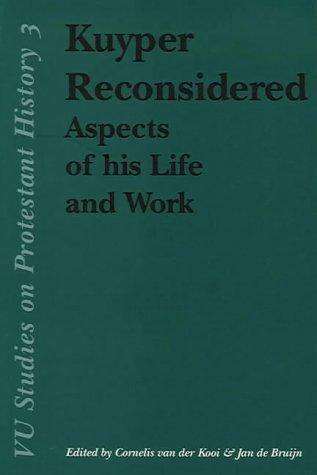
J. de Bruijn (1999), 'Abraham Kuyper as a romantic', in  C. van der Kooi and J. de Bruijn (eds)  Kuyper Reconsidered:Aspects of his Life and Work, VU Studies on Protestant History Amsterdam VU Press, ch.3.

This paper looks at  two other Dutch men, Multatuli and Van Eeden, and compares Kuyper to them. He maintains that Kuyper was a romantic. However, he doesn't fully define what he means by Kuyper as a romantic. For de Bruijn being a romantic seems to imply an inner conflict, a melancholia and hypocondia as well as a poetic streak.


Sewell, Keith (2003), 'Calvin and the stars, Kuyper and the fossils: some reflections of historiographical reflections', Pro Rege, 10-22.
Also in J Kok (ed) Celebrating the Vision: the Reformed perspective of Dordt College (Sioux Center, IA: Dordt College Press, 2004).

Sewell examines how Calvin's and Kuyper's view of astronomy and evolution has been misconstrued. He uses these incidents to show how historiography can be used to prevent this misreading. He shows that there is a tendency for Kuyper to become 'evangelicalised'. He takes to task McGoldrick's biography for being susceptible to this. Kuyper was certainly against evolutionism but not necessarily against the scientific theory. Kuyper is closer to Calvin than to fundamentalism.


Engelsma, David J. (editor)  (1998), Standard Bearer 75(2)

This issue of the Standard Bearer is devoted to Kuyper. It would seem an unusual choice as it was a reaction against Kuyper's views on common grace that promted the PRC-CRC split in 1924. The PRC rejected common grace and as such rejected Kuyper as 'the theologian of common grace'.
These series of articles focus on different aspects of Kuyper. But the continula cry is that Kuyper was best seen as a theologian and not as a cultural activist. There is a stress on Kuyper as a good reformed theologian; for example  'His theology although imperfect, was solid, sound, biblical and creedal Reformed doctrine'. The continuity between Hoeksema, one of the original dissenter's to common grace is also highlighted: 'the theology of Hoeksema is essentially that of Kuyper' and 'Hoeksema spoke highly of Kuyper and his theology'. Here then is a reappropriation of Kuyper minus his theology of common grace. As Terpstra puts it:
The legacy left by Dr. Abraham Kuyper to the Reformed faith and churches is for the most part a great and beneficial one. A significant exception to this is Kuyper's development and promotion of the doctrine of common grace. As much as we appreciate what Kuyper gave to the Reformed churches, including our own, in many areas, we must criticize, condemn, and cast away his teaching on common grace.
There is an emphasis on Kuyper as church reformer and his role in the Doleantie and the subsequent reunion with the 1834 Afscheiding succession and on his views of particular grace.

Contents


Meditation - Abraham Kuyper
  • When What Is Mortal Is Swallowed Up by Life
Editorially Speaking
  • Introduction
Editorial - Prof. David J. Engelsma
  • "Father" Abraham or The Indebtedness of the PRC to Abraham Kuyper
Abraham Kuyper: Prof. Herman C. Hanko
  • A Short Biography
Abraham Kuyper: Rev. Ronald L. Cammenga
  • The Doleantie
Abraham Kuyper: Prof. Russell J.Dykstra
  • --and the Union of 1892
Abraham Kuiper: Mr. Marvin Kamps
  • The Son of God Eternally our Mediator
Abraham Kuyper: Rev. Charles J. Terpstra
  • Developer and Promoter of Common Grace
Abraham Kuiper: Rev. James Laning
  • Do We Hold to Kuyper's View of Presupposed Regeneration?
Dr. A. Kuyper: Rev. Kenneth Koole
  • Politician-a Critique
Book Reviews
  • "Creating a Christian Worldview: Abraham Kuiper's Lectures on Calvinism" Peter
    S. Heslam (Reviewed by Prof. D. Engelsma)


Friday, 30 September 2011

Harry Van Dyke on Gleason's Bavinck

Guest post by Harry Van Dyke

Herman Bavinck: Pastor, Churchman, Statesman, and Theologian
Ron Gleason. With an introduction by Roger Nicole.
Phillipsburgh, NJ: Presbyterian and Reformed Publishing, 2010. Pp. xvi + 511. $29.99.


We are greatly indebted to the Rev. Dr. Ron Gleason, pastor of a Presbyterian Church in America (PCA) congregation in the bucolic setting of Yorba Linda, California, for surprising us with this book at this strategic time. For now that the four imposing volumes of Bavinck’s Reformed Dogmatics are available in English, who does not want to know more about the man behind the work and the context in which it was written?

Ron Gleason would seem to be well qualified to write this book. After receiving his M.Div. degree at Gordon-Conwell Theological Seminary, he went to the Netherlands and between 1975 and 1981 studied under Jan Veenhof in Amsterdam and Herman Ridderbos in Kampen. In 2001 he was awarded a Ph.D. at Westminster Theological Seminary after submitting a dis­ser­tation entitled The Centrality of the Unio Mystica in the Theology of Herman Bavinck.

Gleason’s biography is a robust soft-cover volume with a well-placed portrait of Bavinck on the cover. It comes with a handy Index of Names and Subjects (501–11) and contains no less than six extensive Appendixes (431–99), three of which are valuable synopses (in English) of keynote addresses by Bavinck published (in Dutch) during his lifetime.

The work is based on a variety of sources. Among the primary sources used are Bavinck’s Stone Lectures, several of his smaller publications, and articles in the church weekly De Bazuin. Use is made of the Acts of the synods during these years. In addition, an auto­biography by Rev. Jan Bavinck, the father, provided infor­mation on Herman’s formative years growing up in a devout home appreciative of learning and culture in a Christian spirit. An interview with a granddaughter of Lucas Lindeboom proved useful for a better under­standing of that forceful personality and powerful opponent of Bavinck on more than one occasion. Finally, there are Bavinck’s recently discov­ered lecture notes for his course in ethics. (One only wishes that another appendix had sum­marized the basic thrust of those lectures.)

For a life of Bavinck, the main secondary sources available are the existing Dutch-language biographies. There are five: the 80-page In Memoriam by Bavinck’s one-time pupil J. H. Landwehr (1921) and the biographies by his successor V. Hepp (1921), by A. B. W. Kok (1945), J. Geelhoed (1958) and R. H. Bremmer (1966). Gleason does not use Kok or Geelhoed, quotes Landwehr six times, relies quite frequently on Hepp, and follows Bremmer chapter by chapter, almost page by page.

Gleason includes numerous illustrative citations from corres­pondence held in archives; these, however, appear to be directly quoted from Bremmer. Almost as numerous are a host of very helpful thumbnail sketches of secondary figures, gleaned from the Christelijke Encyclopedie (2nd ed.) and placed in footnotes.

Composing a work in this manner involves constantly transposing into English an enormous amount of prose that one is reading in Dutch. Gleason is generally felicitous in his choice of translations, but before getting to the content of the book I should point out some puzzling choices. For example, “a convent-like mentality” is not the equivalent of con­ven­ti­kel­geest (120); in context, the word denotes the “sectarian mindset” prevalent among the initiated members of a conventicle, i.e., of a small group of disgruntled parishioners meeting privately for mutual edification. The word“union” is not always the right word for vereniging (157); the Free University, for example, was owned and operated, not by a “union,” but by an “associ­ation.” Some other slip-ups may have been almost inevitable: tenure instead of tenor for teneur or strekking (222), Christendom instead of Christianity for christendom (350), field preacher instead of padre for veldprediker (381), and grace instead of pardon for (judicial) gratie. Dutchmen may “climb in the pen” (passim) but Americans just take it up. I do not wish to be a purist, but I protest that Bavinck is made to appear guilty of resorting to an “underhanded method” (297) when all he did was convey a confidential communication (onderhandse mededeling).

Gleason’s book is both edifying and entertaining. The noble figure of Herman Bavinck (1854–1921) rises before us as a consummate theologian, a leading statesman in the Reformed Churches in the Netherlands, and an enthusiastic champion of a culture-engaging Neo-Calvinism, justly renowned in the Reformed world internationally, yet at the same time a discreet and humble man leading a life of self-sacrificial service to his church, his academic institution, and his country. To describe all this in detail, Gleason organizes the story of Bavinck’s life in chrono­logical order. He patiently traces three phases in Bavinck’s career: a brief but fruitful pastoral charge of two years in the Frisian town of Franeker, followed by 20 years of teaching in the Theological Seminary in Kampen (the phase that culminated in the publication of the four-volume Gerefor­meerde Dogmatiek), and the final phase of another two decades spent in the chair for systematic theology in the Theological Faculty of the Free Uni­ver­­sity (VU) in Amsterdam. This last phase was marked by an almost abrupt switch around 1911, away from the pursuit of theology in the strict sense (other than giving his lectures) to a concentrated effort at outlining principles for philosophy, pedagogy and psychology in a number of what were then pioneering studies, both academic and popular.

In my opinion, Gleason underemphasizes the significance of the 1911 switch. True, Bavinck’s new focus in Amsterdam was not a break with theology as such. Yet it offers clear evidence of his burning zeal to branch out and take Reformed principles (which are nourished by theology but which embrace far more) and apply them in the very midst of the cul­tural battle zones of his day. He realized that the rock on which Christ built his church was not theology, but “hearing, confessing, and doing” (see Matt. 7:24; 16:18). To my mind, Gleason would have done greater justice to this phase in Bavinck’s life if he had included more details about these non-theological writings which clearly show him to have been a leading thinker and writer in the Neo-Calvinist movement of his time—to some extent, and in his own way, the equal of Abraham Kuyper. The descriptions of this aspect are too brief and lack substance (229, 253, 276).

A frustrating episode in Bavinck’s life fell in the period between 1892 and 1902. The year 1892 saw the the unification of the churches from the Afscheiding of 1834 and those of the Doleantie of 1886—a unification that was achieved, Gleason makes clear, thanks in no small part to Bavinck’s exertions. The year 1902 saw Bavinck’s move from Kampen to Amsterdam—a change of workplace he had considered and declined on four previous occasions. In the intervening ten years Bavinck campaigned for what should have been the finishing touch to the church merger: creating a single training school for future pastors through a merger of the Kampen seminary with the theological faculty of the Free University. Both institutions trained ministers for the unified denomination. Bavinck’s intent was to eliminate expensive duplication and to raise the scholarly level of the seminary inherited from the Afscheiding churches by taking it out of its relative isolation in the eastern province and bringing it in touch with modern life and academia in the heart of the country. Gleason traces the intricate and crisis-ridden campaign through its various phases with patient and painstaking accuracy (153-68, 187-201, 239-91). Several different config­urations for a unified seminary were tried, but each time Bavinck failed to gain sufficient support. The whole episode suffered from a bitter power struggle: mutual suspicion; public innuendos; unrestrained agitation by both sides in local and regional church papers; and similar all-too-familiar sins that tend to mark dissension in ecclesia. Bavinck campaigned at synods, in committees and by private correspon­dence, but the difficult, protracted and at times acerbic negotiations were a trial for his irenic soul. A hot issue was: Who would control the unified seminary? In his final compromise draft Bavinck proposed that the new theology depart­ment function as an integral part of the Free University but that the appointment of professors for the department be the prerogative of the churches. He felt strongly that the latter could not be left to a private asso­ci­ation such as operated the Free University. Predictably, “Amster­dam”—its professors, supporters and the associ­a­tion—refused to accede to such an arrangement because, after all, the Free University was founded “free of state and church.” At the same time, the supporters of “Kampen” could not abide the thought that “our beloved school” would be absorbed into a university over which the church had no control, and so they accused their own Professor Bavinck of conceding far too much and selling out to the competition.

It would have been helpful if Gleason had quoted Bavinck’s deepest motive during this protracted struggle. It is right there on page 124 of Bremmer’s biography: “At stake is keeping theology pure and keeping the churches on the path of truth.” Without explicitly mentioning this motive, Gleason’s account creates the impression that Kuyper, Rutgers and others, in their exchanges with Bavinck, were tilting at windmills (no pun intended, as Gleason would say).

For all that, I applaud Gleason for not being afraid from time to time to draw lessons from the history he recounts—for example, that churches and church leaders should avoid party spirit and not draw caricatures of their opponents’ position. Obvious enough, but still worth saying. Throughout these years, Bavinck for the most part emerges as an exemplary churchman: fair, patient and conciliatory, courteous but persistent. Gleason’s account at times borders on hagiography. Still, he does not hesitate to record how even Bavinck could run out of patience and pass harsh judgments. His vacillation and indecision was another character flaw and could exasperate colleagues and critics alike. Gleason also deplores the fact that Bavinck, though teaching and publishing balanced views concerning election and covenant, nevertheless did not put up more vigorous resistance to Kuyper’s doctrine of presumptive regeneration in reports he helped draft for the church assemblies (194, 339–42).

Bavinck’s disappoint­ment at failing to achieve a unified centre for Reformed theo­logical study ran deep. Bremmer indicates that Bavinck saw it as weakening the strength of the revived Calvinism of his day. Unity on this score would have made for a stronger basis of operation for addressing the issue of Scripture in the face of Higher Criticism and for developing alternatives to the many secular movements gaining ground in society.

Toward the end of his life, Bavinck called for revisiting the doctrine of Scripture as traditionally applied in the Reformed Churches. Gleason, following Hepp and Bremmer, denies that he was capitulating at last to modernist elements in the biblical criticism to which he had been exposed as a student at Leiden. Rather, Bavinck felt that the churches needed to apply its view of Scripture in a more nuanced way. He may have feared a slide from an infallibility standpoint to one of inerrancy. Would he have approved of the defrocking of Rev. Netelenbos over his view of Scripture? Hepp (338) claims he did and that he said so explicitly to fellow delegates to the synod that had to deal with the case. (Bavinck wrote the pre-advice but was unable to attend any further sessions due to failing health.) Bremmer reports (266) that in his pre-advice Bavinck had urged the improvement and expansion of the confessions with respect to the inspiration and authority of Scripture. Gleason stops his account with Bavinck’s death in 1921, but in this connection one cannot help but speculate what Bavinck’s position might have been in 1926, when Rev. Geelkerken was deposed over a similar issue. Interestingly, at that time Bavinck’s widow, together with his daughter and son-in-law, joined the seceding Geelkerken churches.

For all my appreciation of Gleason’s effort, I must put my finger on some mis­state­ments. The author studied for some years in Kampen and writes about Bavinck growing up and laboring for twenty years in “the bucolic setting” of Kampen. This description may refer to the outskirts of the provincial town, but the late-medieval Hanseatic city with its red-brick buildings, its white-washed city gates and its Gothic basilica can hardly be described as “a small, rural village” (136, 224, 307, 399 et passim). The initial description on page 29 is more to the point. And in case readers wonder, marriages in Holland are performed by a Justice of the Peace (39, 416) only when bride and/or groom are minors and lack parental approval; normally, marriages are performed by the local mayor or his deputy.

I admit that there are times when one does not know whether to take the author seriously. Surely it was not global warming (435) but rather unsanitary conditions in town and country that caused a lack of clean drinking water around 1830. But wait, a similar indictment in a note on page 139—blaming global warming for what has become known in Dutch history as “de barre winter van negentig” (the severe winter of ‘90)—persuades me that the author has planted his tongue firmly in his cheek. Rather odd, for a serious biography.

For the record, readers should be aware of a few instances where the text states the opposite of what was actually the case. For example, Hovy was not president of the VU association “from 1895 on” (176) but until 1895, the year he resigned in protest over the dismissal of Professor Lohman, in which Bavinck was complicit with Kuyper in flouting proper procedure. Keuchenius was not Lohman’s nemesis (217) but rather the other way around. Were Doleantie preachers “experiential” and Afscheiding preachers “less subjective” (261)? If anything, the opposite was the case. Did Bavinck “dismantle” the defence published by a certain Mr. Huisman of some of Kuyper’s theological ideosyncracies (264)? That could hardly be, since Huisman actually critiqued Kuyper, and Bavinck largely agreed with Huisman. Was Bavinck’s colleague Professor Lindeboom the eternal waffler in Bavinck’s eyes, and was Bavinck impossible to work with in Lindeboom’s eyes (296)? No; the relationship was exactly the reverse. And finally, to name no more, it was not Bavinck but Kuyper who became “president of the Council of Ministers” (374); that was the old title for the rotating chairman of the Cabinet, which Kuyper proceeded to have renamed “minister-president” or prime minister. Most of these reversals of meaning are due to misconstruing passages in Bremmer.

In the end, however, these are little more than momentary lapses. They do not affect the overall thrust and sweep of Gleason’s sympathetic account of Bavinck’s life. As mentioned, I was edified and entertained by this important book. I hope it will soon need a reprint, so that with the removal of these lapses it can become an editio castigata.

Harry Van Dyke
Redeemer College
Originally published in Calvin Theological Journal 46.1 (April 2011): 192–197.

Republished here by permission of the author.


Wednesday, 28 September 2011

Wisdom and Wonder by Abraham Kuyper announced

The first part of the translation of Kuyper's Common Grace is announced:
Wisdom & Wonder: Common Grace in Science & Art is a new and complete translation of two sections that the Dutch Reformed theologian and politician Abraham Kuyper appended to his larger three-volume work on common grace. During his life Kuyper labored tirelessly, publishing two newspapers, leading a reform movement out of the state church, founding the Free University of Amsterdam, and serving as Prime Minister of the Netherlands. Popular in our time for his devotional work, Kuyper’s Wisdom & Wonder displays his talents as a public theologian, focusing on his comprehensive and Reformed vision of science and art, still relevant for Christians today.


Full details here.


There is an excerpt here.

Sunday, 25 September 2011

Recent (re)readings on Kuyper

Edward E. Ericson Jr 'Abraham Kuyper: cultural critic' Calvin Theological Journal (1987) 22 (2): 210-237

In this paper Ericson examines the notion that Kuyper was influenced by the Romantic movement.
He claims two Kuyperians have maintained this position - however, he doesn't name the two.

Ericson's thesis is that Kuyper rejects Romanticism and that Kuyper saw Romantic and Enlightenment thought as allied, the one issuing from the other.

He starts by outlining the contours of Romanticism then examining some of Kuyper's key writings and in particular 'Pantheism destruction of the bondaries' shows how these contours are absent in Kuyper and that he even undermines them.

He focuses on the term 'organic'. A term much loved by the Romantics and much used by Kuyper. Kuyper uses the term imprecisely. Kuyper applied the term to:
  • the organic unity of the body of Christ
  • the organic unity of the cosmos
  • the organic character of Encyclopedia
  • the organicism of science
  • the organicism of theology

He notes that for Kuyper 'the notion of organic seems to mean coherence, fittingness. All things fit together coherently. And the reason that things are inextricably intertwined in an overall unity is that God has placed an order in his creation.' (p. 223)


Ericson is Professor of English at Calvin College in Grand Rapids, Michigan. He is the editor of Academic Freedom and Christian Scholarship (Eerdmans, 2000) and author of Solzhenitsyn and the Modern World.


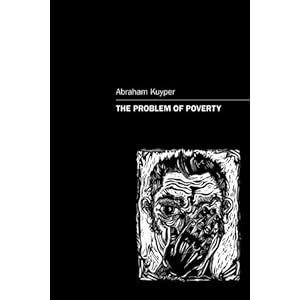
Roger D. Henderson 'How Abraham Kuyper became a Kuyperian' Appendix to Abraham Kuper The Problem of Poverty (Sioux Center, IA: Dordt College Press, 2011)
Previously published in Christian Scholar's Review 22 (1992): 22-35.

Hendrson's aim is to examine why Kuper didn't end up as a liberal theologian as did so many of his University of Leiden contemporaries. He looks at a number of different context: Kuyper's family background, his goals and achievements and his conversion. Their is alos a short biographical introduction.

The paper is a helpful examination of the early life of Kuyper and the early influences that shaped him.


Roger Henderson is a former professor of philosophy at Dordt College. He now lives in The Netherlands.


James C. Schaap 'A writing exercise in identity: Abraham Kuyper's To Be Near Unto God' In J Kok (ed) Celebrating the vision: the Reformed perspective of Dordt College (Sioux Center, IA: Dordt College Press, 2004): 39-54.
Schaap recently rewrote Kuyper's devotional classic To Be Near Unto God. This short piece explains why he came to do that. One thing that he discovered was that 'those who claim that the inheritors of a Reformed or Calvinist worldview have no tradition of piety are, at best, uniformed. No one can read this book and come away believing such nonsense. Kuyper's spirituality is a witness, a century after the devotions were penned' (p. 44).

James Schaap blogs here and is professor of English at Dordt College

Thursday, 22 September 2011

George Grant on Kuyper

Steve Macias has posted a talk by George Grant on Abraham Kuyper here.

Some notes from the talk are available here.

Grant maintains, citing Otto Klassen, that Kuyper was a man feared by Hitler - despite the fact that Kuyper had been dead for almost 20 years!

He also places the blame for the fall from Kyuperianism in Holland on Hitler. Hitler hunted down all the leaders Kuyper had trained and attempted to destory all the institutions. An interesting thesis.
 

Work as/is worship

Sunday, 18 September 2011

Dooyeweerd's The Crisis in Humanist Political Theory review by Bruce Wearne


Guest post by Bruce Wearne. This review first appeared in Sight - used here by permission of the author.


The Crisis in Humanist Political Theory: as seen from a Calvinist cosmology and epistemology
Herman Dooyeweerd (Translated M. Verbrugge, edited by D.F.M. Strauss, co-edited Harry van Dyke)
Paideia Press, 2010
ISBN-13 9780888152121


This volume is the translation of an early work of Herman Dooyeweerd (1894-1977), originally written and published in Dutch in 1931. It is the summation of extensive study made while he was a policy researcher for the Abraham Kuyper Foundation, think-tank of the major Calvinist political party in The Netherlands. It contains an initial systematic formulation of the Christian philosophy that is associated with his name.

The term Calvinist in the book's title, will for some suggest a political justification of the doctrine of predestination and the Biblical teaching of the "chosen people". Such a suspicion is not entirely unwarranted, given for example the historic connections between Dutch reformed theology and the apartheid ideology in South Africa. But readers of Dooyeweerd's work will discover that his "reformational" perspective is cut from another cloth. This is no work of Protestant triumphalism. It self-critically maintains a critical distance from the worldly pride that has repeatedly dogged many political contributions of those claiming a Calvinistic inheritance since the 16th and 17th centuries.

Indeed, in his line by line analysis of the then current body of political thought - an incredible library of weighty scholarly tomes from the German historical tradition, in the tradition of humanistic idealism of Kant and Hegel (and many more) - Dooyeweerd presents himself as a reformer of the intellectual tradition. He sifts and evaluates the theories and analyses of those who had formed, and those who were shaping, the contours of political science.

Political theory is assumed to be an important, though not totally indispensable, scholarly contribution to the work of those called to political office in the administration of public justice. Led by the concept of public justice, this is the discussion of a reformer of political theory. He does not proceed to the articulation of his own contribution before "doing yeoman's duty" as one who has mastered the strengths and weaknesses, twists and turns, and most importantly the underlying "ground principles" (what he would later come to refer to as "religious ground-motives"), of the prominent political theories of the day.

It is also important to note that this is a work that was written to be appreciated by a predominantly German post-World War I readership. The Netherlands had remained neutral in the Great War and this analysis was penned during the years of the Weimar Republic, said to have been sympathetic to the neo-Kantian democratic perspectives of Max Weber and Ernst Troeltsch. This was a few years before Hitler became Chancellor of the Reichstag in 1933. Of interest to historians of political theory will be Dooyeweerd's analysis of the apologia for dictatorship from Carl Schmitt (1888-1985). Schmitt's theory, forged in the heat of the inner spiritual crisis of humanism, prepared the way for the Fuhrerstaat.

The second half of the book provides Dooyeweerd's (neo-Calvinist) view of the way the State must function if it is to carry out its calling "under heaven", and "do" public justice. Dooyeweerd, the professor of jurisprudence, was keen to appropriate positive aspects of Abraham Kuyper's vision of "sphere sovereignty". But that also meant avoiding some of the dogmatic concepts implicit in Kuyper's uncritical view of science and scholarship. For Dooyeweerd, political theory in the Calvinistic line (from Johannes Althusius (1563-1638), required its own Christian philosophical critique of the scientific task, and those a radical critique of any theological endorsement of science's autonomy that go all the way back to Aristotle and Plato.

For Dooyeweerd, Christian political theory is born outside any attempt to bring Christian and pagan thought into a synthesis. Such an attempted marriage has diverted Christian scientific endeavour since the days of the early church. That is not to say that Dooyeweerd's argument defaults to a triumphalist view of Calvinism's contribution to world-history. Not at all. Calvinism as much as other strands of Christianity have all been implicated in this attempted "monster marriage". Calvinism's distinctiveness is to be found in its idea of law centred on God's will for His creation. Dooyeweerd's "philosophy of the idea of cosmic law" thus is a signpost to Christians "doing political theory" that they need to exercise self-critical discernment about the concepts they develop and avoid presuming on their "purity".

The significance of Dooyeweerd's contribution to political theory is in his comprehensive definition of the State's task in the promotion and maintenance of public justice. His analysis rejects any view that suggests the State should impose or justify any nationalist, ethno-supremacist or religious community's ideology. This "neo-Calvinistic" political theory also decisively rejects any presumption of its "manifest destiny" to succeed where all other world-views have failed. The implication is that it is not only neo-pagan America which fails but also any neo-pagan Calvinism! Calvinism's decisive contribution to political theory is thus interpreted from the standpoint of a Christian world-view which promotes scientific engagement motivated by the Christian-Biblical ground-motive of creation, fall and redemption in the communion of the Holy Spirit.

Saturday, 17 September 2011

J. R. R. Tolkein by Mark Horne

J R R Tolkein
Christian Encounters Series
Mark Horne
Thomas Nelson, 2011


This book by Mark Horne is a welcome addition to the series of short biographies in the Christian Encounter series published by Thomas Nelson. Others include J. S. Bach, D. L. Moody, Schweitzer, Columbus, Newton and Galileo.

J. R. R. Tolkein (1892-1973) needs no introduction, he is the author of one of the most popular books of the previous century, The Lord of the Rings. In this short, accessible and well-written book we are introduced to Tolkein the man. The biography is chronological and chronicles Tolkein's life from birth in Bloemfontein, South Africa to his death in Oxford.

This book breaks no new ground, but that is not its aim. It's aim is to provide a simple introduction to the life of Tolkein. Horne recognises that 'Tolkein's faith is important to understanding his works.' Unfortunately, this aspect is not fully developed.

We are told that 'Tolkein's faith helped him to persevere in the midst of severe losses and taught his patience as he forced himself to work at his job and support his family.' His father died while Tolkein was young. Horne makes the interesting observation that Tolkein's religious imagination and faith would have been different if his father had lived. Tolkein's mother later converted to Catholicism and brought up her two children as Catholics. The influence of Catholicism was also evident through Tolkein's guardian Father Francis Morgan, who took over his care when his mother died.

The role of the TCBS (Tea Club and Barrovian Society) is expounded in some detail but little is made of the Inklings - the group that comprised Tolkein, C. S. Lewis, etc. The fellowship and camaraderie of small groups was obviously important to him.

As Horne concludes:
While God calls Christians to proclaim his truth in a variety of ways and situations ... we can learn from Tolkein that sometimes a mere story can change lives.
This book provides a good brief introduction to the life of Tolkein. If you like Lord of the Rings and The Hobbit then this book will help you understand a little more the man behind them.

There is a helpful short appendix on the bibliographical sources.


Disclosure: This book was provided as part of the BookSneeze program - the views are my own.

Sunday, 11 September 2011

Johann Sebastian Bach by Rick Marschall

Johann Sebastian Bach
Christian Encounters Series
Rick Marschall
Thomas Nelson, 2011

This book is one in a series of short biographies in the Christian Encounter series published by Thomas Nelson. Others include D. L. Moody, Tolkein, Schweitzer, Columbus, Newton and Galileo.

Before I read this book I knew little of the life of Bach. I had enjoyed his cello suites and knew that his Christian faith influenced his work. I wanted to know more about how his faith influenced him and to see how his faith integrated with his music. I read this book hoping to find these answers. Marschall largely succeeds in this. As he notes, 'there have been very few studies on Bach's faith life' and he writes to fill that gap.

Although Bach never travelled more than a few hundred miles from his birthplace his music has global appreciation. It is clear from this book that Bach's faith permeated all of his life and his music in particular as these quotes from the book reveal:

 'Bach too, was a preacher, as effective and doctrinally pure as many saints since apostolic times, but he exhorted through his music'.

'He did not preach about music. His music preached about Christ.'

The book shows Bach as an orthodox Lutheran having a close relationship with his saviour. He read the Bible daily and also read Luther's writings. He began almost all his compositions with 'Jesus help me' written at the top left of the first page and 'To God alone the glory' at the bottom right corner of the completed score.  Bach wrote for an audience of one: Jesus Christ his saviour.

Marschall shows that we can't understand Bach without understanding his faith and the other main factor on him, his family: he had twenty children!

This is a helpful biography of Bach that does justice to Bach's faith and his music.

Saturday, 10 September 2011

Radical Together by David Platt

Radical Together
David Platt
Multnomah Books, 2011
ISBN: 978-1601423726


Imagine two churches. The first is seeker-sensitve.
Newcomers are welcomed at the door and provided with a latte and croissants. They settle down in a large auditorium, astounded by the hundreds if not thousands of others who have joined them. Their children are taken care of and entertained in an adjoining room. They listen to a professional band play amazing music accompanied by sensational graphics on HD screens around the auditorium. There are no obvious Christian symbols on display, no cross or crucifix, no stained glass windows, no Bibles. It could be any theatre in any town. The pastor then stands up and gives an excellent and inspiring talk again accompanied with amazing projected graphics on the screens.

The second church is also seeker-sensitive.
But for this church it's a different seeker. This seeker is the one one who seeks worshippers (Jn 4:23). There is very little entertainment, but what takes place is worship and praise to the God who is the creator of all things, the music may not be note perfect, but there is honesty, integrity and sincerity in the singing. This church is attempting to show people the love, justice, holiness, grace and character of God - no gimmicks.

In which place is God most glorified? How can we be radical together and not succumb to the American dream? That is the question that David Platt asks in this book. Platt's previous book Radical was a bestseller. This book takes shows the next step - it provides ideas and examples of how we can be radical together.

It is a challenging if not uncomfortable read. It will challenge you to consider how the radical impact of the gospel affects church life. Platt is refreshingly iconoclastic. Here he wants to consider what could happen if 'we apply the revolutionary claims and commands of Christ to our communities of faith'.

He has six key ideas:

1. The good things of church can become the enemy of the best - programmes, as good as they are, may not be the best thing for a church.
2. The gospel saves us from work so that we can work. We don't earn God's acceptance.
3. The Word does the work - the Bible is our guide and motivation. Living according to God's word will mean making big changes.
4. Building the right church depends on using the wrong people - God is interested in people. Dedication to church programs is not the same as 'devotion to kingdom purposes'. The issue is not performance in church, it is not professionalism but as he puts it 'Performance has nothing to do with it. People have everything to do with it'.
5. We are living and longing for the end of the world - by this he means that we need to take the gospel to the ends of the earth (Mt 24:14 )
6. We are selfless followers of a self-centred God. All this is done not because God needs us - God is self-sufficient, he needs no ones help - but he wants to involve us because he loves us.

These he claims are radical claims. By following these we can be radical together. I was particularly pleased to see the emphasis on the self-sufficiency of God; otherwise the book can become yet another programme to follow, something more for us to do. But at essence what Platt is calling for is for each of us, for the churches, to seek what God call us to do and to do it - and that my be very different from what his church at Brook Hills, Alabama, or our prevailing culture call us to do.

He provides some concrete examples which his congregation in have followed. These include reducing church budgets so that more money can go to mission, lifestyles rearranged, downsizing, a large adoption programme in the church and reallocating resources.

One needn't agree with all that Platt is advocating, but it makes for an interesting read. It will challenge each one of us and each congregation to think what can we do to make sure that we are being sensitive to the right seeker. It is a message that the rugged individualism of evangelicalism needs to hear.

Resources to support he book are available here

Disclosure: WaterBrook Multnomah Publishing Group sent me this book for free for this review - the views expressed are my own.

Monday, 29 August 2011

God's Renaissance Man by James E. McGoldrick

God's Renaissance Man 
 The Life and Work of Abraham Kuyper
James Edward McGoldrick
Evangelical Press: Darlington, 2000
ISBN 0852344465
320 pp.

Kuyper was an incredible man - he seemed to polarise peoples' opinions of him, a bit like marmite you either loved him or hated him. This is the first biography of Kuyper published in English this century.  McGoldrick, a church historian, seeks to build upon the previous two English biographies by Vanden Beg and Praamsma. He rightly says that Vanden Berg is far too uncritical, but then seems address this by over stressing the criticisms of Kuyper.

McGoldrick starts by addressing two criticism of Kuyper and ends with two slightly negative chapters. This is rather strange, almost as if he is bracketing Kuyper between these negatives. The penultimate chapter laments the loss of legacy in the Anti-Revolutionary Party and at the Free University. The final chapter 'Conclusion and critique' look at Kuyper's 'superlapsarianism', his views on 'presumed regeneration' and the way his views have been misappropriated and misapplied to support apartheid. These are almost petty in-house Reformed arguments. The criticisms McGoldrick presents could almost be construed as points on which McGoldrick disagrees with Kuyper. This is particularly evident when he accuses Kuyper of mysticism. The mysticism here is because Kuyper maintained that God still speaks (although Kuyper took great care to stress not in a way that adds to scripture) and that God still does miracles.

McGoldrick writes as an admirer of Kuyper but not as one without 'uncritical approbation'. It feels as if McGoldrick is tempering his enthusiasm for Kuyper by focusing on some of the negatives.

Rather more than a biography this book also covers a lot of Kuyper's theological views. Chapters 2 and 3 provide a helpful church and national background, though I think more could have been made of the role and influence of Groen Van Prinsterer.

Biographical chapters are interspersed with those that deal with Kuyper's theology. Well over a third of the chapters are theological.

I enjoyed reading the book. It is written for a popular audience, however, he has drawn upon a wide range of (English) secondary sources - cited in 9 pages of endnotes. As ever little is mention of the role and influence of his family and how he treated them and how he was able to do so much with a large family.

There is a very useful 48-page annotated bibliography which provided me with one or two avenues for further research.

A useful addition to the increasing amount of kuyperania - but the definitive English biography of Kuyper is still to be written.

Friday, 26 August 2011

The Spirit in Public Theology by Vincent Bacote


The Spirit in Public Theology
Appropriating the Legacy of Abraham Kuyper


Vincent E. Bacote

Baker Academic, 2005
9780801027406


Wipf & Stock Publishers, 2010
978-1608999965
pbk, 172pp


Kuyper's book on the Holy Spirit was a ground-breaking book. It started life as series of articles in De Heraut , these were complied into the book in 1888 (English translation 1900). At the time very few books had been writtten on the Spirit. In this book Bacote looks at the links between Kuyper's theology of the Holy Spirit, common grace and his political perspectives.

Bacote's aim in this book is to 'reveal the interrelated character of the strands of a thread comprised of pneumatology linked to creation and history, public theology and the work of Abraham Kuyper' and 'to articulate a cntemporary formulation of Kuyperian public theology rooted in the Holy Spirit's role in creation and history' (p. 53)

Having got over my problem with the title: Public Theology (Kuyper was a theologian, but it wan't theology - public or not - that he was doing when he was doing politics. He didn't reduce politics to theology) - I was pleased to see that the book had endorsement from top Kuyper scholars including John Bolt, Harry van Dyke, George Harinck and Richard Mouw. So it was with high expectations I staretd this book.

Bacote, in chapter 1, starts by looking at some recent treatments of the Holy Spirit, these include diverse thinkers such as Geiko Muller-Fahrenholz, Sinclair Ferguson, Colin Gunton, Moltmann, Clark Pinnock and Mark Wallace. He then takes a brief look at the public theology of Max Stonehouse and Ronald Thiemann before turning to Kuyper.

Chapter 2 takes a look at the period 1890-1905. During this time Kuyper shaped the Anti-Revolutionary Party, formed the Free University and became primeminister; he also began work on the series on common grace in De Heraut, his Stone lectures on Calvinism were published, the lecture that became The Problem of Poverty was delivered, as was his work on The Holy Spirit.

Chapter 3 focuses on the main thesis of the book, examining in more detail the theological rationale of Kuyper's 'public theology', namely common grace. He also looks at some concerns expressed by sympathetic Kuyperians, Mouw, Klapwijk, van der Kooi and S. U. Zuidema. Bacote maintains, and makes a good case for, the Holy Spirit as the previusly unseen missing link in Kuyper's approach. He identifies three aspects that Kuyer discerns regarding the Holy Spirit's activity in creation:

1. the role fo the Spirit in the creative act;

2. as the animating principle of all life; and

3. in the restraint of sin.

Thus, in Kuyper's theology, the cosmic activities of the Spirit are implicitly linked to common grace.

Having made his case Bacote goes on in chapter 4 to compare Kuyper with A. A. Van Ruler. He also engages with Stanley Grenz, Amos Yong and Clark Pinnock. The final chapter summarises the book.

Bacote has shown that the concept of common grace is bought about by the Spirit and thast common grace is not someething that is a mere intellectual historical curiosity, but has its role today to play in the public square.


Contents

Preface

Acknowledgements

1 Weaving the thread

2. Abraham Kuyper's public theology at its zenith (180-1905)

3. The spirit of Kuyper's public theology

4. The Spirit and creation stewardship

5. Compelled to "go public"

Bibliography

Index


Other Kuyer articles by Bacote include:

Called Back to Stewardship: Recovering and Developing Kuyper's Cosmic Pneumatology
Journal for Christian Theological Research 2:3 (1997). 
Common Grace And "Spiritual" Stewardship: Guidance for Development?
Princeton Seminary Bulletin 24.1 (2003): 84-93 
Abraham Kuyper's Rhetorical Public Theology with Implications for Faith and Learning
Christian Scholar's Review 37:4 (2008): 407-425.

Wednesday, 24 August 2011

The Practice of Political Spirituality by McKendree Langley

The Practice of Political Spirituality
Episodes from the Public Career of Abraham Kuyper, 1879-1918
McKendree R Langley
Jordan Station, Ontario: Paideia Press
204 pp, pbk, $8.99
ISBN 0-88815-070-9


Available from here in hard copy or here as a pdf

McKendree Langley (1945-2005), was a professor of history at WTS. His dissertation was on the history of the Anti-Revolutionary party in The Netherlands, a party that Abraham Kuyper helped to shape. In this excellent book we have some insights into the political spirituality of Kuyper.

Langley explains that:

Kuyper's simple yet profound Christian vision was based upon a deep faith in Christ as the King over the entire cosmos. The exercise of this Christian vision in public affairs can be called "political spirituality"— the ability to discern the directions sin and grace take in public affairs. Political spirituality is an integrated Christian attitude which enriches both thought and action. This book will present and briefly evaluate aspects of Kuyper's public career as examples of political spirituality. This attitude of political spirituality must not be confused with Kuyper's political tactics. Tactics change as times and situations differ, "political spirituality" remains part of a Christian's obligation to do all things to the glory of God. The attitude of Christians towards secularized society determines what they think and do. (p 25)
The book is split into three main sections each dealing with a different periods in Kuyper's political career: party leader, primeminister and elder statesman.

For many Christians politics and Christianity don't mix - or if they do we get a right-wing American fundamentalist version. Kuyper is evidence that Christian faith does shape politics and it can in a distinctively Christian way. Kuyper steered a middle way between Conservatism and Liberalism, between individualism and collectivism. He was involved in politics because 'obedience to the Lordship of Christ and the future of the nation were at stake'. Kuyper shows that it is possible to serve Christ in politics.

Langley is an excellent tour guide, he explains and exegetes Kuyper's approach; showing Kuyper's desire to transform politics - but not just politics but education, insurance, labour conditions and suffrage - arose out of his deeply held Christian principles and convictions. Kuyper campaigned for principles not for votes. In all that he did he didn't fall into the trap of a social gospel, he knew that the Christian faith couldn't be reduced to politics but that politics had to be shaped by Christian principles.

As Langley shows Kuyper 'touched so many disciplines' hence this book will interest all those concerned to integrate Christin faith and society (and that should include all Christians!) - in whatever sphere. Kuyper provides no blueprint, but he does provide an excellent role model.


Contents

Preface
by H. Evan Runner

Introduction: Abraham Kuyper and the Contemporary Discussion on Faith and Politics

Kuyper as Party Leader, 1879-1901
  1. Anti-Revolutionary Centennial
  2. The Events of 1879
  3. Anti-Revolutionary Principles
  4. Defense and Encouragement
  5. Between the Cross and the Second Coming
  6. The Perils of Democratic Progress
  7. Prelude to Power

Kuyper in Power, 1901-1905
  8. Prime Minister in 1901

  9. Cabinet Policy in 1902
 10. The Great Railroad Strike of 1903
 11. The Higher Education Debate in 1904
 12. The Struggle Against Intemperance

Kuyper as Elder Statesman, 1905-1918
 13. The Transition
 14. A Practical Statesman with a Theological Background
 15. Final Statements

Kuyper's Legacy
 16. The Legacy of Kuyper's Political Spirituality

Bibliographical Note

McKendree R. Langley on the Anti-Revolutionary Party

Here is a brief piece by McKendree Langley on the Anti-Revolutionary Party. The party that Abraham Kuyper helped to shape.

It is taken from Encyclopedia of Modern Christian Politics edited by Roy Palmer Domenico and  Mark Y. Hanley (Greenwood publishing 2006)

ANTI-REVOLUTIONARY PARTY (THE NETHERLANDS). The Anti-Revolutionary Party (ARP) in the Netherlands was a significant political movement among evangelical Reformed Protestants from 1827 to 1980. 
The worldview foundations for the party were laid by the parliamentarian Guillaume Groen van Prinsterer in his important book Unbelief and Revolution (1847). Based on a principled rejection of the secularist worldview of the French Revolution in its liberal and radical forms, Groen argued for a Christian worldview on Augustinian/Calvinist lines as the basis for all of life including politics. Groen believed that if democratic voting procedures were divorced from biblical moral values and the national heritage, the result would be the end of true constitutionalism, with a pragmatic secularism as the final norm. Around this ARP worldview Groen began to gather a national following, especially on the issue of full freedom for Christian schools. His slogan was "The Gospel versus the Revolution" (or the Bible's principles versus secular humanism). Theocracy was rejected in favor of constitutional democracy. 
The ARP's organizer was Dr. Abraham Kuyper. He popularized Groen's worldview and emancipatory reformism in about ten thousand editorials in De Standaard daily newspaper between 1872 and 1918. He also led more than a dozen national parliamentary campaigns during that period. For example, during the 1873 campaign he wrote, "The other parties campaign for parliamentary seats, more or less. We campaign for our principles!" Between 1872 and 1879, Kuyper organized the ARP around the program of principles, a central committee under his chairmanship, and scores of local voters' clubs. It was Europe's first nationally organized Christian Democratic party. The ARP's most basic principle was that state authority derives from divine institution, not popular consent. Kuyper deepened the ARP worldview with the concepts of sphere sovereignty; common grace; the ordinances of God for family, church, and state; and the Kingship of Christ over all of life. Kuyper adopted a principled pluralism and saw the complete equality of Christian schools with all others funded by a voucher system as a key ingredient of that pluralism. Parity was achieved in the constitutional reforms of 1917. At elections between 1937 and 1972, the ARP received over 200,000 votes on average and was a major governing party with 16 percent of the national vote.

After World War II, the ARP persisted in carrying on with its worldview in spite of secularist pressures to introduce only pragmatic parties. During 1945-1952 the party stayed out of the government in protest against the surrender of Indonesia. At the same time, the party endorsed European federalism, NATO, and a provisional welfare state. By 1968 the party leaders decided to merge with two sister parties (one Catholic) with moderate policies to bring greater stability to governing coalitions. The public debate between the Catholic "open party" concept of all people of good will and the AR "closed party" of self-confessed Christians grabbed headlines during 1973-1976. The open party won, with no official place for the ARP worldview. 
The formal end of the ARP came in 1980, when it merged with the Christian Democratic Appeal party. While the party could be credited for supporting social emancipation, educational pluralism, a benevolent colonial policy, and a responsible governing record, it also tolerated triumphalism, imperialism before 1949, and some poor judgments in crisis situations. 
Bibliography. Langley. M. R. "Emancipation and Apologetics." Ann Arbor, MI: UMI Dissertation Services, 1995. Langley, M. R. The Practice of Political Spirituality. Jordan Station, ON: Paideia Press, 1984.
McKendree R. Langley

Tuesday, 23 August 2011

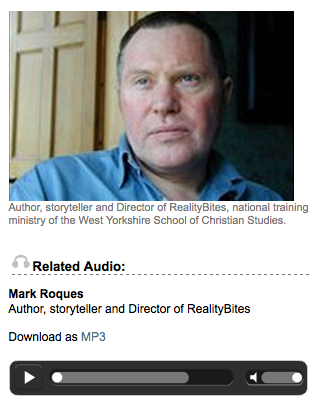
Mark Roques on Australian Radio on teaching Religious Education


Click to listen to the broadcast.

Herman Dooyeweerd timeline

Herman Dooyeweerd (1894-1977)

1894
Birth in Amsterdam

1917
Doctorate in jurisprudence from the VU on the Dutch constitutional law "De Ministerraad in het Nederlandse Staatsrecht" - supervised by D. P. D. Fabius

1918-21
Civil servant at the department of labour


1919
Father dies

1921-1926
Assistant director of the Abraham Kuyper Foundation
Wrote The Struggle for a Christian Politics (English translation  Lewiston, NY: Mellen, 2009).

1920
Begins to publish major articles

1922
Debate with Scholten on 'State interference and individual freedom'
Discussions with brother-in-law D. H. Th. Vollenhoven

1923
'The Calvinistic principles of sphere sovereignty as political principle'

1924
Marries Jantiena Wilhelmina Fernhout on 19th September

1926-1985
Appointed as professor of jurisprudence at the VU

1931
The Crisis of Humanist Political Theory as Seen from a Calvinist Cosmology and Epistemology (1931 [English translation  Grand Rapids: Paideia, 2010]).

1935
De Wijsbegeerte der Wetsidee (Amsterdam, 1935–36) [English translation The Philosophy of the Cosmonomic ldea (Philadelphia: P&R, 1953–58)]

1936
Opposed by VU's V Hepp
Synod dismisses accusations
Starts Philosophia Reformata with D H Th Vollenhoven
Founds the Association for Calvinistic [Reformational] Philosophy

1944
Disagrees with GK over the disposition of Klaas Schilder

1945-6
Writes a series of articles for newspaper  Nieuw Nederland which become Roots of Western Culture (English translation Wedge, 1979)


1946
Delivers a series on lectures on sociologt at the University of Delft - these become A Christian Theory of Social Institutions (Engl. Transl. by Magnus Verbrugge; Dooyeweerd Foundation, 1986)

1947
Introduction to transcendental criticism of philosophic thought. Evangelical Quarterly 19: 47-51

1948
Member of the Dutch Royal Academy
Mother dies
Transcendental Problems of Philosophic Thought: An Inquiry into the Transcendental Conditions of Philosophy. Eerdmans: Grand Rapids.


1951
'The contest about the concept of sovereignity in modern jurisprudence and political science' Free University Quarterly 1: 85-106.

1959
Visits North America
In the Twilight of Western Thought (Craig Press, 1960)

1975
Last article written for Philosophia Reformata
Interview with Pieter Boeles

1977
Death

1994
Dooyeweerd Centre founded

Monday, 22 August 2011

Abraham Kuyper Presentation

Let Christ be King by L. Praamsma

Let Christ be King
Reflection on the Life and Times of Abraham Kuyper
Louis Praamsma
Paideia Press, St Catherine's Ont., 1985

ISBN 0-88815-064-4

Pbk, 198pp

Louis Praamsma (1910-1984), a church historian, moved from The Netherlands to Canada in 1910. His doctorate from the Free University was on 'Abraham Kuyper as Church Historian'. This book is a popular level biography of Kuyper. This book is perhaps a little less accessible than Vanden Berg's biography, but it provides an excellent complement to Vanden Berg.

 Both volumes deal well with the education and political issues Kuyper struggled with, but Praamsma provides more detail on the church reforms Kuyper was involved with. He also concentrates more on the religious and cultural background - the first three chapters provide an excellent summary, particularly for those unfamiliar with Dutch history and culture.

Praamsma is much more refereneced (10 pages of endnotes) than Vanden Berg. Both are 'friends of Kuyper' and so are largely uncritical. Though Praamsma does highlight some of the issues others had with Kuyper, he also quotes more from Kuyper.

If you have time read both - if time is at a premium go for Praamsma.

Unfortunately, the book is out of print but is available as a pdf here.


Contents
 1. The Spirit of the Nineteenth Century
 2. Trial and Error: Theology of the Time
 3. The Dutch Situation
 4. The Young Kuyper
 5. Conversion in the Parsonage
 6. Disturber of the Peace
 7. A Small Note
 8. A Great Enterprise
 9. Reformer of the Church
10. The Salt of the Earth: Kuyper and the Social Problem
11. Professor Kuyper
12. In the New World
13. The Two Graces
14. Christ Our King
15. On the Sidelines
16. Finishing Touches
Notes

Kuyper timeline

I am experimenting with this - the dates are meaningless, these need to be changed (eventually!)