An accidental blog

"If God is sovereign, then his lordship must extend over all of life, and it cannot be restricted to the walls of the church or within the Christian orbit." Abraham Kuyper Common Grace 1.1.

Sunday, 14 March 2010

What happens when I die?

[These are my notes from a recent talk on 'What hapens when I die?']

Death is something we all have to face. It’s a great leveller! In more than one sense!

Death though is not “natural”; the wages of sin is death, death is the last enemy. However, salvation means victory over sin and death – death, because of Jesus’ resurrection is a defeated enemy. When Jesus died death was conquered – so much so that (Mt 27: 52) the earth quaked, some tombs were broken open and people who had died were raised to life! We don’t have to be afraid of death.

What happens when I die is a question most of us have to face at sometime or another.

Though, you may be surprised to know that not everyone will die! Those alive at Jesus’ return won’t die we’ll put on immortality.


About 10% of what I’m going to tell you is wrong! The only problem is, I don’t know which 10%! We need to test all things against the scriptures.

Many people claim to have had death experiences and have come back – many of them non-Christians. All seem to have a similar story to tell: an out of body experience, a tunnel, meeting someone.

One scientific study done by the university of Southampton has been set up to examine 1.500 survivours of cardiac arrest – the study known as AWARE (awareness during resuscitation) started in 2008 and planned to take 3 years. Time 18 Sept 2008


I’ve not seen any of their results yet.

Other Universities have departments of death studies.

At Bath there is the Centre for Death and Society

At Durham, Centre for Death and Life studies


There are a number of places you can get an MA in death Studies; including Bath and Lampeter,


However, personal experiences or scientific studies are not a reliable basis on which to base a theology or a doctrine.

So, what does happen when we die?

There are many responses to this.

The materialistic atheist on the other hand maintains that when we die we die, we get eaten by worms and that’s it. There is no continuity. We die we rot, end of story

Some maintain that we will be reincarnated, according to what we have done. If we have lived well then we may enjoy an eternal disembodied bliss, otherwise we might come back as a cockroach, an ant eater or an ant.

For the Buddhist they hope to get off the wheel of life and cease to exist or face reincarnation (again).

Two dear old friends, Abner and Fred, had many conversations through their life about death and what they thought Heaven would be like. They made an agreement that whichever of them died first would make every effort to make contact with the one that was still living and tell them what Heaven was like.

Well, Fred was the first to die and about a year later, Abner was truly missing his dear friend. One day, the phone rang...and when he answered it, he heard a familiar voice on the line.

Abner said: "Fred, is that you?"
"Yes it is my old friend, yes it is."
Abner was overjoyed, and said:
"So, tell me, what is it like where you are?"
Fred said: "This is wonderful. You wouldn’t believe what I am experiencing now. The most plentiful food and lushest fields you have ever seen, I sleep in late, have a long luxurious breakfast, and then I go and make love.

If it's a nice day I go out in the fields and make love some more. I come in and have a long lunch, then I go out into the fields again and make love all afternoon and retire early in the evening.”


Abner responded: "Heaven sounds so amazing!"

Fred replied: Heaven? Who said anything about heaven? I’m a rabbit in Minnesota!"

For many Christians it is a combination of the Buddhist and the atheist perspective. Our bodies get eaten by worms, but our souls or spirits get into n eternal bliss we call heaven. This however, is not the biblical picture! It is a Greek idea. It stems from a wrong view of what it means to be human. We are not souls or spirits trapped inside a body.

So, what do the scriptures say?

It is something that you’d think they have a lot to say on it. Isn’t that what Christianity is all about getting to heaven when we die? However, there is very little in the scriptures! The problem is that many of our ideas about heaven come not from the scriptures but from non-Christian culture.

As Tom Wright puts it:

“We should remember especially that the use of the word heaven to denote our ultimate goal of the redeemed, though hugely emphasised by medieval piety, mystery plays and the like, and still almost universally at a popular level, is severely misleading and does not begin to do justice to the Christian hope.” FATS p. 20-21

The Bible says nothing about going to heaven when we die.

In the Scriptures heaven is the hidden dimension of our ordinary life – it is where God is. It is not a place that we go to when we die. 

Heaven is not our future hope – our hope is physical bodily resurrection and that will be on the new heavens and new earth.

In the OT it was clear that the dead go to Sheol. David Lawrence in his book Heaven It’s Not the End of the World illustrates it like this. (see slides)

Sheol is translated unhelpfully by the Authorised Version as hell. The two are different places. Sheol is simply the realm of the dead. It was a place of waiting – not punishment or rewards. There are some glimpses of resurrection in the OT but not much. There is some hint that the rewards and fate of the righteous and unrighteous will be different.

The Hebrew word ‘Sheol’ is usually translated as Hades in the NT. This again is the place of the departed and not hell. In Revelation 1: 18 we are told Jesus holds the keys to Hades. Death was not able to hold Jesus and one day when Jesus returns Hades will have to give up the dead.

The New Testament picture looks something like this: (image from Key note – adapted from David Lawrence)

Sheol becomes Hades. There is some sort of “Intermediate State” – the position of the dead between death and Jesus’ return. At Jesus’ return there is resurrection and judgement. The fate of believers will be physical resurrection bodies on a new earth and the unbelievers Gehenna. Gehenna, usually translated as hell, is the name of the rubbish dump outside Jerusalem, where a fire burned all the time to destroy the rubbish that was chucked on it.

So, what then happens between death and the return of Jesus, in this ‘intermediate state’?

It was this question that bugged the Thessalonians – they expected Jesus to return pretty quickly, certainly within a few years of his ascension, but things were dragging on. Believers were dying – what was going to happen to them? Would they miss out? It is these questions that Paul is addressing in his letter to them.

Grieve – grief is important, but don’t grieve like the rest who have no hope.

Hope – because of Jesus’ death and resurrection there is hope. They won’t miss out.

Paul’s focus is not on the intermediate state but on the resurrection. The dead and those alive will meet the Lord.

Incidentally, the word meet here has been used to justify a rapture of the saints up into ‘heaven’ before the tribulation – a modern day theory popularised by the Scofield Bible and by the recent Tim La Haye Left Behind books. However, the word used is the word used to denote meeting a visiting dignitary. A group of important people would go out to meet the dignitary, to welcome him and bring him back to the city; not to go off into the distance with him!

In verse 13 and 15 We have the phrase ‘fallen asleep’.

Some have interpreted this to mean an unconscious sleep.

The dead are asleep. They have no consciousness of what is happening.

David Lawrence writes: ‘evidence from other New Testament passages seems to conflict with this. John [in Revelation] hears the souls of the martyrs in heaven not snoring but shouting’! (p 69)

Some have suggested that for the dead in Christ there is no intermediate state – it is as if they die and are at the resurrection at Christ’s return. This has much going for it. Not least an attempt to get away from a dualistic view of what it means to be human.

However, Jesus on the cross speaks to one of the thieves and says, today you will be with me in Paradise – this seems to imply a conscious awareness of Jesus after death. Lk 23:42, 43.

It could be translated ‘I say to you today, you will be with me in paradise’ – the today refers to when Jesus spoke it and not when the thief would be with him in Paradise. But then why would Jesus use the term paradise?

Paul in Phil 1:21 – depart and be with Christ – if this was an unconscious state how could he then say it would be better?

Why aren’t we told much about what happens between death and Jesus’ return?

I suspect because that is not our goal – our hope is resurrection bodies and the new earth. The physical is important!

There are three possibilities then for what happens when we die, in this intermediate state:

1. We are asleep and are not aware of anything until the resurrection

2. When we die we immediately experience the resurrection, so there is no intermediate state for the dead, but there is an intermediate time for those who are still alive

3. We are with Christ in paradise waiting for the resurrection

What is the take home from this?

Death is not the end. We don’t need to fear it as Jesus has the victory over it.

We don’t have much scriptural information about what happens when we die - because that’s not the focus of the gospel of the kingdom.

Our hope is not in heaven with harps but resurrection bodies on the new heaven and earth. We don’t look forward to life after death, but as Tom Wright puts it, life after life after death!

Music for a Sunday morning


Wednesday, 10 March 2010

Not just Christian philosophers but also prophets

Here is a prophetic call from a Christian philosopher, H. Evan Runner, from The Christian Philosophical Enterprise in the Light of Biblical Prophecy:

Well, why have I taken all this time to develop these thoughts, and how had I thought to relate them to us of the Association for Calvinistic Philosophy? I wanted to bring out clearly that we who are members of this Association and are Christ's men -- we are called to be prophets, we are meant to be prophets, in our thinking, critiquing, writing, publishing, in our instruction of the new generation, in the way we organize and finance (budget) our Association's efforts. That means that we are to be God-possessed, possessed by the Spirit of God, God-driven in our personal lives and work as members, and in our organized activities. Remember Professor Greydanus' words, "To possess in faith the testimony of Christ the Lord regarding Himself in such a way that it governs your inner being and very existence, all that you do and say, is to have the Spirit of prophecy. He of whom this can be said is a prophet."

We members of this Association are prophets. That means -- let us make bold to say it -- that we are not in the first place philosophers, that is, that is not the ultimate truth about our lives and work, either as individual members of this Association or in our collective work as an Association. We are prophets, and our being philosophers, or, to put it more modestly, our being engaged in philosophical work, must be understood as a moment of our lives as prophets. We may not, we cannot, actually, separate our philosophical task from our prophetic calling as men, and it is the prophetic calling which works through in our philosophizing, not vice versa.

Our task as Christian men [and women] who are engaged in philosophical work is to be witnesses to God's glory, to glorify God in His exaltedness far above all His created works, in His holiness.

Further, our task, again as Christian men [and women] engaged in philosophical work, is to be witnesses to the sovereignty and glory of God in all His works of creation, to the reconciliation of all things to God's sovereign Rule through Jesus Christ, to the coming of the Kingdom.

Again, as Christian men who are engaged in the work of philosophy, we are to point men to their lostness, their alienation in the creation, to their having lost the meaning of their lives in the world, the meaning of experience, to point them to the fact that the real nature of the
transcendental and transcendent horizons of human experience -- the continued revelational witness of God's Order -- escapes them.

Once more, in the philosophical work that we as Christians engage in, we are prophetically, thus not by our own wisdom or in our own strength, but in the power of the Holy Spirit, to bring to the light in our critical analyses the spirit of the lie, of suppression and distortion that is at work in the world, however many traces of the truth may be found, and at the same time to point to the gracious revelation of the Way, the Truth and the Life and the age-old community of the Truth and fellowship in the Way and the Life, the Church of Jesus Christ, already known in the Old Testament, out of which our analysis springs.

It is in the Church of God that the community of scholars is born and flourishes, nowhere else. Finally, as Christians engaged in our philosophical task, we are to go on the offensive to extend God's prophecy to the ends of the earth, to all the nations of the world, and, in pushing outward, always to be busy proving, that is, putting to the test, the spirits that are at work everywhere in the world, confident that He who is in us, and who by His Spirit binds us together in the bonds of love, is greater than he that is in the world, and that our Lord's intention is, as He has told us, the establishment of His supremacy over all His creation and the fulfillment of the creation design. All, however, in His own time and in His own way.

Saturday, 6 March 2010

Kuyper Center Review. Vol 1: Politics, Religion and Sphere Sovereignty

The Kuyper Center for Public Justice at Princeton has published a number of essays dealing with politics, religion and sphere sovereignty - hence the title! Many of the essays originated at the annual Kuyper conference at Princeton.

Further details are here.


Contents
Social Pluralism
Jonathan Chaplin

Sphere Sovereignty among Abraham Kuyper's Other Political Theories
James D. Bratt

Kuyper, Neo-Calvinism, and Contemporary Political Philosophy
Gordon Graham

Kuyper, Sphere Sovereignty, and the Possibility of Political Friendship
Michael J. DeMoor

Covenant Theology for a Secular Society: Abraham Kuyper's De Leer der Verbonden (1880) as an Experiment in Modern Theology
John Halsey Wood, Jr.

Neo-Calvinism and the Welfare State
George Harinck

Neither Ignore nor Modify nor Disrupt: The Kuyperian Model of Deliberation as Applied to Same-Sex Marriage
James J. S. Foster

'Here the Shoe Pinches': Kuyper, Tolerance, and the Virtues
John R. Bowlin

Kuyper on Islam: A Summary and Translation
Rimmer de Vries


Friday, 26 February 2010

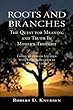
Roots and Branches - Robert D. Knudsen

Robert Knudsen
Roots and Branches: The Quest For Meaning And Truth In Modern Thought.
Edited by Donald Knudsen.
380 pp. ISBN 978-0-88815-206-0.
Reformational Publishing Project/ Paiedia Press, 2009.
http://www.amazon.com/asin/dp/088815206X
http://www.amazon.co.uk/asin/dp/088815206X

Reformational Publishing Project/ Paiedia Press are leading the way in getting reformational books into readers' hands at a great price. This is book comprises a series of articles by Robert Knudsen compiled by his son Donald. it also has an appreciative introduction from William Edgar.

The range and scope of the articles are testimony of Knudsen's wide areas of interest. Knudsen studied under Cornelius van Til and S. U. Zuidema. From 1958 he taught at Westminster theological Seminary where he taught apologetics and courses on Dooyeweerd's philosophy (for an outline of the syllabus see here), His main area of expertise was on existential theology (his Masters was on Tillich, Niehbuhr and Berdyaev). All three of these areas are reflected in this compilation.

CONTENTS

Foreword by Donald Knudsen

Introduction by William Edgar

PART I: THE ORIGINS OF CONTEMPORARY THOUGHT

"Calvinism as a Cultural Force," in John Calvin: His Influence in the Western World. W. Stanford Reid, editor. Grand Rapids: Zondervan, 1982, 13-29.

"Apologetics and History," in Life Is Religion. Henry Vander Groot, editor. St. Catherines: Paideia Press, 1981, 119-133.

"Roots of the New Theology," in Scripture and Confession. John Ski1ton, editor. Philadelphia: Presbyterian & Reformed, 1973, 247-273.

PART II: DISCUSSIONS ABOUT THEOLOGY AND APOLOGETICS

"Analysis of Theological Concepts: A Methodological Sketch," in Westminster Theological Journal. 40, Spring, 1978, 229-244.

"May We Use the Term Theonomy?" in Theonomy: A Reformed Critique. William S. Barker & W. Robert Godfrey, editors. Grand Rapids: Zondervan, 1990, 15-37.

"The Transcendental Perspective of Westminster's Apologetic," in Westminster Theological Journal. 48, Fall, 1986, 223-239.

"Progressive and Regressive Tendencies in Christian Apologetics," in Jerusalem and Athens. Robert Geehan, editor. Philadelphia: Presbyterian & Reformed, 1971, 275-298.

PART III: ANALYSES OF MODERN THEOLOGIANS

"Crosscurrents," in Westminster Theological Journal. 35, Spring, 1973, 303-314.

"Symbol and Reality in Nicolas Berdyaev," in Westminster Theological Journal. 24, November, 1961, 38-47.

"The Ambiguity of Human Autonomy and Freedom in the Thought of Paul Tillich," 4-part series in Philosophia Reformata. 32 (1967) 55-67, 33 (1968) 32-44, 34 (1969) 38-51, 37 (1972) 3-25.

"Transcendental Motives in Karl Jaspers' Philosophy," in Philosophia Reformata. 34 (1969) 122-133.

"Rudolf Bultmann," in Creative Minds in Contemporary Theology. Philip E. Hughes, editor. Grand Rapids: Eerdmans, 1966, 131-162.

PART IV: AN ASSESSMENT OF HERMAN DOOYEWEERD

"Transcendental Method in Dooyeweerd," in Anakainosis. 1/3, April, 1979, 2-8.

"The Religious Foundation of Dooyeweerd's Transcendental Method," in Contemporary Reflections on the Philosophy of Herman Dooyeweerd. D.F.M. Strauss and Michelle Botting, editors. Lewiston, Queenston, Lampter: Edwin Mellen Press, 2000, 271-285.

"Dooyeweerd's Philosophical Method," mimeographed lecture delivered at Annual Philosophy Conference, Wheaton College, Wheaton, IL, Oct. 13, 1962.

"Phiiosophia Reformanda: The Idea of Christian Scientific Endeavor in the Thought of Herman Dooyeweerd," in Reflections on the Philosophy of Herman Dooyeweerd. Mimeographed text, Westminster Theological Seminary, 1968.

BIBLIOGRAPHY

Bibliography Of The Writings Of Robert D. Knudsen, in Westminster Theological Journal. 58, Spring, 1996, 111-121.

Saturday, 20 February 2010

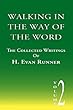
Walking in the Way of the Word - H. Evan Runner

Walking in the Way of the Word
The Collected Writings of H. Evan Runner Volume 2
Paidea Press, 2009
ISBN 0-88815-203-3
(Published by the Reformational Publishing Project)

This is volume 2 of the Collected works of H. Evan Runner; rather perversely it appears before volume 1! Runner was a professor of philosophy at Calvin College until his retirement in 1981. This collection comprises his two main books: The Relation of the Bible to Learning and Scriptural Religion and Political Task. Both have long been out of print, so it is great to see them available again.

Both these works originated as lectures in 1959 and 1961 at Unionville. They are stimulating and inspiring reading.


http://www.amazon.com/asin/dp/0888152035/
http://www.amazon.co.uk/asin/dp/0888152035/

Saturday, 13 February 2010

Review of Biblical Prophets and Contemporary Environmental Ethics by Marlow

Biblical Prophets and Contemporary Environmental Ethics
Re-Reading Amos, Hosea, and First Isaiah
Hilary Marlow
Oxford University Press, 2009
978-0-19-956905-2
338pp +xvi


Academic tomes have a tendency to be boring, inaccessible to non-specialists, without cultural relevance beyond the ivory tower and have unaesthetic covers. This book defies the stereotype in every way. Despite being the product of a Cambridge PhD, under Katherine Dell, it is readable, accessible, and will have an impact within and without the academia - and has a great cover to boot!

Hilary Marlow has been associated with most British evangelical organisations. She is a director of Director of the John Ray Initiative, has been involved with  A Rocha for over a decade, until recently she was a Research Associate in Theology and Science at the Faraday Institute, has written for the Jubilee Trust  and Grove Books and is at present involved in a project with the Kirby Laing Institute for Christian Ethics based at Tyndale House, Cambridge. She has also found time to complete her PhD and this book is the product of that.

The first chapter takes an overview of creation in church history, it is a broad brush view but is full of insight - I made a long list of further avenues to explore as a result of it. She starts - rather predictably - with Lynn White Jr's critique before looking at some theological perspectives on creation. This stems from the early church with its Greek influences to Calvin via the Cappodocians and Aquinas. She mentions that Irenaeus sees Adam typologically, but I'm not certain that this is a true picture.  Tony Lane argues that 'Irenaeus's theology is undermined more than most others by the suggestion of a non-historical Adam' (Darwin Creation and the Fall p. 141). This, of course is a minor quibble. 

She draws upon a number of important secondary sources including Glacken, Harrison, McGrath, Santmire.

Chapter 2 takes the historical perspective on from the sixteenth century. She looks at the divide between history and nature. Von Rad and Eichrodt are singled out for their Hegelian influences which allows them to set up a dualism of nature and history. Following Brueggeman, Marlow agrees that this led to an abandonment and marginalisation of serious thinking about the creation in biblical theology.

Two theologians helped to reverse this trend: Bernhard Anderson and Claus Westermann. As a result many others challenged the setting up of history over creation. Theodore Hiebert, Ronald Simkins and William Brown an three that Marlow briefly focuses on. She rightly notes that these three have helped towards a corrective reading of the Old Testament.

The developoment of an ecological hermeneutic is the subject of chapter 3. Here Norman Habel's Earth Bible Project (EBP) is examined. Taking a cue from feminist theologies the EBP stands with the oppressed Earth in dialogue with the text.

The emphasis on methodology and the methodoogy itself is criticised. As Marlow points out Bouma-Preideger comes up with a similar but more biblically robust set of guidelines. Following Christopher J. H.  Wright's hermeutical triangle God (Israel/humanity and Land/ earth) she forms an ecological triangle: God at the apex and a base of humanity and the non-human creation. It is the interrelationship between these three vertices that are examined in the next three chapters. Three important questions are also posed (p. 111):

1. What understanding of the non-human creation does the text present
2. What assumptions are made about YHWH's relationship to the created world and how he acts in it?
3. What effect do the actions  and choices of human beings have on the non-human creation and vice versa?

Chapters  4-6 look at Amos, Hosea and Is 1-39 in light of these questions and the ecological triangle.  She provides a detailed exegesis and analysis of key passages from these prophets. In Amos the non-human creation plays an important role, 'the natural world engages in a "dialogue" with its creator' (p 157). In Hosea it has less of a role and the emphasis is on God and humanity, but this relationship when broken does have a marked effect on the earth.  Finally, in Is 1-39 there is a link between humanity, God and the rest of creation in that 'natural' disaster is a consequence of disobedience to God and this broken relationship is shown in metaphors and parables of the natural world.

The final chapter looks at the implications of the foregoing for an environmental ethic. Here she starts by providing a broad overview on using the Bible in ethics. The issue of how we move from the scriptures to any ethic is problematic. I was suprised to read a criticism of  Walter Kaiser, she writes 'His study is based on a high view of biblical authority, and this theological perspective colours his selection and interpretation of texts' (p. 248).  All theological perspectives are coloured, theology is never neutral. It left me wondering what is Marlow's view of the authority of scripture and how has that has shaped her choice of passages?

She then turns to environmental ethics in particular. She looks at some key issues; including: what is the value ascribed to the non-human creation? Is it intrinsic or instrumental? Is nature a stable entiry or in flux? and the tension between nature and culture.  She concludes that the prophets recognise instrumental value but also give the non-human creation a value that is greater than any utilitarian one. She does not address the issue of how anything can have intrinsic value,  unless it is value given to it by God - and in which case it is not intrinsic. For the other issues she sees an ambiguity in the prophets.

Few other books have examined the Old Testament in the light of the current environemtal issues. Two other books are by Cyril Rodd Glimpses of a Strange Land  (T&T Clark, 2001) which deals with some individual texts and Chris Wright's Old Testament Ethics for the People of God (IVP, 2004) which takes a broad brush approach. Marlow's book is an example of how to interpret scripture in the light of contemporary issues and how to understand contemporary issues in the light of scripture. It shows that we have not exhausted the scriptures in what it can say to  environmental ethics. As Marlow concludes:

'it is vital that the church be better informed of the rich contribution of its own scriptures to a positive understanding of the creation as a basis for raising awareness of environmental issues and promoting good practice amiong its own members and the wider community'.

I wholeheartedly agree.


Contents
Foreword by John Barton
Introduction
1: Creation in Church History
2: Nature Versus History: An Artificial Divide
3: Ecological Hermeneutics: Meaning and Method
4: Who Can But Prophesy? Creation Dialogue in the Book of Amos
5: The People do not Know: Covenantal Failure in the Book of Hosea
6: The Vineyard of the Lord of Hosts: YHWH, the People and the Land in Isaiah 1-39
7: The Old Testament Prophets and Environmental Ethics: A Dialogue

Publisher's website


Available in the UK from:
amazon.co.uk
eden
book depository

Friday, 12 February 2010

Odds and sods

An illustrated Dooyeweerd? and here
This looks like an interesting book: The Making of an Atheist by Jim Spiegel [HT The Beretta Blog]
Reviews of Jacob Klapwijk's Purpose in the Living World? by Tony Jelsma and by Mark William Westmoreland
N T Wright for Everyone
An interview with Alvin Plantinga
The great Trinity debate coming soon - some resources

Thursday, 11 February 2010

Resources for a Christian approach to biology

Roy Clouser. 2001. Is Theism Compatible with Evolution?. In Intelligent Design Creationism and Its Critics: Philosophical, Theological, and Scientific Perspectives, Ed. Rob Pennock. (Cambridge: MIT Press, 2001), 513-536.

J. J. Duyvene De Wit. 1962.  ‘Organic Life and the evolutionistic world and life view’ Christian Perspectives 1962. Guardian Publishing Company: Hamilton, Ontario, Canada.

J. J. Duyvene De Wit. 1965. 'The Impact of Herman Dooyeweerd’s Christian Philosophy upon Present Day Biological Thought'. In Philosophy and Christianity: Philosophical Essays Dedicated to Professor Dr. Herman Dooyeweerd. W F De Gaay Fortman et al. (eds),  Kampen: J.H. Kok. pp 405-433.

J. J. Duyvene De Wit. 1965. A New Critique of the Transformist Principle in Evolutionary Biology. Kampen: J.H. Kok.


Richard Gunton. 2006. 'Reformational Perspectives on the Evolution Controversy' ReformationalUK blog.

E. L. Hebden Taylor. 1967.  Evolution and the Reformation of Biology: A Study of the Biological Thought of Herman Dooyeweerd of Amsterdam and J. J. Duyvene de Wit. Craig Press.


Russell Maatman. 1993. The Impact of Evolutionary Theory: A Christian View. Dordt: Dordt College Press, 1993.

Arthur J. Jones. 2002. 'The Identity and Nature of the Created Kinds – Speciation among Cichlid Fish'. Leicester: Genesis Agendum.

Jacob Klapwijk. 2008.  Purpose in the Living World?: Creation and Emergent Evolution, Cambridge: Cambridge University Press.

Jan Lever. 1958. Creation and Evolution, Grand Rapids: International Publications. (Translation of Creatie en Evolutie, Wageningen, 1956)

M. D. Stafleu. 'The Idionomy of Natural Kinds and the Biological Concept of a Species' Philosophia Reformata, 65 (2), (2000): 154-169.

M. D. Stafleu 'Evolution, History, and the Individual Character of a Person', Philosophia Reformata, 67 (1), 2002: 3-18

Danie F.M. Strauss. 2003.The “Copernican turn” of biology in the 20th Century. Acta Academica 35(3):49-76.

Danie F.M. Strauss. 200.  Did Darwin initially develop a theory of evolution in the biological sense of the word? South African Journal of Philosophy 26(2): 190-203

Danie F.M. Strauss. 200. Biotic analogies – a threat to scholarly reflection? Acta Academica 28(3): 29-5

Danie F.M. Strauss. 2001. The Effect of Ultimate Commitments on the Content of the Natural Sciences – with special Reference to Biology as a Discipline. Journal for Christian Scholarship 37 :89-105.

Danie F.M. Strauss. 2009. Did Darwin get over the First Hurdle? (lacking evidence for the assumed origination of “life”) Journal for Christian Scholarship 45 (3): 1-32.

Danie F.M. Strauss. 2009. Did Darwin get over the Second Hurdle? (the problem of constancy amidst change), 2009  Journal for Christian Scholarship 45 (3): 77-95
Sytse Strijbos. 1996. 'The Concept of the ‘Open System’ – Another Machine Metaphor for the Organism?'. In Facets of Faith and Science. Vol. 3, The Role of Beliefs in the Natural Sciences Ed. J. Van der Meer. Lanham: University Press of America , Ch 10.

Sytse Strijbos. 1996. 'The Concept of Hierarchy in Contemporary Systems Thinking – a Key to Overcoming Reductionism?'. In Facets of Faith and Science. Vol. 3, The Role of Beliefs in the Natural Sciences. J. Van der Meer (ed.), Lanham: University Press of America, Ch 14.


Magnus Verbrugge. 1984. Alive: An Enquiry into The Origin and Meaning of Life, Vallecito, California: Ross House Books, 1984, pages xviii, 139

Magnus Verbrugge. 1979.  Evolution and the biotic aspect of reality Anakainosis 2 (1) September: 2-7

Uko Zylstra. 1981. ‘Dooyeweerd’s concept of classification in biology’. In Life is Religion: Essays in Honor of H. Evan Runner. Paideia: St Catherine’s.

Uko Zylstra. 1992. Living Things as Hierarchically Organised Structures. Synthese 99:  111-13

Uko Zylstra. 1996. The Influence of Evolutionary Biology on Hierarchical Theory in Biology, with Special Reference to the Problem of Individuality, in Facets of Faith and Science,vol. 2, The Role of Beliefs in Mathematics and the Natural Sciences: An Augustinian Perspective Ed. J. Van der Meer, Lanham: University Press of America. Ch 13,

Uko Zylstra. 2004. Intelligent-Design Theory: An Argument for Biotic Laws. Zygon, 39 (1); 175-191

Tuesday, 2 February 2010

New on my Google Reader RSS feed

These are blogs I've recenlty subscribed to using  Google reader.

+ Science and values
A newish blog by "A group of Christian theologians and scientists concerned about truth and values in science and society."

Old Testament ethics
This is the webpage for the “Old Testament Ethics:  Principles of Living for the People of God” adult learning community at Cornerstone Christian Church.

Sandhedsvidne: 'witness to the truth'
Blog by Angelo Shoun Franklin for Prague

Jazz Notes by Doug Groothius
A reflection on jazz, the universe and life

Teaching Redemptively
A reflection on grace-based education

Crime genre by J Mark Bertrand
Meditations on a life of crime by Rethinking Worldview and Back on Murder author

Monday, 1 February 2010

Odds and sods

Mike Wittmer on evangelical philosophers
Calvinism for the 21st century a Conference at Dordt College (8-10 April 2010)
A list of CPYU Bookshelf interviews including J Mark Bertrand and Jim Belcher
Gabe Lyons via Bob Robinson on Influencing culture
Reviews and interviews: DTK [Desiring the Kingdom by Jamie Smith] around the web


Thursday, 28 January 2010

A bibliography on a Christian approach to sport


updated 22 Sept 2018.

John Byl and Tom Visker Physical education, sport and wellness. Sioux Center, IA : Dordt College Press, 1999.

Contents: 
  • The Bible and the body: a Biblical perspective on health and physical education / John Cooper
  • The Incarnation and the flesh / Bud Williams
  • Somatospiritual model: a biomechanist looks at the Bible / Brian W. Bergemann
  • Transforming wellness: linking spiritual concepts to personal health / Timothy J. Voss
  • Spirituality and wellness: student perspectives / John Byl
  • Attitudes of member institutions of the Coalition for Christian Colleges and Universities (USA) towards required health and fitness courses in the core curriculum / Allison J. McFarland
  • Developing an aim-centered K-12 physical education program based on Christian tenets / Marvin A. Zuidema
  • Leadership theory as it applies to academic work / Beth A. Easter and Dale E. Gibson
  • Sport education: more necessary than ever / James Timmer, Sr.
  • Intentional integration of scripture into the study of sport sociology / Allison J. McFarland
  • Christian sports and leisure: oxymoron or redundancy? / Carl E. Zylstra
  • We coach "Play the whistle" but what happens when the whistle breaks? / Gregory Gidman and David Turkington
  • Sport ethics via Thoreau / Douglas Hochstetler
  • A reflection on the moral value of interscholastic athletes / Calvin P. Van Reken
  • Pressure to win? But I'm a Christian coach at a Christian college / Karol Hunt
  • Moral reasoning: what is it and how it is best accomplished in the classroom and gymnasium / Sharon K. Stoll
  • The effects of religiosity, education and experience on the moral reasoning levels of NCAA division III male head athletic directors / James R. Timmer, Jr.
  • Senior student's perspectives on physical education and sport / Murray W. Hall
  • Calvinism and Mennonites :a pilot study on SPEPHERDing Christianity and sport in Canada / John Byl
  • A contrast between physical activity in the early church and muscular Christianity: what implications does this have for the 21st century? / Dale E. Campbell.

P Heintzman, G A van Andel and Tom Visker 1994. Christianity and Leisure: Issues in a Pluralistic Society. Sioux Center, IA: Dordt College Press


ContentsSection One: Biblical and historical perspective
  • Work and play: a Biblical perspective / Robert K. Johnston
  • Implications for leisure from a review of the Biblical concepts of Sabbath and rest / Paul Heintzman
  • The Puritan ethic and Christian leisure for today / Leland Ryken

Section Two: Methodological issues
  • Toward a Christian perspective in the leisure sciences / Gordon Spykman
  • Leisure science, dominant paradigms, and philosophy: the expansion of leisure science's horizon / Paul Heintzman

Section Three: Present practices and challenges in leisure
  • Whatever happened to the leisure revolution? / Gordon Dahl
  • Leisure and the New Age movement / Glen E. Van Andel
  • Contemplative leisure within Christian spirituality / Joseph D. Teaff
  • Leisure at L'Arche: communities of faith for persons with developmental disabilities / Cathy O'Keefe
  • Unless someone like you cares a whole awful lot / Don DeGraaf

Section Four: Play, sport, and athletics
  • Sport, play, and leisure in the Christian experience / Shirl J. Hoffman
  • Coming to terms with play, game, sport and athletics / John Byl
  • Play, game, and sport in a Reformed, Biblical worldview / Tom Visker
  • Atheletics from a Christian perspective / Marvin A. Zuidema
  • Towards an understanding of 'muscular Christianity': religion, sport, and culture in the modern world / James A. Mathisen
  • Competition in Church sport leagues / Kimberly A. Keller, Gary H. Naylor, and David R. Stirling
  • Christian ethics in North American sport / Murray W. Hall

Section Five: Leisure and culture
  • From the Super Bowl to worship: the roles of story in work and leisure / Quentin J. Schultze
  • From faith to fun: humor as invisible religion / Russell Heddendorf
  • Leisure, drama, and Christianity / Gwen Laurie Wright.

Brian Bolt. 2018. Sport, Faith, Life. Grand Rapids, MI: Calvin Shorts.

Robert Ellis 2014. The Games People Play: Theology, Religion, and Sport. Cambridge: Lutterworth Press.

P Heintzman, G A van Andel Christianity & Leisure II: Issues for the twenty-first century. Sioux Centre, IA: Dordt College Press.

Lincoln Harvey 2014. A Brief Theology of Sport. London: SCM.


Shirl James Hoffman 2010.  Good Game: Christianity and the Culture of Sports. Waco, Texas: Baylor University Press

Robert K. Johnston 1997. The Christian at Play. Grand Rapids: Eerdmans.

Jim Parry, Mark Nesti and  Nick Watson 2013. Theology, Ethics and Transcendence in Sports (Routledge Research in Sport, Culture and Society). London: Routledge.

Clifford Putney 2003. Muscular Christianity: Manhood and Sports in Protestant America, 1880-1920. Harvard: Harvard University Press.
Mark Roques. 2003.  Fields of God: Football and the Kingdom of God  Carlisle: Authentic.

B J van der Walt. 2007. 'Spotlight on sport: a Christian-worldviewish philosophical reflection'. Transforming Power. Potchefstroom: ICCA, ch 13

Tom Visker 2002. Just do it right: the experience of shalom in sport participation. Pro Rege 30:17-21.

Tom Visker 1992-93. Sports participation in a Reformed biblical worldview Christian Educators Journal 32 (Dec 92/ Jan 93): 6-7 and 18-19.

T. L. Visker & S. J. Hoffman.1999  Leisure, Play, Game and Sport in a Christian Perspective Dordt College Press.

Nick J. Watson and Andrew Parker (eds.) 2015. Sports and Christianity: Historical and Contemporary Perspectives (Routledge Research in Sport, Culture and Society). London: Routledge.

Nick J. Watson and Andrew Parker. 2014. Sport and the Christian Religion: A Systematic Review of Literature. Newcastle: Cambridge Scholars Press.

D F M Strauss. 2005. Philosophical Perspectives on Leisure, Play and Sport. In: Relativity and relativism: historical and systematic considerations. In: Acta Academica Supplementum. 2005(2):199-231 Journal for Christian Scholarship, Year 40, 4th Quarter (pp.149-168)


Useful websites:


Sunday, 24 January 2010

Jack Dee on the CofE

"The Church of England for me had always been like an elderly relative that I felt I should visit from time to time."
Jack Dee Thanks for Nothing Doubleday: London , 2009, p. 167.

Music for a Sunday morning

Monday, 18 January 2010

Jesus is coming: plant a tree

Slides for my talk below

The return of Jesus: plant trees!

What would you be doing now if you knew Jesus was coming tomorrow?

Luther, when asked a similar question said: "I would plant a tree today."

Why would he want to do that?

Will what we do now make a difference after Jesus has returned?

If it does then planting a tree is important.

Our role as image bearers of God is not to populate heaven!

If it was all we would have to do is get someone to pray the sinners prayer and then kill them.

The Bible is clear Jesus is returning. How do we then behave? How do we then respond? Does it matter what we think about Jesus’ return? Eschatology, the study of the end times, is it important?

For many the idea is that we are waiting around on an earth which is a training ground for eternity, waiting for Jesus to come and whisk us away so that we can be with him in a mansion in heaven. The earth will be destroyed, time will end and we will be in heaven for ever.

That view has nothing to do with the Bible - it is a reading into the Bible of pagan Greek ideas. It is wrong on nearly every single point!

Eschatology does affect what we do now. It affects the priority we place on culture, business, politics, science and so on.

In the passage we had read (2Pe 3) Peter writes:

1 Dear friends, this is now my second letter to you. I have written both of them as reminders to stimulate you to wholesome thinking.

Wholesome thinking - thinking is important. How do we renew our minds? - part of the answer is given here: “I have written...”: the scriptures. We need to soak and marinade in the scriptures, then our minds can be renewed, become wholesome. Like a jazz musician we will then be able to improvise and develop ideas in the way they were intended to go.

Peter goes on in verse 2

2 I want you to recall the words spoken in the past by the holy prophets and the command given by our Lord and Savior through your apostles.

There are 31,124 verses in the Old and New Testaments, and of these 8,352 are predictive prophecy, almost one third! In fact only four biblical books contain no predictive prophecies: Ruth, Song of Songs, Philemon and 3 John. The emphasis in the scriptures on prophecy is itself justification enough to study it and the end times.

When it comes to theology and eschatology in particular many Christians complain that there are too many terms to understand; and yet we can walk into the Coffee shop and order a coffee - what's going on? expresso, frappacino, baby cino, latte, americano, skinny, how many terms do we have to get our minds around to get a cup of coffee?

So, rather than look at coffee terms, most of which I suspect you will all know I want to look at some theological terms. If we order a coffee we can do theology.

There are four main views regarding theology. All centre around what’s been called the millennium - a period of a 1000 years mentioned in Rev 20.

2. Millennial views (see slides)

A key question is: What about culture? How much will make it in at the return of Jesus.

Does planting a tree now have any lasting influence when Jesus returns. Does it matter what job we do as long as we evangelise and practice singing in church for heaven?

What will be the fate of the earth? Will art, science, poetry, commerce make it into the new earth?

There are two apparently opposing views:

Annihilation or transformation

Discontinuity or continuity.

Renewal or destruction

There are a number of verses that suggest destruction and a number that suggest renewal.

In this passage Peter describes the return of Jesus as the earth being destroyed. The writer to the Hebrews, echoing the psalmist, talks about the earth and heavens perishing and being rolled up like a garment, and Jesus says that heaven and earth will pass away.”

On the other hand we have Romans 8 suggesting a liberation not a destruction.

19The creation waits in eager expectation for the sons of God to be revealed. 20For the creation was subjected to frustration, not by its own choice, but by the will of the one who subjected it, in hope 21that the creation itself will be liberated from its bondage to decay and brought into the glorious freedom of the children of God.

Acts 3: 19-21 restoration of all things apokatastastaseos panton suggest at Christ's return the creation will be restored to its original perfection.

He must remain in heaven until the time comes for God to restore everything, as he promised long ago through his holy prophets.

How do we reconcile these conflicting accounts? Is it restoration or destruction?

In many ways the scriptures can sometimes be like those 3D images - to make the image 3D each eye must see something slightly different, when these are then re-focused a new image appears. We have to take these conflicting images and refocus them.

The first thing we need to remember is that these passages may not necessarily have to be taken literally; they may well be metaphors to describe the catastrophic and cataclysmic event the return of Jesus will be.

Let us examine three passages that talk about an apparent destruction of the earth.

(i) Matthew 24:35: ‘heavens and earth will pass away’ (cf Mk 13:31; Lk 21:33).

35Heaven and earth will pass away, but my words will never pass away.

The Greek word ‘pass away’ is the same word that occurs in 2 Corinthians 5:17, where Paul describes the person in Christ as a new creation, saying ‘the old has gone’ (literally passed away). This implies not total destruction but transformation. Hence we could legitimately paraphrase Jesus as saying ‘heaven and earth will be transformed but my word never changes’.

(ii) Hebrews 1:12

"In the beginning, O Lord, you laid the foundations of the earth,
and the heavens are the work of your hands.
11They will perish, but you remain;
they will all wear out like a garment.
12You will roll them up like a robe;
like a garment they will be changed.
But you remain the same,
and your years will never end.

The word translated as ‘changed’ in v12 is the same word is used in 1 Corinthians 15:51 and 52. Here the context is the resurrection of believers: ‘we will all be changed’. Yet again the meaning can be understood as transformation. When we receive resurrection bodies we shall not be destroyed but changed or transformed; in the same way the earth will be transformed.

Now we come to this tricky passage.

(iii) 2 Peter 3:10

The heavens will disappear with a roar; the elements will be destroyed by fire, and the earth and everything in it will be laid bare.

The KJV has “the earth also and the works that are therein shall be burned up

This was a translation of a word (katakaēsetai) from one particular manuscript (Textus Receptus) version of the passage- recent discoveries have found that a more accurate version of the original (Codex Sinaticus and Codex Vaticanus) comes from a different Greek word (heurethēsetai) meaning: ‘will be found’. The emphasis is not on destruction but on disclosure.

The context here is Noah’s flood. The water purified the earth, the water removed not Noah and his family but evil and the wicked. In the same way fire is used time and again in the scriptures to denote a purification. In fact the language used here is a metallurgical one - the purification of metals by fire. Fire doesn’t destroy the metal it purifies it. So, the new earth will be disclosed, transformed, purified and redeemed.

Jesus’ return then will mean some massive changes – there will be a judgment. However, the earth won’t be destroyed. It will be changed in a similar to which our bodies will be changed, but we will still be us and the earth will still be the earth, albeit a new and redeemed earth.

So, how does that affect what we do now? Should we be planting trees?

It’s interesting to note that in Rev 21 a brilliant description of the new heaven and earth. The imagery isn’t us going to heaven but heaven coming to earth. [Incidentally do you know how many times the phrase ‘going to heaven’ (or similar) is used in the scriptures? None!]

But in verse 24:

The nations will walk by its light, and the kings of the earth will bring their spleandour into it. .. the glory and honour of the nations will be brought into it.

And in Is 60 – the imagery which Revelation has borrowed:

3 Nations will come to your light,
and kings to the brightness of your dawn.

9 Surely the islands look to me;
in the lead are the ships of Tarshish,
bringing your sons from afar,
with their silver and gold,
to the honor of the LORD your God,
the Holy One of Israel,
for he has endowed you with splendor.

10 "Foreigners will rebuild your walls,
and their kings will serve you.
Though in anger I struck you,
in favor I will show you compassion.

11 Your gates will always stand open,
they will never be shut, day or night,
so that men may bring you the wealth of the nations—
their kings led in triumphal procession.

What are these ships of Tarshish? They were large trading ships – why are they here in the holy city, the new Jerusalem?

They were the objects of God’s wrath in Is 23 and yet they appear here.

Richard Mouw writes:

My own impression is that the judgement that will visit the ships of Tarshish is of a purifying sort. We might think here of the ‘breaking’ of the ships of Tarshish as more like the breaking of a horse rather than the breaking of a vase. The judgment here is meant to tame, not destroy. The ships of Tarshish will be harnessed for service in the Holy city – a process that will require a ‘breaking’ of sorts.

The ships of Tarshish represent pagan commerce and yet they seem to under go a purging and appear in the new Jerusalem.

In the same way all our acts will also undergo a breaking, a purifying. Culture will be transformed and be a part of the new earth. What we do now has eternal consequences.

Some of you may be thinking: nothing matters but the kingdom – and by that you think of prayer, worship, Bible study, personal piety and so on. But God would say, because of the kingdom everything matters! Art, history, poetry, wiork, science, business – everything matters.

There was once an engineer – he wanted to be Christian in all that he did. He was accurate in all his measurements, he worked hard, never stole from work, even bought his own paperclips, when he photocopied his own things – he worked extra to cover the costs, he shared his faith with his co-workers. It wasn’t until later he realized he’d been helping build the Tower of Babel.

Nothing matter but the kingdom – but because of the kingdom everything matters.

So, if Jesus were to return tomorrow what would you do tonight? Let’s plant trees!

Trees of culture, commerce, politics, art, …. It matters.

Our original mandate was to fill the earth – that includes a cultural filling.

Jesus is coming – plant trees!

Friday, 15 January 2010

Practical ethics


Practical Ethics  is a useful resource - it provides, as the title suggests, an ethical perspective on the news.

Sunday, 10 January 2010

Music for a Sunday evening


World Christianity Quiz

Courtesy of The International Bulletin of Missionary Research:

World Christianity Quiz

1. Total number of denominations worldwide

2. Percentage of the world’s 6.6 billion people who call themselves “Christian”

3. Ratio of “white” to “non-white”Christians

4. Number of evangelical Christians in the world

5. Number of languages worldwide with a portion of Scripture translated

6. Number of women in full-time Christian ministry serving around the world

7. Total number of Christian foreign missionaries currently deployed worldwide

8. The six countries that receive the greatest number of foreign missionaries

9. Number of Roman Catholic parishes in Africa and in Europe (in 2004)

10. Number of Africans who are serving as foreign missionaries on other continents


Answers here.

You can get a free on-line subscription to the journal here.


Thursday, 7 January 2010

Football and faith?

What role should religion have in football? The BBC's World Service programme Heart and Soul takes a look. 16 mins or so into the programme WYSOCS' Mark Roques is interviewed. Mark, author of Fields of God, makes a great case for football as an expression of the glory of God: football can be redeemed. Playing football is part of the good creation.


The programme can be heard here.

Here's the Colombian goalkeeper, Rene Higuita's scorpion kick Mark mentioned.


Wednesday, 23 December 2009

My best books of 2009

It's that time of year again - the time to compile 'best of' lists. I was thinking of my best books of 2009 and most of them weren't published in 2009. I'm a bit slow catching up with my reading - and then along came a whole tranche of excellent books towards the end of the year. So, my best books, in no particular order:

Jim Belcher Deep Church
Jamie K A Smith Desiring the Kingdom
Mike Goheen and Erin Glanville (eds) Exploring the Religious Roots of a Globalized World
B J van der Walt At Home in God's World
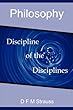
Danie Strauss Philosophy: Discipline of Disciplines
Robert Knudsen Roots and Branches: The Quest for Meaning
H. Evan Runner Walking in the way of the Word
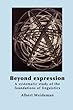
Albert Weideman Beyond Expression
Egbert Schuurman Technology and the Future
Willem Ouweneel Heart and Soul


Here are my best books of 2008

Thursday, 17 December 2009

WYSOCS AGM, globalisation and Newbigin

We had a great time at the WYSOCS AGM last Saturday.

Mike Goheen spoke three times over the weekend. The first session was on globalisation. He took a refreshing approach.   Globalisation is the outworking of the cultural mandate, to spread out spatially and globally - however, it has become distorted and misdirected. It has become shaped by economic idolatry. It has deep religious roots that can't be ignored.

His second session was on Newbigin and his desire for the 'laity' to fulfill their cultural callings. This session crystalised a numebr of key themes for me, discipleship, mission and worldview. Below are some of my notes for this session.

Unfortunately, I missed the third session on Sunday evening.


A neglected area of congregational life Newbigin's plea for training Christian for their cultural callings

Newbigin's understanding of mission

Mission: all of life bears witness to the gospel. Jn 20:21
God's people are a sent people - we can distinguish certain aspects
  • Evangelism as words
  • Deeds, mercy and justice
  • Missions
  • Various callings in culture

The latter he saw as the primary witness.

It's not (just)
  • Evangelism at work
  • Personal ethics - don't steal rubber bands; don't cheat on taxes; don't commit adultery with your secretary etc.
It is:
  • Living out God's creational intent for those areas of creational life

It's the primary witness, but it is the most neglected. It is also one of the hardest things to put into effect.

The church “must equip its members for active and informed participation in the public life of society in such a way that the Christian faith shapes that participation” (Newbigin Public Truth).


". . . a farmer who farms his land but neglects to say his prayers will be certainly condemned by Christians as failing in his duty. But a farmer who says his prayers, and allows weeds, bad drainage, or soil erosion to spoil his land, is failing in his primary duty as a churchman. His primary ministry in the total life of the body of Christ is to care rightly for the land entrusted to him. If he fails there, he fails in his primary Christian task"  (Newbigin 1952 The Christian Layman in the world and in the Church).

How can we do it?


Formation of structures that equip for callings
  • Study centre
  • Conferences
  • Frontier groups
  • Leadership that enables training folk for their callings

Tuesday, 8 December 2009

Lesslie Newbigin 1909-1998

Apparently today is the centenary of the birth of Lesslie Newbigin. To celebrate the fact Lawrence Osborn of Theosblog has posted an appreciation.

Robert Bradshaw has recently been adding pdfs of the journal Reformation & Revival. Recently added are two contributions from Mike Goheen - both not unrelated to Newbiggin:

Michael W. Goheen, "The Legacy of Lesslie Newbigin for Today," Reformation & Revival 14.3 (2005): 49-63.

Michael W. Goheen, "A Missionart Encounter with Western Culture," Reformation & Revival 15.1 (2006): 155-171.

Mike is at WYSOCS this weekend.

Saturday 12th December, 10am - 2pm

The Religious and Historical Roots of Globalisation

This Lecture is scheduled as part 2 of the WYSOCS Charity’s AGM event. The AGM is part 1 and Lunch is part 3. All are welcome.


Saturday 12th December, at 7 for 8pm

A Neglected Aspect of Congregational Care: Newbigin's Plea for Training Laity for their Cultural Callings

Dessert and Coffee will be served from 7pm.
Clergy, elders and deacons especially welcome!


Sunday 13th December, at 8pm

Reading the Bible as One Story

A light supper will be served at the end of the evening.
Students especially welcome.


Venue: Outwood House, Outwood Lane, Horsforth, Leeds.


Monday, 7 December 2009

Creation out of Nothing by Copan and Lane Craig


Creation out of Nothing: a Biblical, Philosophical and Scientific Exploration
Paul Copan and William Lane Craig

Leicester/ Grand Rapids: Apollos/ Baker Academic, 2004. 280pp. pb.
£14.99 ISBN 1-84474-038-2

Creatio ex nihilo (creation out of nothing) is an important doctrine that has come under fire in recent decades from theologians such as Gerhard May and scientist-theologians such as Ian Barbour. May contends that creation ex nihilo is biblically ambiguous and that it was a second-century response to Gnostic ideas; Barbour rejects it in favour of an absolute dependence of the universe on God.

It is in response to these ideas that Copan and Craig have teamed up to write this inter-disciplinary book. They show that creation out of nothing is biblical, and scientifically and philosophically grounded. They don’t explore the rich theological implications of creatio ex nihilo but do show that there is a very strong cumulative case for the doctrine and contra May it is a thoroughly biblical one.

The first three chapters explore the Old Testament, the New Testament and much of the extra-biblical evidence. At times these chapters read like a rich mosaic of commentators, but the conclusion in each one is that creation out of nothing is not a second-century invention; it is implicit in both testaments as well as explicit in the Jewish and early Christian writings.

The second half of the book (chapters 4-8) deals with scientific and philosophical arguments. Chapter 5 exposes the error that many – such as Barbour – make in conflating conservation and creation: ‘Creation is distinct from conservation in that creation does not presuppose a patient entity but involves God’s bringing something into being’ (165).

Chapter 5 explores the problem of the creation of abstract objects such as mathematics concepts. They examine three possible solutions: absolute creationism (which seems to be anything but absolute!), fictionalism and conceptualism. They conclude that much creative work is being done and still remains to be done on this issue; hence, they are not prepared to pronounce judgment over which solution is the most plausible. (I’m tempted to say none of the three they mention!)

The impossibility of an infinite past is explored in Chapter 6. Chapter 7 examines two broad lines of scientific evidence that the universe is not eternal and that it had an origin a finite time ago. The first of these evidences is the expansion of the universe and the standard big bang model of creation; the second, thermodynamics.

The final chapter examines naturalistic alternatives to creation ex nihilo; namely, that the universe created itself and that the universe sprung into existence uncaused out of nothing. Here they ably show the fallacious nature of these arguments.

One need not agree with all their arguments, but Copan and Craig have provided an excellent, inter-disciplinary and timely cumulative case for creatio ex nihilo.


Review originally published in Science and Christian Belief  18(1) (2006)

Thursday, 3 December 2009

Darwin, Creation and the Fall: epilogue

DCF Epilogue

Epilogue: the sea of faith – Darwin didn’t drain it R. J. Berry and T. A. Noble

Taking a metaphor from Matthew Arnold's 'On Dover Beach' and popularised by Don Cupitt, Berry and Noble maintain that faith is still unscathed by Darwin's ideas. This book is an attempt to show that. Even tricky doctrines like the fall and Adam and Eve can be salvaged in the light of Darwin.  But I wonder at what cost?

The strength of this book is that within a narrow range we have diverse views. Some see the fall as a cosmic event, others as an an event without cosmic implications, but an event in time nonetheless. Adam has different roles, for Blocher he is an historic person, for others they 'cannot rule out the existence of a historic Adam'. For some Adam is the ancestor of us all for others he is a federal head. However, this range of views is a weakness of the book. There is sadly no discussion and critique of each other's views. There is no attempt ot come to a consensus.

Throughout the book the views of Patricia Williams and Christopher Southgate are briefly mentioned and critiqued. Their shadow is felt.  It would I would have liked to have seen a fuller engagement with their work. Next to Darwin and Augustine, their names occur most often in the index. And it is their work that has most recently outlined the evolutionary challenge to a traditional Christian theology of the fall.  Williams dismisses it and rewrites theology, whereas Southgate rejects a historical fall as being a 'spurious reading', a general condition rather than a chronological event.

The unexpressed presupposition is that Darwin was largely right and evolution is correct. However, they don't express which view of evolution they adhere to. There is no clear scientific consensus; we have a wide range of views from naturalistic evolutionism (which obviously they dissent from) to theistic evolution. However, which form of theistic evolution do they accept? Is it a form of structuralism, cladism, punctuated equilbrium, neo-Darwinism or what? How does God work through evolutionary chance(?) processes?  Though, to be fair, to address this would mean another book.

It doesn't really fully address the issue of pain and suffering prior to the fall. How are we to reconcile that with the God of the scriptures?  This remains an unanswered question.

Nevertheless, this book provides much food for thought. It will help all those who accept an evolutionary framework attempt to reconcile the fall with evolution.