An accidental blog

"If God is sovereign, then his lordship must extend over all of life, and it cannot be restricted to the walls of the church or within the Christian orbit." Abraham Kuyper Common Grace 1.1.

Saturday, 21 November 2020

A Short Introduction to Abraham Kuyper’s Lectures on Calvinism By Jesse Sumpter


Jesse Sumpter is a Classical school educator based in Moscow, Idaho. In this brief - 48 page - introduction to Kuyper’s Stone Lectures he begins by identifying three of Kuyper’s “key ideas”. These he identifies as the lordship of Jesus; Calvinism as life system; and spheres of authority. 

The remaining chapters in this booklet then follow each of Kuyper’s lectures. Sumpter provides a summary of each one and provides copious quotes from each lecture. 

The book provides an entry-level introduction to the lectures and would be helpful for those who haven’t as yet read Kuyper’s lectures.


Friday, 20 November 2020

Fashion Theology - a brief review


 Fashion Theology

Robert Covolo

Waco Texas: Baylor University Press.


ISBN 978-1-4813-1273-8

Hbk, xiv + 200 pp


This book is a wonderful, nuanced discussion of the relationship between fashion and theology. Covolo shows that fashion is not independent of theology. Theologians have not been as silent about fashion, as has often been supposed, and their discussions go beyond accusations of fashion being trivial and being about vanity. Those discussed include Tertullian, Augustine, Aquinas, Calvin, Kuyper and Barth.


In these excavations of theological discourse and 


fashion theory Covolo identifies several interesting interrelations. Fashion theology is much more than fig leaves!

Saturday, 31 October 2020

Mike Wagenman discusses Kuyper at the Layman’s Lounge


Mike Wagenman discusses Kuyper on the Layman’s Lounge podcast here
It’s well worth checking out.

Friday, 23 October 2020

Review of Toxel’s What is Man?


What is Man?
Basics of the Faith
A. Craig Troxel
Philipsburg, NJ: P&R Publishing
Pbk, 36pp, £3.99
ISBN 978-1-59638-166-7


This is a brief introduction to biblical anthropology and is part of the rapidly increasing series on the Basics of Faith from P&R Publishing. Troxel is a professor of systematic theology at Westminster Theological Seminary in Philadelphia and is the author of a fuller book on the subject With all Your Heart. 

The strength of this book is that it begins with humans made in the image of God. He sees humans as a unity of body and soul and espouses a holistic dualism. He provides good arguments for the rejection of the trichotomous views (ie body, soul and spirit). 

He then moves in briefly to discuss the heart: “the Bible’s principal word to describe humanity’ inner self”. 

The central core of the booklet then utilises Thomas Manton’s notion of the fourfold state of man: man in a state of innocence, in the state of sin, in the state of grace, and in the state of glory. 

This is a useful introduction to a holistic dualism - even if I don’t fully agree with some of his points. I look forward to reading his fuller treatment of the human heart.


Thursday, 22 October 2020

Bartholomew’s review of Reformed Theology & Evolutionary Theory

 Craig Bartholomew reviews Gijsbert van den Brink’s Reformed Theology & Evolutionary Theory at Sapienta


Bartholomew concludes:

I am grateful to van den Brink for his stimulating work. My own hunch is that there is more potential conflict between evolution and the biblical metanarrative than the author thinks. I am not a creationist but am reluctant to diminish the primary authority of Scripture as the lens through which we read and interpret the world, including science. I side with Bavinck and Kuyper in thinking that Christian faith needs to be fully engaged in the practice of science, rather than being kept separate from science, as van den Brink suggests. I take comfort from the fact that Christians need not put all their eggs in one basket but have various possibilities open to them on the question of origins. My sense is that the above issues need to be attended to in detail as part of our quest for the truth of evolution.

Friday, 25 September 2020

Adventures in the Kuyper archive

 Jasmijn Vervloet, curator of the Protestant Heritage collections at the VU Amsterdam, is embarking on an adventure in the Kuyper archive to gain a better understanding of Abraham Kuyper, the founder of VU Amsterdam.

Details here.


Thursday, 24 September 2020

Square-inch.net

 Henry De Jong has created a website to celebrate the 50th anniversary of the AACS/ Institute for Christian Studies Niagara conferences. The site is full of photographs, reminiscences, interviews, YouTube clips and more. https://square-inch.net/


He has an article in the Christian Courier "A Legacy of Learning: Institute for Christian Studies Marks Milestoneexplaining the project.


Friday, 18 September 2020

Review of Kuyper's On Education

 Stiemsma, Shaun (2020) "The Presence of the Past: A Review of Abraham Kuyper's On Education," Pro Rege 49(1): 43 - 47.  Available at: https://digitalcollections.dordt.edu/pro_rege/vol49/iss1/8


Wednesday, 26 August 2020

Popma's Scriptural Reflections on History - out soon

 K.J. Poma's Scriptural Reflections on History translated by Harry van Dyke is soon to be published by Wordbridge publishing.


Full detail are here.

Friday, 10 July 2020

Iron sharpens Iron (ISI) - a ThinkingFaithNetwork initiative


Iron sharpens Iron (ISI) is all about sharpening up as a disciple of Jesus Christ. We are inspired by Proverbs 27:17 “As iron sharpens iron, so one person sharpens another.”

ISI is sponsored by LifeMatters, part of the ThinkingFaithNetwork, based in Leeds. It is completely free and open to anyone.
We are now living in a confusing, post-Christian society.
Today the vast majority of British people are secular. Secular people live as if there is no God and everything is just physical. Secular people have no fear of God and the pagan gods. Their horizons of happiness are thoroughly secular and materialistic. For some the focus is on watching football, drinking lager and watching television. For others it's opera, sophisticated chitchat and poetry. All this without any reference to God and His kingdom.

How should we as disciples of Jesus Christ respond to our post-Christian culture. Should we bury our heads in the sand and ignore it or do we sharpen up as disciples and engage with our complicated and challenging world?

ISI meets every fourth Friday of the month and our speakers present a short talk and then we discuss the topic in hand. We want everyone to contribute to the discussion. We encourage heated debate. We want to learn from each other so we can bear fruit for Jesus Christ, the Lord of heaven and earth. We are now meeting by zoom.

So far we have looked at the following issues:

  • A Christian response to the New Age
  • A Christian perspective on business
  • A Christian discussion about Mafia hitmen and evil
  • A Christian reflection on the pervasive impact of secularism
  • A Christian framework for God’s kingdom and public life
  • A Christian response to Covid-19
  • A Christian discussion about serving God in engineering


If you would like to know more about ISI, when and where we meet, contact the convenor of the group Mark Roques.  
mark@realitybites.org.uk

Thursday, 25 June 2020

Interview with Chris Gousmett of Thumbwidth Press

Chris Gousmett (Dunedin, New Zealand) is a retired information manager, having worked in that field in various government agencies. He has a PhD in historical theology, with a thesis on the relationship of anthropology and eschatology in the Church Fathers. He is now active in research and writing in Biblical studies, theology and philosophy, and translation of Dutch material into English.

He has recently established an e-book publishing venture to make new Reformational literature available, as well as re-issuing Reformational books now out of print. He is on twitter @chrisgousmett


Chris was kind enough to answer some of my questions.


Who or what are your key influences?
I suppose the most influential period was when I was at the Institute for Christian Studies in Toronto in the mid-1908s, where I completed a Master’s degree in philosophical theology. There I had the privilege of studying with Al Wolters, George Vandervelde and Bernie Zylstra, as well as with other staff, including Jim Olthius who was my thesis supervisor.

I suppose I was closest in thinking to Bernie, Al and George than to Jim, but one strong influence from Jim was the importance of anthropology (theory of the human person) for Christian thinking in every field. That has one way or another been part of most of my research projects ever since, most notably in my PhD thesis at Otago University, New Zealand, which explored the influence of anthropological theories on eschatology in the Church Fathers.

In later years I have learned a great deal from Antheunis Janse in this regard, and would like to see his work given more recognition in Reformational circles. I have drafted translations of his many works on anthropology and would like to see these published one day.

How did you come across Reformational philosophy?
An encounter with someone who shared an interest in a book I was reading led to discussion about Christian engagement with the wider world, and he told me about people he knew who were also interested in discussing such issues, and I was put in touch with them. I have often wondered how I could have come across Reformational thinking if it had not been for that encounter, as it is not very prominent in New Zealand or indeed most of the world, and that keeps me alert for opportunities to share about it with others who may be searching for more than they are currently aware of, given the limited exposure that Reformational thinking has even in Christian circles.

What do you feel are its strength and its weaknesses?
The strength of a Reformational vision for life (not just in philosophy) means that there is nothing that falls outside of the authority of Christ, and that is truly liberating in that we are not on our own in dealing with the consequences of the fall in our occupations, our leisure, our relationships.

I sometimes explain the difference between a Reformational vision and traditional evangelicalism by re-wording the Great Commission as it is actually understood in evangelicalism: “Some authority in heaven and earth has been given to me. Go therefore and make disciples of some nations,... teaching them to obey some of what I have commanded you. And surely I am with you some of the time, to the very end of the age.” A Reformational vision can see that “all” means “all” and can work this out in terms of everyday living.

Its weaknesses largely relate to the difficulties of communicating this vision in ways which people can readily grasp. For most people, it is so radically different that they struggle to comprehend the extent of what we are actually saying. Also, sometimes it can come across as a technical, intellectual approach that is disconnected from the issues people deal with every day. But a good part of that is the anti-intellectualist tendency in evangelicalism, and the Biblicist approach which insists on a specific verse to back up every assertion. And of course, many evangelicals see the issues we discuss as outside of the scope of Christian discipleship, and purely optional rather than something that gets to the core of life. The subjectivist tendency in evangelicalism also prevents people from seeing that this is something that they ought to grapple with, as it is only “your opinion” placed against other people’s “opinion”.

You have begun a new publishing venture - Thumbwidth Press (https://www.thumbwidthpress.net/). What are your dreams and hopes for Thumbwidth?

The goal for Thumbwidth Press is to have a website where e-books from a Reformational perspective can be made available to the public. Many younger people do not read hard-copy books that much any more, it seems, so I hope that publishing Reformational material in e-book format will be more accessible to them. I have a number of books in preparation for release as e-books, both new and re-release of Reformational classics to make them accessible for a new generation. The material I am seeking to publish is more introductory and exploratory than academic, perhaps explained as at the “worldview” level rather than the “philosophical” level.

You have also had published a new ebook dealing with COVID-19, Trusting in God during a global pandemic. Could you say something about why you wrote this and who is it aimed at?

This book was written to help children and early teens (10-15 years approximately) to grapple with what is going on in the world around them, which must be a frightening experience for many. It seeks to answer the question, Where is God in all this, and how can I trust him when so many terrible things are happening? It explores how God is always trustworthy but that sometimes people do things which spiral out of our control into things like the pandemic. I seek to explain that people are responsible in many ways for the events that brought about the pandemic and its global impacts and that this is a manifestation of human sinfulness and disobedience to God resulting in consequences which could be more or less expected. I trust that children (and their parents) can be strengthened in their faith and trust in God through my little book.

What books are you reading at the moment?
I have just finished The Liturgy of Creation by Michael Lefebvre. This is an account of the creation narrative as structured by the ancient Hebrew liturgical calendar rather than by a chronological account. It explores how various events in the Pentateuch were given dates which do not correspond with the date on which an event happened, but with the sequence of festival celebrations and their relationship with each other. It is a fascinating argument and makes better sense of the dating in these books than attempts to connect them with a chronological calendar.

I am now working through The Unintended Reformation: How a religious revolution secularised society, by Brad Gregory. This explores how the dramatic social upheaval of the 16th century reformation led unintentionally to secularisation in many fields of human endeavour. It comports well with the Reformational view of how secularisation came about, and it would be a fascinating exercise to do a careful comparison of Gregory’s views with those of Dooyeweerd on the same issues. I suspect that Gregory would see Reformational scholarship as confirming many of his conclusions. I am eager to continue reading this book, as I have gained much from the first 50 pages and expect the rest of this book to be equally insightful and helpful. I think it should be required reading for any Reformational seeking to influence current society – it both gives in-depth explanation as to how things have got to be the way they are, and is a warning to be alert to the unintended consequences of what we are engaged in today.


What do you like to do for fun?
Now that I am retired I have time for a number of activities. I am building a model railway which I enjoy, and my son shares in that with me, helping to run the trains. My wife and I often invite friends for a meal and fellowship, and we enjoy walking and visiting beaches and other scenic spots, of which there are many here in Dunedin.


Saturday, 20 June 2020

Christian philosophy diagrams

Richard Russell has over several decades been drawing and sharing numerous diagrams to illustrate Reformational philosophy.


For the first time they have been collected together in this volume.

Richard A. Russell, 2020. Christian Philosophy DiagramsBristol: All of Life Redeemed.


Saturday, 13 June 2020

El Reformacional


I have recently been in "zoom" contact with a group in Mexico City. They have founded a Christian school and seminary on Reformational principles, and have a vision for a Christian University.

They have also been producing translations of Reformational philosophy into Spanish for use in their school and seminary.

They have begun a Reformational newspaper online (http://elreformacional.com/) - it is well worth checking out particularly if you can read Spanish.

If you'd like more details on it I'm sure that Andrés García (via twitter: @elreformacional) would be happy to provide them.


They are also on twitter @elreformacional


Friday, 12 June 2020

#Kuyperania


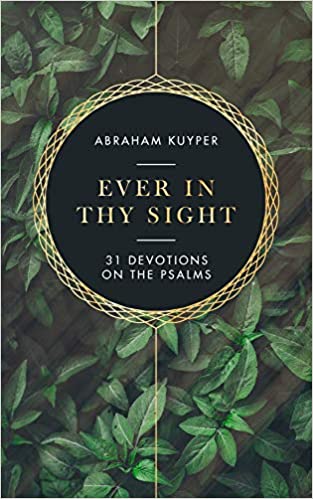
Fred  Zaspel has a brief note on Kuyper's Ever in Thy Sight a Books at a Glance:


I have not read Abraham Kuyper in great depth, but I have read enough that when I saw this little devotional, I was eager to take a look. I was not disappointed. Rich, warm reflections on the Psalms – theologically informed and brimming with insightful devotional application. Refreshing daily readings for any Christian.


Joustra, R. 2020. Abraham Kuyper’s Overseas Manifesto. (May 6) Providence Magazine
has been examining Kuyper's foreign policy.


Two papers have been recently published discussing Kuyper:


Freire, Lucas G. 2020. Abraham Kuyper and Guillaume Groen van Prinsterer as Anti-Rationalist Liberals. Journal of Church and State forthcoming

Ford, Brian 2020. Neoliberalism and four spheres of authority in American education: Business, class, stratification, and intimations of marketization. Policy Futures in Education 18(2):200-239. 


Thursday, 11 June 2020

Saturday, 6 June 2020

Abraham Kuyper: An Annotated Bibliography - is now online!


Abraham Kuyper: An Annotated Bibliography 1857-2010 by Tjitze Kuipers and originally published by Brill in 2011 is now online in a revised and updated version. 

This is a game-changer for Kuyper students! https://sources.neocalvinism.org/kuyper/