An accidental blog

"If God is sovereign, then his lordship must extend over all of life, and it cannot be restricted to the walls of the church or within the Christian orbit." Abraham Kuyper Common Grace 1.1.

Saturday, 25 March 2017

Roques: The Spy, the Rat and the Bed of Nails

The Spy, the Rat and the Bed of Nails
Creative Ways of talking about Christian Faith
Mark Roques
Leeds: ThinkingFaith Network
ISBN 978-0-9957572-0-2
Pbk, 182pp, £8.99

For many evangelism is a difficult ask. We often dread talking about our faith. Not because we are ashamed of it but because we are afraid of coming over as sounding a bit naff. However, there is good news - and not only in the Gospel - Mark Roques has written a book that will help us share our faith without being naff.

This book will revolutionise how we evangelise. Roques shows us creative ways in which to share or faith. His basic premise is that we need to tell stories that provoke and ask questions that expose religious beliefs. He takes his cue from Jesus’ approach. Roques shows how Jesus used humour and stories to reveal the heart of God. Roques shows how we can do the same. He draws upon his vast experience as a school teacher and as a speaker to provide a myriad of examples of how this can be done. He gives illustrations of how to communicate awe and wonder, to expose and challenge contemporary idolatries. As suggested by the title of the book Roques makes good use of examples from James Bond films, from rats and from a bed of nails.

If you want to share the good news of Jesus in a way that engages, inspires and brings glory to Jesus - you will do no better than drawing on the resources that Roques provides in this book.

The book can be obtained from here

Kuyper on 'What is a Christian family?'

Abraham Kuyper on what it is to be a Christian family:

"For a family to be Christian, three things must be present in it through the Spirit of Christ and the result of his work. The first is the restoration of what sin and misery have corrupted. The second is the elevation of original family life to its ideal. And thirdly, in order that this blessing might not be passing but fix its roots in the family and seek to be nourished there, the family must sanctify its communion by establishing a family altar before which the entire family (that is, parents, children, and servants) kneel so as to give to God the honor and worship he is due for what he in his grace has given the family and to ask him to bless its life. Only in this way can Christ exercise his dominion as our King over the family as well. Only in this way will he be honored as King in the family and through the family. The good things that happen will proceed from him through his Spirit. And Christian parents who with their baptized children and Christian staff live together in such a family will know that not only their personal salvation, but also the exalted grace they enjoy in family life, comes to them from their God only for the sake of Christ."
Pro Rege: Living Under Christ’s Kingship
Volume 2: The Kingship of Christ in Its Operation. Lexham Press, 2017.  p. 317

Saturday, 11 March 2017

Review of Greidanus Preaching Christ from Psalms

Preaching Christ from Psalms
Foundations for Expository Sermons in the Christian Year
Sidney Greidanus
Grand Rapids: Eerdmans, 2016
ISBN: 978-0-8028-7366-8
Pbk, xx + 595pp, £28.99

Sidney Greidanus is the  Emeritus professor of preaching at Calvin Theological Seminary, Grand Rapids. He has long been concerned with preaching Christ from the Old Testament. His concern dates back over 30 years.  After preaching a sermon from Ecclesiastes a member of the congregation came up to him and asked a provocative question: ‘I like your sermon … But could a rabbi have preached that in a synagogue?’ Was Greidanus’ sermon a Christian sermon? This question stirred him into action and the theme of preaching Christ from the Old Testament was developed in his 1989 book The Modern Preacher and the Ancient Text as well as in his Preaching Christ from the Old Testament (1999). Since then he has produced books on preaching Christ from Daniel, Genesis and Ecclesiastes. And now we have the latest - and what sadly seems to be the last - on Preaching Christ through Psalms.

This book is a brilliant fusion of hermeneutics and homiletics. The opening chapter takes an overview of the issues of preaching from the Psalms - including examining some objections others have from preaching the Psalms. As always with Greidanus there is much wisdom and excellent advice. The rest of the chapters examine different Psalms in detail (ones covered include Pss 122, 72, 146, 80, 96, 29, 2, 51, 32, 121,95, 23, 130, 118, 22, 118, 47, 104, 8, 100). Greidanus has followed the Revised Common Lectionary in selecting these Psalms from year A and has linked them to the Christian feasts.

He looks at ways of seeing Jesus in the text; these include redemptive-historical progress, promise-fulfilment, typology, analogy, longitudinal themes, New Testament references and contrast. These approaches have been explained and justified more fully in his Preaching Christ from the Old Testament. Obviously, not all these are applicable all the times to great variety of Psalms

The remaining chapters, each of which looks at a different Psalm, all follow a similar structure:


  • Text and context
  • Literary interpretation - including parallelisms, imagery, repetitions and structure
  • Theocentric interpretation
  • Textual theme and goal
  • Ways to preach Christ
  • Sermon theme, goal and need
  • Liturgy, scripture reading, sermon outline and PowerPoint
  • Sermon exposition


As can be seen from the structure of each chapter, his approach is one that grapples with the text, its structure and purpose before seeing how a Christological approach arises from it. There is also lots of practical advice, including suggestions for PowerPoint slides. In the sermon exposition, we are shown the fruit of this digging down would look like in a well-crafted sermon (at the end there are even examples of a prayer and song to use). Also included in the Appendices are examples of sermons on Psalms 72 and 80 by a former student of Greidanus, Ryan Faber.

The Bible is often compared to a stick of seaside rock with Jesus’ name written all the way through it. Here, Greidanus breaks open the Psalms and shows us Jesus written all the way through it. This book will be an invaluable resource for any preacher who plans to preach from any of the Psalms and do so in a way that brings glory to Jesus. Greidanus’ Preaching Christ through … books are all a wonderful gift to preachers and to the institutional church.


Wednesday, 25 January 2017

Review of The Mission of the Church

Mission of the Church
Five Views in Conversation
Edited by Craig Ott
Grand Rapids: Baker Academic
ISBN 9780801097409
Pbk, 224pp, £13.99

What do you get when a Catholic, an Eastern Orthodox, a female evangelical and two male evangelicals are asked to discuss the mission of the church? We’d expect sparks, disagreement and fiery arguments - but that’s certainly not what we do get here - there is a real sense of a listening dialogue and understanding. This book’s aim is to explore commonalities and differences. Perhaps there is hope for ecumenical dialogue!
The contributors are Stephen B. Bevans, a Roman Catholic, Darrell L. Guder a mainline Protestant, Ruth Padilla DeBorst a Latina evangelical, Edward Rommen an Orthodox and Ed Stetzer a North American evangelical. The Catholic view advanced here is that of prophetic dialogue, but its not really clear how this is different from other Christian views.
Missing from the discussion is the distinction between church as institute and as organism (but being a good Kuyperian I would say that!). Having said that, however, the Orthodox view seems to focus on the church as an institution with the focus on sacrament as mission, and Padilla DeBorst on the church as an organism with the different social actions taken by the church and her support of integral mission. Both are needed.
After each author has provided their perspective, they each get an opportunity to provide a response to each other. This adds to the value of the book. The introduction by Ott provides a clear overview and justification for the book. 
All the authors endorse a trinitarian view of mission, the concept of missio dei, an awareness of the global nature of the church, a shift from mission to missions and a recognition of the place of the church in mission - even though the authors would all endorse the same ecclesiology.   
The strength of the book is the range of agreement. The book lives up to its aim of a charitable dialogue. That in a way is also its weakness - I would have liked to have seen more on what is most distinctive about mission according to evangelicalism and the same for the other views. The stress here is on the similarities. And that is a good place to start.


Saturday, 21 January 2017

Brief review of James Hamilton's Work and our Labor in the Lord


Work and our Labor in the Lord
James M. Hamilton Jr.
Crossway
Pbk, 128pp, £12.31
ISBN: 978-1433549953

James Hamilton, a professor of biblical theology at The Souther Baptist Union, has produced in this book a brief biblical theology of work. The book is part of a new series from Crossway: Short Studies in Biblical Theology. The four chapters look at work from the perspective of creation, fall, redemption and restoration. In other words, he explores work ‘as it was meant to be, as it is, as it can be, and as it will be’.

I was surprised to see the use of inclusive language - but it soon becomes clear that this is deliberate. Hamilton approaches and interprets the scriptures through the lens of a complementarian position. Unfortunately, this position is assumed and not justified. This is a shame as it limits the usefulness of the book.

‘God put Adam in the garden to work and keep it, and he put the woman in the garden to help the man’ (p. 41).

Woman is  man’s helper:

‘What does the woman’s role of helping entail? Perhaps it would be easier to say what helping does not entail, for helping would seem to involve everything but what the man is to do. God created the woman so that together they could be fruitful and multiply, and God created her to help the man lead, protect, and provide. The jobs were given to the man to do, and the woman was given to help him do them. These roles are established so that together the man and woman can accomplish the tasks set out in Genesis 1:28 and 2:15’ (p.25, man the garden italics).

And this despite that the term helper is used of God (e.g. Ps 70:5; 115:9) but no limits seem to be placed on God’s role as a helper!

There is much own the book which is useful and insightful. But, for me, the complementarian framework through which Hamilton reads the scriptures mars the book. For those who agree with the complementarian position, the book will be well received.


Table of Contents

Introduction
Chapter 1 Creation: Work in the Very Good Garden
God’s Design for Work 
Work in the Garden Genesis 1–2
The Blessings of the Covenant Deuteronomy 28:1–14
Judgment on God-Given Tasks Genesis 3:16–19
Work Outside Eden

Chapter 2 Work After the Fall Fallen, Futile, Flourishing
Introduction
Fallen
Futile 
Flourishing 
Work under the Old Covenant

Chapter 3 Redemption: Work Now that Christ Has Risen
Introduction
Redeemed Work
Renewal of Mind: Work unto the Lord That Adorns the Gospel
Work in Christ

Chapter 4 Restoration: Work in the New Heavens and New Earth
What We Were Made To Do
The Building Materials
The House They Build
Conclusion

Bibliography

Tuesday, 10 January 2017

Review of Mouw's Adventures in Evangelical Civility

Adventures in Evangelical Civility
A Lifelong Quest for Common Ground
Richard J. Mouw
Grand Rapids: Brazos Press
Hbk, 256pp, £15.99
ISBN: 9781587433917

Richard Mouw, former president of Fuller Theological seminary, has produced a number of great little books. Not least his introduction to Abraham Kuyper. This is another one. Sadly though, this is not a biography but a memoir. However, it does contain biographical information, though we learn some things about his upbringing and his parent these insights are tangential to the chapter topics. But what we do have is a commentary on his life and on several of the books he has written. This memoir is more thematic than chronological. Mouw is clear that it’s not can autobiography and it seems he has no plans (as yet) to write one; he is also clear that it is not a detailed report on his ‘intellectual pilgrimage’.

As always with Mouw’s books, this one is packed with perspicacity, perceptivity and propriety. It provides a wonderful insight into the mind of a great philosopher-theologian partitioner and academic. Mouw has spent much of his time in civil dialogue with other Christian traditions as well as non-Christian traditions. He makes an interesting distinction between inter- and intra-faith discussions. These intra and inter dialogues shows Mouw’s concern to find common ground. 

Mouw straddles the gap between the academic and the public. He dislikes the concept of a public intellectual, but it is a fitting description of him. He also straddles the gap between evangelical and Calvinist - he describes refers to himself by both descriptions. His is certainly a life lived on common ground. This is perhaps shown in at one time his two favourite authors, Ralph Waldo Emerson and Cornelius Van Til. Two very different conversation partners. In the book he discusses common grace, the antithesis, the image of God and total depravity - and show how these have provided important theological tools for his engagement with others. 

He traces his moves from his philosophical studies at Chicago to social-political studies at Calvin and his beginning discussions with Yoder and the Anabaptist movement. His developing cultural discipleship linked with civility is the broad topic of chapter 7 but these also characterise his life and attitudes. This is particularly seen in his discussions with Catholics, Anabaptists and Mormons. 

All in all this book presents a portrait of Mouw as a man of wisdom, civility, commitment and a Kuyperian concern that the gospel shapes all of life. It is well worth reading.


Contents
1. Calvinists in an Edinburgh Pub
2. A Tale of Two Authors
3. A Many-Faceted "Imaging"
4. More Than "Calisthenics"
5. Lessons from the Philosophical "Moderns"
6. Commonalities in the Public Square
7. Preaching Civility
8. Depravity: Less Than "Total"?
9. Our "Direction-Setting"
10. Paying Attention to Context
11. Reformed and Evangelical
12. When Truth Is Distorted
13. On Being a "Public Intellectual"
14. Interfaith Engagements
15. Of Hymns and Dialogues
16. Concerns about the Journey
Index

Saturday, 24 December 2016

Kuyper's On the Church - a review


On the Church
Collected Works in Public Theology
Abraham Kuyper
Edited by John Halsey Wood Jr. and Andrew M. McGinnis
General Editors Jordan J. Ballor and Melvin Flikkema
Translators Harry Van Dyke, Nelson D. Kloosterman, Todd M. Rester, Arjen Vreugdenhil
Bellingham, WA: Lexham Press, 2016
Hbk; xxxix+ 495pp; £40
ISBN 978-1577996750


This volume, published by the Abraham Kuyper Translation Project, is a fresh translation into English of seven of Kuyper’s essays on the nature of the Church:

Commentatio (1860)
Rooted and Grounded (1870.25)
A Tract on the Reformation of the Churches (1883.06)
Twofold Fatherland(1887.23)
Lord’s Day 21 (1905.17)
State and Church (1916.06)
Address on Missions (1890.05)

As John Halsey Wood Jr. notes in his introduction, Kuyper’s ‘concern for the church predated and permeated all … other concerns’. Kuyper was a church historian and a church pastor - among other roles and callings - and this is evidenced by the first of the essays translated in this volume. Commentatio is Kuyper’s prize-winning essay, that formed his doctoral thesis, comparing John a Lasco’s and Calvin’s conception of the church. The sections reprinted here are mainly from the third section. In it, in seed thought, are much of Kuyper’s ideas on the nature of the church. It is clear that Kuyper preferred a Lasco’s view over Calvin’s, chiefly because the former’s view was closer to the Dutch spirit. This, of course, was before his conversion to Calvinism. 
Kuyper’s later major contribution to ecclesiology was the distinction between the church as institution and the church as organism. For Kuyper, the church has to do not only with Sunday services or missions but the reforming of all facets of life and culture. Kuyper uses several metaphors to illustrate the church as organism—institute distinction. In essence, the institution is the church organisation, its sacraments, its ministers; the organism is the church in the world, Christians at work in society, the body of Christ, strengthened and served by the church as institute. The church as institute does not run schools, universities, or trade unions; that is the role of the church as organism.
This distinction is to the fore in the second selection in this volume. Rooted and Grounded has previously been published in 2013 in booklet form - see the review in Bishop (2014). In this sermon, Kuyper places an emphasis on the priesthood of all believers. For the church to be truly an institution and organic the role of the institutional leaders is to equip the church as organism to be able to do the works of service in the market square, in the classroom, in the business place, in the political area, in the laboratory and so forth. 
The church as institution is the main focus of the next piece, A Tract on the Reformation of the Churches. This was written three years before the Doleantie secession from the Dutch Reformed Church led by Kuyper. It has been previously translated by Herman Hanko and serialised in The Standard Bearer (1977-1986)Kuyper writes here as a church pastor with a heart for the right functioning of the church. His concern is for a pure church. Kuyper argues for a severing of the church and the State. This text is a basis for a manual for Reformed church government. 
In Twofold Fatherland, an address delivered at the seventh annual meeting of the Free University, Amsterdam just after the Doleantie secession, we have Kuyper as an almost Lutheran:

‘we have a twofold fatherland and live as a twofold people under a twofold King’ (226) 

A cursory read of this piece seems to suggest that Kuyper is promoting a two-realm approach. But digging deeper this is far from the truth. He does suggest that there is a fatherland above and below, but both are given by God’s grace - one by common grace, the other particular grace. Both are to give God the glory. The tension of hyper-spirituality (287), suggests Kuyper, is to devalue the earthly fatherland. He also posits that the earthly fatherland has been disrupted by sin and that there is a distinction between the (sinful) world and the earthly field of common grace. 
The Lord’s Day  21 is taken from Kuyper’s E Voto Dordraceno - his commentary on the Heidelberg Catechism. This selection looks at three questions from the Catechism:

Question 54: What do you believe concerning the ‘Holy Catholic Church’? 
Question 55: What do you understand by the ‘communion of saints’? 
Question 56: What do you believe concerning the ‘forgiveness of sins’? 

The essay State and Church is extracted from a two-volume work written for members of the Anti-Revolutionary Party in 1916, was written by Kuyper for party leaders who had had no formal academic training and was designed to provide clarification to Ons Program.
The final selection, the address on missions, provides a fascinating insight into Kuyper’s attitude to mission. These are verbatim notes taken from an address by Kuyper to a missions conference in January 1890. What we have here are Kuyper’s main theses and then a verbatim report. What is particularly interesting here is Kuyper’s stress that missions should be the work of the church and not of voluntary organisations as was primarily the case at the time.

The book closes with a detailed table of contents a brief section of biographical details on Kuyper and the contributors but not of the translators. There is also an extensive subject/ author index and a scripture index. The essays by Wood and de Bruijne serve as excellent introductions to the context and to the relevance of Kuyper’s essays.

Within these pages, we can see the distinctiveness of Kuyper’s ecclesiology, although not always fully spelled out. Here we can see the distinction between organism and institution, the key role of common grace, sphere sovereignty especially in that the church should be free from state involvement and the state free from church meddling, and the key roles of the church in looking beyond itself in mission, evangelism and philanthropy.


This book is a welcome addition to the ever-expanding publications of the Abraham Kuyper Translation Project. It deserves to be read widely as Kuyper’s conception of the church is not merely of historical interest only; his distinction between organism and institute provides an excellent framework for ecclesiology today.


Bishop, S., 2014, ‘Kuyperania in recent years’, Koers – Bulletin for Chritian Scholarship 79(1), Art. #2138, 6 pages. 
http:// dx.doi.org/10.4102/koers. v79i1.2138

Tuesday, 20 December 2016

Book of the year for 2017

This will undoubtedly be in my book of the year list for next year:


Coming soon:
 Mark Roques James Bond and Rat Worship: Creative Ways of Sharing the Christian Faith. Leeds: Thinking Faith Network.

Monday, 19 December 2016

Books of the year 2016

Books of the year 2016 - the long-awaited list (don't accept any other alternatives):


Bruce Ashford and Chris Pappalardo
B&H Publishing

Jordan J. Ballor and Robert Joustra (eds)
Grand Rapids, MI: Christian’s Library Press.

Craig G. Bartholomew
Grand Rapids: Baker Books

Abraham Kuyper 
General editors Jordan J. Ballor and Melvin Flikkema
Bellingham, WA: Lexham Press

Abraham Kuyper
On the Church
General editors Jordan J. Ballor and Melvin Flikkema
Bellingham, WA: Lexham Press

Keith Sewell 
The Crisis of Evangelical Christianity
Wipf and Stock

James K.A. Smith
Grand Rapids: Brazos Press

Mike Wagenam
Together for the World: The Book of Acts. 
Lexham Press.


Sunday, 18 December 2016

Saving Calvinism by Oliver Crisp


Saving Calvinism
Expanding the Reformed Tradition
Oliver D. Crisp
Downers Grove: IVP Academic
167pp; pbk; £14:39
ISBN: 978-0830851751

The title begs the question - does Calvinism need saving? And if so from who or what? This book is in some ways both a sequel and an introduction to Crisp’s other books Deviant Calvinism: Broadening Reformed Theology (Fortress, 2014), Retrieving Doctrine: Essays in Reformed Theology (IVP Academic, 2011), and Revisioning Christology: Theology in the Reformed Tradition (Ashgate, 2011) - although this one is much shorter and more accessible than its precursors. 

The aim is clearly stated:

‘It is an attempt to provide a Reformed perspective concerning human salvation that seeks to broaden what is thought of as “Calvinistic” when it comes to such matters—not so much by presenting a revision of Calvinism but by attempting to remind modern Calvinists of the breadth of resources at their disposal’ (9)

He uses the analogy of a house - much of modern Calvinism, often depicted as New Calvinism, only uses two rooms downstairs. Crisp’s goal is to open up the house. For Crisp Calvinism is broader than the TULIP five points. Although, he does look at each one of the five points
Calvinism is not the monolith most people assume it is - Crisp shows the diversity of Calvinism. Whether all Calvinists would agree is another issue! It is highly doubtful, for example, that this book would have been published by the Banner of Truth! 
Crisp takes a fresh look at variants of Calvinistic theology. In chapters 2 and 3 he takes a look at election and freewill. Here he considers infra- and supralapsarianism and then draws upon Jonathan Edwards and John Giradeau. Girdeau opposed Edwards’ view of free will. (Crisp has dealt with Girardeau elsewhere (Crisp, 2014).) Crisp comments:

‘Even if Girardeau’s position is in some respects incomplete or underdeveloped, it does show that not all Reformed thinkers have been of one mind on the matter of theological determinism’

Crisp’s  discussion on God permitting evil is particularly stimulating - here he introduces the notion of skeptical theism, by which ‘we don’t know why God permits evil, but we can trust that there is some good reason for doing so’. 
Crisp maintains that it is possible to be a universalist and a Calvinist: 

‘it seems to me that one can be a Calvinist and a universalist. However, even if Scripture does not support universalism, it is still possible to think that the purposes of God in salvation are much more expansive than is sometimes reported’.

Not all Calvinists endorse penal substitution - again Crisp shows penal substitution is the favoured view of most Calvinists not all have adopted this perspective. He examines several other ways of understanding the atonement these include: satisfaction, as developed by Anselm of Canterbury; vicarious penitence; and penal non-substitution. Crisp sensibly advocates not one model but kaleidoscopic meta-model approach. 
He then goes on to look at hypothetical universalism as supported by John Davenant and John Preston. Although Crisp doesn’t endorse it he makes an excellent case for it being consistent with Calvinism. 
The book is eminently readable and deserves a wide readership. Crisp has certainly shown that Calvinism has a wide theological range and is wider than the traditional five points seems to suggest - even though the five points provide a good summary they are not a theological straitjacket. Crisp even suggests that: ‘Holding to all of the five points is not, in fact, a necessary condition for being a Calvinist’. Although I don’t agree with all the points Crisp makes, the book does make for a stimulating and thought-provoking read.


Reference
Crisp, Oliver D 2014. John Girardeau: Libertarian Calvinist? Journal of Reformed Theology 8(3): 284-300. 

Saturday, 17 December 2016

Kuyperania in 2015 Koers 81(3)

My review of several works by, on and about Kuyper are now published in Koers:

Bishop, S., 2016. "Kuyperania in 2015". KOERS — Bulletin for Christian Scholarship, 81(3). Available at: https://doi.org/10.19108/KOERS.81.3.2230


Monday, 12 December 2016

2017 Kuyper Conference “Neo-Calvinism and the Church” Princeton Seminary, 7-8 April 2017

 'Neo-Calvinism and the Church' is the theme of the 2017 Kuyper Conference
Rev. Dr. Timothy Keller of Redeemer Presbyterian Church, New York City, will receive the Abraham Kuyper Prize for Public Theology. The prize will be awarded at a ceremony in Miller Chapel on the seminary campus on Thursday evening April 6, 2017, at which Tim Keller will give a public lecture. 
The annual Kuyper conference will address Keller’s theme and will take place from April 7 to 8. The conference will include plenary presentations by Daniel BourdannéRuth Padilla DeBorst, Stefan Paas and John Halsey Wood, as well as concurrent sessions with juried papers on the conference theme.
The conference organisers invite papers on topics related to Neo-Calvinism and the church, to be presented in concurrent sessions. While we welcome proposals about the contributions of Abraham Kuyper, Herman Bavinck, and other Neo-Calvinists, proposals relating to the mission of the church today might range more widely.  
Possible themes could include the distinction between church as institute and organism, the role of democracy in the church, the possibilities and problems of state and established churches, and the pluriformity of the church, as well as how the difference between particular and common grace shapes the church’s role in society. Financial support is available for graduate students through submission to the CFP.
To apply, please email a proposal of 250 words or less by December 31, 2016 to kuyper.conference@ptsem.edu. Please include your name and institutional affiliation in your email, but not on your proposal itself. Proposals will be double-blind peer-reviewed. Notifications of accepted papers will be sent by January 18, 2017. Please contact kuyper.conference@ptsem.edu for additional information.
Darrell L. Guder
Interim Director, Abraham Kuyper Conference
Emeritus Professor, Missional and Ecumenical Theology
Princeton Theological Seminary 

Sunday, 27 November 2016

Review of Four Views on Christianity and Philosophy

Four Views on Christianity and Philosophy 
(Counterpoints: Bible and Theology)
Graham Oppy, K. Scott Oliphint, Timothy McGrew, Paul K. Moser
Paul M. Gould and Richard Brian Davis, general editors 
Stanley N. Gundry, series editor. 
Grand Rapids: Zondervan
ISBN 9780310521143


I love the X views series (where X is three, four or five) - they provide an excellent introduction to the conflicts and disputed views of key topics. This one is no exception. It provides a good overview of four different approaches to Christianity and philosophy. This book follows the same excellent format as the other views series — four philosopher state their case then each of the others provide a critique and finally the original author responds.

The authors here are the agnostic Graham Oppy, the presuppositionalist Scott Oliphint, the neoclassical foundationalist Timothy McGrew and Paul Moser. They all agree on a number of points but crucially they disagree on a number of others; not least the nature of philosophy, the form of or existence of a Christian philosophy and the role of natural theology.

For Oppy
One of the most important tasks for philosophy is comparison and adjudication of worldviews (24).
Graham Oppy, is perhaps the lion in the Daniel’s den, the other three are all Christians, Oppy is an agnostic. Oppy shows a good understanding of key Christian doctrines - but seems to view Christianity as naturalism plus some add-ons. He sees philosophy’s role as an evaluator of worldviews. It has the role of an umpire, so rather than seeing Christianity and philosophy in conflict the position he was supposedly advocating he sees the role of philosophy in adjudicating between worldviews and here shows how he sees it functioning in evaluating naturalism and Christianity. For him philosophy is a neutral tool - he declares himself to be a ‘philosophical neutralist’ (21). He concludes his chapter with a telling remark:
There is a central component of the philosophical endeavour that requires the setting aside of all disputed presuppositions (47).
But, presumably, that for Oppy doesn’t include setting aside the disputed presupposition that we have to set aside presuppositions! 

McGrew in his response to Oppy makes an excellent point:
Oppy complains that we have no textual evidence from nonChristian sources substantiating the resurrection (36). But what is he looking for? People who were persuaded of the resurrection of Jesus became Christians. From whom else should we expect such testimony?(58)
Oliphint provides an overview of what he describes as the ‘Covenant model’: a Christianity trumps philosophy perspective. He sees philosophy as ‘the discipline that takes as its subject matter the nature of reality .., the nature of knowledge …, and the nature of right and wrong’ (71). To examine the relationship between philosophy and Christianity he evokes the idea of principia. Each discipline has its own principia. He maintains that theology – by which he means Reformed theology – provides the foundation for philosophy. This is because:
the principia of theology come—as it were—from the outside, in. They come from a transcendent source and are not generated within the discipline itself. (74-75).
He sees reason being a servant and not a master to theology and philosophy. My concern with Oliphint’s position is that he elevates the role of theology:
Thus, it is theology that sets the boundaries and the parameters, the rules and the laws, for all other disciplines. (88)
Philosophy is then a handmaid to theology it ‘can help theology in its ability to distinguish and to clarify the truth as it is found in Scripture as well as in God’s revelation generally’. (93)

McGrew espouses a convergence model whereby philosophy confirms Christianity and Christianity completes philosophy.
Philosophy, rightly and thoughtfully pursued, offers us multiple clues that point to the existence of a deity. (150)
McGew, therefore, accepts and endorses a natural theology and defends it here. Though he is aware of its limitations: 
Natural theology may suggest that there is a deity, but it cannot tell me whether there is redemption for sin … (141-142)
Moser in his rebuttal makes an excellent point:
The New Testament writers could have used arguments of natural theology, but they chose not to do so. This is significant, and it raises the question of why they avoided such arguments. (167)
Moser obviously is obviously dubious of natural theology – rightly so, in my opinion. He espouses a convergence model:
My approach to Christian philosophy offers philosophy under, or conformed to, God in Christ, which involves a distinctive kind of wisdom, namely, God’s wisdom in Christ. If philosophy is the love and pursuit of wisdom, Christian philosophy is the love and pursuit of God’s wisdom under divine authority in Christ, which calls for an ongoing volitional union with Christ, including one’s belonging to God in Christ. (175)
He sets this against what he describes as speculative philosophy
Speculative philosophy goes awry in not giving a primary and irreplaceable role to God’s self-manifestation of his character—his righteous love—in the message of Christ crucified. This message enables God’s presence and character to be confirmed and witnessed to by God’s unique Spirit, with no need of speculative argument. (197)
And 
Speculative philosophy assumes that, at least for some people, God’s self-manifestation in the message of the cross does not adequately witness to God’s presence and reality. (198)
The focus then for Moser is wisdom and for ‘kingdom-enhancement’ philosophy. Though I’m not quite sure what he means by that. If all truth is God’s truth, then couldn’t all aspects of philosophy be kingdom enhancing?

The book concludes with a piece by the editors Gould and Davis. Here they note that it is clear that the mind matters and that ideas matter. Amen to that.


This book is a welcome contribution to the series – sadly there was no contribution from a Reformational philosopher such as Roy Clouser, Danie Strauss or Renato Coletto, a contribution from any of these would have been an excellent addition. 

Wednesday, 12 October 2016

New and recent books from Reformational scholars

There are a number of excellent books that have recently been published or are about to be published by Reformational scholars. These include:


Lambert Zuidervaart 2016. Religion, Truth, and Social Transformation: Essays in Reformational Philosophy. McGill-Queen's University Press.

Craig Bartholomew 2017. Contours of the Kuyperian Tradition: A Systematic Introduction. IVP Academic

Robert Sweetman 2016. Tracing the Lines: Spiritual Exercise and the Gesture of Christian Scholarship (Currents in Reformational Thought). Wipf and Stock

Mike Wagenam 2016. Together for the World: The Book of Acts. Lexham Press.

Craig Bartholomew 2016. Introducing Biblical Hermeneutics: A Comprehensive Framework for Hearing God in Scripture. Baker Academic.

Craig Bartholomew 2016. Revealing the Heart of Prayer: The Gospel of Luke. Lexhmam Press.

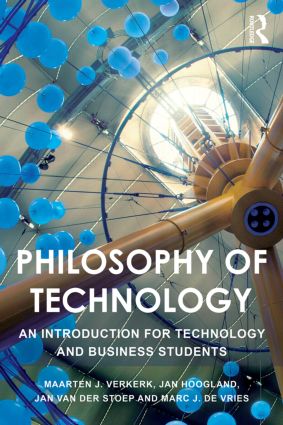
Maarten J Verkerk, Jan Hoogland, Jan van der Stoep, Marc J. de Vries 2016. Philosophy of Technology: An Introduction for Technology and Business Students. Routledge.

Tuesday, 11 October 2016

The history of the Reformational movement in the UK - part II

The second part of my paper on the history of the Reformational movement in the UK has now been published in the journal Koers.


Bishop, S., 2016. "A History of the Reformational Movement in Britain. II: The Post-World-War II Years to the end of the Twentieth Century". KOERS — Bulletin for Christian Scholarship, 81(1). Available at: http:// dx.doi.org/10.19108/ KOERS.81.1.2251

http://www.koersjournal.org.za/index.php/koers/article/view/2251/pdf


Tuesday, 4 October 2016

Copan's Little Book for New Philosophers

A Little Book for New Philosophers
Why and How to Study Philosophy
Paul Copan
Downers Grove, Ill: IVP Academic, 2016
128 pp; pbk; £6.99
ISBN: 9780830851478
Publisher’s website here

This may be a little book but it tackles a large task: examining how and why Christians should study philosophy. Philosophy has been more than a little denigrated in the church, it has become a byword for worldly thinking or at best a tool for theology. So Copan’s task is an important one. 

Copan’s aim is ‘that this small book will offer new material for some, reminders for others and, hopefully, reinforcement for all to look afresh at the implications of doing philosophy under the lordship of Christ’ (9). The need to do philosophy under the lordship of Christ is crucial. For those beginning to study philosophy will find this book a helpful guide.

Copan sees a number of important roles for philosophy. These include sharpening our minds, helping us see that ideas have consequences, to isolate and deal with sloppy thinking. These are all crucial roles and not just for Christians. In addition he for Christians he sees philosophy as being able to strengthen theology. Though we need to be careful to see philosophy as the handmaiden of theology. Philosophy should not be a naturalistic tool, as Copan puts it: ‘If God is the originator of the universe, why can’t he also be at work within it? Why must the Christian bow to naturalistic demands and assumptions?’ (90).

What is perhaps most surprising is that one of the foremost Christian philosophers, one who has done much to establish Christian philosophy, Herman Dooyeweerd is not mentioned in this book. Nevertheless, this book will help philosophy students see that philosophy can be a much a Christian calling as doing theology, and as such it is a welcome addition to this new series of ‘Little Books’. As Copan has it:
‘Ultimately, our philosophizing—as with our eating, drinking or whatever we do—should be done to the glory of God. Undertaking the study of philosophy should be an act of worship, and thus we devote our mental exertions, our research and our reading to God. Our philosophy should be undertaken in a spirit of prayer and dependence on God for understanding, insight and wisdom about what projects to undertake’ (119-120) 

Amen to that!


Contents
Preface
Introduction

PART ONE
Why Study Philosophy?
1. Philosophy and Baking Bread 
2. Philosophy as Loving Wisdom 
3. Faith, Philosophy and Scripture 
4. Thinking About God

PART TWO
How To Study Philosophy
5. Virtuous Philosophy
6. Philosophy and Community 
7. Doubting Wisely
8. Considering Philosophy

Name and Subject Index 
Scripture Index


Thursday, 29 September 2016

Philosophy of Technology by Maarten J Verkerk, Jan Hoogland, Jan van der Stoep, Marc J. de Vries

Philosophy of Technology
An Introduction for Technology and Business Students
By Maarten J Verkerk, Jan Hoogland, Jan van der Stoep, Marc J. de Vries

A new book has been published by Routledge.

'Philosophy of Technology: An introduction for technology and business students is an accessible guide to technology’s changes , their ubiquitousness, and the many questions these raise. Designed for those with no philosophical background in mind, it is ideal for technology and engineering students or specialists who want to learn to think critically about how their work influences society and our daily lives.'


Contents
Part I: Thinking & Making
1. Thinking & Technology: Between analysis & criticism Portrait Carl Mitcham
2. Speaking in a Two-Sided Way: The meaning of disclosure & the disclosure of meaning Portrait Martin Heidegger

Part II: Making & Designing
3. The World of Technology: Three kinds of complexity Portrait Lewis Mumford
4. The Artefact [I]: Diversity & coherence
Portrait Alasdair MacIntyre
5. The Artefact [II]: Identity, function & structure
Portrait Gilbert Simondon
Case Study I: Nanotechnology
6. Knowledge of Designing: The role of the engineer
Portrait Herbert Simon
7. Design & Reality: Methodological obstinacy Portrait Bruno Latour
8. Technology & Production: From dehumanisation to the human measure
Portrait Larry Hickman
Case Study II: The New Factory

Part III: Designing & Thinking
9. The Rules of the Game: Technology as a social practice Portrait Langdon Winner
10. Symmetries: Between pessimists & optimists Portrait Jacques Ellul
11. Clashing Worlds: Globalisation & cultural diversity
Portrait Albert Borgmann
Case Study III: Network Enabled Military Operations
12. The Homo Technicus: From device to cyborg Portrait Don Ihde
13. ‘Good’ Technology?: Normative artefacts & the web of responsibilities Portrait Egbert Schuurman Case Study
IV: Innovation in Health Care
14. Expectations for the Future: The secular sacred and the limits of technology
Portrait Andrew Feenberg