An accidental blog

"If God is sovereign, then his lordship must extend over all of life, and it cannot be restricted to the walls of the church or within the Christian orbit." Abraham Kuyper Common Grace 1.1.

Thursday, 7 August 2014

British Calvinists: John Howe (1630-1705)

John Howe (1630-1705) was born in Loughborough, he studied at Christ's College, Cambridge and Brasenose College, Oxford, he then became chaplain of Magdalen, when Thomas Goodwin was the president. He graduated with a BA in 1650 and MA 1652. In 1654 he became the perpetual curate of Great Torrington, Devon. He beam one of Oliver Cromwell's chaplains. He attended the Congregationalist's Savoy Conference as an observer. 

He returned to Great Torrington in when Richard Cromwell dies. In 1662 with the Act of Uniformity he was ejected from his church. he spent most of his time in this period preaching and writing. He eventually went to Ireland but returned to London in 1676 and to the Presbyterian Haberdashers' Hall. He eventually went to Utrecht. He returned to London in 1687. He was widely recognised as one of the leading dissenters and worked hard to unite the Congregationalists and Presbyterians. 

Some of his writings are available here:

Monday, 4 August 2014

Two new excellent books from Bennie van der Walt

Two new books have been published by Bennie van der Walt:

2014. Constancy and Change: Historical Types and Trends in the Passion of the Western Mind.

This looks at Vollenhoven's consistent-problem historical method in a clear and accessible way. It will provide an excellent entry point into Vollenhoven's work. The aim of the book is to provide an elementary, comprehensible introduction to Vollenhoven’s complicated historiographic method. It does that admirably.


CONTENTS
Preface: Prof. Annette Combrink .............................................. ii
Introduction: ........................................................................ iv
Chapter 1: How to portray the history of philosophy: exploring historiographical problems and methodologies ... 1
Chapter 2: A Scripturally oriented perspective on the history of Western intellectual thinking: the origin, contours of and questions about the consistent problem-historical method .............................18
Chapter 3: Flying on the wings of Vollenhoven’s radical Christian worldview: a reconsideration of current typologies of Christian worldviews............................. 38
Chapter 4: The concept “woman”: a feminist historiography of the relation between male and female ..........73
Chapter 5: The implications of a consistent problem-historical method of philosophical historiography for gender differences and relationships........................... 96

Bibliographical references 


2014. At the Cradle of a Christian Philosophy: Calvin, Vollenhoven, Stoker, Dooyeweerd. 

This book examines the roots of reformational philosophy as found in Calvin, Vollenhoven and Dooyeweerd. It is an excellent introduction.


CONTENTS

Preface – Prof. M.F. Heyns 

Introduction 

Chapter 1: The uniqueness of John Calvin’s (1509-1564) Philosophia Christiana ... 1

Chapter 2: The Christian philosophy of D.H.Th. Vollenhoven (1892-1978) ... 47

Chapter 3: The Christian philosopher, H.G. Stoker (1899-1993) ................. 80

Chapter 4: The Christian philosophy of H. Dooyeweerd (1894-1977)........... 116

Bibliographies

Acknowledgments 


As ever with Bennie's work these are clear, accessible and replete with wisdom and insight.

The books can be obtained from the author contact him on:
benniejvanderwalt at gmail.com


British Calvinists: John Flavel (1630-1691)


John Flavel (1630-1691) was born in Bromsgrove and graduated from University College, Oxford. He ministered for most of his life in Devon. First at Dipford near Totnes, then in 1656 moved to Dartmouth. With the passing of the Act of Uniformity he was ejected in 1662 though he continued to preach privately in the Dartmouth area near Salpton. With the granting of indulgence in 1671 he returned to Dartmouth and used a meeting  house but especially for him. He also conducted a small dissenting academy.  

He write a number of books. Many of then can be found here: 


Monday, 28 July 2014

British Calvinists: John Bunyan (1628-1688)

John Bunyan (1628-1688) best known for the classic Pilgrim's Progress was born in Bedford, the son of a tinker. In 1644 after the death of his mother and sister Mary he joined Cromwell's Parliamentary army.

He married a year after being discharged from the army and became interested in the externals of religion. It was hearing some Christian women talk of their faith that promoted him to read the Scriptures. Through this he was converted. He was baptised by full immersion in the river Ouse in 1653. His wife died in 1655 and from the he began to preach the gospel in the Bedforshire countryside. In 1660 he was arrested for preaching without a licence. He was able to support his children while he was in prison by crocheting and selling laces.

On release from prison he became the pastor a church in Bedford. 

He died from pneumonia caught when on an urgent pastoral call during a rain storm. 

He was a prolific writer and wrote over 60 publications. Some of which are available here: 

Saturday, 26 July 2014

British Calvinists: Stephen Charnock (1628-1680)

Stephen Charnock (1628-1680) was born in London and graduated from Emmanuel College, Cambridge. It was during his time at Emmanuel that he became converted. After Cambridge he became a minister in Southwark before becoming senior proctor at New College, Oxford.  

In 1656 he moved to Ireland to become chaplain to Henry Cromwell. After the restoration of the monarchy Charnock was prevented from preaching in public, he continued to do so in private. 

In 1675 until his death he was a co-pastor at Crosby hall, London. All his works were published posthumously and were transcribed after his death. 

Some of his works are available here: 

Friday, 25 July 2014

British Calvinists: Edward Fisher (1627-1656)

Edward Fisher (1627-1656) is best known for his The Marrow of Modern Divinity (1645). He was born in Mickelton, Gloucestershire and graduated from Brasenose, Oxford in 1630. Unusually for a Calvinist he was a Royalist. 

He sold his father's estate in 1656, he got into debt and went to Carmarthen as a school teacher before escaping his debtors by going to Ireland. 

His Marrow book was re-discovered by Thomas Boston (1676-1732) in 1700 and was then reprinted in 1718. The doctrine of unconditional grace in the book was disliked by many in the Church of Scotland, even though it was on Joseph Caryl's list of 'approved' books prepared at the request of the Westminster Assembly. James Haddow accused it of advocating antinomianism. 

Some of his works are available here:

Thursday, 24 July 2014

British Calvinists: Matthew Poole (1624-1679)

Matthew Poole (1624-1679) was born in York, he graduated from Emmanuel College. In 1648 he took the post of minister at St Michael-le-Querens. With the passing of the Act of Uniformity in 1662 he resigned. He then concentrated on writing bible studies. Most notable was his five volume work Synopsis criticorum biblicorum,in which he summarised the views of 150 biblical scholars. 


Some of his works are available here: http://www.prdl.org/author_view.php?a_id=464

Wednesday, 23 July 2014

The Clarendon Code and Declaration of Indulgences

After the restoration of the monarchy in 1660 several Acts of parliament were passed under Charles II that had a direct impact on British Calvinism and non-conformity. Of particular importance were the four Acts that became known as the Clarendon Code. 

1662 Act of Uniformity - The full name of the Act is 'An Act for the Uniformity of Public Prayers and Administration of Sacraments, and other Rites and Ceremonies, and for establishing the Form of making, ordaining and consecrating Bishops, Priests and Deacons in the Church of England.'

Steps were taken after the restoration to reintroduce a revised Prayer Book. The Act meant that clergy had to use, and comply with, the Prayer Book and failure to do so would mean they were deprived of their living. It also meant that all clergy had to have episcopal ordination. As a result almost 2000 clergy forced out of parishes. It is sometimes known as the Great Ejection. Edmund Calamy in 1775 published  The Nonconformist's Memorial: Being an Account of the Lives, Sufferings, and Printed Works, of the Two Thousand Ministers Ejected from the Church of England, Chiefly by the Act of Uniformity, Aug. 24, 1666. This includes a list of the ejected ministers: https://archive.org/details/nonconformistsm00calagoog


1665 Five Mile Act also known as the Oxford Act or Non-conformist Act. Its full title was "An Act for restraining Non-Conformists from inhabiting in Corporations". It meant that clergy expelled by the Act of Uniformity couldn't live within five miles of the parish they were excluded from unless that swore to obey the 1662 Prayer Book.

The other Acts that formed part of the Clarendon Code were: the Corporation Act (1661) and the Coventicle Act (1664). The Corporation Act meant that all municipal officers were Anglicans; and the Conventicle Act forbade the meeting together of five or more - other than of the same family - for unauthorised worship.

The effect of the Clarendon Code meant the privatisation of non-Conformity.


1672 Declaration of Indulgences.  This was an attempt by Charles II to extend religious liberty to Roman Catholics and non-Conformists. It allowed dissenters to hold services in public places. Parliament saw this as an act of sympathy for the Catholics and so it was withdrawn in 1673 and replaced by a number of Parliament Test Acts. The Test Acts required anyone in public serve to denounce Roman Catholic doctrine and be communicant members of the Church of England.


Tuesday, 22 July 2014

British Calvinists: David Clarkson (1622-1686)

David Clarkson (1622-1686) was born in Bradford and graduated in 1645 from Trinity College, Cambridge. In 1645 he became a fellow of Clare College, Cambridge. 

He was the rector (1650-1655) of Crayford in Kent and (1656-1661). After the Great Ejection in 1662 he he preached wherever he could and continued to write. Following The Declaration of Indulgence in 1672 he became the pastor of presbyterian-independent church in Mortlake. He became a co-pastor with John Owen in 1682 and after Owen's death the sole pastor, of a church in Leadenhall St, London. 


Some of his writings are available here: http://www.prdl.org/author_view.php?a_id=203

Thursday, 17 July 2014

British Calvinists: Thomas Watson (c. 1620-1686)


Thomas Watson (c. 1620-1686) was a Yorkshire man, he graduated from Emmanuel College, cambridge with a BA in 1639 and MA in 1642. 

In 1649 he ministered at St Stephen's, Walbrook, London as a lecture and then rector. He married Abigail Beadle in 1647 and they had seven children.

 He held to strong Presbyterian views but was sympathetic to the king. He was imprisoned in 1651 for his part in attempting to restore the monarchy. Christopher Love on elf Watson's fellow imprisonees was executed, but Watson was released and restored to his pastorate at St Stephen's.

The 1662 Act of Uniformity saw Watson ejected from the church, but like many others he continued to preach. In 1672 after the Act of Indulgence he was licensed to preach at Crosby Hall, Bishopsgate. Stephen Charnock was one of his co-workers at Crosby Hall. Watson retired to Barnston, Essex. 


Some of his books can be obtained from The Christian Bookshop Ossett:  http://www.christianbookshopossett.co.uk/catalogue.php?&search=Thomas%20Watson&nd=2&


Tuesday, 15 July 2014

British Calvinists: Thomas Manton (1620-1677)

Thomas Manton (1620-1677) was born in Lydeard St. Lawrence, Somerset. He graduated from Wadham College, Oxford with a BA in 1639, a BD in 1654 and a DD in 1660. 

He was ordained as a deacon in 1640 and ministered at Sowton, Exeter for three years. While in Sowton he married Mary Morgan. He took up the living of St Mary's Stoke Newington. He became a leading Presbyterian and was appointed as a clerk to the Westminster assembly.

Despite disapproving of the the king's execution he remained in favour with Cromwell. He succeeded his father-in-law Obadiah Sedgwick as rector of St Paul's, Covent Garden. 

He favoured the restoration of Charles II and was appointed as one of Charles's chaplains.  In 1662 he was ejected from the Established Church - he continued to preach and was arrested in 1670 and kept in prison for 6 months. The Declaration of Indulgence was granted in 1672 and Manton was licensed as a Presbyterian. 

In 'Thomas Merton: the man and his ministry' J. C. Ryle in 1870 had this to say of Manton:

1. As a man, I am disposed to assign a very high place to the author of these volumes. He strikes me as having been, not merely an ordinary 'good ' man, but one of singularly great grace and consistency of Christian character.
...
2. As a writer, I consider that Manton holds a somewhat peculiar place among the Puritan divines. He has pre-eminently a style of his own, and a style very unlike that of most of his school. …
3. As a theologian, I regard Manton as a divine of singularly well-balanced, well-proportioned, and scriptural views. …
4. As an expositor of Scripture, I regard Manton with unmingled admiration. Here, at any rate, he is 'facile princeps' among the divines of the Puritan school. …


The complete work of Thomas Manton, in 22 volumes, is available here: http://archive.org/search.php?query=thomas+manton+works/

Some of his works are available from the Christian Bookshop Ossett here: http://www.christianbookshopossett.co.uk/catalogue.php?&search=manton&nd=2&


Monday, 14 July 2014

Review of Harry Van Belle's Explorations in the History of Psychology

Explorations in the History of Psychology
Persisting Themata and Changing Paradigms
Harry A. Van Belle
Soux Center, IO: Dordt College Press, 2014
ISBN 978-0-932914–99-6
Pbk; 239+vi pp;  £12.00
Available from Dordt College Bookstore

There are several textbooks that provide an overview of the history of psychology, but none that do it from a Christian perspective, until now. Van Belle, emeritus professor of psychology at The Kings University College in Alberta, Canada, has produced an excellent introduction to, and overview of, the history of psychology utilising the Dutch Christian philosopher Vollenhoven’s approach. It is the fruit of many years teaching university students in North American and in Africa. Now students everywhere can benefit from Van Belle’s wisdom, insight and experience.

History is important it places where we are within a context. A historical perspective is important in showing not only where we have come from but also in revealing the ideologies at work in a subject. Van Belle, in utilising Vollenhoven’s approach, helpfully shows the continuities and discontinuities in the history of psychology: “The history of psychology necessarily consists of both persisting thematas and changing paradigms” (p. i).

The first half of the book is taken up with the Greek and the Middle Ages. Although psychology as a separate discipline, rather than being a sub-discipline of philosophy, didn’t exist until the nineteenth century, the Greek and scholastic roots prove illuminating. The final sections of the book deal with a number of key psychological schools and shifting emphases on consciousness, the unconscious mind, adaptation, functionalism, behaviourism and then cognitive and humanistic psychology. 

Each chapter closes with a list of references and a ‘Some issues to stimulate discussion’, this section provides helpful prompts for discussion and will prove invaluable for those who want to use the book as a college text. For those who want a history of psychology then this is the  book to go to, the added advantage is that it is from a distinctively Christian approach that avoids being simplistic and biblicistic. Van Belle has served us well. 


Saturday, 12 July 2014

British Calvinists: William Gurnall (1617-1679)


William Gurnall (1617-1679) born in Kings Lynn is probably best known for his three-volume book Christian in Complete Armour (1655, 1658, 1662), which is still in print published by Banner of Truth. He graduated from Emmanuel College, Cambridge, with a BA in 1635 and MA in 1639. He then became a curate in Sudbury and subsequently rector of St Peter and Paul's in Lavenham, Suffolk. 

Some of Gurnall's works are here:  http://www.prdl.org/author_view.php?a_id=1403

Some of his books are available to buy from Ossett Christian Bookshop here.


Thursday, 10 July 2014

Friday, 4 July 2014

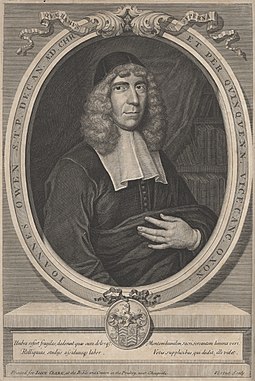
British Calvinists: John Owen (1616-1683)

John Owen (1616-1683) was born in Stadham, Oxfordshire. He graduated form Queen's College Oxford in 1632 aged 16 with a BA and then with an MA in 1635. At Oxford he was influenced by the philosopher Thomas Barlow. 

During the civil war he went to live in London. During this time he went to hear the renowned preacher Edmund Calamy, Calamy was unable to preach at that time but his replacement made a great impact on Owen and Owen converted. 

Owen first major work  A Display of Arminianism was published in 1643. The next year he became the pastor at Fordham and married Mary Rooke, he also published The Duties of Pastors and People Distinguished.  In 1646 he became a Congregationalist and founded a church at Coggeshall, Essex.. He became the Dean of Christ Church and then the Chancellor. He was appointed as Chancellor by Oliver Cromwell. 
In 1658 he took part in the formulation of the Savoy Declaration. When Cromwell died in 1658 Owen joined the Wallingford House Party. 

He was invited to go to Boston, USA, to become their minister but preferred to stay in the UK. 

He died aged 67 at Ealing and is buried at Bunhill Fields. He has been described as one of the greatest theologians of the Puritans and as the British Calvin. 


    His works include: 
  •  Justitia Divina (1653)
  •  Doctrine of the Saints' Perseverance (1654) 
  • On the Mortification of Sin in Believers (1656)
  •  Communion with God (1657) 
  • Schism (1657) 
  • Of Temptation (1658) 
  • Two Questions Concerning the Power of the Supreme Magistrate about Religion (1659)
  •  Discourse on the Holy Spirit (1674) 
  •  Person of Christ (1678) 
  • Discourse of the Work of the Holy Spirit in Prayer (1682) 
  •  Holy Spirit and His Work, as a Comforter and as the Author of Spiritual Gifts (1693)


A website devoted to Owen is http://www.johnowen.org/


Thursday, 3 July 2014

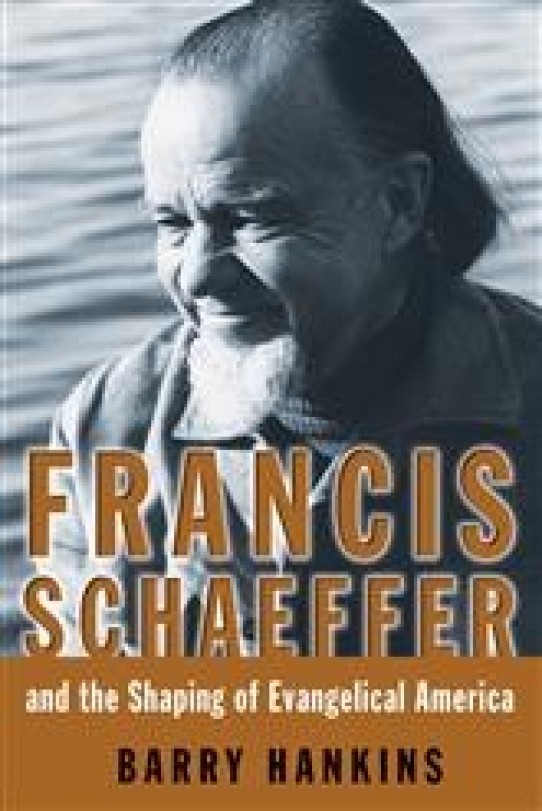
Hankins: Francis Schaeffer and the Shaping of Evangelical America

Francis Schaeffer and the Shaping of Evangelical America
Barry Hankins
Grand Rapids: Eerdmans, 2008
ISBN 978-0802863898
Pbk, 288pp, £14.99.

Hankins, a historian at Baylor University, has provided an excellent, critical, but not unsympathetic, intellectual biography of L'Abri's Francis Schaeffer. We see here the journey of Schaeffer from fundamentalist to cultural critic and back again as he embraced, or rather was embraced by, the Christian Right.

Hankins seems ambivalent towards Schaeffer, on the one hand he recognises the impact he has had on evangelicals in helping them to be more culturally and intellectually aware and on the other he sees the weaknesses in Schaeffer’s position. Schaeffer was good at painting the large picture but was weak and even wrong on some of the key details. 

Schaeffer’s strength was that he was a populariser;  his weakness was that he was a populariser. This comes through clearly in Hankins biography. 

Hankins provides a helpful overview and critical assessment of most of Schaefffer’s works. He shows that “Schaefer's analysis of western history was compelling in its broad outlines, but problematic in its details” p96. Schaeffer’s analysis of the Renaissance didn't acknowledge the difference between the Italian and the northern forms. He was reliant on the now discredited approach, popular at the time, of Jacob Burkhardt's approach to the Renaissance.


Nevertheless, Schaefer struck a chord with modernist Christians. He was the man for that time. But it Is clear that the time for him is not now, as Hankins shows the sales of C.S. Lewis’s far outstrip the sales of Schaeffer’s books today. 

Hankins has performed an excellent job of placing Schaeffer in context and showing how he could be so influential and so flawed. The latter comes out clearly in his exchanges with Mark Noll and George Marsden over Schaeffer’s claims in A Christian Manifesto that the US was founded as a Christian country. Hankins insightfully points out: 
It seems that for Schaeffer, when a Christian utilised non-Christian thinking [eg Aquinas], the product was sub-Christian, but when a non-Christian [eg Thomas Jefferson and other founding fathers] used Christian influences, the product was thoroughly Christian. (p 170). 

Wednesday, 2 July 2014

Academy Regained Conference at Redeemer and McMaster 28 July


Satellite conference with the CSCA/ASA/CiS Conference 
Monday, July 28, 2014 starting at 9:00 AM 

Redeemer faculty members Russ Kosits and David Koyzis are chairing “Academy Regained,” a conference that is overlapping with the annual conference of the Canadian Scientific and Christian Affiliation (CSCA), the American Scientific Association (ASA) and Christians in Science (CIS).

“Academy Regained” will explore the relevance, usefulness, and power of a Kuyperian approach -- an emphasis on the biblical narrative of creation, fall, redemption, and consummation -- for the academic disciplines. The goal is to portray the Reformational worldview, not as merely a collection of slogans, but as an emerging school of thought with a worthwhile programme of research.

The conference will feature presentations and discussions on how this approach applies to the natural sciences, the social sciences and the humanities. Faculty from Redeemer and other universities across North America are leading the different workshops.

This conference is part of the annual convention of the CSCA/ASA/CiS, which this year is being held at McMaster University. “From Cosmos to Psyche: All Things Hold Together in Christ,” is the theme of that conference, which begins on July 25.

Full details are availble here

Topics include:
K. VanderMeulen/C. Jongsma, “A Neo-Kuyperian Approach to Mathematics”
D. Schuurman/S. Vander Leest, “Exploring a Biblical Perspective of Engineering”
A. Sikkema, “Reformational Perspectives in Physical Science”
V. Asatryan, “Exploring a Biblical Perspective of Marketing”
R. Kosits/E. Johnson, “A Preliminary Rationale for Reformed and Reformational Perspective in Psychological Science”
J. Vanderwoerd, “Toward a Biblical Grounding for Professional Social Work Practice”
D. Koyzis, “Political Science Regained”
J. Danielson, “Music as Science and Art”
K. Flatt, “What Does Kuyper Have to Do with Ranke and Foucault? A Reformational Perspective on the Discipline of History”
A. Wilkinson, “Word and Flesh: Toward a Christian View of English Literature”
J. Rusthoven, “Toward a Reformed Understanding of Biomedical Ethics”

Tuesday, 1 July 2014

Recent Kuyperania (June 2014)

A review of Bratt's Abraham Kuyper appeared in Christian Scholar's Review XLIII(3) (Spring 2014), written by Jonathan Huggins. He concludes:

The book is so well researched that it is sure to become the standard work on Kuyper for those who want to engage with him seriously. I highly recommend the work to anyone who has interests in theology, politics, and history. It is a fascinating story about a rare person. Kuyper's intellectual powers and organizational skills were exceptional, and the relevance of his contributions is hard to deny. For those who are at home in the Reformed tradition, especially the more conservative expressions, Kuyper will prove to be a helpful, if challenging, guide. He defies simple categorization, especially in the contemporary American context. This should encourage a healthy dose of humility, even as it also encourages a strong confidence in the Reformed faith.

Scott Pryor reflects on the recent Convivium Calvinisticium the themes of which was “Creation, Redemption, and Neo-Calvinism” here.

He has also been working his way through Bratt's biography - see here, for example.

In Knowing & Doing  the newsletter of the C S Lewis Institute Connally Gilliam offers some reflections on "A Reformed Vision of the Visual Arts: A Conversation with Abraham Kuyper, Nicholas Wolterstorff, and the Word of God"

Vincent Bacote delivered a lecture on the "Social vision of Abraham Kuyper" a handout is available here.

Hoon Lee reviews Bratt's Abraham Kuyper he concludes:
Simply put, Bratt’s Abraham Kuyper is the definitive biography on Abraham Kuyper. It is a must read for anyone interested in Kuyper. It provides a critical introduction to Kuyper’s life, writings, and thought, but is also a resource for those already familiar with Kuyper. A small warning, the volume is not a simple read and may require a slight learning curve for readers completely uninitiated with Kuyper. I end this review as I began it and ponder, given Bratt’s depictions of the historical context of Kuyper’s social engagement, one wonders if Marsden’s appropriation will be successful in today’s climate.

Monday, 30 June 2014

Sandford: Blueprint for Theocracy: The Christian Right's Vision for America

Blueprint for Theocracy: The Christian Right's Vision for America
Examining a Radical "Worldview" and its Roots
James C. Sanford
Providence, Rhode Island: Metacomet Books
ISBN 978-0-9747042-0-3; 278 pp; hbk; £15.34


Sanford wrote this book originally out of curiosity, the book then evolved into a ‘history and role of Christian rightists ideology, or Christian Worldview.’ He looks at the origins of worldview, its development into an ideology by the Christian Right and finally, the agenda of the RR. It is a fascinating and well researched book. He looks at the term Christian Worldview as it has been used by the Religious Right (RR) in the States (the capital's are Sandford's).

The term Christian Worldview is obviously not the prerogative of the Christian right and is not univocal. Sadly Sandford - despite his protestations to the contrary - seems to treat it as if it were. How Abaraham Kuyper and Herman Dooyeweerd used the term worldview and how Francis Schaeffer and Charles Coulson and how the Christian Right use it are not the same. Sanford maintains that 'The Calvinist prototype developed by Kuyper was eventually to become the gold standard for today's Christian Worldview'.

Sandford sees the development something like this:


He  maintains that 'The historical record shows that Christian Worldview was formulated by doctrinaire theologians reacting with hostility to the rise of empirical science, secularism and popular democracy.' (The historical record - as David Naugle has shown - shows nothing of the sort.)

Sandford also writes:  'The concept [of worldview] was first developed by conservative theologians in Europe who wished to restore a more doctrinaire form of Christianity to a position of dominance'. That may be what it is used for now by the RR, but certainly was not the idea behind James Orr's (1844-1913) and Kuyper's development of it. Sanford rightly notes worldview is subject to 'different shades of meaning' but tends to treat it as if it weren’t.

He is right that 'Kuyper's ideas of antithesis and sphere sovereignty were critical in shaping his political views' but these views do not necessarily lead to a right wing manifesto. Reading Kuyper's own political programme, recently translated into English, soon lays that misconception to rest. Kuyper also had a strong view of the role of common grace that 'tempered' the antithesis.

Sandford recognises that he is not neutral and has a bias in favour of ‘pluralism, tolerance, and evidence-based thinking, and against the absolutist agendas in the political sphere.’ The irony is that it was pluralism and tolerance that was the outworking of Kuyper’s worldview and sphere sovereignty in his own political programme.The blame of the Christian Right in the sates can’t then be placed at Kuyper’s door.

The term worldview evolved over time from a pre-theoretical concept to an ideology. In a sense Francis Schaeffer popularised it and the Reconstructionists, such as Rushdoony,  politicised it. I would have liked to have seen more in the way the term worldview has morphed into an ideology.

In the book Sandford makes some interesting observations; for example, ‘it wasn't until communism was perceived as a threat to American society ... did evangelicals gradually begin to show a renewed interest in political.’  Political activity it seems was reactionary. Regarding VanTil he has this to say: 'When he published articles and books, he did so almost always in non-refereed publications, whose editors offered little critical challenge to his ideas', and 'Dooyeweerd invented his own unique vocabulary and was renowned for his lack of transparency'.

As this book shows the (mis)use of worldview has become an ideology in the hands of the Religious Right. What Sandford fails to see is how his own worldview is operating in his own writing. If there is a God who is concerned with redeeming all of life, who has laws and norms for every area of life then these will also apply to mathematics, science, architecture, art, sociology, business, … and even politics. When it comes to politics God is not silent.

Christians may well disagree with the way it has been outworked in the RR - I would share many of the concerns Sandford highlights - but it does not mean that we should, as Sandford seems to want, ignore those God-given laws and norms. The issue is whose laws and norms do we obey - humanity’s or God’s? Sandford it seems want Christianity to change minds but not institutions, to be private but not public. 


Saturday, 28 June 2014

Block's Obadiah: The Kingship Belongs to YHWH

Obadiah
The Kingship belongs to YHWH
(Hearing the Message of Scripture: A Commentary on the Old Testament)
Daniel I. Block
Grand Rapids: Zondervan, 2014
ISBN 9780310942405

Obadiah at just under 300 words is the shortest book of the Bible. There are not many one volume commentaries devoted to it, so this book is a welcome addition.

There have been a proliferation of new commentary series recently - well at least two! This commentary on Obadiah is part of a new series from Zondervan. The emphasis in this series is the place given to understanding the role of the biblical authors as rhetoricians. Block examines not only the message of the author but also what strategies he used to get over his message. As the series editors put it:
The primary goal of this commentary series is to help serious students of Scripture, as well as those charged with preaching and teaching the Word of God, to hear the messages of Scripture as biblical authors intended them to be heard . While we recognize the timelessness of the biblical message, the validity of our interpretation and the authority with which we teach the Scriptures are related directly to the extent to which we have grasped the message intended by the author in the first place . Accordingly, when dealing with specific texts, the authors of the commentaries in this series are concerned with three principal questions: (1) What are the principal theological points the biblical writers are making? (2) How do biblical writers make those points? (3) What significance does the message of the present text have for understanding the message of the biblical book within which it is embedded and the message of the Scriptures as a whole . The achievement of these goals requires careful attention to the way ideas are expressed in the OT, including the selection and arrangement of materials and the syntactical shaping of the text.
And as the author has it:
With this volume we are launching a new commentary series, whose goal is to help readers of the Scriptures hear the messages that the human and divine authors in- tended to communicate. 
Each part of the commentary is split into five main sections: 
  1. The main idea 
  2. The literary context
  3. Translation and outline - here the author provides his own translation
  4. Structure and literary form 
  5. An explanation of the text.
This forms a helpful framework. 

The final chapter: ‘Canonical and practical significance’ is very useful and interesting. Here the exegetical detail is supplemented by a broad overview. As Block notes: ‘The brevity of the book masks its profundity.’ Block develops the idea of Edom as a representative of the nations and as a representative of humanity. He also highlights the key idea behind the book as ‘The dominion belongs to YHWH.’ Here he leaves us rightly with a Christological perspective: 
The dominion belongs to YHWH incarnate in Jesus Christ! To him be the glory and dominion for ever and ever. Amen!

Block is no stranger to commentary writing he has produced major commentaries on Ezekiel, Judges and Deuteronomy, this book is a welcome addition to his corpus.