An accidental blog

"If God is sovereign, then his lordship must extend over all of life, and it cannot be restricted to the walls of the church or within the Christian orbit." Abraham Kuyper Common Grace 1.1.

Monday, 23 March 2015

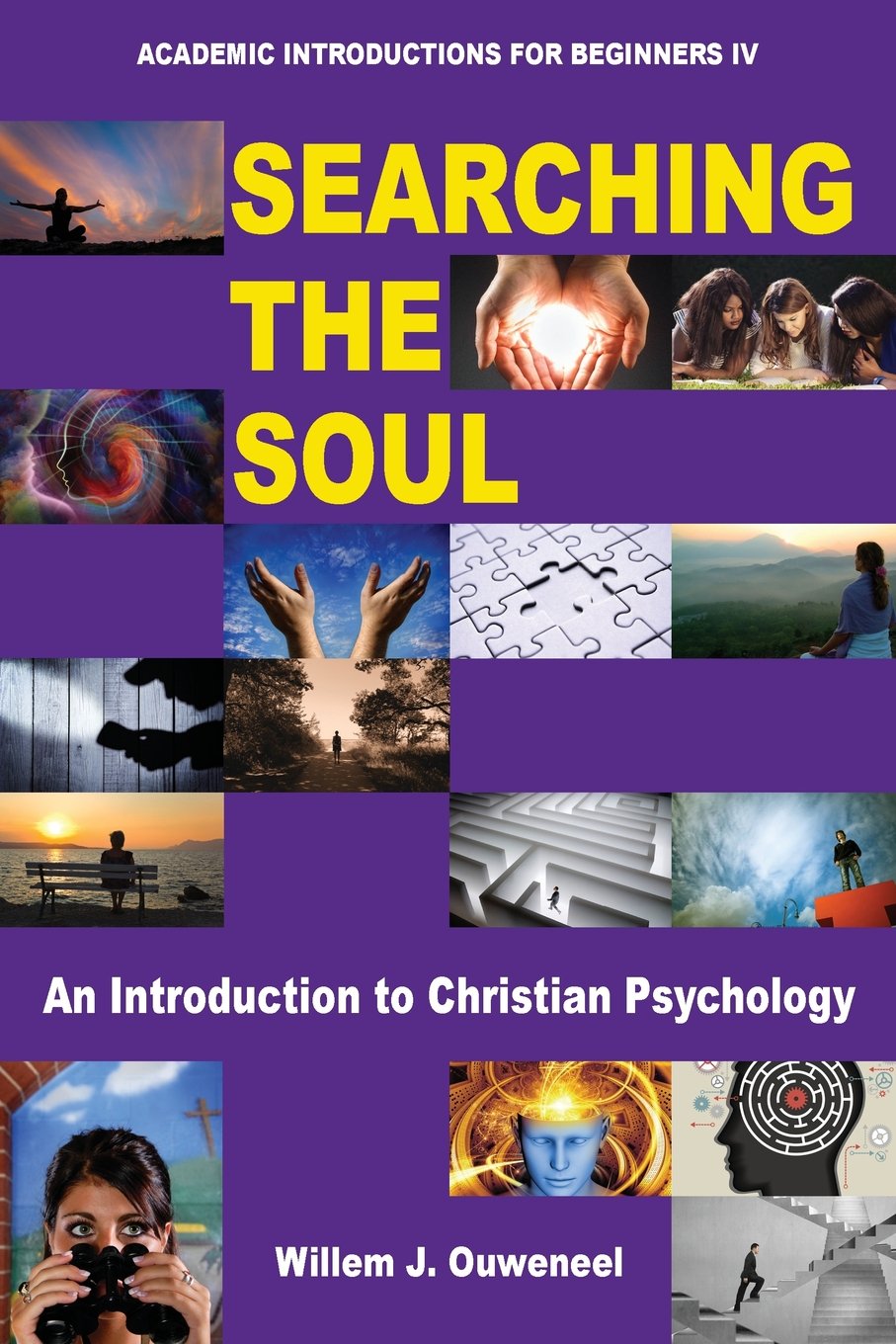
Searching the Soul by Willem J. Ouweneel - a review

Searching the Soul
An Introduction to Christian Psychology
Academic Introductions for Beginners IV
Willem J. Ouweneel.
Jordan Station, ON: Paideia Press
ISBN 978-0-88815-225-1
Pbk, xiii + 231 pp, £8.00


What is Christian psychology? Willem Ouweneel answers this question, in the fourth volume of his Academic Introductions Series, by first looking at what it’s not. It’s not a neutral science and it’s not a biblical psychology. In respect to the latter he reminds us that the Bible is true, but not all truth is in the Bible. Christian psychology is based on a Christian worldview which is ‘rooted in the Bible’ (p10). He is scathing about attempts to integrate psychology and theology; all to often the integrationists, like biblicists, understand by ‘psychology’ the current secular psychological views (p 12); they often also confuse theology with the Bible. Theology is unable to provide a Christian worldview as a basis for psychology - the limited role of theology is dealt with further in his What Then Is Theology? 

The book is an expansion of his earlier Heart and Soul (2009), which in turn was a translation of his Dutch work Hart en Ziel (1984).

His working definition is ‘psychology deals with what goes on inside a person as well as with his outward behaviour’. (p3) He develops the formula B = f(R,P,S) to show that behaviours cannot be reduced to one element or another but are a function of religious (R), personal (P) and situational factors (S).

The strength of the book is that it develops a Christian view of psychology within a Christian anthropology. So erroneous dualistic and tricotomistic (body/ soul/ spirit) views of humanity are rejected. (Unfortunately, he keeps using exclusive language.) His approach does not set Christian psychology against secular psychology, he discerns what is good in the former and seeks to transform it. He can do this as he is working from a Christian philosophical view of reality based largely on Dooyeweerd and Vollenhoven’s works. 

Particularly interesting for me was the chapter on the development of psychology from its nineteenth century origins through structuralism, functionalism, depth psychology, reflexology, behaviourism, humanistic psychology, cognitive, Gestaltand existentialist psychologies. 

It is in the context of psychology that Ouweneels’s splitting of Dooyeweerd’s psychical modal aspect into two: the perceptive and the sensitive that makes practical sense. He also makes good use of Vollenhoven’s distinction between structure and direction to critique the different psychological approaches on offer.

This books would be an excellent resource for those studying psychology at school or as undergraduates, but any Christian would find something of value in it, particularly if they are involved in any form of pastoral ministry. It is replete with good sound Christian wisdom.


Contents
  1. Psychology and Christianity
  2. Starting points for a christian psychology
  3. The unity of man
  4. Psychological knowledge
  5. The development of psychology
  6. The lower mental idionomies
  7. The spiritive idionomy
  8. The normal personality
  9. The human heart
10. The abnormal personality
11. Causes of mental disorders
12. The Christian and psychotherapy.


Friday, 20 March 2015

Computer Science by Jonathan R. Stoddard

Com­puter Sci­ence: Dis­cov­er­ing God’s Glory in Ones and Zeros
Jonathan R. Stoddard 
Presbyterian and Reformed
ISBN: 9781596389908

In this 24-page booklet Jonathan Stoddard, an associate pastor with computer science degree, attempts to understand how God is the Lord over computer science. He takes a Van Tilian approach: 

‘First, God is the foundation for computer science. Second, there is an analogical relationship between God and computer science.’

He views computing as being possible because of God: God created the foundations for computing. It is not the accident of evolution but a reflection of ‘the God who has spoken in our world’ and he has ‘established the laws needed to make computer science possible’.

Stoddard explores several analogical relationships. The way a computer scientists writes his code and the computer executes that code is analogical to the way God creates by his word: ‘there is a relation between the act of God’s creative speech and the creative speech of the programmer’. 

His approach, like Van Til’s (and Poythress, who wrote the preface), gets rather close at times to a Christian theo-ontological view, where the attributes of God provide the basis for the sciences. This perhaps comes to the fore when he writes ‘When we program computers, we are still thinking God’s thoughts after him’. 

This booklet, then is something of a curate’s egg. It is great to see a work - albeit brief - exploring what the lordship of Christ over computing might look like, but is marred by his reliance on Van Til’s analogical thinking. There is no discussion of how worldviews impact on computing or on how computer science can be viewed through the  Christian approach of creation, fall and redemption. But then a booklet of more than 24 pages would be required to do justice to that. Stoddard is right that God is the foundation for computer science, but I would disagree that that foundation is to be found in an analogical relationship.


Thursday, 12 March 2015

Mark Roques on Parables, Paris and Posing Probing Questions

Mark Roques in his own inimitable, iconoclastic style does his stuff on parables and communicating the gospel at Leeds City Church:


Tuesday, 10 March 2015

Power in Service by Willem Ouweneel - a review

Power in Service
An Introduction to Christian Political Thought
Willem J. Ouweneel
Jordan Station, ON: Paideia Press, 2014
Isbn:978-0-88815-229-9
Pbk, 146pp, £5.75

What is the Kingdom of God? This question opens the book by Ouweneel, the second volume in the Academic Introductions for Beginners series. This is an apposite question. Ouweneel develops the idea that politics cannot be separated from the kingdom of God. Likewise politics is also rooted in creation and grounded in creational ordinances - despite what Augustine thinks.

Drawing on a reformational approach Ouweneel ably shows, in this brief but brilliant book, that politics is an important area for Christian involvement. Humans are political agents, but since the fall all of life has been tainted with sin and that includes politics. But we can look forward to a fully redeemed politics when Christ returns.

Ouweneel utilises the kuyperian concept of sphere sovereignty to examine the relationship between the church and the state. Employing Dooyewerd’s analysis of institutions he sees the State as a juridicial institution that maintains public legal order. He stresses the importance of the separation of church and state but rightly affirms that this does not mean a separation between religion and society, as all of life is religious - all the way down. The role of the state is limited, it cannot play the role of a moralist but neither is it neutral.
He makes excellent use of the Vollenhoven's distinction between structure and direction to show how the fall has changed the direction but not the structure of the human heart. Ouweneel sees structure and direction as two polarities, as horizontal and vertical. 

He makes a very good point in noting that Christians often make the mistake of identifying the ‘world’ with ‘society’. Many Christians then avoid society thinking that in doing so they are avoiding the evil world. Hence, an avoidance of politics. Understanding the world as direction, and society as structure helps avoid such a non-biblical pietistic approach to society. Avoiding society taken to an extreme would be to withdraw into a monastery; but then that too is a society!

Also helpful is his discussion on being strangers and pilgrims. As he points out we cannot escape society and social institutions; no societal relationship is of itself evil, biblically there is no distinction between sacred and profane. 

Several of the key themes are then covered in a case study in the final chapter on Christian schools and religious and moral education imposed by the state.

Recent year have seen a significant number of helpful book on a Christian approach to politics - in particular David Koyzis’  Political Visions and illusions and James Skillen’s The Good of Politics. (See my list of resources for a Christian approach to politics.) This book is a helpful addition to those. It outlines clearly and accessibly what a reformational approach to politics looks like.


Contents
1. What is the kingdom of God?
2. Church and state apart
3. Offices and responsibilities
4. Theocracy
5. Strangers and pilgrims
6. The two kingdoms
7. Creation and re-creation
8. En route to the kingdom
9. The Christian school under attack


Saturday, 28 February 2015

Glossary of terms used in reformational philosophy in Wisdom for Thinkers by Willem J. Ouweneel

Numbers in parentheses show where the concept is defined or discussed in Ouweneel’s Wisdom for Thinkers. Where possible the phrasing is Ouweneel’s. The numbers in parentheses indicate where the term is discussed.


Absolutising - making an aspect of reality absolute, making it the one and only thing to which all other things can be reduced. (47)

Abstraction - there are (at least) three kinds of abstraction:
Abstraction of the universal - the unique character of a phenomenon is disregarded in the search for what phenomena have in common so that general principles are formulated.
Abstraction of the objective - personal feelings and prejudices are disregarded so that another investigator would in the same circumstances obtain the same results.
Modal abstraction - every science has its own modal viewpoint from which it studies cosmic reality. (126) 

Anastatic - see Religious ground-motive

Analogies play an important role in the theory of modal aspects. All modal aspects are intertwined, because within each aspect we find analogies with all other aspects; e.g. strong feelings is an energetic analogy within the sensitive aspect. (73)

Apostatic - see Religious ground-motive

Boundary this is not to be taken in the spatial sense - the law is a boundary between God and the cosmos. The boundary also connects - the law could be called the connection point between God and cosmos. (74-75) Law as boundary emphasises the uncreated aspect of the law; it is God’s own Word for creation - it is spoken not created. However, the law-side emphasises the created aspect of the law. 

Culture - human action through which the potentialities of creation are unfolded (78). Culture is manipulated (handled, shaped) nature; it is nature as worked or processed by humanity. (84) It is the specific way in which the object-function of non-human entities have been opened up by humanity. (85)

Direction - see Structure

Destination function - this indicates an entities destination or purpose of an entity within human life. (87)

Encapisis - certain matter may be encapsulated within some other matter. There are several different forms of encapsis:
symbiotic encapsis eg the yucca plant and the yucca moth
correlative encapsis eg a living being and its habitat or between church and state
subject-object encapsis eg a snail and its shell, or the spider and its web.

Entity - something that 'is', something that exists within our empirical reality.  There is a distinction between entities and the properties of entities. A genuine entity functions in all 16 aspects of cosmic reality, whereas the properties of entities do not. (82)
There are different kinds of entities: inanimate things, plants, lower animals, higher animals and humans.

Epistemology The philosophy of knowledge: the part of philosophy that tries to answer questions like: What is knowledge? How can we know that we know something? (5)

Faith underlies beliefs it is supra-rational (8); it is not non-rational, or even irrational; faith is not necessarily against reason, but faith is above reason (9). It always possesses a religious nature p 10. Faith is transcendent, it surpasses everything that belongs to or empirical world (reason and feelings are immanent). It can be expressed in beliefs and emotions but transcends our beliefs and emotions. (30)

Foundational function - in tangible things this is usually the spatial function. (87)

Functionalism - the absolutisation of certain immanent functions. (107)

Heart – this is a metaphor for our innermost being, our ego, our personality centre. (30) 

Idionomy - this term (first suggested by P. Verburg) is used for Dooyeweerd's ‘individuality structure’. The idionomy is a kind of law that makes e.g. all horses, not just your horse, to be horses. The idionomy of a certain entity is characterised by a certain specific modal aspect. Each will have a foundational function and a destination function. (87)

Kernel is the essence of a modal aspect. A kernel is not ‘thing-like’ (71). The kernel of the arithmetical aspect is number; of the spatial is extended form; of the kinematic is motion … 

Law - see Boundary

Law-side - see Ordered world

Law-spheres all things within cosmic reality are subject to the laws that the Creator has instituted for them. (59) 

Modal aspects or modalities of reality. There are sixteen of them: arithmetical, spatial, kinematic, energetic, biotic, perceptive, sensitive, logical, formative, lingual, social, economic, aesthetic, juridicial, ethical and pistic. Modal aspects are not phenomena but always only aspects of phenomena; they are not concrete things or states. (51) Each modal aspect has a kernel. Sometimes described as law spheres. 

Nature - the parts of cosmic reality that are unspoiled and pristine, i.e. unaffected by humanity (84).

Natural laws (and norms) natural laws tell us what is, norms tell us what ought to be. (61) Laws cannot be disobeyed whereas norms can be disobeyed.

Norms see Natural laws

Objects see Subjects

Ordered world and World order. The ordered world is made up of facts and is on the factual side or subject-side;  the world order is made up of laws and is on the law-side of reality. (60) 

Ontology - the philosophy of all things that are, or simply, of all things that exist, the philosophy of the whole of cosmic reality. (5)

Qualifying function - this indicates the 'quality', it is the highest subject-function of the entity. (87)

Philosophy  - the foundational science - ‘the science of sciences’. (6)

Reason – this is never autonomous as it is directed by the heart. (31).

Religion - the confidence humans have in Someone or something as a kind of Ultimate Ground. This Someone or something functions as a kind of general, foundational principle from which the whole of reality can be explained. (11)

Religious ground-motives the deepest motives that drive our hearts, and are therefore of a religious nature. They can be of two sorts: anastatic (from the redeemed heart) and apostatic (from the sinful, unregenerate heart; of which there are three types: matter-form; nature-grace; and nature-freedom). (35)

Science - theoretical knowledge. (17)

Special sciences are scientific disciplines (e.g. geometry) interested in the whole of reality but only from a certain aspect or angle (e.g. the spatial). (45)

Spiritive  (a term coined by Ouweneel) for the analytical, historical, lingual, social, economic, aesthetic, mural, ethical and pistic modal aspects. (41)

Structure and Direction - Structure deals with the creational structures and the laws God has instituted for the various creatures and cosmic modalities. Direction is a dimension that is, so to speak, perpendicular to that of structure; it involves the directness of any entity, event or state of affairs. There are only two directions: either towards the Creator or an apostate one away from the Creator. (76-77)

Subject and object - these tell us about the ways things function within reality p. 65. Plants are subject to all the  modal laws in the biotic  and lower. They are objects in all the modal aspects above the biotic. Humans are subject to all modal laws, they function as subjects, or have subject functions in all modal aspects. P. 66. Plants function as objects in the modal aspects higher than the biotic. (67). 
All things function in all modal aspects either with subject-functions or object-functions (68). Object functions are not always activated. 

Subject-side (or factual side)- see Ordered world

Supra-rational transcends, rises above the rational. (8) It is distinct from the rational and the irrational.

Time is created, time and the created cosmos belong together, and the modal aspects are aspects of the temporal cosmos. (54).

Typical-function - this is associated with natural things when they are culturally manipulated. In cultural entities this will always be the formative function (88)

World order - see Ordered world

Worldview a (frequently un-articulated) set of ideas and principles concerning the world in which we live, the nature, the origin, the purpose (or lack of purpose) of this world. (7) 


Wisdom for Thinkers by Willem J. Ouweneel: a review

Wisdom for Thinkers
An Introduction to Christian Philosophy
Willem J. Ouweneel
Jordan Station, ON: Paideia Press
ISBN 978-0-88815-226-8
Pbk, 208pp, £7.50

This is the first part of a proposed series entitled ‘Academic Introductions for Beginners’. So far there are four volumes published:

Wisdom for Thinkers
Power in Service
What then is Theology?
Searching the Soul

And two more are proposed on biology and history.

Ouweneel is a prolific author - he has published 165 works - primarily in Dutch and has three earned doctorates in genetics (University of Utrecht, 1970), philosophy (VU, Amsterdam 1986 - one of his supervisors was Andree Troost) and theology (University of the Orange Free State, SA, 1993).  He is thus adequately equipped to deal with these subjects. He has worked as a school teacher, as a scientific officer, laboratory researcher, as a part-time pastor, and as professor of theology, philosophy of science, ethics, psychology in several universities and as a French and German teacher. This wide academic and work background makes Ouweneel an ideal person to write such a broad series.

All the books in the series are written from a Dooyeweerdian reformational perspective.
Wisdom for Thinkers  lays the foundation for the series. It provides us with an excellent and largely accessible introduction to reformational philosophy. In it he covers a wide range of topics including the nature of philosophy and worldviews, a Christian view of cosmic reality, a Christian view of entities, anthropology, the philosophy of science, and the relationship between philosophy and theology. Several of the chapters are then developed in the subsequent books. For example, there is much overlap between the chapter here on philosophy and theology and his What Then Is Theology? And in the latter he keeps referring back to this book. Those unfamiliar with Christian philosophy would do well to read this introductory book before diving into those later in the series.
Reformational philosophy is not known for its accessibility and there are a large number of new terms that have been coined by adherents of this approach - primarily because old terms don’t adequately express the intricacies of God’s creation. Ouweneel has done much to remedy this as this book is accessible, most of the technical terms are clearly defined, but the subtle nuances and technicalities contained in the terms may well overwhelm someone who has not come across this Christian philosophy before. A glossary would have helped solve some of these problems. (I have been working on one see here.)

Ouweneel presents clearly the Dooyeweerdian perspective and is not afraid to develop and adapt the approach, but where he differs from Dooyeweerd he does often make it clear that he does. For example Dooyeweerd sees fifteen modal aspects, Ouweneel sixteen. He splits the psychic aspect into perceptive and sensitive modes and he has coined the term ‘spirtive’ to describe the modal aspects from the analytical to the pistic.

There are a small number of frustrations I found with the book. These include the lack of a glossary, the use of exclusive language,* the lack of references (but perhaps this is deliberate to make the book more accessible) and the surprisingly short bibliography (2.5 pages). These shortcomings are however more than compensated for by the excellent indexes (8 pages of subject index and 3 pages of scripture index), the price of the book, and the making of a Dooyeweerdian approach (almost) accessible.

This book is a great beginning for what promises to be an excellent series.


Kuyperania February 2015

David Koyzis has the second part of his piece looking at Kuyper's ideas and applying them to evangelism and pluralism: 'When we turn inwards' First Things 

Jordan Ballor offers some thoughts on Koyzis's piece at Calvinist International 

The Kuyper Center Review  vol 5 includes:

Michael Bräutigam 'A queen without a throne? Harnack, Schlatter, and Kuyper on theology in the university'
Gijsbert van den Brink 'Evolution as a bone of contention between church and academy'
Ad de Bruijne 'Not without the church as institute'
Dylan Pahman F.W.J. Schelling: a philosophical influence on Kuyper's thought'
Harry Van Dyke 'Kuyper on the teaching of history'
Gordon Graham 'Abraham Kuyper and the idea of a Christian scholar'
Ernst Conradie 2014. Views on worldviews : an overview of the use of the term, worldview, in selected theological discourses. Scriptura 113: 1-12
Looks at the use of the  term worldview in five texts including Kuyper's Lectures on Calvinism.
Abstract. This article explores the ways in which the term 'worldview' is used in five distinct contexts that shape the study of religion and also of Christian theology, namely neo-Calvinism, the sociology of knowledge, discourse on religion and ecology, discourse on science and theology and African Traditional Religion. One text by one author is selected in each case to describe the distinct ways in which the term is used. This description suggests that the term is used in theological debates with very different connotations and also with very little cross-referencing - this can only cause confusion. On this basis a modest proposal is made as to what the notion of a worldview could entail, at least in the context of theological discourse

Jeffrey Skaff 2015. Common Grace and the Ends of Creation in Abraham Kuyper and Herman Bavinck. Journal of Reformed Theology 9(1): 3 – 18.
Abstract. Despite its marginal place in contemporary dogmatics, the doctrine of common grace potentially has much to offer to a theological account of the created order. Describing its relationship to special grace, however, to salvation, is no easy task. This article finds that Abraham Kuyper—the most prominent supporter of the doctrine—attempts to describe this relationship in two ultimately irreconcilable ways. In addition, it argues that only one of these ways—one in which common grace is always ordered to special grace—is acceptable. Such an account, which is defended by Kuyper’s contemporary Herman Bavinck, provides the basis for an understanding of the created order that should resonate with Christian theologians both inside and outside the Neo-Calvinist tradition, including those who have been influenced by Karl Barth.

Friday, 20 February 2015

Neo-Calvinism and the French Revolution ed. Eglinton and Harinck

Edited by James Eglinton and George Harinck
London: T&T Clark, 2014.
ISBN: 978-0-567-65663-6
Hbk, xii + 210pp, £65.00

The rallying cry of the French Revolution can be summed up as “No God, no master”. According to Kuyper: 
“The French Revolution threw out the majesty of the Lord in order to construct an artificial authority based on individual free will. That project resembled a scaffold nailed together from odd planks and beams which cracks and falls when the first gale rises. The Christian religion teaches us that life on earth is part of an external existence. The French Revolution, by contrast, denied and opposed everything beyond the horizon of this earthly life. The Christian religion speaks of a lost paradise, a state of purity from which we fell, and for that reason calls us to humility and conversion. The French Revolution saw in the state of nature the criterion of what is normally human, incited us to pride, and substituted the liberalizing of man's spirit for the need of conversion. Springing from God's love, the Christian religion brings loving compassion into the world. Over against that compassion, the French Revolution placed the egoism of a passionate struggle for possessions. And finally, to touch on the real point that lies at the heart of the social problem, the Christian religion seeks personal human dignity in the social relationships of an organically integrated society. The French Revolution disturbed that organic tissue, broke those social bonds, and left nothing but the monotonous, self-seeking individual asserting his own self-sufficiency (The Problem of Poverty 43-44).

The relationship between neo-Calvinism and the French Revolution is an important one and one that until now has been seldom examined in depth. This book collects the papers from the second European conference on neo-Calvinsim held in Paris in 2012. The first was in Edinburgh 2010. 

Groen van Prinsterer’s refrain ‘Against the Revolution, the gospel’ distills neo-Calvinist views regarding the French Revolution. In chapter 1 James Bratt looks at: What went wrong with the French Revolution? In essence, for kuyper, liberty was replaced by suppression, equality with class segmentation and fraternity with strife. Bratt draws effectively on Kuyper’s 1889 ‘Not the liberty tree but the cross’. 

In Chapter 2 Harinck compares Bavinck’s view with Kuyper’s. The French Revolution is like the fall of Adam and Eve, Groen van Prinsterer introduced the idea to Kuyper who developed it further and contrasted the French Revolution world and life view with the neo-Calvinists. Bavinck didn’t utilise the French revolution as much as Kuyper, for Bavinck the Revolution was an historical event and he focused less as an expression of modernism, over the years it was the ideas behind it that became more important compared with the historical event. 

Eglinton poses the question in Chapter 3: What do Paris and Amsterdam have to do with Babel and Pentecost? The Frnech Revolution disliked linguistic diversity, neo-Calvinism was positive towards it. Here Eglinton looks at Kuyper’s ‘Uniformity: the curse of modern life and his De Gemeene Gratie. The later is more measured than the former, but they provide different accounts of linguistics. Eglinton’s key critique of Kuyper is that despite Kuyper’s opposition  to a false uniformity he seeks to maintain a one nation, one language model. 

What was the French Revolution? Is the question that Elliott seeks to answer in Chapter 4. He does so by examining the views of a number of historians: Burke, Carlyle, Chateaubriand, Lamennais (whose interpretation was appreciated by Bavink),  Hugo and the Dutch Reformed: Groen van Prinsterer, Kuyper and Bavinck.

Covolo sums up well the neo-Calvinst view of the French Revolution in Chapter 5: ‘The French Revolution has been for secularism what the reformation has been for the Christian faith’ (p. 82). Covolo carefully and convincingly argues that fashion during the French Revolution should be taken seriously as it illustrates ‘rituals with deep social, political and even spiritual meaning’.

In Chapter 6 Wilkinson critiques the ideals of the French Revolution as presented in Kieslowski’s Three Colours trilogy. She explores each film and links them with Kuyper’s critique of the revolution in The Problem of Poverty. Reading Three Colours through a kuyperian lens ‘helps clarify what Kieslowski is doing’ (p 102). This is down in a fascinating and novel way - it provides stimulating reading; I shall certainly be rewatching Kieslowski’s films again to see the nuances I previously missed.

Klei, in Chapter 7, looks at the legacy of Groen van Prinsterer, in the light of the French Revolution, in the political ideology of orthodox political parties in the Netherlands.

Burger looks at Kuyper’s anti-revolutionary doctrine of scripture (Ch 8) and Huttinga (Ch 9) at Bavinck’s view of theology as the queen of the sciences. Surprisingly, Huttinga maintains that such a view is not a misplaced view, but is an ‘affirmation of the glory of science and knowledge in general’ (p. 145), though Bavinck’s view of theology is not so much as ruler, ‘but more of the eschaton of the sciences.’ 

In Chapter 10 Kaemingk tests the hypothesis that the French Revolution saw the birth of modern secularity by examining the treatment of Islamic immigrants in contemporary France. As Kaemingk clearly shows the heirs of the Revolution did not transcend religion but developed a new one and behaved as followers of religion. This is illustrated in the French law passed banning the use of clothing in schools that indicates a student’s religious affiliation. This desire for uniformity stems from a religious perspective and illustrates the ‘secularist mission to Islam’. 

Den Boer, in Chapter 11, looks at three markers: perspective, dialectic and integration with regards the French revolution. He suggests that the rise of neo-Calvinism as a reaction to the French Revolution is ‘historically speaking problematic’ (p. 193). He thinks it is better rooted in a wider ‘historical revolutions’. 

What becomes clear from these diverse and wide ranging contributions is that there is little consensus about the role of the French Revolution in neo-Calvinist thought. Kuyper used it as a foil in stressing the antithesis, whereas Bavinck it played much less of a role.

Despite the common themes of neo-Calvinism and The French Revolution we have here a diverse collection of papers, which show that neo-Calvinist studies are flourishing. The book poses - and answers - many fascinating questions. 

This volume will be of  use not only to those with an interest in neo-Calvinism but also in the French Revolution and in the secularisation of Europe.


Book reviews around the web


Rudi Hayward has an excellent review of Willem J. Ouweneel's What Then Is Theology? Paideia Press, 2014.
In this book Ouweneel offers us, according to the subtitle, “an introduction to Christian theology”.  However it is not an introduction in the usual sense of an overview of the main themes and content of theology.  It is rather an introduction to the activity of theology, or as Ouweneel puts it in his foreword “It is more like a chemist taking you into his laboratory, and showing you what he is doing.  That is, the purpose of this book is to analyze the phenomenon of theology itself” (xiii).  This means that the book is not really an example of theology, it is a book about theology, and as such is more philosophical in character.  This is an important point for Ouweneel who is also a philosopher as well as a theologian, and he makes numerous references to his earlier book Wisdom for Thinkers which introduces Christian philosophy.


Luke Stamps at Credo has a review of Craig Bartholomew and Mike Goheen's Christian Philosophy. Baker, 2013.


Jon Coutts, of Trinity College Bristol, takes a helpful look at James Skillen's The Good of Politics. Baker, 2014.  he writes:
The Good of Politics offers an accessible, probing introduction to the issues and histories at play in a Christian approach to government. With a balance of nuance and narrative it deftly traces recurrent concerns without dwelling on them so that it can provide a sweeping review of the biblical and historical contexts that inform and compel our contemporary engagement. As such it commends itself to classrooms and churches as a prompt for group discussion and deeper study, cultural awareness and social activity.

Journal for Christian Scholarship articles by Bennie van der Walt and Danie Strauss


The recent issue of Journal for Christian Scholarship contains two excellent looking articles:

B.J. van der Walt 2014. How and why the Potchefstroom University for Christian Higher Education became a secular institution: a personal analysis Journal for Christian Scholarship 50(4): 13-48.

Danie Strauss 2014. Introducing Christian philosophy. Journal for Christian Scholarship 50(4): 61-79.

Saturday, 14 February 2015

Kuyper Center Review Volume 5

The Kuyper Center Review 5 (2015) has been announced. It contains papers from the 2013 Kuyper Conference at Princeton on 'Church and the Academy'. It contains papers by
H. Russel Botman
Michael Bräutigam
Gijsbert van den Brink
Ad de Bruijne
Javier A. Garcia
Gordon Graham
Marinus de Jong
Dylan Pahman
Harry Van Dyke


Monday, 2 February 2015

Kuyperania: to celebrate 10 years of www.allofliferedeemed.co.uk

To celebrate 10 years of www.allofliferedeemed.co.uk here's a new translation of a Kuyper piece by Harry van Dyke:


Dr. A. Kuyper, Het heil in ons (1879; repr. Kampen: Kok, 1910), pp. 165–225. 

This study appeared in thirteen instalments in the Sunday supplement of De Standaard, from Aug. 2 to Nov. 15, 1874. Translated and annotated by Harry Van Dyke. 

Lambert Zuidervaart: On Being a Reformational Philosopher

Dr. Lambert Zuidervaart's lecture to the ICS "Scripture, Faith, and Scholarship" seminar. November 14, 2014. Toronto - followed by Q&A.


Saturday, 31 January 2015

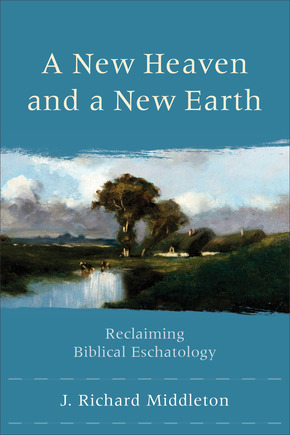
A New Heaven and a New Earth by J. Richard Middleton

A New Heaven and a New Earth
Reclaiming Biblical Eschatology

J. Richard Middleton

Grand Rapids: Baker Academic, 2014
ISBN 978-0801048685
pbk, 336pp, £14.55

Richard Middleton, the co-author of The Transforming Vision and author of The Liberating Image, has produced a fascinating, insightful and brilliant book dealing with eschatology. He wrote it because he saw that the 'time was ripe for a clearly articulated Christian eschatology that is rooted in responsible exegesis of Scripture and also attuned to the theological claims and ethical implications of the Bible's vision of salvation'. He has done exactly that. He clarifies how eschatology is consistent with a holistic worldview. 

We have sadly lost the biblical vision of eschatology. For far too many Christians the aim is to escape the earth and to be in heaven with God, worshiping him - they envisage heaven as an eternal church service. For many Christians who have swallowed this escapist nonsense it will come as a shock to see that this vision of heaven is Platonic rather than biblical. It's not helped, as Middleton points out, by some of the hymns that we sing; for example: Wesley's Love Divine: 'Changed from glory into glory/ till in heaven we take our place' or even the Christmas carol 'Away in a Manger': 'And fit us for heaven to live with thee there'! As Middleton shows this idea of a transcendent non-earthy realm goes back not to the Scriptures but to Plato. 

Middleton draws upon second temple Judaism, Greek philosophers, church fathers, the Apocrypha, the Dead Sea scrolls, Little Red Riding Hood, Reggae music, the film the Princess Bride, Narnia as well as primarily the scriptures to show how this holistic view of eschatology is firmly rooted in the scriptures. When it comes to a biblical view of heaven it seems we have lost the plot, but Middleton by looking at the plot of the biblical story shows us what a more biblical, holistic and integrated eschatology looks like.

In his examination of four key NT texts (Acts 3:17-21; Eph 1:7-10; Col 1:16-20; Rom 8:19-23; 2 Pet 3:10-13) he concludes that salvation is restorative and comprehensive and holistic. It is a repairing of what went wrong and a redeeming of all things - not just our 'souls'. The garden in Genesis 1 is to be fulfilled in Revelation 21-22. He rightly emphasises that 'the human contribution to the the new Jerusalem is not to be downplayed' and that salvation 'does not erase cultural differences'. Heaven is not just an eternal church service or worship meeting! He suggests that cultural development may even need to take place on the new earth. 

Not being afraid of look at the apparently contrary data in scriptures, Middleton examines these in close detail. Several texts suggest a cosmic destruction and other-worldly destiny rather than an holistic renewal - these include the Olivet Discourse, Revelation 6, 2 Peter 3 and Hebrews 12. After a close examination of these passages he concludes 'the Bible envisages nothing less than the eschatological transformation of heaven and earth'; a transformation not an annihilation.

He briefly looks at personal eschatology and concludes that there is little evidence for an intermediate state in the Scriptures.  

The final chapters examine the important question 'So What?' The gospel of the kingdom is good news as it addresses Jesus' hearers with 'full-bodied concrete earthly needs', and it breaks down the opposition between the Jews and gentiles; it is open to the outcasts and outsiders. This perspective is in stark contrast to the new form of dualism Middleton claims is making inroads into the North American church: an in group/ out group dualism. 

He makes an excellent case for the need not to separate eschatology and ethics. The kingdom of God is not the church, or a set of cultural ideas, it is nothing less than 'God's restorative rule over the entire earth'.

The book is extremely well documented - about 25% of it is references and this shows the depth of research Middelton has done and engaged with.

This book is a must-read for all Christians.  


Contents

Preface: How I Came to Write This Book
1. Introduction: The Problem of Otherworldly Hope

Part 1: From Creation to Eschaton
2. Why Are We Here? Being Human as Sacred Calling
3. The Plot of the Biblical Story

Part 2: Holistic Salvation in the Old Testament
4. The Exodus as Paradigm of Salvation
5. Earthly Flourishing in Law, Wisdom, and Prophecy
6. The Coming of God in Judgment and Salvation

Part 3: The New Testament's Vision of Cosmic Renewal
7. Resurrection and the Restoration of Rule
8. The Redemption of All Things

Part 4: Problem Texts for Holistic Eschatology
9. Cosmic Destruction at Christ's Return?
10. The Role of Heaven in Biblical Eschatology

Part 5: The Ethics of the Kingdom
11. The Good News at Nazareth
12. The Challenge of the Kingdom
Appendix: Whatever Happened to the New Earth?

Index


All of Life Redeeemed is 10 years old!

It is now ten years since I started the website www.allofliferedeemed.co.uk.

Here's what it looked like almost ten years ago, this was before I purchased the domain name and was using www.freewebs.com/reformationalphilosophy:


Four new books by Willem J. Ouweneel


Four new books by Willem J. Ouweneel, the Dutch biologist and philosopher, have recently been published by Paideia Press.

They are part of a series called academic introductions for beginners.

Philosophia Reformata to be published by Brill


The journal of the Association for Reformational Philosophy Philosophia Reformata is to be published in the future by Brill.


The bad news is it looks like the www.philosophia-reformata.org, which contained an archive of older issues, is no longer available - I accessed it today to find an advert for a web hosting site.

The good news is that volumes 76-80 are available free (until the end of 2015) from the Brill site.
However, it requires registering and using an access code - details are on the Brill link above.

Much older issues of the journal (volumes 12- 57 (1947-1992)) are to be found here:


Kuyperania January 2015

Koyzis, D. What would Kuyper do? First Things
Takes a look at Kuyper's legacy of sphere sovereignty and principled pluralism in the light of tolerance and idolatry.

Brock, C. Review of James Bratt Abraham Kuyper. Journal of Theological Studies

The review begins:
JAMES BRATT’S Abraham Kuyper: Modern Calvinist, Christian Democrat offers to the Anglophone world an outstanding and long-desired portrait of the nineteenth-century founder of neo-Calvinism. Bratt is a fair, balanced, and careful historian who makes much of Kuyper’s profound contextual insight, unique application of Calvinist theology, and lasting theological and political legacy without hiding Kuyper’s tendency towards sweeping generalization, blind hubris, and glaring defects. Bratt narrates the central tension in Kuyper between ‘the lust for labor and influence, the regimented discipline that made it good, the passion to make his voice heard [and] the insistence on doing things his way and on his schedule’. Kuyper was, perhaps, the most accomplished man in the modern era, who lived a life of endeavours equalling or exceeding those of the most ambitious. According to Bratt, Kuyper ‘authored over twenty thousand newspaper articles, scores of pamphlets, and numerous multivolume treatises. He edited two newspapers … He co-founded a new university, where he also served as professor. He co-founded a new religious 

Wednesday, 28 January 2015

Colossians by Christopher Seitz


Colossians
Brazos Theological Commentary on the Bible
Christopher R. Seitz
Brazos Press, 2014
240pp

ISBN 9781587433016

This is the latest contribution from the Brazos theological series of commentaries. Revd Christopher Seitz, senior research professor of biblical interpretation at Wycliffe College, University of Toronto, and OT scholar, was asked to write the commentary on Colossians. The choice of an OT scholar seems a surprising choice, though of course Paul would have been seeped in the Old Testament so this may be an advantage rather than disadvantage.

Seitz rightly sees Colossians as a coherent part of the Pauline corpus, as a stable collection, and as part of the canon of Scripture, and not as an isolated single letter of Paul. Colossians is viewed as a letter written to 'correct and shepherd a flock, yet one he does not have first hand knowledge of and has never visited'. He sees Colossians as containing Paul's mature theological reflections on his vocation as an apostle, an apostleship that has developed from being a church planter.

As the series subtitle suggests the emphasis is on the theological rather than historical, exegetical or philological. In particular Seitz pays special attention to Paul's use of the Old Testament. He contributes his own translation - interspersed in bold with the commentary. There are a number of valuable 'Excurses' within the text - these have a different typeface so they stand apart. These include discussions on the phrase 'By the will of God', 'Prison apostleship and fellowship', 'The knowledge of God', an extended on on 'The transition to Colossians 1:15-20', 'Brief theological postscript', 'Garmenting the New Adam in Christ', and 'The finale and the question of Paul as author'.

An appendix provides a free translation and amplification of the text.

This might not be the first commentary I'd go to when looking at Colossians, that would usually be Tom Wright's IVP commentary, but I would certainly want to consult it if preaching from Colossians. Seitz's commentary with its distinct emphases provides a good complement to Wright, Bruce, Moo and O'Brien.


Friday, 16 January 2015

Vollenhoven Foundation Website

The Vollenhoven Foundation has a webiste: http://www.christelijkefilosofie.nl/stichtingvollenhoven/ 

On it there is information about Rob Nijhof's recently defended PhD thesis on "The logos philosophy Jan Woltjer" and an English translation by Harry van Dyke of a memoriam to Tony Tol.


Monday, 5 January 2015

Kuyperania December 2014


As previously mentioned:The second and third parts of Kuyper's Common Grace have now been translated and published by Christian's Library Press:


Part 2 details here    Part 3 details here


John Halsey Wood Jr reviews James Bratt's Abraham Kuyper biography.

Hunter Baker reviews the recently translated Scholarship.

Kuyper's 'Liberalists and Jews' from 1878 has been translated by Dr. Jann Schlebusch and is available on line here.

Grönum, N.J. and Janse van Rensburg, F., 2014, ‘Abraham Kuyper's Christian science and empirical science – different yet similar: An investigation into epistemological structures ’, In die Skriflig 48(1), Art. #1786, 8 pages. Online here.
Abstract. Abraham Kuyper wanted his fellow countrymen to accept biblically informed academic output as scientific and therefore authoritative. If Kuyper's plans were to come to fruition, he would have to state the case for a Christian science in a way that made sense to an audience enamoured with empirical science. Kuyper did this when he adopted foundationalism as epistemological thought structure, just like empirical scientists did. He did also differ from empirical science in the sense that he took faith as the foundation for his epistemological thought structure. Although Kuyper's choice for faith as foundation gave him the opportunity to introduce the Bible to scientific endeavour, his acceptance of foundationalism resulted in him dehumanising knowledge the same way empiricist scientist's did.


Monday, 22 December 2014

Kuyperania - A Christmas meditation by Abraham Kuyper

Jordan Ballor over at the Calvinist International has posted one of Kuyper's Christmas meditations from Honey from the Rock (Honig uit de Rotssteen), vol. 2, no. 1 - it is a newly translated piece by James DeJong.

Thursday, 4 December 2014

Sir Henry Frederick Ross Catherwood (1925-2014)

Sir Henry Frederick Ross Catherwood (1925-2014)

Elaine Storkey has written a warm tribute to Sir Fred Catherwood who died on 30 November: "Sir Henry Frederick Ross Catherwood (1925-2014): A Tribute"

There was also an obituary in The Guardian by Stephen Bates.

Catherwood was an evangelical who saw, and worked on the principle, that Christian ministry extends beyond the church walls.

As Storkey puts it:
The integration of Fred Catherwood’s Christian faith with his economic and political work was communicated very publicly in two books written during this period: The Christian in Industrial Society, (1964) where he grounds his views on liberty and freedom at work in biblical principles, and The Christian Citizen (1969). He shows himself to be a passionate supporter of democracy. Whilst not blind to its limitations, or to the vulnerability of a minority within it, he sees democracy as ‘…the only form of government which a Christian can accept as his ideal…’ For him, democracy is the fruit of a seed planted in Reformation thinking.

Jeremy Ive on Christian Peacebuilding in South Africa and the Newick Park Initiative


Jeremy's Cambridge paper on it is here.

The Newick Park Initiative (NPI) in South Africa was a Christian initiative which helped to build the trust and a shared national vision across the political spectrum in the years around the release of Nelson Mandela in early 1990. It also prepared the ground for the mediation of Professor Washington Okumu in 1994 which made possible the peaceful conduct of the first fully non-racial elections of that year. The relational principles governing NPI are a guide for Christian peacebuilding at a national level, applicable in other contexts as well.

Monday, 1 December 2014

Kuyperania November 2014


There is a review of Bratt's biography: Abraham Kuyper: Modern Calvinist, Christian Democrat in
Ward, Rowland S. Abraham Kuyper: Modern calvinist, Christian democrat [Book Review] [online]. Reformed Theological Review, The, Vol. 73, No. 2, Aug 2014: 136-138. Availability: ISSN: 0034-3072. [cited 05 Nov 14].


Thursday, 27 November 2014

Interview with Al Wolters


Al Wolters is interviewed after his lectures titled 'Worldviews in the Bible' at Vancouver Institute for Evangelical Worldview.

Friday, 7 November 2014

Kuyper's Common Grace Volume 1 now completed

The second and third parts of Kuyper's Common Grace have now been translated and published by Christian's Library Press:


Part 2 details here    Part 3 details here

Thursday, 6 November 2014

Alan Storkey War or Peace?: 1. The long failure of western arms

Alan Storkey has a new book he describes it thus:


War or Peace? It’s a Kindle E-book, looking at why we have generated two World Wars and become a militarised world in which 200 million people have been killed in war-related deaths. It takes the story to 1945. It contains a lot of important buried history and changes the view of how major world decisions have been made. It is 150,000 words, 24 chapters, £3.20 so most people can afford it and could help us see how a disarmed world makes sense. www.amazon.com/dp/B00ONDNR5A or www.amazon.co.uk/dp/B00ONDNR5A depending on continent.

 See also www.whyworldwar1.com and www.wecandisarmtheworld.co.uk for other accessible stuff.

Sunday, 2 November 2014

Friday, 31 October 2014

Kuyperania October 2014

Stephen N. Williams Reviews de Bruijn's Pictorial Biography of Kuyper at Reformation 21.

Andy Crouch Abraham Kuyper goes pop Christianity Today

  Reviews the DVD series Life of the World. He begins:
The statesman and theologian theologian Abraham Kuyper is all but forgotten in his native Netherlands, but his reputation continues to flourish in the United States among Christians looking for better ways to imagine their role in Western society. They often come to Kuyper for his account of the “cultural mandate”—the biblical theme of responsibility for the world so often neglected in narrower versions of conservative Christianity. But they stay for Kuyper’s most distinctive contribution, his carefully developed account of culture’s “spheres,” each with its own features, functions, and significance. The family, government, science, art, education, and more are each essential. None can be reduced to the other, and each requires particular virtues and bequeaths us particular forms of flourishing.

Vincent Bacote in an interview with Bart Noort discusses his kuyperian influences:

How has your work on Abraham Kuyper influenced your view on ethics? 
Many people are very surprised when they find out I’m studying him. I’m not from the traditional reformed background, and Kuyper was not a friendly man to non-European people like me. But my discovery of Kuyper, when I was in seminary, gave me a framework for engaging culture. His doctrine on common grace and the work of the Spirit sets a way for us to live our life inside and outside the church. The topic of my next book, eschatology and ethics, seems to be not neo-calvinistic, but in fact it is. You still have to think about God’s actions and purposes in the world from the beginning of time to the end of the age. How is God’s plan playing a role in how we see our lives? My approach is oriented towards giving people a framework for addressing important questions in areas such as business, the question of race or even our experience of public events. For example, someone can get pretty enthusiastic about a political rally, or about some entertainment event. It can give us a taste of the Kingdom, so to speak. But when we come home, it has given us no long-term vision. I want to consider how eschatology can inform these people in how to live their live in the face of God’s promises with the world. This fulfillment of God’s purposes still has a neo-calvinistic flavour to it.

What did studying Kuyper do for your own spirituality? 
I was shocked when I read racist comments by Kuyper. It didn't matter in what context he said some very racist things: he did say it. I couldn't erase it. I had to figure out what to do with this, because I was pretty excited about the rest of his work, especially regarding participating in society and culture. As a person, it raises the question of how you deal with the imperfection of people you have come to admire or you just started to admire. You can feel betrayed! Over the years I came to realize humans are very good at dissappointing each other. For me it raised the question: how do I have a proper mode where criticism needs to be, but also a merciful mode where I can still see someone as a human through the eyes of Jesus? Today, if I see something on Facebook which makes me distressed or angry, how do I keep generosity? With Kuyper I concluded that I needed a double view: I wanted to say something positive about common grace and public action, but I couldn't pretend and say those other things were not there. I have to tell the truth about both parts.

Can we say Kuyper made you a more merciful man?
(big laugh) He was the beginning of my path toward more mercy! He made me a more critical thinker. Think of it this way: Some people adore Schilder, and tell you not to read Kuyper, other people tell you to read Kuyper and certainly not Schilder. But a critical thinker wants to learn from everyone. One should admit for example that someone like Bultmann had excellent exegetical skills but that his interpretations are most of the time not helpful or orthodox. Let me tell you an example from a book that I am reading: the author is stating that euro-centric ethics is not good for latinos. In my opinion, he's indirectly saying we should take attention to African people as well. While I'm not following his methodology, I'm inspired by his attempt to give attention to the ethical questions of minority groups. Part of the critical thinking is also learning to deal with the downsides of someone; critical thinking is about telling the truth about someone. It is not helpful to hide the truth about the positives and negatives of someone, whether we like them or not. I think you can say a critical thinker is generous and merciful to others as a way of obeying the second one of the two Big Commandments. Obviously, mercy will not always look the same way, there's also the need for a prophetic voice. This voice is identifying things which need to be corrected in a merciful way. Don't lie about people. Don't disrespect people. They may even hate or disrespect you or your views, but loving them instead of hating them is part of the calling of a christian.

Imagine you were a critical thinker on your work on Abraham Kuyper.
What would your comments be? Maybe I should elaborated more the Spirit's work on re-creation and not just creation. Also, I would have had more explicitly original Dutch sources in there, as critics were rightly saying. Those are things that would made my work better, though there were no negative reviews of my book, which amazed me. I might have written more about the specific possibilities for people to participate in the public, a broader range of examples of how that may look like. It wouldn't hurt to have done more of that. That will be more in my book on eschatology though, so I learned from that. But I think I made a positive contribution by the notion on the Spirit's presence and ongoing work in creation, something people don't really often think about from what I have seen. A focus on the Spirit helps us to have a more truly trinitarian theology, not just a trinitarian confession. In my current project, something that's positive is the question of how to expand the topics in ethics, not by replacing things but by adding things to whats already there. I think thats a more generous way of dealing with ethics. I am not writing to fight others but to make a contribution to our life together.

Monday, 20 October 2014

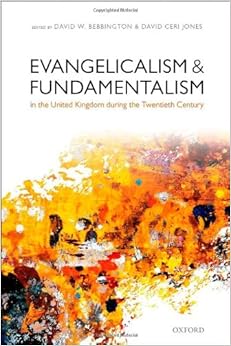
Evangelicalism & Fundamentalism by Bebbington and Jones

Evangelicalism & Fundamentalism
in the United Kingdom during the Twentieth Century
Edited by David Bebbington and David Ceri Jones
Oxford: Oxford University Press, 2013
ISBN 979-0-19-966483-2
Hbk, xiii+409pp, £72.01

It has been the received wisdom that fundamentalism is largely an American phenomenon that has had little impact on British evangelicalism. Here David Bebbington and David Ceri Jones have complied a volume looking at the relationship of evangelicalism and fundamentalism in Britain.

Bebbington is well know for his seminal Evangelicalism in Modern Britain and Jones is co-author of The Elect Methodists and is working on a history of evangelicalism in Wales, so both are well equipped to edit this volume.

Fundamentalism has been described as ‘the crypto-zooology of the theological world. It need not be argued against. It can be dismissed.’[1] Fortunately, in this volume it is not dismissed but examined in the light of the evangelical movement in Britain. Both fundamentalism and evangelicalism are notoriously difficult to define. The most oft-quoted definition in this book is Marsden’s tongue in cheek definition of fundamentalists as ‘evangelicals who are angry about something’ (cited in, for example, pages 116, 148, 231, 255, 339, 351, 363). Perhaps evangelicalism is then fundamentalism made more socially acceptable. Or as John Mark Reynolds, cited by Holmes, puts it an evangelical is ‘a fundamentalist who watches The Office.’ Or Marsden's (1980) ‘a mosaic of divergent and sometimes contradictory traditions and tendencies that could never be totally integrated’. Like the soap in a bath it is difficult to get a hold of - and very slippery.

Nevertheless, these authors all make an excellent attempt to examine British evangelicalism to see if there are any fundamentalist tendencies in it. Most think not. Though, of course it depends how each is defined. Some see the relationship as intersecting sets (e.g. Holmes), for some the intersection is an empty set, others as a spectrum of views (eg Warner).

The majority of the book is devoted to historical case studies. Warner and Holmes take a broader look and examine statements of faith and theological perspectives.

The Fundamentals the 12 volumes that were largely responsible for the fundamentalist movement so it is fitting that the first chapter takes a look at the British contributions to it. Treloar notes that there were 17 British contributors (out of the 90)who contributed about 400 of the 1400 pages. This alone shows that fundamentalism isn’t just an American phenomenon. He proceeds to provide brief biographies of the contributors.

One of the contributors was Thomas Whitelaw of Kilmarnock and he is the subject of the next chapter. One interesting chapter is that on Methodism. Its inclusion is intriguing as the Methodists are hardly renowned for their evangelicalism let alone fundamentalism, but Wellings identifies one small group that did have fundamentalist tendencies. One of the editors of the Fundamentals was A.C. Dixon - at one point he moved to England to Spurgeon's Metropolitan Tabernacle. It is surprising then that he didn’t play a greater role among the British Baptists. Bebbington provides a helpful look at the Baptists and Andrew Atherstone at the Anglicans - both of them deal with the inter-war years.

One key characteristic of the fundamentalists is their anti-Catholicism stance this is taken up by John Maiden. Surprisingly is the inclusion of a chapter on women. Surprising as women were often overlooked by the predominantly male leadership. Wilson provides an excellent analysis of female involvement in fundamentalism, in particular Mrs Horrocks and Elizabeth Morton.

The section on the later twentieth century includes chapters on John Stott and Billy Graham. A sociological exploration of new churches in York brings the narrative up to date. A surprising omission is a chapter on D.M. Lloyd Jones, particularly as Jones is the editor of a volume on him. But then the omission may be overlooked in that there is book on him! The National variations section deals with the Ulsterman W.P. Nicholson, Scotland and post-War Wales. The final section on theological reflection looks at Pentecostalism, evangelical bases of faith, and theology.


For those with an interest in twentieth-century evangelicalism this book is a treasure trove. The book is replete with sources and avenues for further research. The book deserves a wider reading than the price tag would permit.

The majority of the chapters appear in this volume for the first time, those by Bebbington, Randall and Tidball are reprints of articles published first elsewhere. Each chapter has its own footnotes and there is a useful 17-page bibliography and an even more helpful 15-page index.


[1] Bauder, K.T. 2011. In Four Views of the Spectrum of Evangelicalism ed. A. D. Naselli and C. Hansen. Zondervan.

The Drama of Scripture by Bartholomew and Goheen (2nd edn)

The Drama of Scripture
Finding Our Place in the Biblical Story
Craig G. Bartholomew and Michael W. Goheen
Grand Rapids: Baker Academic
ISBN 978-0-8010-4956-9
Pbk, 272 pp, £11.05.

The Drama of Scripture is the first book in the trilogy that also includes Living at the Crossroads and Christian Philosophy. First published in 2004, now a decade later we have the updated second edition.

The success of the first edition has been justly deserved. It has been translated into Russian, Korean, Chinese, Czech and Spanish. There were UK and US version and an abridged version with a study guide published as The True Story of the Whole World and now this second edition.

The second edition hasn’t changed the narrative structure; the biblical story of creation, fall and redemption still remains, as do the chapter titles. The main additions are not major but include mainly updated references and a few literary tweaks, its length has been increased by almost ten per cent.

The book was written for first-year undergraduates but the appeal will be wider. In an age when biblical literacy is waning, even in the church, this book will provide a welcome tool in the pastor’s, and was as educator’s, arsenal. Few books do a similar job of retelling the biblical narrative as a coherent, unified, integrated story of redemption. Even fewer do it with the grace, humour and accessibility of Bartholomew and Goheen. The book will help makes sense of the storied scriptures and of our storied world. Finding our place in the scriptures will help us to find our place and role in the world. This second edition is to be warmly welcomed.

Roy Clouser video recordings


Here are more recordings of Roy Clouser's presentation to the Wrestlers class:

Presenter Name(s)TitleCourse DateClick for recordings
Roy ClouserReformed Theology and the Myth of Religious Neutrality (2 of 2) 4/25/2010 Link
Roy ClouserCan we Know that God is True? 5/15/2011 Link
Roy ClouserThe Idea of a Christian Philosophy 3/11/2012 Link
Roy ClouserThe Dutch Philosopher Dooyeweerd's Theory of Reality 3/18/2012 Link
Roy ClouserUnderstanding Early Genesis 12/8/2013 Link
Roy ClouserWhat is Faith? 9/28/2014 Link


Tuesday, 14 October 2014

Tom Wright on Dooyeweerd and Kuyper

In a recent piece in Dutch Tom Wright spoke about his regard for Herman Dooyeweerd and Abraham Kuyper (translation based on google translate):

Tom Wright 2

Wright emphasizes often that his theological insights are innovative, or at least surprising. Still, he has his sources such great thinkers to whom he is indebted. In an interview with the Dutch magazine Wapenveld Wright  named  the Calvinist philosopher Herman Dooyeweerd (1894-1977), who conceived a comprehensive philosophical worldview  - the Philosophy of the Law Idea - in which he took the whole of reality into consideration, from school and hospital to economy and sacrament. Wright is impressed by that great Dooyeweerdian grip. "Herman Dooyweerd was important for me," he says, "although I haven't made a careful study of his work ​​myself. His ideas reached me through a good friend, Brian Walsh, who was very influenced by Dooyeweerd. In the early nineties we taught together in Oxford a series of lectures in which the different elements of the theology of the New Testament ethics, had to come together. I was then very much in the preparatory phase of the thick academic books on the New Testament, The New Testament and the People of God (1992). First It is without doubt the result that I then realized that the sense of God's comprehensive Kingdom is associated with the Messiah expectation in the Old Testament, and of course with the way this all came to light in Jesus through my conversations with Brian Walsh."

Brian Walsh challenged Wright to learn to think differently from what he was used to. "Not in the spirit of 'give to God what is God's and to Caesar what is Caesar's' - that would be tantamount to separate compartments - but deliberately going for a deep connection between church and world. Dooyeweerd wanted to integrate all aspects of life from the point of Christ's victory. He was convinced, like C.S. Lewis way that every square inch and every second is claimed by God - and return claimed by Satan. This insight was also not completely foreign to me, it was latent, I had never thought to the bottom . Now I just had to do, thanks to the critical questions of my friend who was so fascinated by Dooyeweerd. And I must say that I am the intellectual rigour of the Dutch Christian thinkers - Kuyper should also mention here of course! - I admire. It made a real difference to what I was used to finicky and sometimes sweet-voiced English way of thinking. Not that I did not know any serious and profound thinkers in England, but the perseverance of the Dutch thinkers have converted a change in me."

Wright is speaking at a conference in Theological University Kampen on 31 October - details here.

Sustainable Development, Architecture and Modernism: Aspects of an Ongoing Controversy

In their paper 'Sustainable Development, Architecture and Modernism: Aspects of an Ongoing Controversy' Arts 2014, 3, 350-366; doi:10.3390/arts3040350 Han Vandevyvere and Hilde Heynen use Dooyeweerd's ideas to critique sustainable development.

Here's the abstract:

Abstract: In some discourses on sustainability, modernism in architecture is blamed for its technocratic beliefs that supposedly generated a lot of the social and environmental problems the world is facing today. At the same time, many architectural critics seem to be convinced that the present call for sustainability with its “green buildings”, is but another screen behind which well-known old power structures hide. In this paper, we react to these viewpoints in different ways. First we clarify the issues that are haunting current architectural discourses by unraveling the logics behind the viewpoints of the critics of the “environmental doctrine” on the one hand and the technical environmentalists on the other hand. We will offer, secondly, a new framing to these debates by relying upon the modal sphere theory of the Dutch philosopher Herman Dooyeweerd. This new framing will allow us to reconnect, thirdly, with the discourse of modernism, which, we will argue, is all too often conflated with a technocratic paradigm—a partial, incomplete and even misleading representation. In conclusion, we present a different framing of modernism, which allows understanding of it as a multilayered and multifaceted response to the challenges of modernity, a response that formulated a series of ideals that are not so far removed from the ideals formulated today by many advocates of sustainability. We are, thus, suggesting that the sustainability discourse should be conceived as a more mature and revised version of the paradigm of modernism, rather than its absolute counterpoint.