
"If God is sovereign, then his lordship must extend over all of life, and it cannot be restricted to the walls of the church or within the Christian orbit." Abraham Kuyper Common Grace 1.1.
Saturday, 28 September 2013

Thursday, 26 September 2013
James Bratt interviewed about his recent Kuyper biography
James Bratt is interviewed here on Reformedcast about his biography of Kuyper.
Monday, 16 September 2013


Wednesday, 11 September 2013
Sunday, 8 September 2013
Imagining the Kingdom by James K. A. Smith
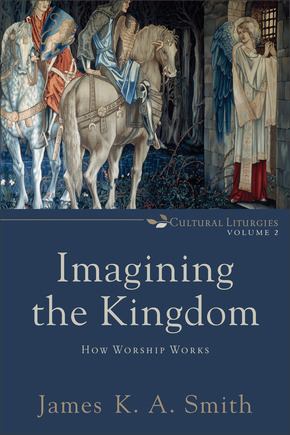
How Worship Works
James K. A. Smith
Grand Rapids: Baker Academic, 2013, pbk, 224 pp.
ISBN 978-0-8010-3578-4
Imagining the kingdom is the second part of a proposed trilogy exploring "cultural liturgies". In the first volume, Desiring the Kingdom (Baker Academic, 2009), Smith posed an exciting and outrageous question: "What if education wasn't first and foremost what we know, but about what we love?" In this second volume he follows this up by suggesting that "our actions emerge from how we imagine the world: "What if we are actors before we are thinkers?" (p 32). Smith's thesis is that we are defined more by what we worship than by what we think or believe. Thus we need to see more clearly how the affective affects the cognitive: to displace functional intellectualism, where what we do is the outcome of what we think.
His aim is "to articulate a Christian philosophy of action that takes seriously the creational conditions of human action: our embodiment, our finitude, our sociality, and the complexity of our being-in-the-world—the different ways that we “intend” our world." (p 33) He seeks to develop a liturgical anthropology, one that is defined but what we love (the affective), rather than how what we think or what we know (the cognitive). One that emphasises that we are not primarily theorisers.
To examine this em-body-ment, in Part 1, he looks at the work of two French academics, the philosopher Merleau-Ponty, particularly his nation of bodily intelligence and the sociologist Bourdieu, with his critique of theoretical reason. Bourdieu argues that human formation is not primarily cognitive. Part 2 "Sanctified Perception" develops and applies these "toolbox" ideas to look at how worship works.
Particularly helpful and insightful is the narrative function and role of worship. This is something that "secular" liturgies understand and utilise to shape and form us. We live in a storied world.
In essence what Smith is doing is connecting worship and worldview, he desires to make education more about formation not information, and sees liturgy - the rituals and routines that shape what we love - as playing an important part in this formation. He deftly bridges the academy and the church - the full footnotes provide the academic support for the arguments and the vignettes provide a more concrete view. Thus, the main text is interspersed with helpful examples utilising films such as Rise of the Planet of the Apes, Jane Campion's Bright Star, The King's Speech and novels like David Foster Wallace's Infinite Jest and Nicholson Baker's The Mezzanine.
His final chapter deals with the importance of ritual and liturgy in formation. Interestingly he identifies repetition in liturgy as being important.
Smith is not afraid of plundering Egypt - or in his case French theorists - he identifies what that have learnt because of common grace. His is a transformative approach.
This liturgical anthropology Smith develops is important not only for academics but for all Christian educators, from infant through to postgraduate level, as well as for pastors and church worship leaders. We are liturgical creatures, "sacramental animals"; we love what we worship. Worship, then is an encounter and a formation. I look forward to the third part of this so-far excellent trilogy.
Sunday, 1 September 2013
Something for labor day
 Over the years I've posted pieces to do with work. Labo(u)r day in North America seems like a good opportunity to have another look at them:
Towards a Christian view of work
What full-time Christian minsters need to know about secular work
Work: a Bible study
Michael Schutt: Vocation the mask of God
Some great books on work and vocation:
Tom Nelson Work Matters my review here
Daryl Cosden The Heavenly Good of Earthly Work
Lee Hardy The Fabric of This World
Gene Veith God at Work
Mark Greene Thank God It's Monday
Stephen Nichols What is Vocation? my review here
Douglas Schuurman Vocation after Christendom
Miroslav Volf Work in the Spirit: Toward a Theory of Work
Paul Marshall (ed.) Labour of Love: Essays on Work pdf available here
R. Paul Stevens The Other Six Days
Amy L. Sherman Kingdom Calling my review/ summary here, here, here and here
Vocational discipleship - some professional groups
Being more vocationally intentional
Resources for a Christian approach to business
... and finally a great offer from Byron Borger here. (But you will need to be quick.)
Saturday, 31 August 2013
Recent Kuyperania (Summer 2013)
Trott Garrett 2013. A Review of “Abraham Kuyper: An Annotated Bibliography, 1857–2010” Journal of Religious & Theological Information 12(1-2):57-60.
Himes, Brant 2013. “The common good and just peacemaking: Abraham Kuyper’s and Dietrich Bonhoeffer’s discipleship for a better worldliness.” Paper presented to the Twelfth Annual Conversation on the Liberal Arts: “War and Peace as Liberal Arts,” Westmont College, Santa Barbara, California, February 21-23, 2013.
Davey Henreckson 2013 “Can These Bones Live? Unexpected Lessons From the Life of Kuyper” Comment (July)
Simon P. Kennedy 2013. "Abraham Kuyper and his Political Thought: Calvinist and Pluralist." Reformed Theological Review 72 (2): 3-85.
Eric Miller 2013. “Father Abraham: Meet the Dutch neo-Calvinist who helped birth an enduring intellectual movement.” (Review of Bratt 2013) Christianity Today (April 2013).
Ronald A. Wells 2013 “Until the trumpet blows: getting personal with Kuyper under the cross.” (Review of Mouw) Books & Culture (March/April)
John Halsey Wood Jr 2013. “Going Dutch in the modern age: Abraham Kuyper's struggle for a free church in the nineteenth-century Netherlands.” The Journal of Ecclesiastical History 64(3): 513-532.
Himes, Brant 2013. “The common good and just peacemaking: Abraham Kuyper’s and Dietrich Bonhoeffer’s discipleship for a better worldliness.” Paper presented to the Twelfth Annual Conversation on the Liberal Arts: “War and Peace as Liberal Arts,” Westmont College, Santa Barbara, California, February 21-23, 2013.
Davey Henreckson 2013 “Can These Bones Live? Unexpected Lessons From the Life of Kuyper” Comment (July)
Simon P. Kennedy 2013. "Abraham Kuyper and his Political Thought: Calvinist and Pluralist." Reformed Theological Review 72 (2): 3-85.
Eric Miller 2013. “Father Abraham: Meet the Dutch neo-Calvinist who helped birth an enduring intellectual movement.” (Review of Bratt 2013) Christianity Today (April 2013).
Ronald A. Wells 2013 “Until the trumpet blows: getting personal with Kuyper under the cross.” (Review of Mouw) Books & Culture (March/April)
John Halsey Wood Jr 2013. “Going Dutch in the modern age: Abraham Kuyper's struggle for a free church in the nineteenth-century Netherlands.” The Journal of Ecclesiastical History 64(3): 513-532.
Saturday, 24 August 2013
...what has Christianity ever done for the world?

From Milton Jones Even More Concise 10 Second Sermons London: DLT, 2013
Friday, 23 August 2013
Calvin's Preface to Pierre Robert Olivétan's French translation of the New Testament
Calvin's Preface to Pierre Robert Olivétan's French translation of the New Testament.
In prose here. Adapted by Justin Taylor here.
Without the gospel
It follows that every good thing we could think or desire is to be found in this same Jesus Christ alone.
For, he was
In short,
If we are able to boast with the apostle, saying, O hell, where is thy victory? O death, where is thy sting? it is because by the Spirit of Christ promised to the elect, we live no longer, but Christ lives in us; and we are by the same Spirit seated among those who are in heaven, so that for us the world is no more, even while our conversation is in it; but we are content in all things, whether country, place, condition, clothing, meat, and all such things.
And we are
In prose here. Adapted by Justin Taylor here.
Without the gospel
everything is useless and vain;without the gospel
we are not Christians;without the gospel
all riches is poverty,But by the knowledge of the gospel we are made
all wisdom folly before God;
strength is weakness,
and all the justice of man is under the condemnation of God.
children of God,
brothers of Jesus Christ,
fellow townsmen with the saints,
citizens of the Kingdom of Heaven,
heirs of God with Jesus Christ, by whom
the poor are made rich,It is the power of God for the salvation of all those who believe.
the weak strong,
the fools wise,
the sinner justified,
the desolate comforted,
the doubting sure,
and slaves free.
It follows that every good thing we could think or desire is to be found in this same Jesus Christ alone.
For, he was
sold, to buy us back;he was
captive, to deliver us;
condemned, to absolve us;
made a curse for our blessing,he died for our life; so that by him
[a] sin offering for our righteousness;
marred that we may be made fair;
fury is made gentle,
wrath appeased,
darkness turned into light,
fear reassured,
despisal despised,
debt canceled,
labor lightened,
sadness made merry,
misfortune made fortunate,
difficulty easy,
disorder ordered,
division united,
ignominy ennobled,
rebellion subjected,
intimidation intimidated,
ambush uncovered,
assaults assailed,
force forced back,
combat combated,
war warred against,
vengeance avenged,
torment tormented,
damnation damned,
the abyss sunk into the abyss,
hell transfixed,
death dead,
mortality made immortal.
In short,
mercy has swallowed up all misery,For all these things which were to be the weapons of the devil in his battle against us, and the sting of death to pierce us, are turned for us into exercises which we can turn to our profit.
and goodness all misfortune.
If we are able to boast with the apostle, saying, O hell, where is thy victory? O death, where is thy sting? it is because by the Spirit of Christ promised to the elect, we live no longer, but Christ lives in us; and we are by the same Spirit seated among those who are in heaven, so that for us the world is no more, even while our conversation is in it; but we are content in all things, whether country, place, condition, clothing, meat, and all such things.
And we are
comforted in tribulation,This is what we should in short seek in the whole of Scripture: truly to know Jesus Christ, and the infinite riches that are comprised in him and are offered to us by him from God the Father.
joyful in sorrow,
glorying under vituperation,
abounding in poverty,
warmed in our nakedness,
patient amongst evils,
living in death.
Esther and Daniel by Wells and Sumner
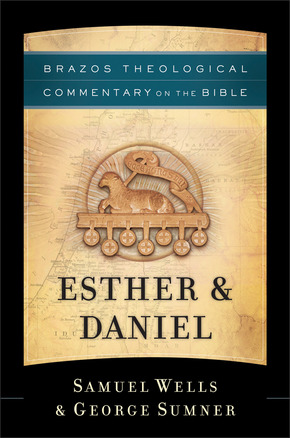
Brazos Theological Commentary on the BIble
Samuel Wells & George Sumner
Grand Rapids: Brazos Press, 2013.
ISBN 9781587433313
Hbk, £19.99/ $32.99, 256pp.
This volume is a welcome addition to the Brazos Theological Commentary on the Bible series. This series lies somewhere between exegesis and exposition. As the title suggests the theological issues are to the fore and this provides a fresh approach.
Samuel Wells, rector of St Martins-in-the-Field, London, takes a narrative view of Esther. Some commentaries concentrate on the leaves of a tree, Wells focuses on the forest. This is no atomistic approach. In his opening chapter he uses the terms farce, burlesques-style, a study in improvisation to describe it. This is no dry and dusty tome. He brilliantly opens up Esther and shows the book to be both far fetched and existentially urgent.
Wells is author of Improvisation: The Drama of Christian Ethics and he also sees elements of improvisation within Esther. Intriguingly, he sees the key question of Esther as "How to navigate the dangerous waters of exile, between the two extremes of spineless assimilation and fruitless resistance?"
George Sumner is professor of World Mission at Wycliffe College, Toronto, and so inevitably and intriguingly the missional elements of Daniel are highlighted. As he writes in the introduction: "There is no missiology without Christology (and vice versa), even as there is no Christology without staurology." He, as does Wells, provides a Christological perspective on the text. He sees Daniel as a single coherent work - despite its redactional history. He takes a "circulatory system" approach, where a major artery runs directly from Daniel to Revelation and he rightly interprets the two books in relation.
Sumner does not suffer from chronological snobbery and he freely uses Calvin, Jerome, Melanchthon and others to help make sense of the text.
There is a subject index and a useful scripture index.
Of the making of commentaries there seems so end. So what fresh insights does this volume offer? The strength is that Wells provides a drama-tic setting to Esther and Sumner brings missional insights to the understanding of dabble. Both authors take seriously the Christological and canonical settings of the books. The weakness is that there is no common format. But then, perhaps that is a strength - each author is free to do what they would like and thus play to their strengths.
This series is certainly one worth considering when buying a new commentary.
Wednesday, 21 August 2013
Tuesday, 20 August 2013
Monday, 19 August 2013
Saturday, 10 August 2013
Going Dutch in the Modern Age by John Halsey Wood Jr - Ch 7 a scapple

Click on the image for a large version
Christian Philosophy by Bartholomew and Goheen
Craig Bartholomew and Mike Goheen's new book has been announced. Full details are here.

Table of Contents
Introduction
Part 1: Approaching Christian Philosophy
1. Why Philosophy?
2. Faith and Philosophy
Part 2: The Story of Western Philosophy
3. Ancient Pagan Philosophy: The Pre-Socratics to Socrates
4. The High Point of Greek Philosophy: Plato, Aristotle, and Their Legacy
5. Medieval Synthesis Philosophy: Augustine to Abelard
6. The Middle Ages: Aristotle Rediscovered
7. The Renaissance and Reformation
8. Early Modern Philosophy: Bacon to Leibniz
9. Modern Philosophy: Hume to Schleiermacher
10. Modern Philosophy: Romanticism to Gadamer
11. Postmodernism and Philosophy Today
Part 3: Christian Philosophy Today
12. Christian Philosophy Today
13. Reformed Epistemology
14. Reformed Epistemology Applied
15. Reformational Philosophy
Conclusion
Annotated Further Reading List
Index

After exploring the interaction among Scripture, worldview, theology, and philosophy, the authors tell the story of philosophy from ancient Greece through postmodern times, positioning the philosophers in their historical contexts and providing Christian critique along the way. The authors emphasize the Reformed philosophical tradition without neglecting other historical trajectories and show how philosophical thought relates to contemporary life.
Table of Contents
Introduction
Part 1: Approaching Christian Philosophy
1. Why Philosophy?
2. Faith and Philosophy
Part 2: The Story of Western Philosophy
3. Ancient Pagan Philosophy: The Pre-Socratics to Socrates
4. The High Point of Greek Philosophy: Plato, Aristotle, and Their Legacy
5. Medieval Synthesis Philosophy: Augustine to Abelard
6. The Middle Ages: Aristotle Rediscovered
7. The Renaissance and Reformation
8. Early Modern Philosophy: Bacon to Leibniz
9. Modern Philosophy: Hume to Schleiermacher
10. Modern Philosophy: Romanticism to Gadamer
11. Postmodernism and Philosophy Today
Part 3: Christian Philosophy Today
12. Christian Philosophy Today
13. Reformed Epistemology
14. Reformed Epistemology Applied
15. Reformational Philosophy
Conclusion
Annotated Further Reading List
Index
Wednesday, 7 August 2013
Good News to the Poor by Tim Chester

Social Involvement and the Gospel
Wheaton: Crossway books, 2013
ISBN 978-1-4335-3703-5
Pbk, 244pp.
Publishers website here.
To rephrase Bishop Tutu "When people say that the Bible and social action don't mix, I ask them which Bible they are reading." Yet it seems that many evangelicals are reading different Bibles. Evangelical attitudes to social action have always been mixed. Some see it as a capitulation to the social gospel others as an integral part of the gospel. Chester in this introductory book helpfully examines this relationship.
The book begins by outlining four ways in which evangelicals in general have responded to the relationship and poses a number of key questions:
Is social involvement something we do as well as evangelism? Is there another way of doing evangelism? Is it a distraction or the real job of proclaiming the gospel?The book attempts to explore these important issues. He provides a good case for evangelical social action but has some pertinent criticism too and he wants to see social action that is truly evangelical. He sees proclamation of the gospel message as being central to Christian social action and the need for social action to be shaped by the gospel. He argues that evangelism and social action are distinct but inseparable activities.
Is social involvement a legitimate activity of Christians? Does it have biblical support?
In the first chapter he looks at three biblical reasons for involvement: the character of God, the reign of God and the grace of God. He maintains that social involvement is rooted in the character of God and that "Our understanding of poverty is fundamentally related to our understanding of God". This focus on the centrality of God is to be welcomed.
One of the reasons for the lack of involvement is that Christianity is too often considered to be a private with no public ramifications. This misconception is investigated in Chapter 2. Calvin, Kuyper, Elizabeth Fry, Wilberforce, William Booth are all cited of examples of Christians whose faith has made a public difference. The privatising effect of human reason on through the Enlightenment and human experience on faith through Romanticism are briefly - albeit oversimplified - examined.
Chester focuses on poverty as a key social issue, but he sees it including social marginalization and powerlessness. He advocates a relational approach to poverty. Tackling poverty is much more than feeding the hungry, poverty is more than a lack of income. The root of poverty is alienation from God, poverty is economic and social: it is "about marginalization, vulnerability, isolation and exclusion." This is obviously an area in which Christianity can help.
Chester makes a good case for social action that precedes, accompanies and follows evangelism. What he doesn't do is to show how social action and social reform relate. Does social reform need to follow social action?
Chester provides good reasons for the need for evangelicals to be involved in social action. He also provides some useful suggestions and ideas for involvement and includes some pertinent warnings: social action doesn't mean doing something for the poor, it is more than providing solutions. More effective ways include helping people to help themselves: "Good social involvement is helping people o find their own solutions." Participation is key.
The book includes some thought provoking poems by Stuart Henderson, a number of vignettes that help focus the issues on real situations, a useful list of further reading and a bibliography.
Contents
1. The Case for Social Involvement
2. More Than a Private Faith
3. The Case for Evangelizing the Poor
4. Social Involvement and Proclamation
5. Social Involvement and the Kingdom of God
6. Good News to the Poor
"Land of Milk and Honey" Stewart Henderson
7. Good News to the Rich
8. Welcoming the Excluded
9. Strengthening the Powerless
10. Following the Crucified Lord
11. Can We Make a Difference?
"Jesus, Jewel of the Poor" Stewart Henderson

Subscribe to:
Posts (Atom)


